


Strainer Basket 12
In industrial fluid handling, the efficiency of a filtration system is often determined by the precision and durability of its internal components. Among these, the strainer basket 12—typically referring to baskets designed for 12-inch nominal pipe size (NPS) housings or specific "Size 12" industrial filter vessels—serves as a critical line of defense. These components are engineered to remove coarse solids from liquid streams, protecting downstream equipment such as pumps, valves, and heat exchangers from mechanical damage and clogging.
For engineers and procurement professionals, selecting the correct Strainers & Baskets involves more than simply matching a diameter. It requires a deep understanding of fluid dynamics, material compatibility, and the structural requirements of high-volume industrial processes. This guide examines the technical specifications, engineering considerations, and selection criteria for 12-inch strainer baskets in demanding B2B environments.
Understanding the Role of Strainers & Baskets in Large-Scale Industrial Systems
Industrial strainers are closed vessels that mechanically remove solids from flowing liquids or gases via a perforated or mesh-lined basket. The "12-inch" designation usually signifies a high-capacity system capable of handling significant flow rates, often found in municipal water treatment, large-scale chemical processing, and cooling water circuits for power plants.
Unlike standard filters that may require frequent cartridge replacements, a strainer basket 12 is designed for longevity and reuse. The basket is the primary functional element; it must be robust enough to withstand the differential pressure created as debris accumulates. In a 12-inch system, the surface area of the basket is substantial, allowing for higher dirt-holding capacity and longer intervals between cleaning cycles compared to smaller 4-inch or 6-inch counterparts.
Technical Specifications for the Strainer Basket 12
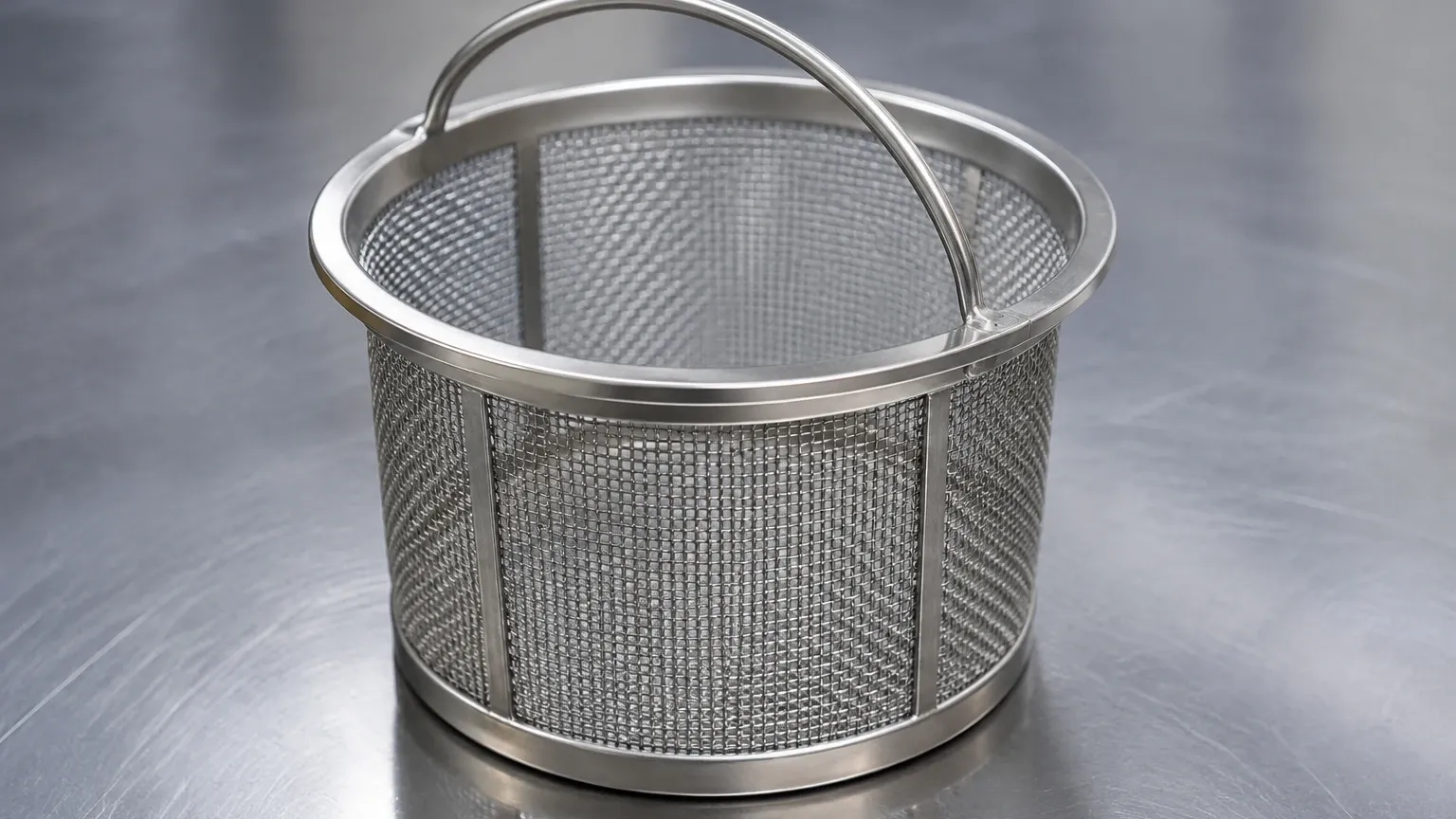
When specifying a strainer basket 12, technical performance is dictated by the construction method and the filtration media used. Kaifil specializes in manufacturing these components to meet exact industrial tolerances, ensuring they fit seamlessly into existing simplex or duplex strainer housings.
Perforation and Mesh Linings
The foundation of most industrial baskets is a perforated metal sheet. For a 12-inch basket, the perforation size typically ranges from 1/16" to 1/4" for coarse straining. However, many applications require finer filtration. In these cases, the perforated basket serves as a structural support for a fine wire mesh lining.
Mesh linings can range from 20 mesh (approx. 900 microns) down to 400 mesh (approx. 35 microns). For a strainer basket 12, the structural integrity of the mesh-to-perforation bond is vital, as the large surface area is subject to significant hydraulic forces. Sintered mesh or multi-layer mesh constructions are often utilized in high-pressure applications to prevent media migration or mesh collapse.
Dimensional Accuracy
A 12-inch strainer basket must adhere to strict dimensional standards to ensure a proper seal within the housing. This includes:
* Flange Diameter: The top ring or flange must seat perfectly to prevent fluid bypass.
* Basket Height: Sufficient clearance at the bottom of the housing is necessary to allow for sediment settling.
* Handle Configuration: Large baskets can be heavy when full of debris; heavy-duty handles or lifting lugs are essential for safe removal during maintenance.
Engineering Considerations: Flow Dynamics and Pressure Management
One of the most critical factors in industrial filtration is the "Clean Pressure Drop" (ΔP). For a strainer basket 12, engineers must calculate the ratio of the open area of the basket to the cross-sectional area of the inlet pipe. A common industry standard is a 6:1 or 8:1 open area ratio.
Open Area Ratio (OAR)
The OAR determines how long a strainer can operate before the pressure drop becomes unacceptable. If the OAR is too low, the velocity of the fluid through the mesh increases, which can lead to:
1. Particle Breakthrough: High velocity forces contaminants through the mesh.
2. Structural Fatigue: Increased turbulence can cause vibration and eventual cracking of the basket welds.
3. Pump Strain: The upstream pump must work harder to overcome the resistance, increasing energy costs and wear.
In a 12-inch system, the volume of fluid is substantial. Therefore, the strainer basket 12 must be engineered with a high-percentage open area perforated metal to maintain system efficiency. Kaifil’s engineering approach focuses on optimizing this ratio while maintaining the structural rigidity required for high-flow environments.
Material Selection and Corrosion Resistance
The longevity of a strainer basket 12 is heavily dependent on its material of construction. Industrial environments often involve corrosive chemicals, high temperatures, or abrasive slurries.
* 304 Stainless Steel: The standard choice for general-purpose applications, providing good corrosion resistance and durability in water and mild chemical environments.
* 316/316L Stainless Steel: Specified for pharmaceutical, food and beverage, and marine applications. The addition of molybdenum provides superior resistance to chlorides and pitting corrosion.
* Specialty Alloys: For highly aggressive environments, such as those found in chemical refining or desalination, baskets may be manufactured from Monel, Hastelloy, or Titanium. These materials ensure that the strainer basket 12 does not become a point of failure due to chemical degradation.
Beyond the base metal, surface treatments such as electropolishing can be applied. Electropolishing is particularly important in the pharmaceutical and food industries, as it creates a smooth, easy-to-clean surface that prevents bacterial growth and reduces the adhesion of sticky contaminants.
Customization Options for Specialized Industrial Applications
Standard off-the-shelf baskets often fail to meet the nuances of specific industrial processes. Customization is a core strength of Kaifil’s manufacturing capability. For a strainer basket 12, several modifications can enhance performance:
Reinforced Bottoms and Sides
In systems with high solids loading or pulsating flows, the bottom of the basket is the most vulnerable point. Reinforcing the base with a solid metal plate or additional cross-members prevents the basket from "ballooning" or bursting under pressure.
Magnetic Inserts
For hydraulic systems or metalworking fluid recovery, magnetic rods can be installed within the strainer basket 12. These magnets capture fine ferrous particles that might otherwise pass through the mesh, providing an extra layer of protection for precision machinery.
Slotted or Wedge Wire Construction
While perforated metal is common, some applications benefit from wedge wire (V-wire) construction. Wedge wire baskets offer a non-clogging surface and very high structural strength, making them ideal for heavy-duty industrial straining where backwashing or mechanical cleaning is employed.
Maintenance, Cleaning, and Longevity
The total cost of ownership (TCO) for a strainer basket 12 is determined largely by its maintenance requirements. Because these components are designed to be cleaned and reused, the ease of maintenance is a primary engineering concern.
Cleaning Protocols
When the pressure differential reaches a predetermined limit (usually 10-15 psi over the clean drop), the basket must be removed and cleaned. For a 12-inch basket, this often involves:
1. Manual Washdown: Using high-pressure water or steam to dislodge trapped particles.
2. Ultrasonic Cleaning: For fine mesh baskets where particles are wedged deep within the weave.
3. Chemical Bath: Used when the contaminant is organic or scale-based and cannot be removed mechanically.
Signs of Wear
During maintenance, the strainer basket 12 should be inspected for:
* Mesh Blinding: Permanent clogging that cannot be cleaned, reducing the effective open area.
* Bypass Tracks: Wear patterns around the flange or seams that indicate fluid is escaping the basket without being filtered.
* Deformation: Any bowing or twisting of the basket frame, indicating that the system has exceeded its design pressure.
Procurement Checklist: Specifying Your Filtration Requirements
When contacting a manufacturer like Kaifil for a replacement or a new strainer basket 12, having the following technical data ready will ensure an accurate quote and a high-performance product:
1. Fluid Characteristics: What is the liquid? What is its viscosity and temperature? This dictates material selection.
2. Contaminant Profile: What is the size and nature of the solids being removed? (e.g., sand, scale, organic fibers). This determines the mesh or perforation size.
3. Flow Rate: What is the normal and maximum flow rate in GPM (gallons per minute)? This is essential for calculating pressure drop.
4. Housing Dimensions: Provide the exact internal diameter of the housing seat and the total depth available for the basket.
5. Operating Pressure: What is the maximum system pressure and the maximum allowable differential pressure before cleaning?
By focusing on these factual engineering requirements, purchasing teams can secure Strainers & Baskets that deliver reliable performance and minimize downtime. Whether for a standard water intake or a complex chemical reactor feed, the strainer basket 12 remains a fundamental component in maintaining the integrity of industrial fluid systems. Kaifil’s commitment to quality manufacturing ensures that every basket is built to withstand the rigors of the most demanding applications, providing a cost-effective and durable filtration solution.
