


Strainer Basket Bunnings
In the realm of fluid management and debris removal, the term "strainer basket" covers a broad spectrum of products ranging from domestic hardware found at retailers like Bunnings to high-precision industrial components used in chemical processing plants. For homeowners and small-scale tradespeople, a strainer basket bunnings search typically yields results for kitchen sink wastes, floor wastes, or swimming pool pump baskets. However, for engineers and procurement professionals in the industrial sector, the requirements for strainers and baskets are significantly more rigorous, involving specific alloy selections, precise micron ratings, and the ability to withstand high-pressure environments.
Understanding the distinction between consumer-grade retail products and industrial-grade Strainers & Baskets is essential for maintaining system integrity and preventing costly downtime. This article explores the engineering considerations, material science, and selection criteria that define professional filtration solutions.
The Distinction Between Retail and Industrial Filtration
When searching for a strainer basket bunnings, the intent is often centered on residential maintenance or light commercial plumbing. These products are designed for standard water temperatures, atmospheric or low-pressure drainage, and general-purpose debris like food scraps or leaves. They are typically mass-produced with standard dimensions to fit common household plumbing fixtures.
In contrast, industrial strainers are engineered components designed to protect downstream equipment—such as pumps, valves, and flow meters—from particulate matter that could cause abrasion or blockage. The engineering requirements for these components include:
* Pressure Ratings: Industrial baskets must often survive high differential pressures without collapsing.
* Chemical Compatibility: Unlike domestic plastics or basic stainless steels, industrial strainers may require specialized alloys (such as 316L, Duplex, or Monel) to resist corrosive process fluids.
* Filtration Precision: While a retail basket might catch items visible to the eye, industrial baskets can be lined with fine wire mesh to capture particles as small as 5 to 10 microns.
* Durability: Industrial environments involve continuous operation, thermal cycling, and mechanical vibration, necessitating robust construction techniques like TIG welding and reinforced frames.
Engineering Considerations for Industrial Strainers & Baskets
The selection of a strainer basket is rarely a "one-size-fits-all" decision in a B2B context. Engineers must evaluate several technical parameters to ensure the component performs reliably within a specific system.
Flow Rate and Pressure Drop
The primary function of a strainer is to remove solids, but this naturally introduces resistance to the fluid flow. The "clean pressure drop" ($ΔP$) is a critical metric. If the open area of the basket is too small, the pressure drop will be excessive, forcing the pump to work harder and increasing energy consumption. A well-designed industrial basket typically offers an open area ratio of at least 6:1 or 8:1 relative to the cross-sectional area of the inlet pipe to minimize flow restriction.
Mechanical Strength and Burst Pressure
As a strainer basket accumulates debris, the pressure differential across the mesh increases. If the basket is not engineered to withstand the maximum possible system pressure, it may deform or burst, sending both the debris and fragments of the basket into the downstream equipment. Industrial manufacturers like Kaifil utilize perforated metal backings or heavy-duty support cages to provide the necessary structural integrity for high-load applications.
Material Selection and Corrosion Resistance
While a standard strainer basket bunnings might utilize generic 304 stainless steel or PVC, industrial applications demand precise material traceability. The choice of material is dictated by the chemical nature of the fluid and the operating temperature.
1. 304 Stainless Steel: Suitable for general water treatment and food-grade applications where corrosion risk is moderate.
2. 316/316L Stainless Steel: The industry standard for pharmaceutical and chemical processing due to the addition of molybdenum, which enhances resistance to chlorides and pitting.
3. Specialty Alloys: For highly aggressive environments, such as seawater filtration or concentrated acids, materials like Hastelloy or Super Duplex may be required to prevent premature failure.
Surface treatments also play a role. Electropolishing is frequently used in the food and beverage industry to ensure the strainer surface is smooth and free of microscopic pits where bacteria could colonize, ensuring compliance with hygiene standards.
Filtration Accuracy: Perforated vs. Mesh Lining
The "strainer basket bunnings" category usually refers to perforated metal baskets with hole sizes ranging from 2mm to 5mm. In industrial settings, the level of filtration is often much finer, requiring a hybrid construction.
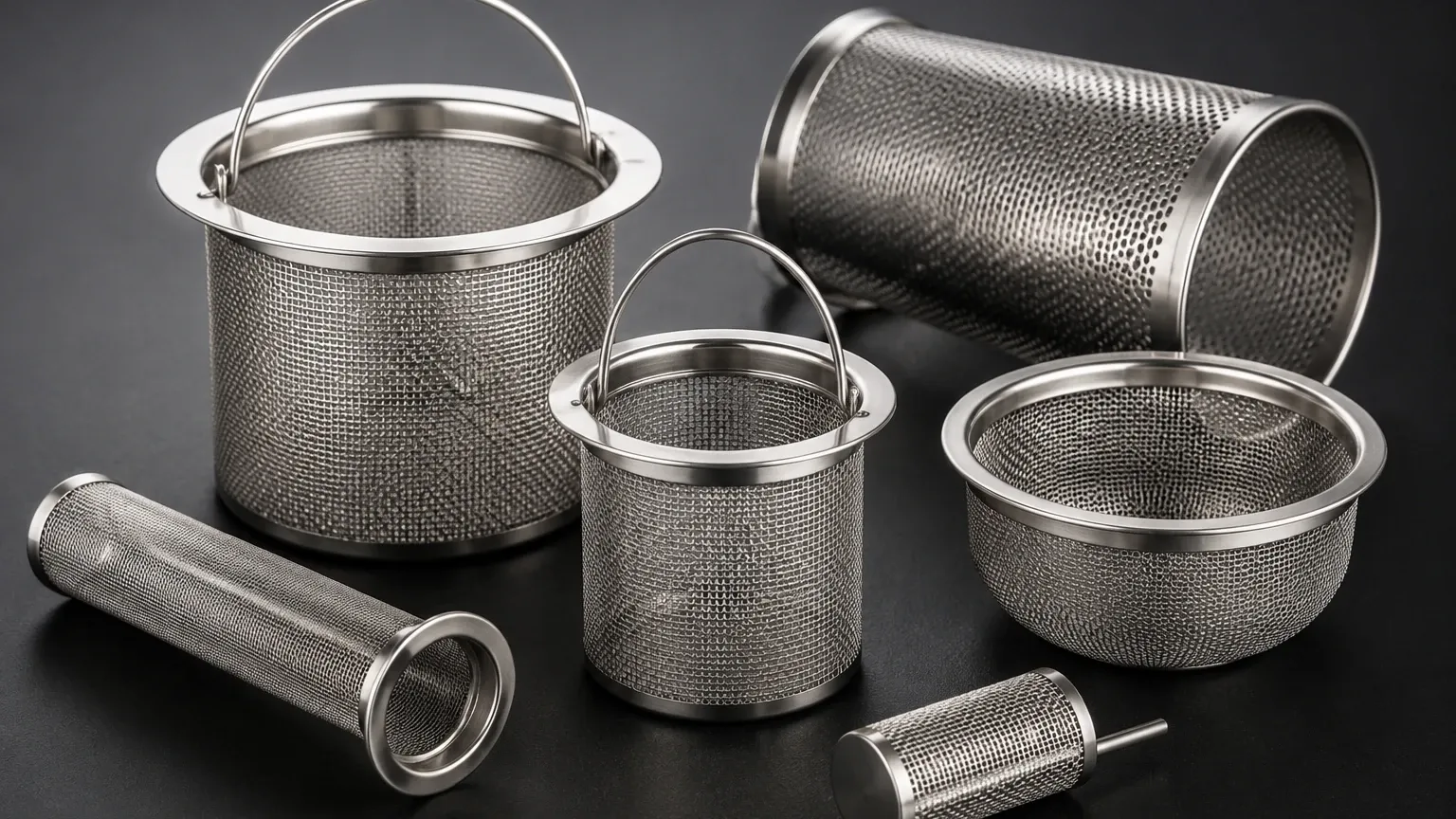
* Perforated Metal Baskets: These serve as the primary filter or as a support structure. They are excellent for removing large debris like stones, scale, or bolts. The hole patterns (staggered vs. straight) and the percentage of open area are key variables.
* Wire Mesh Liners: When finer filtration is required, a stainless steel wire mesh is welded inside the perforated basket. This allows the strainer to achieve precise micron ratings. The mesh can be woven in various patterns, such as plain weave, twilled weave, or Dutch weave, depending on the required flow characteristics and particle retention.
Customization and OEM Solutions
One of the most significant differences between retail outlets and professional manufacturers is the ability to customize. Standard retail products are built to fixed dimensions. In industrial retrofitting or new equipment design, custom dimensions are often necessary to fit existing housings or to accommodate specific flow geometries.
Customization options include:
* Handle Designs: Slant handles, heavy-duty lifting lugs, or folding handles for ease of maintenance in tight spaces.
* Gasket Seats: Integrated O-ring grooves or flat gasket surfaces to ensure a bypass-free seal within the strainer housing.
* Magnetic Inserts: The addition of magnetic rods within the basket to capture fine ferrous particles that might pass through the mesh.
* Reinforced Bottoms: To prevent wear in applications where heavy solids settle rapidly.
Maintenance, Cleaning, and Replacement Cycles
In a B2B environment, the total cost of ownership (TCO) is more important than the initial purchase price. A cheap strainer basket that requires frequent replacement or is difficult to clean will eventually cost more than a high-quality, durable component.
Cleaning Procedures
Industrial baskets are designed for reuse. The cleaning process typically involves backwashing or ultrasonic cleaning. It is vital that the cleaning method does not damage the fine wire mesh. Engineers should confirm the "cleanability" of a basket design, especially when dealing with sticky or fibrous contaminants.
Monitoring Performance
To optimize maintenance schedules, industrial systems often use differential pressure gauges. When the pressure drop reaches a predetermined limit, it signals that the basket is full and requires cleaning. This prevent-over-clogging approach protects the basket from structural damage and ensures the system operates at peak efficiency.
Selecting the Right Partner for Filtration Solutions
While a search for strainer basket bunnings might be the starting point for a simple home project, industrial procurement requires a partner with deep technical expertise and manufacturing capabilities. When evaluating a supplier for industrial strainers, engineers should verify:
* Manufacturing Standards: Does the supplier follow ISO quality management systems?
* Material Certification: Can the supplier provide Mill Test Reports (MTRs) to prove the grade of stainless steel used?
* Technical Support: Can the manufacturer assist in calculating the required open area or suggest the best mesh type for a specific viscosity?
Kaifil specializes in bridging the gap between standard designs and high-performance requirements. By focusing on precision manufacturing and material integrity, we provide solutions that go beyond the limitations of retail-grade hardware. Whether you are replacing a single basket in a hydraulic system or designing a filtration array for a new chemical plant, the focus remains on reliability and performance.
For those requiring robust, industrial-grade Strainers & Baskets, it is essential to move beyond consumer retail options and consult with specialists who understand the complexities of industrial fluid dynamics. Proper selection today prevents equipment failure and operational losses tomorrow.
