


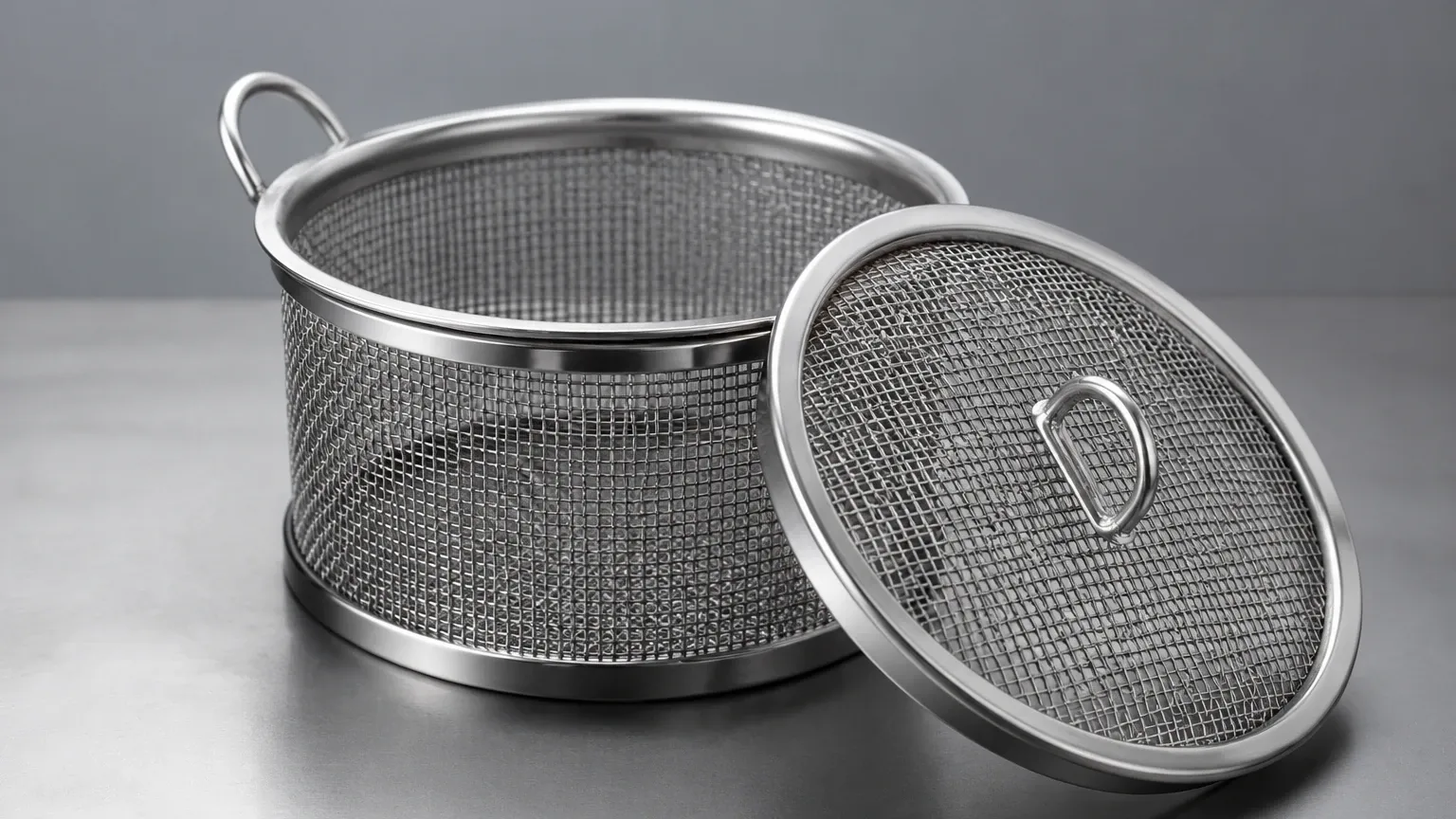
Strainer Basket with Lid
In industrial fluid handling and processing, the integrity of downstream equipment often depends on the efficiency of primary filtration components. Among these, the strainer basket with lid serves as a critical line of defense, capturing macroscopic solids and particulate matter before they can damage pumps, valves, or heat exchangers. Unlike open-top baskets used in gravity-fed systems, a basket equipped with a lid or a specialized closure mechanism is designed for pressurized environments, batch processing where containment is vital, or applications requiring frequent manual cleaning without fluid loss.
For engineers and procurement professionals, selecting the right Strainers & Baskets involves more than just matching a pipe size. It requires a deep understanding of material science, fluid dynamics, and the mechanical stresses placed on the filtration media during operation. This guide explores the technical considerations, design variations, and selection criteria for industrial-grade strainer baskets to ensure optimal performance and longevity.
The Role of the Lid in Industrial Basket Strainers
The term "lid" in an industrial context typically refers to one of two things: the integral cover of the basket itself or the closure mechanism of the strainer housing that secures the basket in place. When discussing a strainer basket with lid as a single assembly, the focus is often on containment and ease of handling.
Containment and Safety
In chemical processing or high-temperature applications, an integral lid on the basket prevents the bypass of solids if the flow rate surges. It also ensures that when the basket is removed for cleaning, the captured debris remains contained, reducing the risk of environmental contamination or operator exposure to hazardous materials.
Structural Integrity
For high-pressure applications, the lid or top flange of the basket acts as a sealing surface. If the basket does not seat correctly against the housing cover, unfiltered fluid can bypass the media. A well-engineered lid ensures a positive seal, directing 100% of the flow through the mesh or perforated metal.
Ease of Maintenance
Industrial lids are often designed with ergonomic handles or quick-release mechanisms. In systems where the strainer must be cleaned multiple times per shift, the design of the lid significantly impacts the "Mean Time to Repair" (MTTR) and overall system downtime.
Engineering Specifications and Material Selection
Kaifil specializes in manufacturing filtration components that withstand corrosive environments and high mechanical loads. The choice of material is the first and most critical decision in the engineering process.
Stainless Steel Grades
* SS304: The standard for general-purpose industrial applications. It offers excellent strength and good corrosion resistance for water treatment, food and beverage, and light industrial chemicals.
* SS316/316L: Preferred for pharmaceutical and marine applications, or any environment involving chlorides and acids. The addition of molybdenum enhances pitting resistance.
* Specialty Alloys: For extreme environments, materials like Hastelloy or Monel may be used, though 300-series stainless steel remains the industry benchmark for durability and cost-effectiveness.
Filtration Media: Perforated vs. Mesh
The "body" of the strainer basket with lid can be constructed from different media types depending on the required micron rating:
* Perforated Plate: Used for coarse straining (typically 1/2" down to 1/32"). It provides the highest structural strength and is often used as a support "cage" for finer mesh.
* Wire Mesh: Used for fine filtration (from 20 mesh down to 400 mesh or finer). Stainless steel wire mesh is pleated or layered to increase the surface area and dirt-holding capacity.
* Multi-Layer Composites: For high-pressure applications, a fine mesh is sintered or mechanically bonded between two layers of perforated metal to prevent media migration and collapse.
Design Variations for Specific Applications
Not all industrial processes are the same, and the design of the strainer basket with lid must reflect the specific challenges of the medium being filtered.
Slant-Top vs. Flat-Top Baskets
Flat-top baskets are standard for most simplex strainers. However, slant-top designs are often utilized in specialized housings to reduce pressure drop and allow for a larger filtration surface area within a compact footprint. The lid design must be precisely machined to match the angle of the housing seat to prevent bypass.
Heavy-Duty Reinforced Baskets
In hydraulic systems or high-viscosity oil filtration, the differential pressure $(\Delta P)$ across the basket can be substantial. Reinforced baskets feature internal or external longitudinal ribs and a heavy-duty lid flange to prevent the basket from buckling under the weight of the captured solids or the force of the fluid.
Magnetic Inserts
For applications involving metal machining or grinding, a strainer basket with lid can be equipped with magnetic rods. These magnets capture fine ferrous particles that might otherwise pass through a standard mesh, providing an extra layer of protection for precision downstream components.
Key Evaluation Criteria for Engineers
When specifying a Strainers & Baskets solution, engineers should evaluate the following technical parameters to ensure the component is fit for purpose:
1. Open Area Ratio (OAR): This is the ratio of the total open area of the basket holes to the internal cross-sectional area of the inlet pipe. A high-quality industrial strainer should have an OAR of at least 6:1 or 8:1. This ensures that the strainer does not become a bottleneck in the system and allows for significant solids loading before the pressure drop becomes critical.
2. Micron Rating and Capture Efficiency: It is essential to define the smallest particle size that must be removed. Using a mesh that is too fine will lead to rapid clogging and excessive maintenance, while a mesh that is too coarse will fail to protect downstream equipment.
3. Maximum Allowable Pressure Drop (Clean vs. Dirty): Engineers must calculate the pressure drop when the basket is clean and establish a threshold for when the basket must be pulled for cleaning. A strainer basket with lid that is properly sized will typically operate with a clean pressure drop of less than 2 PSI.
4. Seal Compatibility: The gaskets or O-rings used in the lid assembly must be compatible with the process fluid. Common materials include EPDM, Viton (FKM), PTFE, and Buna-N. Incorrect seal selection can lead to leaks, bypass, or chemical degradation of the gasket.
Common Risks and Mitigation Strategies
Failure to properly specify or maintain a strainer basket can lead to significant operational risks. Understanding these risks is the first step in prevention.
Media Migration and Bursting
If the differential pressure exceeds the structural limits of the basket, the mesh may tear or the bottom of the basket may blow out. This sends both the captured debris and pieces of the filter media into the downstream system. Mitigation: Use reinforced perforated backings and install differential pressure gauges to monitor the state of the filter.
Bypass Due to Poor Sealing
A common issue with lower-quality baskets is an improperly machined lid flange. If the lid does not sit flush, fluid will take the path of least resistance through the gap. Mitigation: Ensure the manufacturer uses precision CNC machining for the top flange and lid interface.
Galvanic Corrosion
If a stainless steel basket is placed in a housing made of a significantly different metal without proper insulation, galvanic corrosion can occur, leading to premature failure of the basket mesh. Mitigation: Match the basket material to the housing material or use compatible alloys.
Maintenance and Replacement Cycles
The longevity of a strainer basket with lid depends heavily on the cleaning protocol. Stainless steel baskets are designed to be permanent or semi-permanent components, but they are not indestructible.
* Cleaning Methods: For most applications, manual cleaning with a soft brush or high-pressure water jet is sufficient. In the food and pharmaceutical industries, baskets may undergo Ultrasonic cleaning or CIP (Clean-In-Place) cycles. It is vital to avoid using carbon steel brushes, as they can embed iron particles into the stainless steel, leading to "tea staining" or localized rusting.
* Inspection Points: During every cleaning cycle, the lid seals, handle welds, and the integrity of the mesh-to-flange bond should be inspected. Any signs of fraying in the wire mesh or pitting in the metal are indicators that the basket is nearing the end of its service life.
* Total Cost of Ownership (TCO): While a custom-engineered basket from a manufacturer like Kaifil may have a higher initial cost than a generic off-the-shelf part, the TCO is lower due to reduced replacement frequency, better protection of expensive pumps, and decreased labor costs associated with maintenance.
Conclusion: Selecting the Right Partner
Specifying a strainer basket with lid is a technical task that requires balancing flow requirements, filtration accuracy, and mechanical durability. For B2B buyers and engineers, the goal is to find a solution that integrates seamlessly into existing infrastructure while providing reliable performance under pressure.
Before finalizing a purchase, it is recommended to confirm the exact chemical composition of the process fluid, the maximum flow rate, and the physical characteristics of the contaminants. By working with a specialized manufacturer like Kaifil, companies can access OEM-quality filtration components tailored to their specific industrial needs, ensuring that their systems remain protected and efficient for years to come.
