


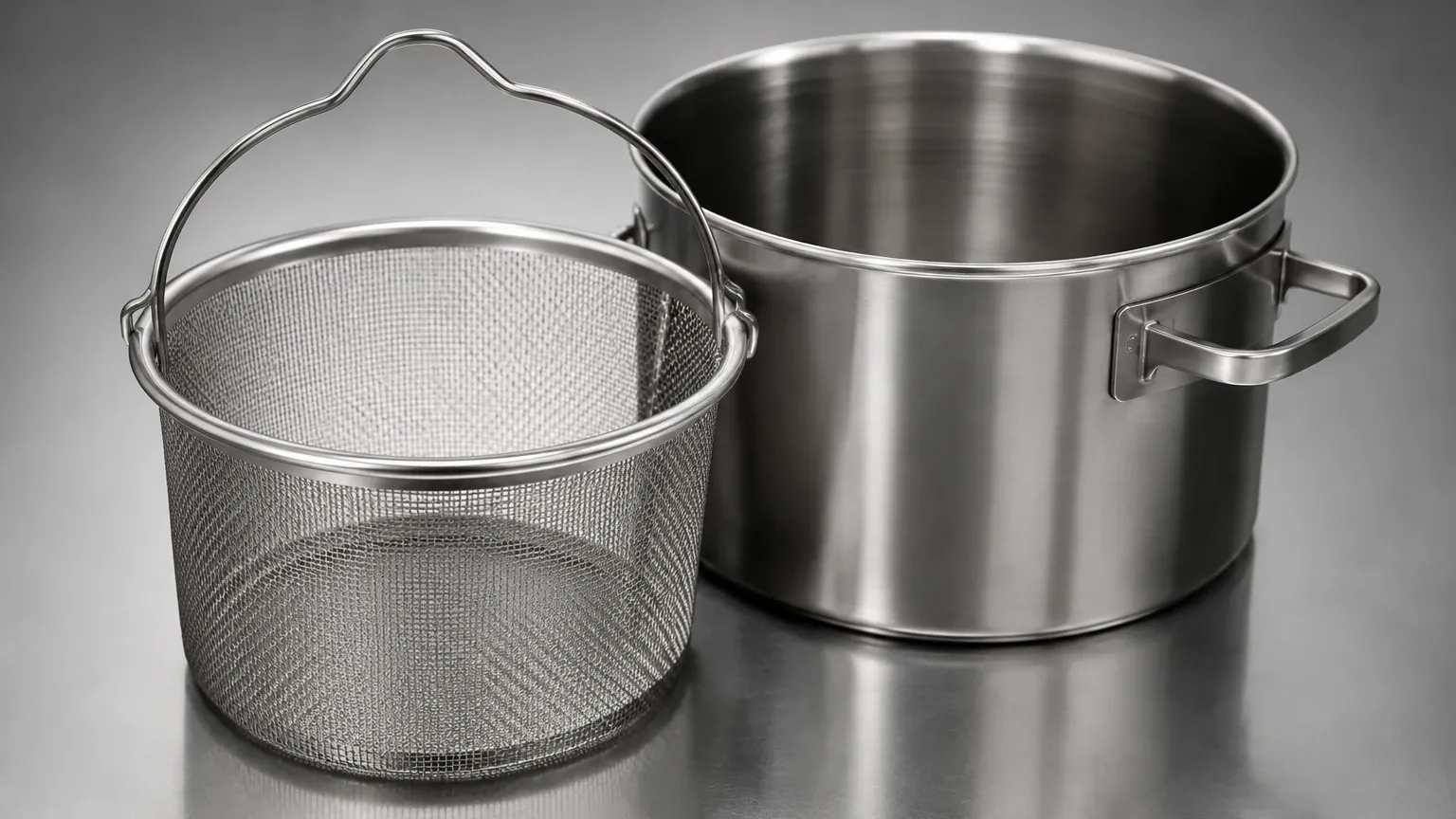
Strainer Basket with Pot
In industrial fluid handling, the protection of downstream equipment is a primary engineering concern. Whether managing high-viscosity chemicals, food-grade liquids, or hydraulic fluids, the presence of particulate matter can lead to catastrophic pump failure, valve scoring, and compromised product quality. A technical solution widely adopted across these sectors is the integrated strainer basket with pot assembly. This configuration, consisting of a robust outer housing (the pot) and a removable internal filtration element (the basket), provides a high-capacity method for removing solids from liquid streams.
For engineers and procurement professionals, selecting the correct Strainers & Baskets involves more than simply matching pipe sizes. It requires a deep understanding of flow dynamics, material compatibility, and the mechanical stresses placed on the filtration media during operation. As a specialized manufacturer, Kaifil focuses on providing precision-engineered stainless steel solutions that meet these rigorous industrial standards.
Understanding the Strainer Basket and Pot Assembly
The term "strainer basket with pot" typically refers to a simplex or duplex basket strainer where the "pot" serves as the pressure vessel or housing. Unlike Y-strainers, which are often used for smaller debris loads and permanent installations, the basket-and-pot design is engineered for applications requiring high dirt-holding capacity and frequent cleaning.
The pot is the stationary component of the system, plumbed directly into the pipeline via flanged, threaded, or socket-weld connections. Its internal volume is designed to house a large-surface-area basket. The basket itself is the sacrificial or cleanable component that intercepts particles. In industrial environments, the synergy between the pot's internal geometry and the basket's mesh profile determines the overall efficiency of the filtration process.
One of the primary advantages of this design is the top-loading capability. By removing a bolted or quick-release cover from the pot, the operator can lift the strainer basket out for cleaning without dismantling the piping. This reduces downtime and ensures that the seal integrity of the main line remains undisturbed.
Engineering Specifications for Industrial Pots and Baskets
When evaluating a strainer basket with pot for an industrial application, several mechanical specifications must be prioritized. The housing must be rated for the maximum operating pressure and temperature of the system, often adhering to ASME or DIN standards.
Housing Design and Closure Types
For many chemical and pharmaceutical applications, the method of closure on the pot is critical. Bolted covers are standard for high-pressure environments where a secure, high-torque seal is required. However, in food and beverage or water treatment sectors where frequent cleaning is necessary, quick-opening covers (such as swing bolts or V-band clamps) are preferred to minimize labor costs.
Basket Support and Sealing
A common failure point in low-quality strainers is "bypass," where fluid escapes around the edges of the basket rather than passing through the mesh. A high-performance strainer basket with pot features a precision-machined seat or an O-ring seal at the basket rim. This ensures that 100% of the fluid is directed through the filtration media. Furthermore, for high-viscosity fluids, the basket must be reinforced with a perforated metal backup to prevent the fine wire mesh from collapsing under the differential pressure.
Material Integrity and Corrosion Resistance in Filtration
Material selection is perhaps the most critical factor in ensuring the longevity of a strainer basket with pot. In industrial filtration, stainless steel is the gold standard due to its mechanical strength and resistance to various forms of chemical attack.
* Stainless Steel 304: This is the most common material for general industrial use, offering excellent durability and resistance to oxidation. It is suitable for water treatment, cooling systems, and many food-processing applications.
* Stainless Steel 316/316L: For more demanding environments, such as chemical processing or marine applications, SS316 is required. The addition of molybdenum provides superior resistance to chlorides and pitting corrosion. The "L" (low carbon) variant is often specified for components that require extensive welding to prevent carbide precipitation.
* Specialty Alloys: In highly aggressive environments involving concentrated acids or high-temperature steam, engineers may specify Monel, Hastelloy, or Duplex stainless steels.
At Kaifil, the focus remains on high-grade stainless steel fabrication, ensuring that both the pot and the internal basket can withstand the specific pH levels and chemical compositions of the process fluid. Surface finishes also play a role; electropolishing is frequently used in pharmaceutical contexts to remove surface imperfections where bacteria could proliferate.
Optimizing Flow Dynamics and Pressure Management
The performance of a strainer basket with pot is measured by its ability to remove contaminants while maintaining a low pressure drop (Delta P). Every filtration element introduces some resistance to flow. An improperly sized strainer can lead to cavitation in pumps or insufficient flow to downstream processes.
The Open Area Ratio
Engineers use the "Open Area Ratio" (OAR) to determine the efficiency of a basket strainer. This is the ratio between the total open area of the basket mesh and the cross-sectional area of the inlet pipe. A well-designed industrial strainer should typically have an OAR of at least 6:1. This high ratio ensures that even as the basket begins to collect debris, there is still enough clear passage to prevent a significant spike in pressure drop.
Micron Rating vs. Mesh Count
Selecting the right filtration fineness is a balance between protection and maintenance.
* Mesh Count: Refers to the number of openings per linear inch. A higher mesh count means finer filtration.
* Micron Rating: Refers to the actual size of the particles that will be trapped.
If the mesh is too fine for the application, the strainer basket with pot will clog too quickly, necessitating constant cleaning. If it is too coarse, harmful particles may pass through and damage sensitive equipment. Kaifil provides customized mesh configurations to hit the exact balance required for specific industrial viscosities and particle size distributions.
Customization and OEM Solutions for Specific Applications
Standard off-the-shelf strainers often fail to meet the unique constraints of specialized industrial plants. This is where OEM and customized manufacturing become essential. A strainer basket with pot can be tailored in several ways:
1. Dimensional Customization: Pots can be fabricated with offset inlets and outlets to fit into tight piping envelopes or existing infrastructure.
2. Multi-Stage Filtration: For applications with a wide range of particle sizes, a "basket-within-a-basket" design can be used. A coarse outer basket protects a fine inner mesh, extending the service life between cleanings.
3. Magnetic Inserts: In hydraulic and machining applications, magnetic rods can be suspended within the basket to capture fine ferrous particles that might otherwise pass through a standard mesh.
4. Heating Jackets: For fluids that solidify at room temperature (like resins or certain food products), the pot can be equipped with a steam or thermal oil jacket to maintain the fluid's viscosity during filtration.
By working closely with a manufacturer like Kaifil, engineering teams can ensure that the filtration component is an optimized part of the larger system rather than a bottleneck.
Maintenance Protocols for Extending Component Lifespan
The total cost of ownership for a strainer basket with pot is heavily influenced by how easily it can be maintained. A neglected strainer not only risks equipment damage but also increases energy consumption as pumps work harder to overcome the pressure drop of a clogged basket.
Monitoring Differential Pressure
The most effective way to manage maintenance is by installing differential pressure gauges on the pot. By measuring the pressure at the inlet versus the outlet, operators can pinpoint exactly when the basket has reached its holding capacity. Typically, a basket should be cleaned when the pressure drop reaches 5-10 psi over the clean-start pressure.
Cleaning Procedures
Stainless steel baskets are designed for reuse. Depending on the contaminant, cleaning may involve:
* Manual Rinsing: Suitable for large, non-adhesive debris.
* Ultrasonic Cleaning: Essential for fine meshes where particles are lodged deep within the wire weave.
* Chemical Soaking: Used when the buildup consists of scale, resins, or biological matter that cannot be removed mechanically.
Regular inspection of the pot's gaskets and seals is also mandatory. Even a minor leak in the cover gasket can lead to environmental hazards or system pressure loss.
Procurement Checklist for Engineering Teams
Before finalizing a purchase order for a strainer basket with pot, purchasing teams and engineers should confirm the following technical details with the manufacturer:
* Fluid Characteristics: Viscosity, temperature, and chemical composition.
* Flow Rate: Minimum, normal, and maximum flow (GPM or m³/h).
* Filtration Requirement: Target micron size and the nature of the solids (hard, fibrous, or gelatinous).
* Pressure Rating: Maximum allowable working pressure (MAWP) for the pot housing.
* Connection Type: Compatibility with existing piping (e.g., ANSI 150# Flange, NPT, etc.).
* Materials of Construction: Compatibility of the housing, basket, and seals (Viton, EPDM, PTFE) with the process fluid.
By addressing these factors, facilities can avoid the common pitfalls of improper filtration selection, such as premature basket failure or excessive pressure loss.
Conclusion
The strainer basket with pot remains a cornerstone of industrial fluid management. Its ability to provide high-capacity filtration, ease of maintenance, and robust protection for expensive downstream machinery makes it an indispensable component in modern manufacturing and processing plants.
Whether you are designing a new system or upgrading an existing one, choosing a partner with technical expertise in stainless steel fabrication is vital. Kaifil’s commitment to quality and precision ensures that every filtration solution—from standard Strainers & Baskets to highly customized OEM components—delivers reliable, long-term performance in the most demanding industrial environments. By focusing on the engineering fundamentals of material science, flow dynamics, and mechanical design, Kaifil helps global industries achieve optimized filtration efficiency and reduced operational risk.
