


#8 Wire Screen
In industrial filtration and separation, selecting the correct mesh size is a critical engineering decision that directly impacts throughput, product purity, and equipment longevity. The #8 wire screen is a widely utilized specification in both woven wire mesh and specialized filtration components. Defined by having eight openings per linear inch, this mesh size serves as a versatile boundary between coarse scalping and fine filtration.
For engineers and procurement professionals, understanding the technical nuances of #8 wire screen—including its material properties, structural variations, and performance under pressure—is essential for optimizing industrial processes. While standard woven mesh is common, many high-stress applications require the enhanced durability and non-clogging characteristics of Wedge Wire Screens, which can be engineered to provide equivalent filtration performance with significantly higher mechanical strength.
Understanding #8 Wire Screen Specifications and Mesh Geometry
The term "#8 wire screen" primarily refers to the mesh count. In a standard square weave, this means there are eight wires and eight openings per inch in both the warp and shute directions. However, the mesh count alone does not define the filtration capability; the wire diameter is the second crucial variable.
Aperture and Open Area
For a typical industrial #8 mesh, the wire diameter often ranges from 0.025 inches (0.635 mm) to 0.047 inches (1.19 mm).
1. Aperture (Opening Size): If a #8 screen uses a 0.032-inch wire, the resulting opening is approximately 0.093 inches (2.36 mm). This size is ideal for removing larger particulates while allowing high flow rates of liquids or gases.
2. Open Area Percentage: This is the ratio of the area of the openings to the total area of the screen. A higher open area reduces pressure drop but may compromise the structural integrity of the screen under heavy loads. For a standard #8 mesh, the open area typically falls between 50% and 65%.
When specifying these components, engineers must balance the need for a specific micron rating with the physical demands of the application. In high-pressure hydraulic systems or heavy-duty chemical processing, a standard woven #8 wire screen may suffer from wire migration or deformation, leading to a loss of filtration accuracy. In such cases, switching to a rigid filtration medium like wedge wire is often the recommended path.
Material Selection: Stainless Steel vs. Specialty Alloys
The environment in which the #8 wire screen operates dictates the material requirements. Because these screens are often exposed to corrosive fluids, high temperatures, or abrasive solids, material durability is paramount.
Stainless Steel 304
SS304 is the industry standard for general-purpose applications. It offers excellent corrosion resistance in most atmospheric conditions and is widely used in food and beverage processing due to its ease of cleaning and sanitization. It provides a cost-effective solution for non-acidic environments.
Stainless Steel 316 and 316L
For chemical processing, pharmaceutical manufacturing, and marine environments, SS316 is the preferred choice. The addition of molybdenum enhances resistance to pitting and crevice corrosion, particularly in chloride-rich environments. The low-carbon version, 316L, is used when welding is required to prevent carbide precipitation, ensuring the integrity of the filter housing or support structure.
High-Temperature and Specialty Alloys
In petrochemical or specialized heat-treatment applications, screens may be fabricated from Inconel, Monel, or Hastelloy. These materials maintain their mechanical properties at extreme temperatures and resist aggressive chemical attack that would degrade standard stainless steel. When selecting a #8 wire screen, the total cost of ownership (TCO) should include the expected lifespan of the material versus the initial procurement cost.
Comparing Woven #8 Mesh and Wedge Wire Screens
While a woven #8 wire screen is effective for many applications, it has inherent limitations in industrial settings involving high solids loading or frequent backwashing. This is where Wedge Wire Screens provide a superior engineering alternative.
Structural Integrity
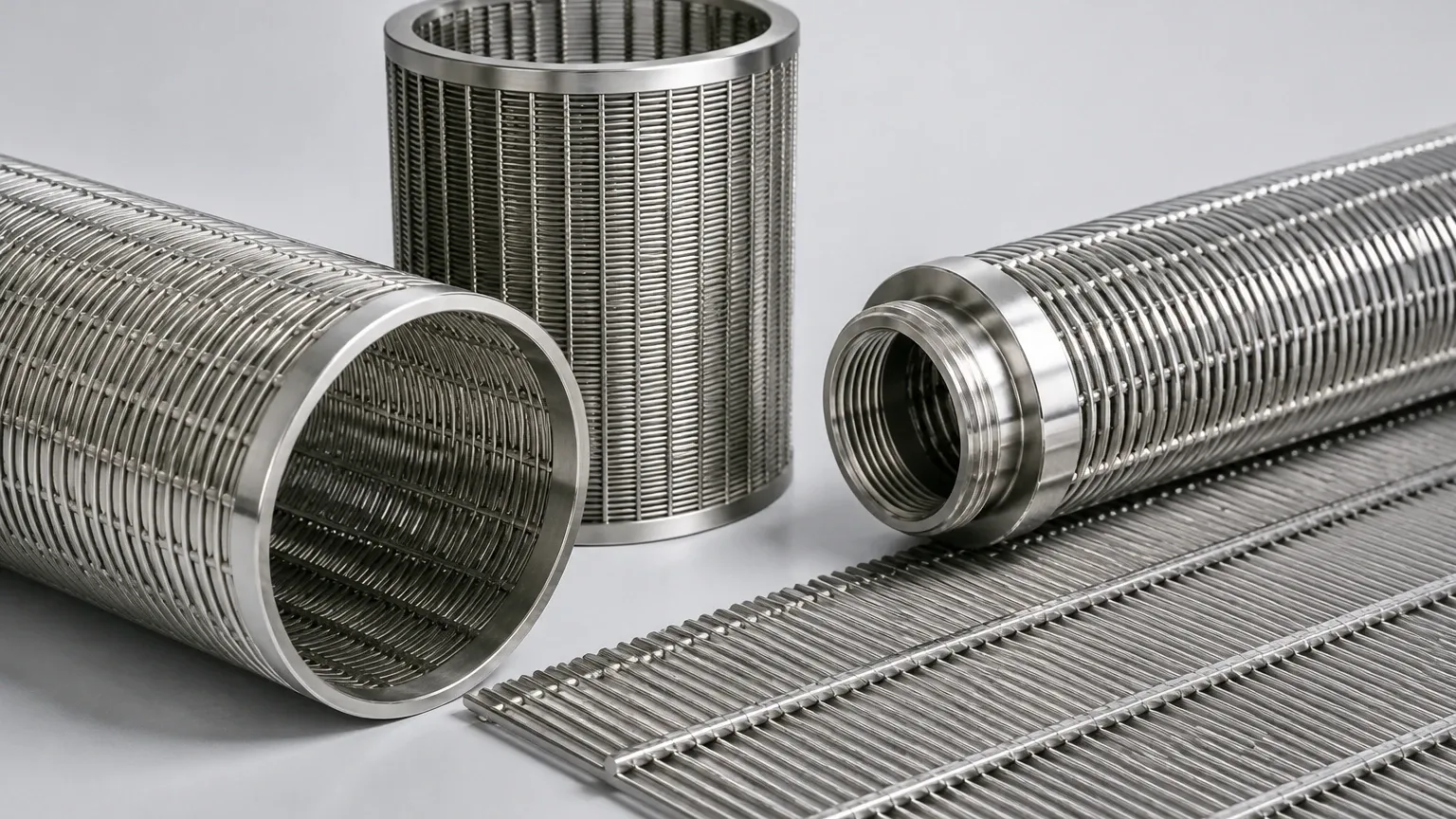
Woven mesh relies on the interlocking of wires, which can shift under high differential pressure. Wedge wire, conversely, consists of V-shaped profile wires resistance-welded onto support rods. This creates a rigid, non-moving structure that can withstand significantly higher mechanical stress without deforming the filtration apertures.
Clogging and Blinding
Woven wire mesh has "dead zones" where the wires intersect, which can trap particles and lead to blinding (clogging). Wedge wire features a continuous slot design with a V-shaped profile that widens inwardly. This means that any particle small enough to pass through the surface slot will continue through the screen without getting stuck, making it ideal for self-cleaning systems and automatic backwash filters.
Effective Cleaning
Because of the smooth surface and V-profile, wedge wire is much easier to clean via mechanical scraping or back-pulsing. For industries like pulp and paper or wastewater treatment, where downtime for filter cleaning is costly, the transition from a woven #8 wire screen to a wedge wire equivalent can result in substantial operational savings.
Engineering Considerations for High-Performance Filtration
When integrating a #8 wire screen into a system, several engineering factors must be evaluated to ensure performance expectations are met.
Pressure Drop (ΔP)
The pressure drop across the screen is a function of the open area, the fluid viscosity, and the flow velocity. A #8 mesh generally offers low resistance, but as solids accumulate on the surface, the ΔP will rise. Designers must specify the maximum allowable pressure drop before the screen requires cleaning or replacement to prevent pump cavitation or system failure.
Flow Distribution
Uniform flow across the entire surface of the screen is necessary to prevent localized wear and premature blinding. In large-scale vessels, internal baffles or flow distributors are often used in conjunction with the screen to ensure the entire surface area is utilized effectively.
Mechanical Support
For larger diameter filters, a #8 wire screen may require a perforated metal backup or a heavy-duty support grid. Without adequate support, the mesh may bulge or tear under the weight of the filter cake or the force of the fluid flow. Custom-manufactured filter cartridges often incorporate these support layers to provide a robust, multi-stage filtration solution.
Industrial Applications and Performance Expectations
The #8 wire screen is found in a diverse range of industries, each with specific performance requirements.
* Food and Beverage: Used for scalping large particles from juices, syrups, or oils. The screen must meet FDA standards for food contact and be capable of withstanding Clean-in-Place (CIP) cycles.
* Chemical Processing: Acts as a primary separator for catalysts or raw materials. In these environments, chemical compatibility and resistance to thermal expansion are the primary concerns.
* Water Treatment: Used in intake screens to protect downstream pumps and membranes from debris. In these high-volume applications, the durability of the screen against abrasion from sand and silt is critical.
* Hydraulic Systems: Serves as a coarse suction strainer to prevent large contaminants from entering the pump. Reliability is the key metric here, as a screen failure can lead to catastrophic pump damage.
In each of these sectors, the #8 wire screen must provide consistent filtration accuracy. If the mesh count is inconsistent or the wire diameter fluctuates due to poor manufacturing tolerances, the entire process efficiency is compromised.
Maintenance, Replacement Cycles, and Cost Considerations
The longevity of a #8 wire screen depends on the abrasiveness of the media, the frequency of cleaning, and the mechanical loads applied.
Inspection and Replacement
Regular inspection for wire thinning, broken welds, or mesh distortion is necessary. In abrasive applications, such as mining or aggregate processing, the wires will eventually wear down, increasing the aperture size and allowing larger particles to pass. Establishing a proactive replacement cycle based on historical wear data helps avoid unscheduled downtime.
Total Cost of Ownership (TCO)
While a standard woven #8 wire screen may have a lower initial purchase price, the TCO can be higher if it requires frequent replacement or manual cleaning. Investing in a high-quality, precision-manufactured stainless steel filter or a wedge wire alternative can reduce long-term costs by extending service life and improving process uptime.
Customization Options
Manufacturers like Kaifil provide customized filtration solutions that go beyond off-the-shelf mesh. This includes custom-shaped cartridges, reinforced edges, and specific alloy selections tailored to unique industrial challenges. When ordering, it is important to confirm the exact dimensions, required micron rating (or mesh count), and the specific environmental conditions the screen will face.
Conclusion: Selecting the Right Filtration Component
The #8 wire screen is a fundamental component in industrial separation, but its effectiveness depends on precise specification and quality manufacturing. Whether utilizing a standard woven mesh for light-duty applications or upgrading to Wedge Wire Screens for demanding environments, engineers must prioritize structural integrity and material compatibility. By understanding the relationship between mesh geometry, flow dynamics, and maintenance requirements, purchasing teams can ensure they receive filtration components that deliver reliable, long-term performance in the field.
