


Wedge Wire Screen Deutsch
In the landscape of industrial filtration and separation, precision is the primary metric of performance. For engineers and procurement specialists operating within the German-speaking industrial sectors—or those adhering to rigorous European engineering standards—the term "wedge wire screen deutsch" represents more than just a linguistic preference. It signifies a demand for high-quality, durable, and technically compliant filtration components that meet the exacting requirements of modern manufacturing. Wedge wire screens, characterized by their V-shaped profile wires and non-clogging design, are essential components in processes ranging from food processing to chemical refining.
Understanding the technical nuances of Wedge Wire Screens is critical for ensuring operational efficiency and minimizing downtime. This guide examines the engineering principles, material standards, and selection criteria necessary for integrating these components into industrial systems, with a particular focus on the specifications relevant to the high-standard European market.
Technical Fundamentals of Wedge Wire Construction
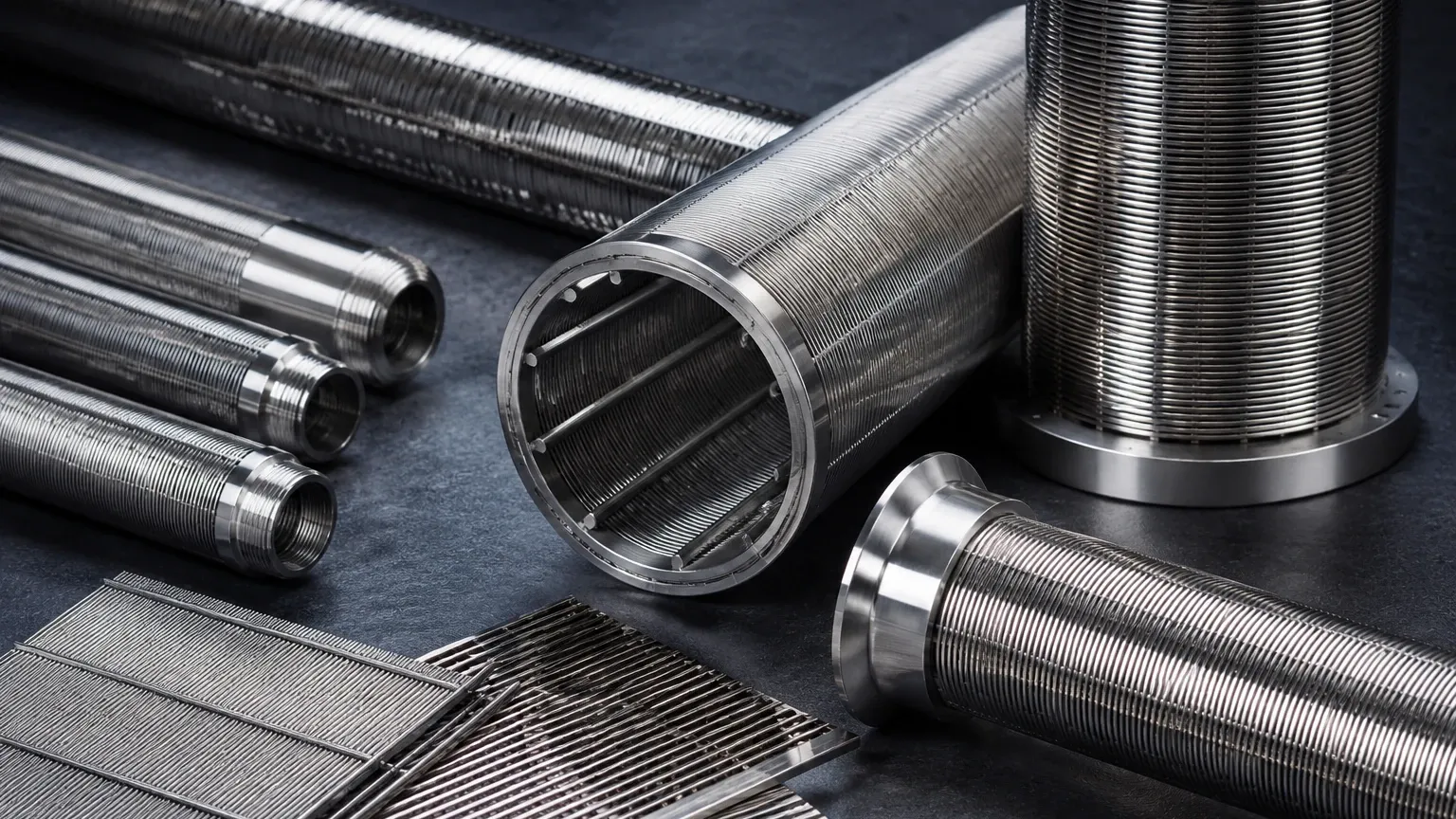
Wedge wire screens are fabricated through a process of resistance welding where V-shaped profile wires are fused to support rods at every intersection. This construction method creates a robust, three-dimensional structure that differs significantly from woven wire mesh or perforated metal.
The V-Shaped Profile
The defining characteristic of a wedge wire screen is the V-shaped profile of the surface wire. In a filtration context, the narrowest part of the opening is at the surface, with the gap widening toward the downstream side. This geometry ensures that particles only slightly smaller than the slot width pass through without becoming wedged in the screen. This "self-cleaning" or non-clogging property is why wedge wire is preferred for continuous industrial processes where mechanical cleaning or backwashing is required.
Slot Width Precision
For technical applications in the DACH region (Germany, Austria, Switzerland), slot width precision is paramount. Slot openings can range from as small as 20 microns to several millimeters, depending on the application. The consistency of these slots across the entire surface area determines the filtration efficiency and the reliability of the separation process. Engineers must specify tolerances that align with their specific process requirements to prevent bypass or premature blinding.
Material Standards and European Designations
When sourcing wedge wire screen components for the German market, understanding material equivalence is vital. While AISI 304 and 316L are common international designations, European projects often reference EN standards.
1. 1.4301 (X5CrNi18-10): Equivalent to AISI 304, this is the standard stainless steel used for general industrial applications. It offers good corrosion resistance and mechanical strength for non-aggressive environments.
2. 1.4404 (X2CrNiMo17-12-2): Equivalent to AISI 316L, this molybdenum-bearing stainless steel is essential for applications involving chlorides or acidic environments, such as chemical processing or marine water treatment.
3. Duplex Steels (e.g., 1.4462): For extreme environments requiring both high mechanical strength and superior pitting resistance, duplex stainless steels are utilized.
Selecting the correct material grade is not merely about corrosion resistance; it also impacts the screen's lifespan and the total cost of ownership. In the food and beverage industry, for instance, the use of 1.4404 is often mandated to ensure compliance with hygiene standards and to withstand aggressive Clean-in-Place (CIP) chemicals.
Engineering Considerations for Flow and Pressure
Integrating Wedge Wire Screens into a hydraulic or pneumatic system requires a detailed analysis of flow dynamics. Engineers must balance the required filtration fineness with the allowable pressure drop across the screen.
Open Area Calculation
The "open area" of a screen is the ratio of the total slot area to the total surface area. A higher open area results in a lower pressure drop and higher flow capacity. However, increasing the open area often requires using thinner profile wires, which can reduce the mechanical strength of the screen. The formula for calculating open area in wedge wire is typically:
Open Area % = (Slot Width / (Slot Width + Wire Width)) x 100
In high-pressure applications, such as hydraulic oil filtration or deep-well water extraction, the support rod spacing and wire profile must be engineered to withstand the differential pressure without deforming.
Mechanical Load and Structural Integrity
Unlike disposable filter cartridges, wedge wire screens are often intended as permanent or semi-permanent structural components. They may be subjected to high mechanical loads, vibration, or thermal cycling. When evaluating a "wedge wire screen deutsch" specification, engineers should confirm the collapse strength and burst pressure ratings. These values are determined by the combination of wire profile, support rod frequency, and the welding quality at the contact points.
Key Applications in High-Precision Industries
The versatility of wedge wire allows it to be used across diverse sectors, each with its own set of technical challenges.
Food and Beverage Processing
In the brewing industry, wedge wire screens are used in lauter tun bottoms for wort separation. The precision of the slot width ensures efficient drainage while retaining the grain bed. Similarly, in sugar processing and vegetable oil filtration, the smooth surface of the wedge wire allows for easy removal of filter cakes, maintaining high throughput.
Chemical and Petrochemical Refining
Refineries utilize wedge wire for catalyst bed supports and reactor internals. The ability of stainless steel wedge wire to maintain structural integrity at high temperatures and in chemically aggressive environments makes it superior to synthetic media. In these applications, the exactness of the "wedge wire screen deutsch" standard ensures that the components can interface perfectly with existing vessel geometries.
Water Treatment and Intake Systems
For municipal and industrial water treatment, wedge wire is used in intake screens to protect pumps and turbines from debris while minimizing the impact on aquatic life. The low-velocity flow through the large open area of these screens prevents impingement, which is a critical environmental and operational consideration.
Selection Criteria and Procurement Guidance
When purchasing Wedge Wire Screens for professional industrial use, technical buyers should move beyond basic dimensions and focus on the following evaluation criteria:
* Slot Consistency: Request data on the standard deviation of slot widths. High-precision applications require tight tolerances to ensure consistent particle retention.
* Surface Finish: For food-grade or pharmaceutical applications, the surface roughness (Ra value) must be specified. Electropolishing may be required to eliminate microscopic burrs and improve corrosion resistance.
* Welding Integrity: The strength of a wedge wire screen lies in its welds. Inadequate penetration or brittle welds can lead to wire displacement under pressure. Manufacturers should provide documentation on their welding processes and quality control measures.
* Customization Capabilities: Industrial systems rarely use off-the-shelf sizes. The supplier must be able to provide custom diameters, lengths, and mounting hardware (such as flanges, threaded fittings, or reinforcement rings) to ensure seamless integration.
Maintenance, Cleaning, and Longevity
One of the primary advantages of stainless steel wedge wire is its durability. However, maximizing the service life of these components requires an appropriate maintenance strategy.
Cleaning Methods
Because of the V-shaped slot, wedge wire is highly receptive to backwashing (reversing the flow to dislodge particles). In processes involving sticky or fibrous materials, mechanical cleaning with brushes or scrapers is possible without damaging the screen surface, provided the wire profile is robust enough. Ultrasonic cleaning is also an effective method for removing fine particulate matter from the slots of small-diameter filter cartridges.
Replacement Cycles
While wedge wire screens are designed for longevity, they are not indestructible. Erosion from abrasive particles or chemical degradation can eventually widen the slots or weaken the support structure. Regular inspection of the slot widths using feeler gauges or optical measurement tools is recommended. Establishing a baseline for pressure drop across a clean screen allows operators to identify when fouling or structural failure is occurring.
Conclusion: Achieving Reliable Filtration Performance
Specifying a "wedge wire screen deutsch" standard reflects a commitment to engineering excellence and operational reliability. By focusing on material science, hydraulic efficiency, and precise manufacturing tolerances, engineers can ensure that their filtration systems perform predictably under demanding industrial conditions.
Whether the application involves the delicate separation of solids in a pharmaceutical process or the rugged demands of a wastewater treatment plant, the choice of wedge wire screen is a foundational decision. Working with an experienced manufacturer that understands these technical requirements allows for the development of customized solutions that optimize performance and minimize the total cost of ownership. For detailed technical specifications and to explore customization options for your specific industrial application, you can Review product options and application support to ensure your filtration components meet the highest standards of precision and durability.
