


Z Wires
In the field of industrial filtration and solids-liquid separation, the structural integrity and precision of the screening media are paramount. Among the various configurations used to enhance the performance of Wedge Wire Screens, the integration of specialized profiles such as z wires plays a critical role. These components are not merely structural additions; they represent a specific engineering approach to managing high-pressure loads, abrasive materials, and complex flow dynamics in demanding industrial environments.
For engineers and procurement professionals, understanding the technical nuances of z wires is essential for optimizing filtration efficiency and extending the service life of equipment. This article examines the technical specifications, material considerations, and application-specific benefits of utilizing z wires within advanced filtration systems.
The Role of Z Wires in Industrial Screening Technology
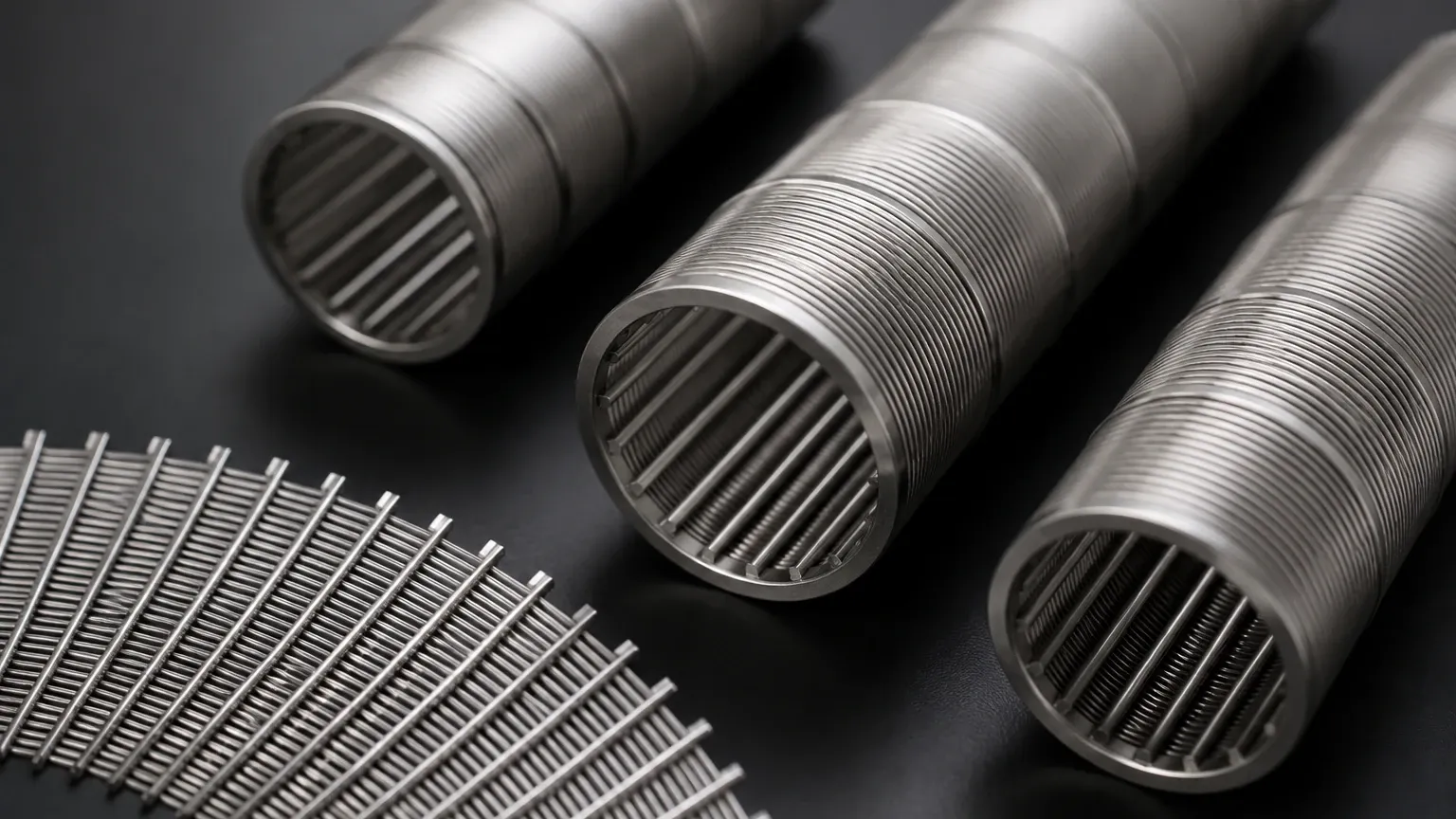
Wedge wire technology relies on the precise arrangement of surface wires and support rods. While standard V-shaped wires are the industry norm for the screening surface, the internal architecture often requires specialized profiles to maintain slot consistency under heavy mechanical stress. Z wires are frequently employed as either support members or specialized profile wires designed to provide a higher degree of interlocking stability than traditional round or rectangular rods.
The geometry of z wires allows for a unique distribution of force. In high-vibration environments, such as those found in mineral processing or large-scale wastewater treatment, the "Z" shape provides multiple points of contact for resistance welding. This creates a more rigid matrix, ensuring that the slot openings—the gaps between the surface wires—remain uniform even when subjected to fluctuating hydraulic pressures or heavy particulate loads.
Technical Specifications and Profile Geometry
The performance of a filtration component is dictated by its geometric precision. When incorporating z wires into a screen assembly, several technical factors must be evaluated:
Profile Dimensions and Tolerances
The height, width, and angle of the z-profile must be manufactured to tight tolerances. In precision filtration, even a deviation of a few microns in the support structure can lead to "slot drifting," where the gaps between surface wires widen or narrow. This inconsistency results in bypass (where oversized particles pass through) or premature blinding (where particles become trapped in the screen).
Resistance Welding Integrity
Industrial wedge wire is typically constructed using an automated resistance welding process. The flat surfaces of the z wires provide an ideal interface for this process. By maximizing the weld area at each intersection, manufacturers can produce a screen that resists delamination and fatigue. For B2B buyers, confirming the weld quality and the consistency of the z-profile is a primary step in quality assurance.
Open Area Calculations
While z wires provide structural reinforcement, they must be positioned to minimize interference with the total open area. The open area determines the flow capacity and pressure drop across the screen. Engineering a balance between the frequency of z-wire supports and the required flow rate is a core challenge in custom filter design.
Material Considerations for Z Wire Assemblies
Material selection is the most significant factor in determining the longevity of z wires in industrial applications. Because these components are often exposed to corrosive fluids or abrasive slurries, high-grade alloys are standard. Kaifil and other specialized manufacturers typically utilize various grades of stainless steel to meet these demands.
1. AISI 304/304L: The standard choice for general industrial applications, offering good corrosion resistance and excellent weldability. It is suitable for food and beverage processing and basic water treatment.
2. AISI 316/316L: Containing molybdenum, this grade offers superior resistance to chlorides and acids. It is the preferred material for chemical processing, pharmaceutical manufacturing, and marine environments.
3. Duplex Stainless Steels: For extreme environments involving high pressure and highly corrosive media, duplex steels provide nearly double the yield strength of standard austenitic grades and exceptional resistance to stress corrosion cracking.
4. Specialty Alloys: In specific cases involving high temperatures or unique chemical profiles, alloys such as Monel or Hastelloy may be required for the z wires and the surrounding screen assembly.
Selecting the correct material involves evaluating the pH levels, temperature ranges, and the presence of abrasive solids in the process stream. Using a lower-grade material for the internal z wires than for the surface mesh can lead to galvanic corrosion or structural failure, compromising the entire filtration system.
Performance Benefits: Flow Efficiency and Structural Integrity
The primary engineering objective of using z wires within Wedge Wire Screens is to enhance the performance-to-weight ratio of the filter. There are several distinct performance advantages:
Enhanced Load Bearing
In vertical pressure vessels or large-scale intake screens, the weight of the fluid and the accumulated solids can be immense. The z-profile acts as a structural beam, preventing the screen surface from collapsing or deforming. This is particularly important in backwashing cycles, where the flow direction is reversed at high pressure to clear the screen.
Non-Clogging Characteristics
By maintaining the rigid alignment of the V-shaped surface wires, z wires indirectly support the non-clogging nature of the screen. The two-point contact between the particle and the slot ensures that any particle passing through the surface will continue through the filter without getting wedged. If the support structure (the z wires) were to flex, the slots could temporarily widen and trap particles, leading to permanent blinding.
Vibration Resistance
In applications like vibratory sifters or centrifugal separators, the filtration media is under constant mechanical stress. The interlocking nature of z-wire supports dampens harmonic vibrations that can lead to metal fatigue. This durability reduces the frequency of replacement and minimizes unplanned downtime in a production facility.
Industrial Applications for Z Wire Reinforced Screens
Z wires are utilized across a broad spectrum of industries where standard filtration components fail to meet mechanical requirements.
* Petrochemical and Refining: In reactor internals and catalyst bed supports, screens must withstand high temperatures and heavy catalyst loads. The structural rigidity provided by z wires ensures the catalyst remains contained while allowing for efficient hydrocarbon flow.
* Pulp and Paper: The processing of wood pulp involves high-consistency slurries that are both abrasive and chemically aggressive. Z-wire reinforced cylinders and baskets are used in pressure screens to remove contaminants and knots from the pulp.
* Mining and Aggregate: Screening ores requires media that can handle the impact of heavy rocks and the abrasion of fine silts. Z-wire structures provide the necessary impact resistance for dewatering and sizing screens.
* Food and Beverage: In mash tuns for brewing or juice extraction systems, the screens must be easy to clean (CIP – Clean-In-Place) and structurally sound enough to support the weight of the grain or fruit bed. The smooth surface of wedge wire combined with z-wire support meets these hygienic and structural needs.
Critical Selection Criteria for Engineers and Procurement
When specifying z wires for a filtration project, technical professionals should confirm several key parameters to ensure the component is fit for purpose. Relying on generic specifications often leads to premature failure or suboptimal flow.
1. Slot Width Precision
The slot width must be matched to the minimum particle size that needs to be retained. For z-wire reinforced screens, it is vital to specify the tolerance of these slots. For example, a 100-micron slot with a +/- 5-micron tolerance requires much tighter manufacturing control over the support z wires than a standard aggregate screen.
2. Differential Pressure (ΔP) Limits
Engineers must calculate the maximum expected differential pressure across the screen. This includes both the operational ΔP and the maximum ΔP during a surge or a blocked-filter scenario. The spacing and thickness of the z wires should be engineered to withstand these forces without permanent deformation.
3. Surface Finish and Treatment
In industries like pharmaceuticals or food processing, the surface finish of the z wires and the screen is critical. Options such as electropolishing or passivating the stainless steel can improve corrosion resistance and reduce the adhesion of organic materials, making cleaning more effective.
4. Connection and Framing Details
How the z-wire assembly integrates into the larger machine is often overlooked. Procurement teams should confirm the requirements for end flanges, reinforcement rings, or custom framing. A high-quality filter element is useless if it cannot be sealed properly within the housing.
Installation and Maintenance Best Practices
To maximize the ROI of z-wire reinforced filtration components, proper installation and maintenance protocols must be followed. Unlike disposable mesh filters, stainless steel wedge wire components are long-term assets.
* Alignment during Installation: Ensure that the screen is seated correctly within the housing. Misalignment can create localized stress points on the z-wire supports, leading to premature cracking.
* Monitoring Pressure Drop: Continuous monitoring of the pressure drop across the filter is the best way to determine when cleaning is required. A sudden drop in ΔP may indicate a structural failure or a bypass, while a steady increase indicates the need for a cleaning cycle.
* Cleaning Protocols: Use compatible chemical cleaning agents or ultrasonic cleaning for fine-slotted screens. Avoid mechanical scraping with tools harder than the stainless steel, as this can damage the wire profiles and alter the slot dimensions.
Conclusion
Z wires represent a specialized but essential component in the architecture of high-performance Wedge Wire Screens. By providing superior structural reinforcement, enhancing weld integrity, and ensuring slot consistency, these profiles enable industrial filtration systems to operate under the most grueling conditions.
For B2B buyers and engineers, the focus should remain on material quality, geometric precision, and the specific mechanical demands of the application. Partnering with a manufacturer like Kaifil, who understands the engineering nuances of custom stainless steel filtration, ensures that the resulting components provide the durability and accuracy required for modern industrial processes. Whether in chemical processing, water treatment, or food production, the correct implementation of z-wire technology is a decisive factor in operational efficiency and total cost of ownership.
