


Metal Mesh Filters Near Me: A Technical Guide to Selecting Industrial Filtration Solutions
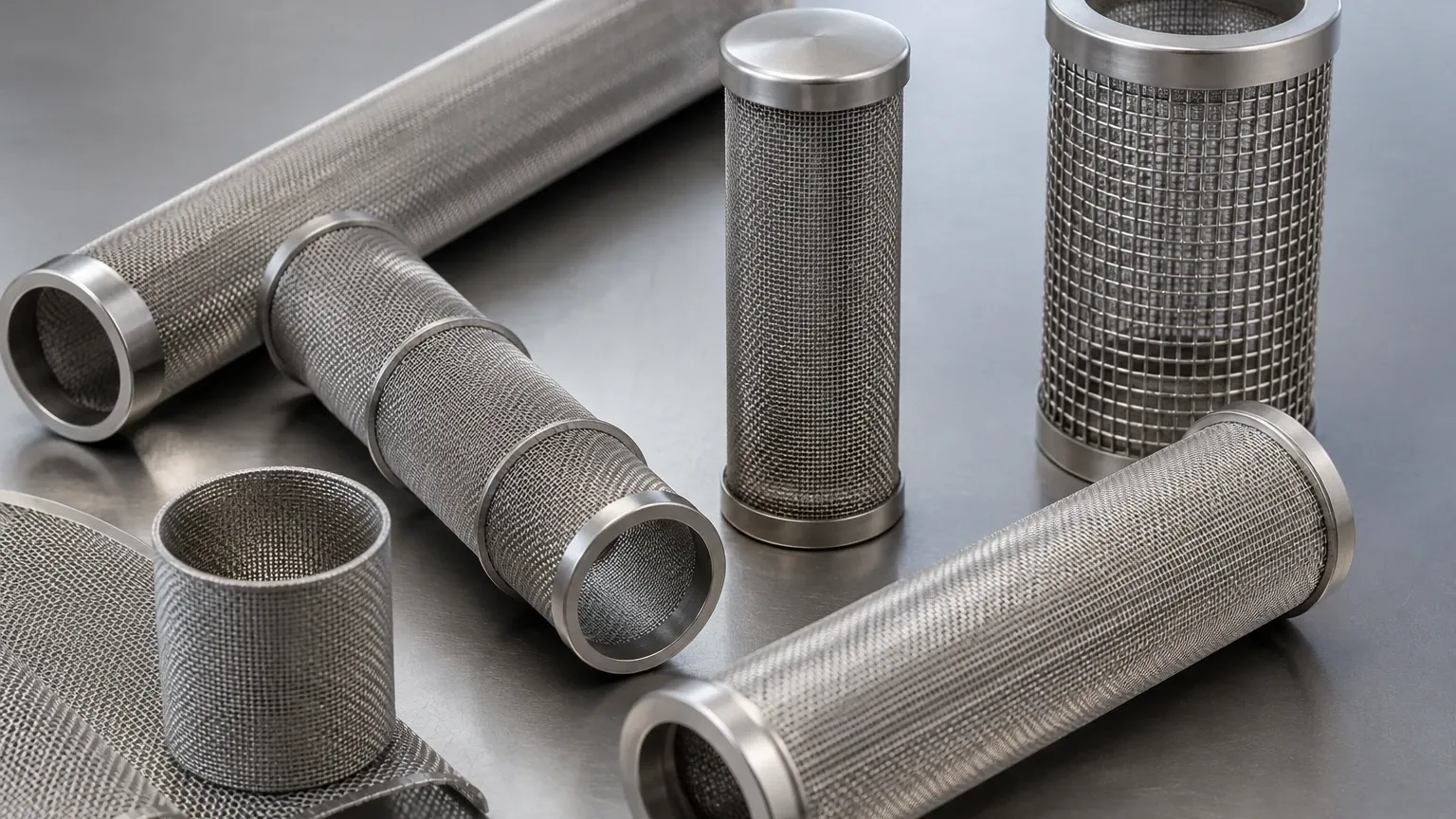
For procurement managers and process engineers, searching for "metal mesh filters near me" is often the first step in addressing an immediate maintenance requirement or a new system design. However, in the context of industrial-grade filtration, proximity is frequently secondary to technical specification, material integrity, and manufacturing precision. While local distributors may offer standard sizes, critical applications in chemical processing, pharmaceuticals, and hydraulic systems often necessitate direct collaboration with specialized manufacturers capable of producing high-performance Wire Mesh Filter Cylinders & Tubes.
This guide examines the engineering considerations behind metal mesh filters, providing technical insights into material selection, structural design, and performance evaluation to help professionals make informed purchasing decisions that go beyond geographical convenience.
Understanding the Search for Local vs. Specialized Sourcing
The intent behind searching for metal mesh filters near me typically falls into two categories: urgent replacement of a failed component or the need for a prototype for a new engineering project. While local availability reduces lead times for off-the-shelf items, industrial filtration often involves unique variables—such as specific flow rates, chemical exposures, and pressure differentials—that generic stock cannot satisfy.
Working with a specialized manufacturer like Kaifil allows for the customization of filtration parameters. In industrial engineering, the "nearest" solution is the one that meets the exact technical threshold of the application, thereby preventing costly downtime or equipment damage caused by bypass or structural failure.
Technical Specifications of Wire Mesh Filter Cylinders & Tubes
Wire mesh filter cylinders and tubes are the workhorses of industrial liquid and gas filtration. Their performance is dictated by the geometry of the mesh, the method of construction, and the support structures used to withstand operational stresses.
1. Weave Types and Filtration Efficiency
The choice of weave significantly impacts the filter’s flow characteristics and particle retention capabilities:
* Plain Weave: The simplest pattern where wires cross over and under each other. It offers high flow rates and is ideal for coarse filtration.
* Twill Weave: Allows for thicker wires and is more durable, suitable for heavier loads.
* Dutch Weave (Plain and Twill): Features a higher density of wires in one direction, creating a tortuous path for particles. This is the standard for precision filtration where high pressure and fine micron ratings (down to 5-10 microns) are required.
2. Structural Reinforcement
Unlike simple mesh screens, industrial filter cylinders must maintain their shape under vacuum or high-pressure conditions. This is achieved through:
* Internal Support Cores: Perforated metal tubes or expanded metal that prevent the mesh from collapsing under external pressure (outside-in flow).
* External Cages: Used for inside-out flow patterns to prevent the mesh from bursting.
* Multi-layer Sintering: Bonding multiple layers of mesh together through heat and pressure to create a single, rigid porous plate that combines fine filtration with high mechanical strength.
Material Selection: Beyond Standard Stainless Steel
When evaluating "metal mesh filters near me," the alloy composition is the most critical factor for longevity. Kaifil specializes in stainless steel solutions, focusing on grades that withstand aggressive environments.
* AISI 304: The standard for general industrial use, providing good corrosion resistance and mechanical properties. It is widely used in food and beverage applications where high-temperature sterilization is required.
* AISI 316L: Containing molybdenum, this grade offers superior resistance to chlorides and acids. It is the preferred material for pharmaceutical and chemical processing where the risk of pitting corrosion is high.
* Specialty Alloys: For extreme environments involving high-concentration acids or seawater, alloys like 904L or Duplex stainless steel may be specified to ensure the filter does not become a point of failure in the process loop.
Engineering Selection Criteria for Industrial Applications
Selecting the right filter requires a quantitative approach. Engineers must define several key parameters before finalizing a purchase order.
Micron Rating: Absolute vs. Nominal
* Nominal Rating: Indicates the ability of the filter to retain a majority of particles of a specific size (usually 60-90%). It is suitable for non-critical pre-filtration.
* Absolute Rating: Refers to the diameter of the largest hard spherical particle that will pass through the filter under specified test conditions. For critical pharmaceutical or hydraulic systems, an absolute rating is mandatory to protect downstream components.
Pressure Drop (ΔP)
The initial pressure drop across a clean filter is a function of the fluid viscosity, flow velocity, and the open area of the mesh. A high initial ΔP reduces the effective service life of the filter, as the terminal pressure (the point at which the filter must be cleaned or replaced) will be reached sooner.
Chemical Compatibility
Engineers must verify that the filter medium, the support structure, and the joining methods (welding or adhesives) are compatible with the process fluid. In high-purity applications, the use of resins or glues is often prohibited, making all-welded stainless steel construction the only viable option.
Manufacturing Precision and Quality Control
The reliability of Wire Mesh Filter Cylinders & Tubes depends heavily on the manufacturing techniques employed. A filter is only as strong as its weakest point, which is typically the longitudinal seam or the end cap connection.
* Welding Integrity: Advanced techniques such as plasma welding or resistance welding ensure a leak-proof seam without introducing contaminants or significantly altering the metallurgy of the stainless steel. This is crucial for maintaining the micron rating across the entire surface of the cylinder.
* Dimensional Accuracy: Precision in the outer diameter (OD) and inner diameter (ID) is essential for a proper seal within the filter housing. Even a millimeter of variance can lead to fluid bypass, rendering the entire filtration stage ineffective.
* Cleanliness Standards: For the food, beverage, and pharmaceutical sectors, filters must be free of oil, grease, and metallic burrs. Ultrasonic cleaning and passivation are standard post-production steps to ensure the components meet hygiene requirements.
Maintenance, Cleaning, and Total Cost of Ownership (TCO)
One of the primary advantages of stainless steel wire mesh filters over disposable polymer cartridges is their cleanability. When evaluating the cost of "metal mesh filters near me," it is important to consider the Total Cost of Ownership rather than just the initial purchase price.
Cleaning Methods
* Backwashing: Reversing the flow of the process fluid to dislodge particles from the surface of the mesh.
* Ultrasonic Cleaning: Using high-frequency sound waves in a cleaning solvent to remove deeply embedded contaminants in Dutch weave or sintered mesh.
* Chemical Cleaning: Using acids or alkalis to dissolve organic or inorganic scaling, provided the filter material is compatible.
Replacement Cycles
While metal filters are durable, they are not infinite. Fatigue from pressure cycling or erosion from high-velocity abrasive particles will eventually necessitate replacement. Monitoring the rate at which the pressure drop increases after each cleaning cycle can help engineers predict the end-of-life for the component, allowing for scheduled maintenance rather than emergency repairs.
Why Direct Manufacturer Collaboration Outperforms Local Sourcing
While a local search for "metal mesh filters near me" might provide a quick fix, it often lacks the engineering depth required for optimized process performance. By working directly with a manufacturer like Kaifil, industrial buyers gain access to:
1. Customized Geometry: Filters can be designed to fit existing housings perfectly, eliminating the need for expensive system modifications.
2. Technical Support: Direct access to engineers who understand the nuances of filtration physics and material science.
3. OEM Capabilities: The ability to produce proprietary designs for equipment manufacturers, ensuring consistent quality and performance for their end-users.
4. Material Traceability: Essential for regulated industries like aerospace and pharmaceuticals, providing documentation that the alloys used meet the specified standards.
Conclusion
In the industrial sector, the search for "metal mesh filters near me" should be viewed as a search for expertise and reliability rather than just physical proximity. High-quality Wire Mesh Filter Cylinders & Tubes are critical components that protect expensive machinery and ensure product purity. By focusing on technical specifications—such as weave type, material grade, and welding quality—engineers can secure filtration solutions that offer superior performance and a lower total cost of ownership. Whether you are in chemical processing, the hydraulic industry, or water treatment, choosing a partner with deep manufacturing experience ensures that your filtration system operates at peak efficiency.
