


9×9 Filter
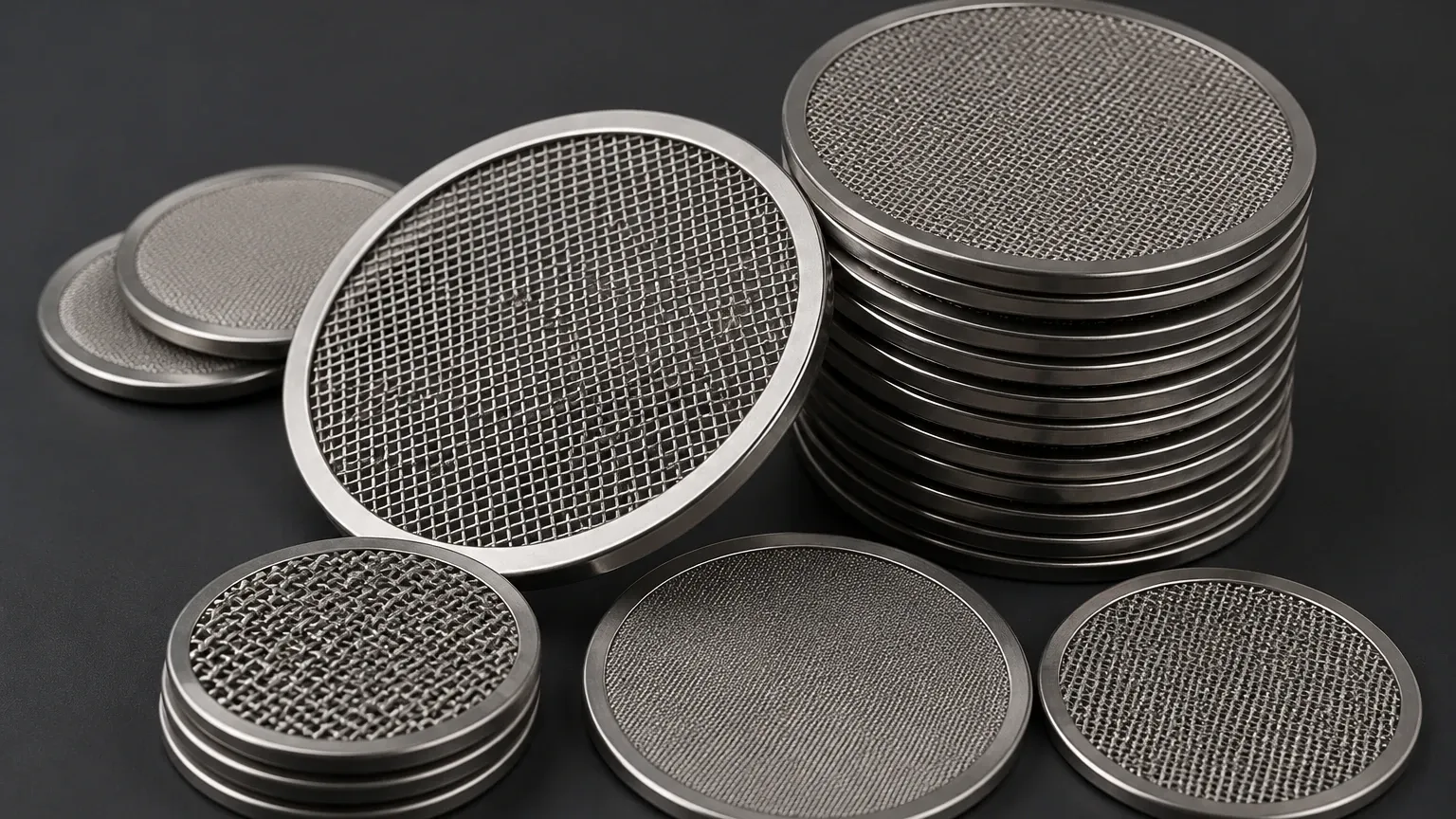
In industrial filtration, the term "9×9 filter" typically refers to a specific grade of woven wire mesh characterized by having nine openings per linear inch in both the warp and weft directions. This coarse mesh configuration is a foundational component in many high-capacity filtration systems, particularly when integrated into Filter Discs & Packs. Understanding the technical specifications, material properties, and mechanical performance of a 9×9 mesh is essential for engineers tasked with optimizing fluid processing or protecting downstream equipment from large-particle contaminants.
As a coarse filtration medium, the 9×9 filter serves various roles, from primary straining in heavy-duty hydraulic systems to providing structural support in multi-layer sintered or bound filter packs. This guide examines the engineering considerations behind 9×9 filters and how they contribute to efficient industrial operations.
Technical Specifications and Mesh Geometry
The performance of a 9×9 filter is dictated by its geometric properties, specifically the relationship between the mesh count, wire diameter, and the resulting clear opening (aperture). In a 9×9 weave, there are nine wires per inch (25.4 mm), which creates a relatively large aperture compared to fine-mesh variants.
Aperture and Open Area
To calculate the aperture size of a 9×9 filter, engineers must subtract the wire diameter from the mesh pitch. For example, if a 9×9 mesh utilizes a wire diameter of 0.035 inches (0.889 mm), the calculation is as follows:
1. Pitch: 1 inch / 9 = 0.1111 inches (2.822 mm)
2. Aperture: 0.1111 – 0.035 = 0.0761 inches (1.933 mm)
This resulting aperture size determines the largest spherical particle that can pass through the mesh. Additionally, the percentage of open area—the ratio of the total area of the openings to the total area of the mesh—is a critical factor for flow rate and pressure drop. A 9×9 filter with a 0.035-inch wire diameter provides approximately 47% open area, allowing for high-volume throughput with minimal resistance.
Weave Types
Most 9×9 filters are produced using a plain weave pattern, where each warp wire crosses alternately over and under each weft wire. This pattern ensures maximum stability and consistent aperture sizes. For specialized applications requiring higher mechanical strength or different surface characteristics, variations such as twilled weaves may be employed, though plain weave remains the standard for this specific mesh count.
Material Selection for Industrial Durability
Because 9×9 filters are often deployed in demanding environments involving high pressures, corrosive chemicals, or extreme temperatures, material selection is paramount. Stainless steel is the industry standard due to its mechanical properties and resistance to oxidation.
Stainless Steel 304
Grade 304 is the most common material for 9×9 filters. It offers excellent corrosion resistance in most atmospheric conditions and is highly cost-effective. It is suitable for applications in food processing, general industrial straining, and water treatment where high concentrations of chlorides are not present.
Stainless Steel 316 and 316L
For more aggressive environments, such as chemical processing or marine applications, Grade 316 is preferred. The addition of molybdenum enhances its resistance to pitting and crevice corrosion, particularly in chloride-rich environments. Grade 316L (low carbon) is often specified for filters that require welding, as it prevents carbide precipitation that can lead to intergranular corrosion.
High-Temperature Alloys
In specialized sectors like polymer extrusion or aerospace, 9×9 filters may be fabricated from Inconel, Monel, or Hastelloy. These alloys maintain their structural integrity at temperatures exceeding 1,000°F (537°C) and provide superior resistance to highly acidic or alkaline media.
The Role of 9×9 Mesh in Filter Discs & Packs
While a single layer of 9×9 mesh can function as a standalone strainer, it is frequently utilized as a component within complex Filter Discs & Packs. In these configurations, the 9×9 filter serves several critical functions:
1. Structural Support
Fine filtration meshes (e.g., 200 mesh or 500 mesh) are physically delicate and can easily deform under high differential pressure. A 9×9 mesh, constructed from thicker wire, acts as a rigid support layer. By placing the fine mesh against the 9×9 layer, the assembly can withstand significantly higher operating pressures without the risk of the fine wires "breaching" or migrating.
2. Drainage and Flow Distribution
In multi-layer packs, the 9×9 mesh acts as a drainage layer. Its large apertures and open area ensure that once the fluid passes through the fine filtration layer, it can move laterally and exit the filter housing with minimal backpressure. This uniform flow distribution prevents localized clogging and extends the service life of the entire pack.
3. Pre-Filtration
When used as the outermost layer in a gradient-density pack, the 9×9 mesh serves as a pre-filter. It captures large debris, scale, and clumps before they reach the finer internal layers. This protects the more expensive fine-mesh components from premature blinding and mechanical damage.
Applications Across Key Industries
The versatility of the 9×9 filter makes it a staple in various industrial sectors. Its ability to handle high flow rates while removing large particulate matter is essential for maintaining system efficiency.
Polymer and Plastic Extrusion
In the plastics industry, melt filtration is critical for ensuring product quality. 9×9 filters are used in screen changers to remove un-melted resin pellets, metal fragments, or large carbonized particles. They are often spot-welded into multi-layer packs to provide the necessary strength to survive the high-viscosity flow of molten polymers.
Chemical and Petrochemical Processing
Chemical plants use 9×9 filters in suction strainers and basket filters to protect pumps and valves. By removing large scale and debris from raw chemical feeds, these filters prevent mechanical wear and unscheduled downtime in downstream reactors and heat exchangers.
Food and Beverage Production
In the food industry, 9×9 filters are used for coarse straining of juices, oils, and syrups. Stainless steel construction ensures compliance with hygiene standards, as the smooth surface of the wire mesh is easy to clean and sanitize. These filters are often used to remove seeds, pulp, or large solids during the initial stages of processing.
Hydraulic and Lubrication Systems
Large-scale hydraulic systems in mining and construction equipment rely on coarse filters to maintain fluid cleanliness. A 9×9 mesh can be used as a "last chance" filter or a reservoir breather to prevent large environmental contaminants from entering the sensitive hydraulic circuit.
Engineering Considerations for Customization
Selecting a 9×9 filter involves more than just choosing a mesh count. Engineers must consider the specific mechanical requirements of the application to ensure the filter performs reliably over its intended lifespan.
Edge Treatment and Binding
For Filter Discs & Packs, the treatment of the edges is vital. Raw edges can fray, leading to wire migration which can contaminate the process stream. Options for edge treatment include:
* Aluminum or Stainless Steel Rims: A metal U-shaped binding is crimped around the edge of the disc to provide rigidity and a secure seal within the housing.
* Spot Welding: Multiple layers are fused at the perimeter to maintain alignment.
* Sintering: The layers are bonded together through heat and pressure, creating a monolithic structure that eliminates the need for external binding.
Shape and Dimensional Accuracy
While circular discs are the most common, 9×9 filters can be custom-cut into squares, ovals, or complex geometries using laser cutting or precision stamping. Maintaining tight tolerances on the outer diameter (OD) is essential for ensuring a proper bypass-free fit within the filter holder.
Pressure Drop and Dirt Holding Capacity
The pressure drop ($\\Delta P$) across a 9×9 filter is generally low due to the high open area. However, as the filter captures particles, the effective open area decreases, leading to an increase in $\\Delta P$. Engineers must calculate the expected dirt-holding capacity to determine the appropriate cleaning or replacement interval. In high-flow systems, the mechanical strength of the 9×9 wire must be sufficient to resist collapsing as the differential pressure rises.
Maintenance and Replacement Cycles
One of the primary advantages of stainless steel 9×9 filters is their cleanability. Unlike disposable synthetic filters, metal mesh can be cleaned and reused multiple times, significantly reducing the total cost of ownership.
Cleaning Methods
Depending on the contaminant, 9×9 filters can be cleaned using several methods:
* Ultrasonic Cleaning: High-frequency sound waves create cavitation bubbles that dislodge particles from the mesh intersections.
* Backwashing: Reversing the flow of the process fluid can often clear the surface of the mesh.
* Chemical Cleaning: Soaking the filter in compatible solvents or acids can dissolve organic or mineral deposits.
* Burn-off (Pyrolysis): For polymer extrusion filters, heating the filter in a controlled vacuum oven can vaporize trapped plastics.
Determining When to Replace
Despite their durability, 9×9 filters eventually require replacement. Signs that a filter has reached the end of its service life include:
* Permanent Deformation: "Dishing" or stretching of the mesh that cannot be corrected.
* Wire Breakage: Fatigue from pressure cycling can lead to individual wire failures.
* Irreversible Blinding: When contaminants become deeply embedded in the wire intersections and cannot be removed by cleaning.
Conclusion: Selecting the Right 9×9 Filtration Solution
The 9×9 filter is a workhorse of industrial filtration, providing the necessary balance of high flow, mechanical strength, and coarse particle retention. Whether used as a standalone screen or as a structural component in multi-layer Filter Discs & Packs, its performance is a direct result of precise engineering and material selection.
When specifying a 9×9 filter, technical teams should prioritize mesh consistency, material certification, and edge integrity. By partnering with manufacturers who offer customized configurations and advanced fabrication techniques, industrial operators can ensure their filtration systems provide maximum protection and efficiency in even the most demanding environments. Understanding these technical nuances allows for better decision-making, ultimately reducing maintenance costs and protecting the integrity of the final product.
