


Disc Filter Accessories
In industrial filtration, the efficiency of a separation process is rarely determined by the filter media alone. While the primary filtration occurs at the surface of the mesh or sintered metal, the structural integrity, sealing performance, and longevity of the system depend heavily on the auxiliary components used during installation. For engineers and procurement specialists, understanding the role of disc filter accessories is essential for optimizing throughput, preventing bypass, and extending the service life of high-value filtration equipment.
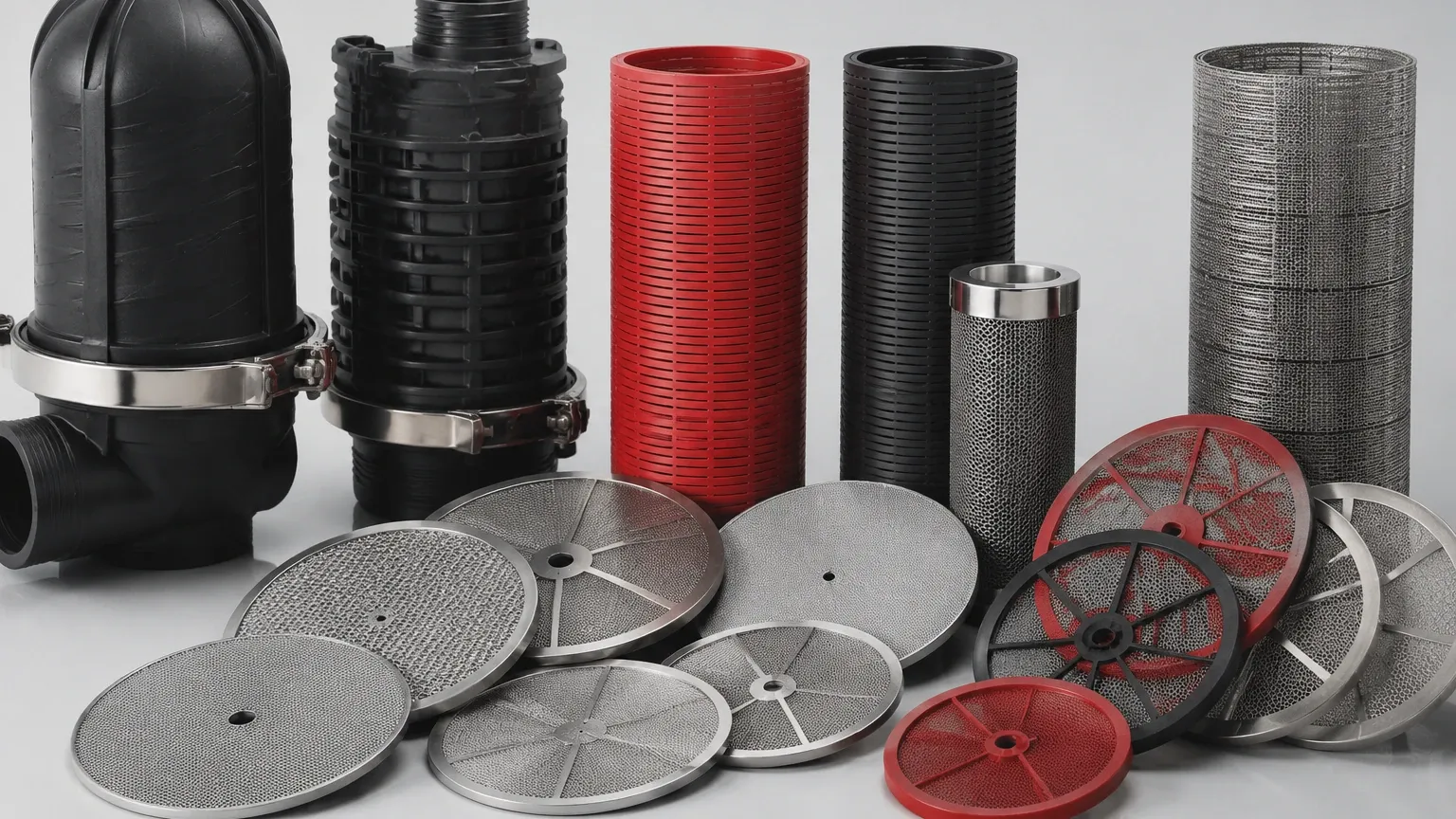
Industrial filtration systems often utilize Filter Discs & Packs to handle high-pressure environments, corrosive fluids, and high-viscosity melts. These components are rarely used in isolation; they are integrated into complex housings where specific accessories ensure they perform according to their micron ratings and flow specifications. This guide explores the technical aspects of these accessories, their material requirements, and the engineering considerations necessary for successful implementation.
The Fundamental Role of Filter Discs & Packs in Industrial Filtration
To understand the necessity of accessories, one must first recognize the varied configurations of the filter media itself. Filter discs can range from single-layer woven wire mesh to multi-layer sintered structures. In many applications, such as polymer melt filtration or oil refining, multiple layers of different mesh counts are combined into a single pack. These packs are often spot-welded or bound with a metallic rim (typically aluminum or stainless steel) to maintain their shape under pressure.
However, even the most precisely manufactured filter pack cannot function effectively if the housing does not provide a perfect seal. This is where disc filter accessories become critical. Without proper support structures or sealing gaskets, the fluid will follow the path of least resistance, bypassing the filter media entirely and leading to downstream contamination or equipment damage.
Identifying Critical Disc Filter Accessories
The term "accessories" in the context of disc filtration refers to the hardware and consumable components that facilitate the mounting, sealing, and protection of the filter media. Each component serves a specific engineering purpose.
Sealing Gaskets and O-Rings
Sealing is perhaps the most critical aspect of any filtration assembly. In high-temperature or high-pressure applications, standard elastomeric seals may fail. Engineers must choose between various materials based on chemical compatibility and thermal stability:
* PTFE (Teflon): Excellent chemical resistance but prone to cold flow.
* Viton (FKM): High-temperature resistance and compatibility with many oils and chemicals.
* Copper or Aluminum Gaskets: Used in extreme temperature environments where polymers would degrade.
* Sintered Metal Seals: Often used in high-pressure hydraulic systems to ensure a metal-to-metal seal that resists deformation.
Support Plates and Breaker Plates
In applications involving high-viscosity fluids, such as plastic extrusion, the pressure exerted on the filter disc can be immense. Support plates (or breaker plates) are heavy-duty perforated metal discs that sit behind the filter pack. They provide the mechanical strength necessary to prevent the mesh from bowing or bursting under differential pressure. The design of these plates—specifically the hole pattern and open area—must be optimized to minimize pressure drop while maximizing support.
Retaining Rings and Clamps
To prevent the filter media from shifting during backpulsing or sudden flow surges, retaining rings are used to lock the discs in place. These accessories must be precision-machined to ensure they do not interfere with the active filtration area while providing enough clamping force to maintain a leak-proof seal against the housing shoulder.
Spacers and Flow Distributors
In multi-disc assemblies, spacers are used to maintain a consistent gap between layers. This ensures that the entire surface area of each disc is utilized. Flow distributors may also be employed to prevent "channeling," where the fluid concentrates in one area of the filter, leading to premature localized clogging and reduced overall efficiency.
Engineering Considerations: Material Selection and Compatibility
When specifying disc filter accessories, material compatibility is paramount. Using mismatched materials can lead to several failure modes that compromise the entire filtration system.
Galvanic Corrosion
If a stainless steel filter disc is paired with an accessory made from a significantly different metal in a conductive fluid, galvanic corrosion can occur. This leads to the rapid degradation of the less noble metal, potentially introducing metallic particles into the filtrate. For this reason, most high-end industrial systems utilize 304 or 316L stainless steel for both the filter media and the supporting accessories.
Thermal Expansion
In high-temperature processes, such as chemical vapor deposition or steam filtration, the coefficient of thermal expansion (CTE) must be considered. If the accessory expands at a different rate than the filter disc or the housing, the seal may fail as the system heats up, or the filter media may be crushed during the cooling cycle. Engineering teams should verify that all components in the stack-up are thermally compatible across the entire operating range.
Chemical Resistance
Accessories are exposed to the same harsh environments as the filters. Whether it is the low pH of a chemical processing line or the high-pressure steam used in SIP (Sterilization-in-Place) cycles in the pharmaceutical industry, the accessories must resist pitting, crevice corrosion, and stress corrosion cracking. 316L stainless steel is the industry standard due to its molybdenum content, which provides superior resistance to chlorides.
Optimizing Performance through Proper Accessory Integration
The integration of accessories directly impacts the Total Cost of Ownership (TCO) of a filtration system. A well-designed assembly reduces the frequency of unplanned maintenance and ensures consistent product quality.
Minimizing Pressure Drop
Every accessory placed in the flow path introduces a potential restriction. For instance, a support plate with insufficient open area will increase the initial clean pressure drop (ΔP). This forces the pumps to work harder, increasing energy consumption and shortening the time between filter changes. Engineers must balance structural requirements with the need for high flow rates.
Preventing Bypass
Bypass is the primary enemy of precision filtration. Even a gap of a few microns between the filter disc and its housing can allow large particles to pass through. The use of precision-machined disc filter accessories, such as compression rings or specialized edge-sealing techniques, ensures that 100% of the process fluid passes through the media. This is especially critical in the pharmaceutical and food and beverage industries, where microbial or particulate contamination can lead to entire batch rejections.
Application-Specific Accessory Requirements
Different industries have unique requirements that dictate the design and material of filtration accessories.
* Food and Beverage: Accessories must be designed for hygiene. This means no "dead zones" where bacteria can accumulate, and surfaces must be polished to a specific Ra (Roughness Average) to facilitate cleaning.
* Pharmaceutical: Compliance with FDA and USP Class VI standards for all sealing materials is mandatory. Traceability of materials (MTRs) for both the filters and the accessories is often required for regulatory audits.
* Hydraulic Systems: In these applications, accessories must withstand high-frequency pressure pulsations. Fatigue resistance of support grids and retaining rings is a primary design concern.
* Polymer Extrusion: The focus here is on heat resistance and the ability of breaker plates to withstand the shear forces of molten plastics.
Maintenance, Replacement, and Total Cost of Ownership
While the filter discs themselves are often considered consumables, many disc filter accessories are designed for long-term use. However, they are not indestructible. Regular inspection protocols should include:
1. Checking for Deformation: Support plates should be inspected for flatness. Any bowing indicates that the system has exceeded its design pressure.
2. Seal Integrity: Gaskets and O-rings should be replaced every time the filter housing is opened. Reusing an old seal is a common cause of bypass leaks.
3. Surface Inspection: Look for signs of erosion or pitting on retaining rings and flow distributors. Even minor surface degradation can create turbulence or harbor contaminants.
4. Cleaning Protocols: When cleaning stainless steel accessories, avoid using wire brushes or tools made of carbon steel, as these can embed iron particles into the stainless surface, leading to rust.
By investing in high-quality accessories and following a strict maintenance schedule, facilities can significantly reduce the risk of catastrophic filter failure. The cost of a premium stainless steel support plate is negligible compared to the cost of a production line shutdown caused by a burst filter disc.
Customization and Technical Specification for Procurement
Because industrial filtration systems vary widely in design, off-the-shelf accessories are not always suitable. Customization is often required to match specific housing dimensions or unique process conditions. When working with a manufacturer like Kaifil, engineers should provide the following data points to ensure the correct specification of accessories:
* Exact Dimensions: Outer diameter (OD), inner diameter (ID), and thickness with required tolerances.
* Operating Environment: Maximum temperature, operating pressure, and the chemical composition of the fluid.
* Filtration Grade: The micron rating of the Filter Discs & Packs being used, as this influences the design of the support structure.
* Compliance Requirements: Whether the components need to meet specific industry standards like 3-A, FDA, or ASME.
In conclusion, while the filter disc is the component that performs the actual separation, it is the ecosystem of disc filter accessories that allows it to function reliably in a demanding industrial environment. From ensuring a leak-proof seal to providing the structural backbone against high pressures, these components are vital to the success of any filtration strategy. By prioritizing material compatibility, precision engineering, and regular maintenance, technical teams can achieve optimal filtration performance and long-term cost efficiency.
