


Disc Filter Aquaculture
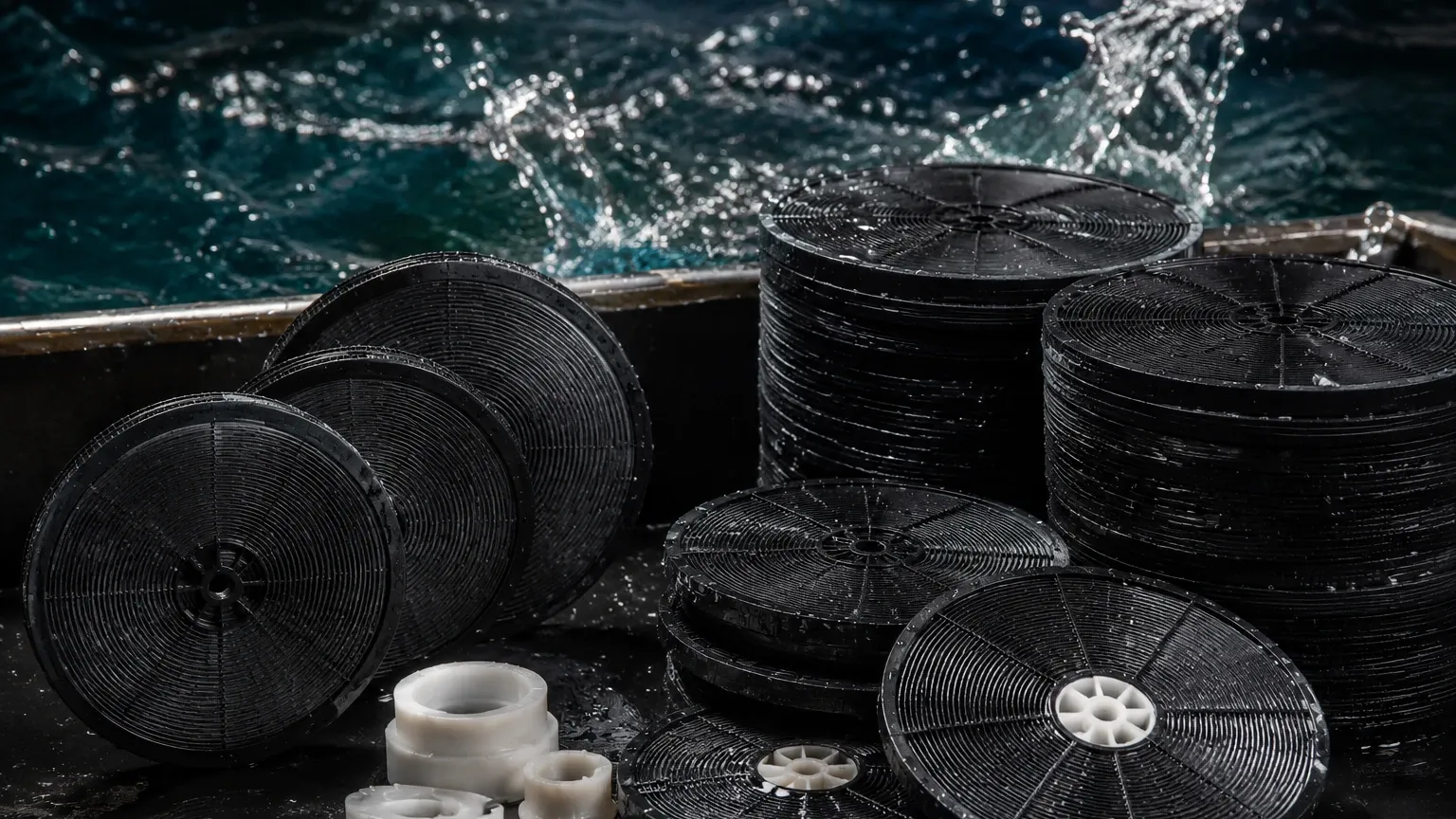
In the modern aquaculture industry, particularly within Recirculating Aquaculture Systems (RAS) and large-scale hatcheries, water quality management is the primary determinant of biological success and operational profitability. As stocking densities increase to meet global demand, the organic load—consisting of uneaten feed, metabolic waste, and escaped pathogens—places immense pressure on the aquatic environment. Mechanical filtration serves as the first line of defense in these systems. Among the various technologies available, the use of specialized disc filter aquaculture components has emerged as a standard for high-efficiency solids removal.
For engineers and facility managers, selecting the correct filtration media is not merely a matter of sizing a pump; it requires a deep understanding of particle dynamics, material science, and the specific hydraulic demands of aquatic life support systems. This article explores the technical nuances of Filter Discs & Packs and their critical role in maintaining the delicate balance of an aquaculture ecosystem.
The Critical Role of Mechanical Filtration in Modern Aquaculture
Mechanical filtration in aquaculture is designed to remove suspended solids before they can break down into dissolved nutrients like ammonia and nitrites. In a Recirculating Aquaculture System, the efficiency of the mechanical stage directly impacts the performance of the downstream biofilter. If solids are allowed to pass through the primary filter, they can clog the biofilter media, promote the growth of heterotrophic bacteria, and deplete dissolved oxygen levels.
Disc filtration systems operate on the principle of surface filtration. Water is passed through a series of fine mesh discs or stacked disc elements that capture particles larger than the specified micron rating. In aquaculture, the goal is typically to remove particles in the 20 to 100-micron range. Removing these solids quickly is essential because the longer organic waste remains in the water column, the more it leaches nitrogenous compounds that are toxic to fish and shrimp.
Using high-quality stainless steel filter components ensures that the system can handle high flow rates while maintaining structural integrity under the constant pressure of backwashing cycles. Unlike disposable media, precision-engineered metal discs offer a permanent solution that can be cleaned and reused, significantly reducing the long-term operational costs of the facility.
Technical Specifications of Filter Discs & Packs for Aquatic Use
When specifying components for disc filter aquaculture applications, engineers must evaluate the construction of the filter media itself. Filter discs are typically constructed from multiple layers of stainless steel wire mesh. These layers may be bonded through sintering—a process that uses heat and pressure to fuse the wires at their contact points without the use of binders or adhesives.
Multi-Layer Sintered Structures
A common configuration for industrial aquaculture involves a five-layer sintered mesh. This structure includes a fine filtration layer, supported by distribution layers and heavy-duty reinforcement layers. This design provides several advantages:
1. Mechanical Strength: The disc can withstand high differential pressures during heavy loading phases without deforming.
2. Fixed Pore Geometry: Sintering ensures that the pore size remains constant, preventing "media migration" or the widening of gaps that could allow larger particles to bypass the filter.
3. Ease of Cleaning: The smooth surface of the sintered mesh allows for more effective backwashing, as particles are trapped on the surface rather than becoming embedded deep within the media.
Weave Types
The choice of weave—such as plain weave, twilled weave, or Dutch weave—affects both the filtration accuracy and the flow resistance. For aquaculture, where high flow rates are common, a Dutch weave is often preferred for its ability to provide fine filtration while maintaining a high open-area ratio. This balance is crucial for minimizing the energy required to pump water through the filtration system.
Evaluating Filtration Efficiency: Micron Ratings and Flow Dynamics
The "micron rating" is the most cited specification for any filter, but in an aquaculture context, it must be understood in terms of nominal versus absolute ratings. A nominal rating indicates the ability of the filter to retain a majority of particles of a certain size, while an absolute rating guarantees the retention of all particles above that size.
In most disc filter aquaculture setups, a nominal rating is sufficient for general solids removal. However, for specialized applications such as intake water treatment or the prevention of specific parasitic outbreaks, a more precise absolute-rated disc may be required.
Flow Velocity and Pressure Drop
Engineers must calculate the "clean pressure drop" (the resistance of the filter when it is free of debris) and the "terminal pressure drop" (the point at which the filter must be cleaned). Stainless steel Filter Discs & Packs are engineered to provide a low initial pressure drop, which translates to lower energy consumption for the circulation pumps. As solids accumulate on the disc surface, the pressure drop increases. In automated systems, this pressure differential triggers a backwash cycle, where high-pressure jets of water or air clear the debris from the mesh.
Material Selection: Corrosion Resistance in Freshwater and Marine Environments
Aquaculture environments are notoriously harsh on equipment. The constant exposure to water, dissolved oxygen, and organic acids can lead to rapid degradation of inferior materials. When selecting filter discs, the specific chemistry of the water—particularly its salinity—is the primary factor in material selection.
Stainless Steel 304 vs. 316L
For freshwater applications, Stainless Steel 304 often provides sufficient corrosion resistance. However, for marine or brackish water aquaculture, Stainless Steel 316L is the industry standard. The addition of molybdenum in 316L provides superior resistance to pitting and crevice corrosion caused by chloride ions in seawater.
In highly intensive systems where ozone is used for disinfection, the oxidative stress on metal components is even higher. In these cases, specialized alloys or advanced surface treatments may be necessary to ensure the longevity of the filter packs. Kaifil’s expertise in material selection allows for the customization of filter components that can withstand these specific chemical challenges, ensuring that the filtration system does not become a point of failure due to corrosion.
Customization and Engineering for Industrial Scale Aquaculture
No two aquaculture facilities are identical. The physical footprint of the filtration room, the species being raised, and the specific water source all dictate the design of the filtration system. Customization is therefore a critical service for OEM manufacturers and system integrators.
Geometric Customization
Filter discs can be manufactured in a wide range of diameters, from small 10mm discs for laboratory-scale systems to large-format packs exceeding 1000mm for industrial drum filters. Furthermore, the center holes, mounting points, and edge treatments (such as welding, binding, or framing) must be precisely engineered to fit the existing housing. A poor fit can lead to "leakage," where unfiltered water bypasses the media, rendering the entire filtration process ineffective.
Layer Configuration
Depending on the turbidity of the source water, a custom "pack" may be designed. This involves stacking multiple discs of varying mesh counts. A graduated density approach—where coarser mesh precedes finer mesh—can significantly extend the time between cleaning cycles by distributing the particulate load throughout the depth of the pack rather than just on the surface.
Operational Considerations: Backwashing and Maintenance Cycles
The success of a disc filter aquaculture system depends heavily on the efficiency of its cleaning mechanism. Because aquaculture water is rich in biological oils and proteins, filter media can become "blinded" by a biofilm if not properly maintained.
Automated Backwashing
Most modern disc filters utilize an automated backwash system. When sensors detect a specific pressure differential, the system reverses the flow or uses external spray nozzles to dislodge the "filter cake." The durability of stainless steel mesh is a major advantage here; it can withstand the high-pressure impact of backwash sprays that would tear or stretch polymer-based meshes.
Chemical Cleaning
Over time, even the best backwash system may not remove 100% of the accumulated organic matter or mineral scaling. Stainless steel filter packs can be subjected to ultrasonic cleaning or mild chemical baths (such as citric acid for scale removal) to restore them to their original flow capacity. This ability to perform deep maintenance is why metal filtration components are often viewed as a lifetime investment for a facility.
Total Cost of Ownership and Long-term Performance
While the initial capital expenditure for stainless steel Filter Discs & Packs may be higher than for plastic or disposable alternatives, the total cost of ownership (TCO) is typically lower.
Factors contributing to a lower TCO include:
* Reduced Downtime: High-strength metal discs are less likely to suffer catastrophic failure, preventing unplanned system shutdowns that can endanger the livestock.
* Zero Consumable Costs: Unlike cartridge filters that must be replaced and disposed of, stainless steel discs are permanent components.
* Energy Efficiency: Precision-woven mesh provides better flow characteristics, reducing the head pressure on pumps and lowering monthly electricity costs.
* Waste Reduction: By using permanent media, aquaculture facilities reduce their environmental footprint, aligning with global sustainability standards for the industry.
Conclusion
In the demanding field of aquaculture, the reliability of mechanical filtration is non-negotiable. Disc filter aquaculture solutions, powered by high-performance stainless steel filter discs and packs, provide the precision, durability, and efficiency required to manage high-density aquatic environments. By selecting the right material, weave, and structural configuration, engineers can ensure consistent water quality, protect downstream biological processes, and optimize the overall performance of the facility.
As a professional manufacturer, Kaifil provides the technical expertise and manufacturing capabilities to deliver customized filtration solutions that meet these rigorous industrial standards. Whether for a new RAS installation or the retrofitting of an existing hatchery, choosing the correct filtration media is a fundamental step toward operational excellence.
