


Water Filter Disc Brita
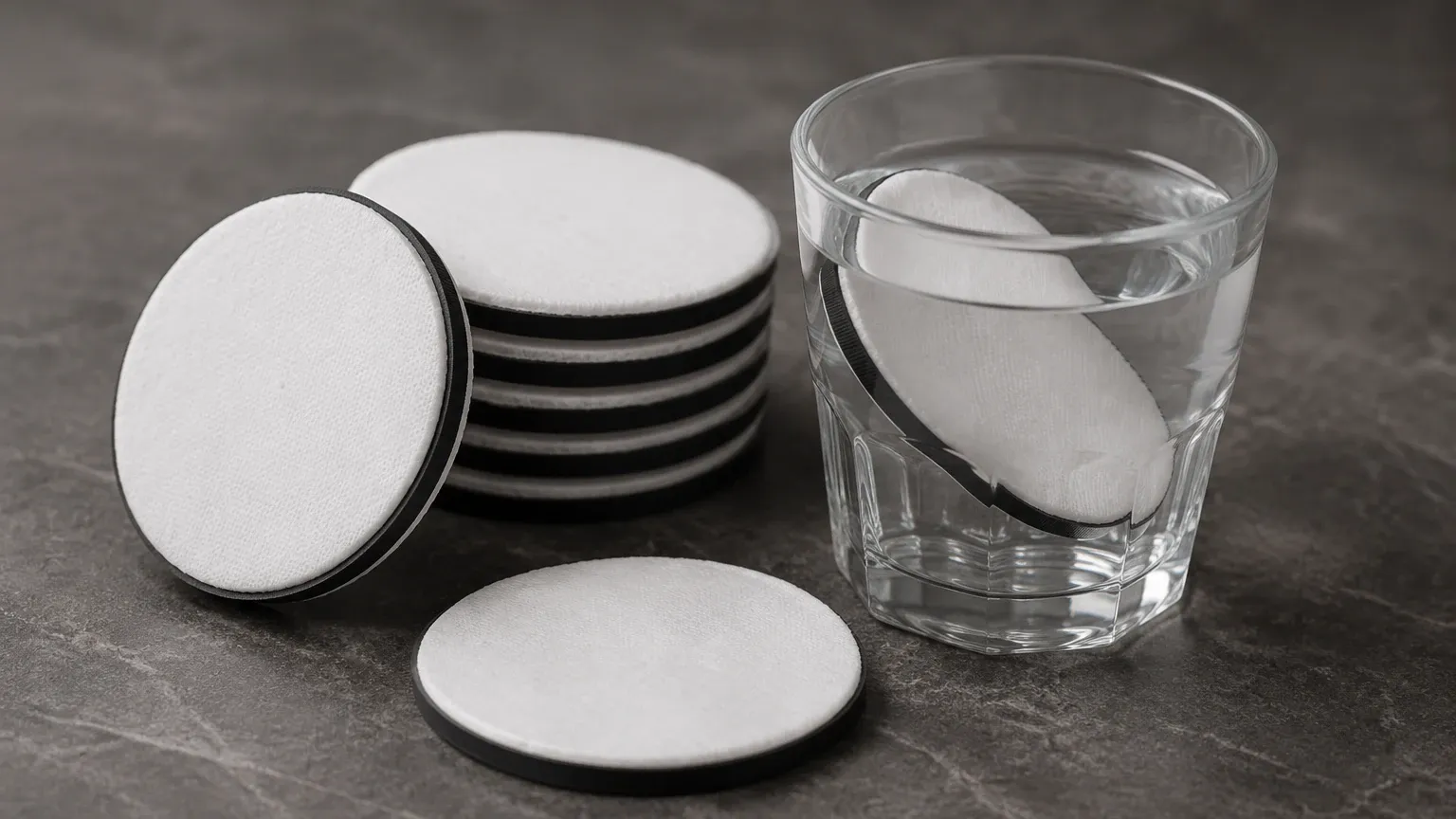
In the realm of fluid purification, the term "water filter disc" often brings to mind consumer-level solutions like the water filter disc brita, which is widely utilized for residential tap water improvement. However, for engineers and procurement professionals in the industrial sector, the requirements for filtration components extend far beyond the capabilities of consumer-grade plastic and carbon inserts. Industrial-grade Filter Discs & Packs are precision-engineered components designed to withstand high pressures, extreme temperatures, and corrosive environments that would compromise standard household filters.
Understanding the transition from consumer-scale filtration to industrial performance is critical for selecting the right components for commercial water treatment, chemical processing, and food and beverage production. This guide examines the technical specifications, material considerations, and engineering principles behind high-performance filter discs.
Understanding the Role of Filter Discs in Water Treatment
Filtration is the process of removing suspended solids from a fluid stream by passing it through a porous medium. While a water filter disc brita typically relies on activated carbon and ion-exchange resin to improve taste and remove chlorine, industrial filter discs utilize mechanical straining through sophisticated metal mesh structures.
In industrial water treatment, filter discs serve as critical barriers in multi-stage systems. They are often employed as pre-filters to protect sensitive downstream equipment, such as reverse osmosis (RO) membranes or high-pressure pumps, from particulate damage. The primary function of these discs is to provide a consistent, measurable micron rating that ensures the removal of specific particle sizes, ranging from coarse debris to microscopic contaminants.
Mechanical Straining vs. Adsorption
The fundamental difference between consumer discs and industrial metal discs lies in the filtration mechanism. Consumer discs primarily use adsorption—a chemical process where contaminants stick to the surface of carbon. Industrial stainless steel filter discs utilize mechanical straining, where the pore size of the wire mesh physically blocks particles larger than the specified micron rating. This mechanical approach allows for predictable performance, higher flow rates, and the ability to clean and reuse the filter, which is rarely possible with carbon-based consumer discs.
Material Engineering: Stainless Steel vs. Consumer Grade Components
When evaluating filtration components, material selection is the most significant factor influencing durability and chemical compatibility. Consumer products like the water filter disc brita are generally constructed from food-grade plastics and compressed carbon. While effective for low-pressure residential use, these materials fail under industrial stress.
Stainless Steel 304 and 316L
Most industrial filter discs are manufactured from stainless steel, specifically grades 304 and 316L.
* Stainless Steel 304: Offers excellent corrosion resistance for standard water filtration and general industrial applications. It is cost-effective and provides the structural integrity needed for high-flow environments.
* Stainless Steel 316L: Contains molybdenum, which significantly enhances resistance to chlorides and acids. This grade is the standard for pharmaceutical, marine, and high-salinity water treatment applications where 304 might suffer from pitting corrosion.
Advantages of Metal Media
Unlike plastic-housed consumer filters, metal filter discs offer:
1. Temperature Resistance: Capable of operating in environments exceeding 400°C, whereas plastic components deform or melt.
2. Pressure Tolerance: Metal mesh can withstand significant differential pressures without bursting or bypassing contaminants.
3. Chemical Stability: Stainless steel does not leach chemicals into the filtrate, making it ideal for high-purity water and food-grade applications.
Technical Specifications for Industrial Filter Discs & Packs
Specifying the correct Filter Discs & Packs requires a deep dive into mesh engineering. For an engineer, the choice of weave and layer configuration determines the efficiency and lifespan of the filtration system.
Wire Mesh Weave Types
The way wires are woven together dictates the pore shape and the disc's mechanical strength:
* Plain Weave: The most common weave where each warp wire crosses over and under each shute wire. It provides high flow rates and is easy to clean.
* Dutch Weave: Uses larger diameter warp wires and smaller shute wires, resulting in a much denser mesh. This weave is preferred for fine filtration and high-pressure applications because it offers superior strength and smaller pore sizes.
* Twill Weave: Allows for thicker wires and is used when the mesh needs to support heavy loads or high-viscosity fluids.
Multi-Layer vs. Single-Layer Discs
Industrial applications often require more than a single layer of mesh. Multi-layer filter packs are constructed by stacking different mesh counts.
* Support Layers: Coarse mesh layers provide structural rigidity.
* Filtration Layers: Fine mesh layers determine the actual micron rating.
* Drainage Layers: Help distribute fluid flow evenly across the filter surface.
By combining these layers, manufacturers create a "pack" that offers both fine filtration and the mechanical strength to resist deformation under high-pressure surges.
Application Scenarios: From Commercial Kitchens to Industrial Processing
While a water filter disc brita is designed for a single pitcher or a small faucet attachment, industrial filter discs are integrated into large-scale infrastructure.
Food and Beverage Production
In the production of bottled water, juices, and beer, stainless steel filter discs are used to remove yeast, sediment, and pulp. Because these discs can be sterilized using steam-in-place (SIP) or clean-in-place (CIP) protocols, they meet the stringent hygiene requirements of the industry. The durability of metal discs ensures that no plastic fragments or carbon dust enter the final product, a risk often associated with lower-quality consumer-grade filters.
Hydraulic and Lubrication Systems
In heavy machinery, filter discs protect hydraulic valves from metal shavings and environmental dust. These discs must handle high-viscosity fluids and maintain their shape under extreme pressure. A failure here could lead to catastrophic equipment damage, making the precision of industrial metal discs far more critical than in residential water applications.
Chemical and Petrochemical Processing
Filter discs are used to recover catalysts and remove impurities from aggressive chemical streams. The ability to specify 316L stainless steel or even exotic alloys like Hastelloy allows these discs to operate in environments that would dissolve a standard water filter disc brita in minutes.
Selection Criteria: Performance, Durability, and Cost
When transitioning from a general understanding of filtration to professional procurement, engineers must evaluate several key performance indicators (KPIs).
Micron Rating: Absolute vs. Nominal
* Nominal Rating: Refers to the ability of the filter to retain a percentage (usually 60% to 90%) of particles of a specific size. Many consumer filters use nominal ratings.
* Absolute Rating: Refers to the diameter of the largest hard spherical particle that will pass through the filter under specified test conditions. Industrial Filter Discs & Packs often provide absolute ratings, ensuring that no particle larger than the specified size bypasses the filter.
Pressure Drop (Delta P)
The resistance to flow caused by the filter media is known as the pressure drop. A high initial pressure drop indicates that the filter may be too restrictive for the pump's capacity, leading to energy inefficiency. Industrial discs are engineered to maximize open area while maintaining filtration efficiency, balancing flow rate with particle retention.
Total Cost of Ownership (TCO)
While the initial cost of a stainless steel filter disc is higher than a disposable water filter disc brita, the TCO is often lower in industrial settings. Metal discs are cleanable and reusable. When the pressure drop reaches a certain threshold, the disc can be backwashed, ultrasonically cleaned, or chemically treated to restore its original performance. This eliminates the recurring cost of replacement cartridges and reduces the environmental impact of waste disposal.
Customization and OEM Manufacturing for Specialized Filtration
One of the primary advantages of working with a professional manufacturer like Kaifil is the ability to customize filter components to meet exact application needs. Unlike the standardized dimensions of consumer products, industrial filter discs can be tailored in several ways:
Edge Treatments
To prevent fraying and ensure a bypass-free seal within the filter housing, discs can be finished with various edge treatments:
* Spot Welding: Multiple layers are welded together at the perimeter.
* Aluminum or Stainless Steel Binding: A metal rim is crimped around the edge of the disc to provide a smooth, rigid surface for gaskets.
* Sintering: The layers of mesh are bonded together using heat and pressure without the need for binding materials, creating a monolithic structure that is exceptionally strong.
Shape and Dimensions
Industrial filters are not limited to circular discs. Depending on the housing design, they can be manufactured as rectangular screens, oval packs, or custom-contoured shapes. Precision laser cutting ensures that every disc fits perfectly within the assembly, preventing the fluid bypass that often plagues generic or poorly fitted filtration components.
Engineering Considerations Before Purchase
Before finalizing a procurement order for filtration components, engineers should confirm several critical factors with their supplier:
1. Fluid Compatibility: Ensure the metal grade (304, 316L, etc.) is compatible with the chemical composition and pH of the fluid being filtered.
2. Flow Rate Requirements: Calculate the maximum flow rate to ensure the disc diameter and mesh open area can handle the volume without excessive pressure buildup.
3. Operating Temperature: Confirm that all components, including any edge bindings or gaskets, can withstand the peak operating temperatures of the system.
4. Cleaning Protocols: Determine if the filter will be cleaned manually or via an automated backwash system, as this influences the required structural strength of the mesh.
By focusing on these technical parameters rather than marketing claims, purchasing teams can ensure they are acquiring filtration solutions that provide long-term reliability and precise performance. While a water filter disc brita serves its purpose in the kitchen, the demanding world of industrial processing requires the robust, engineered excellence of professional Filter Discs & Packs.
