


Brita Fill & Go Filter Discs
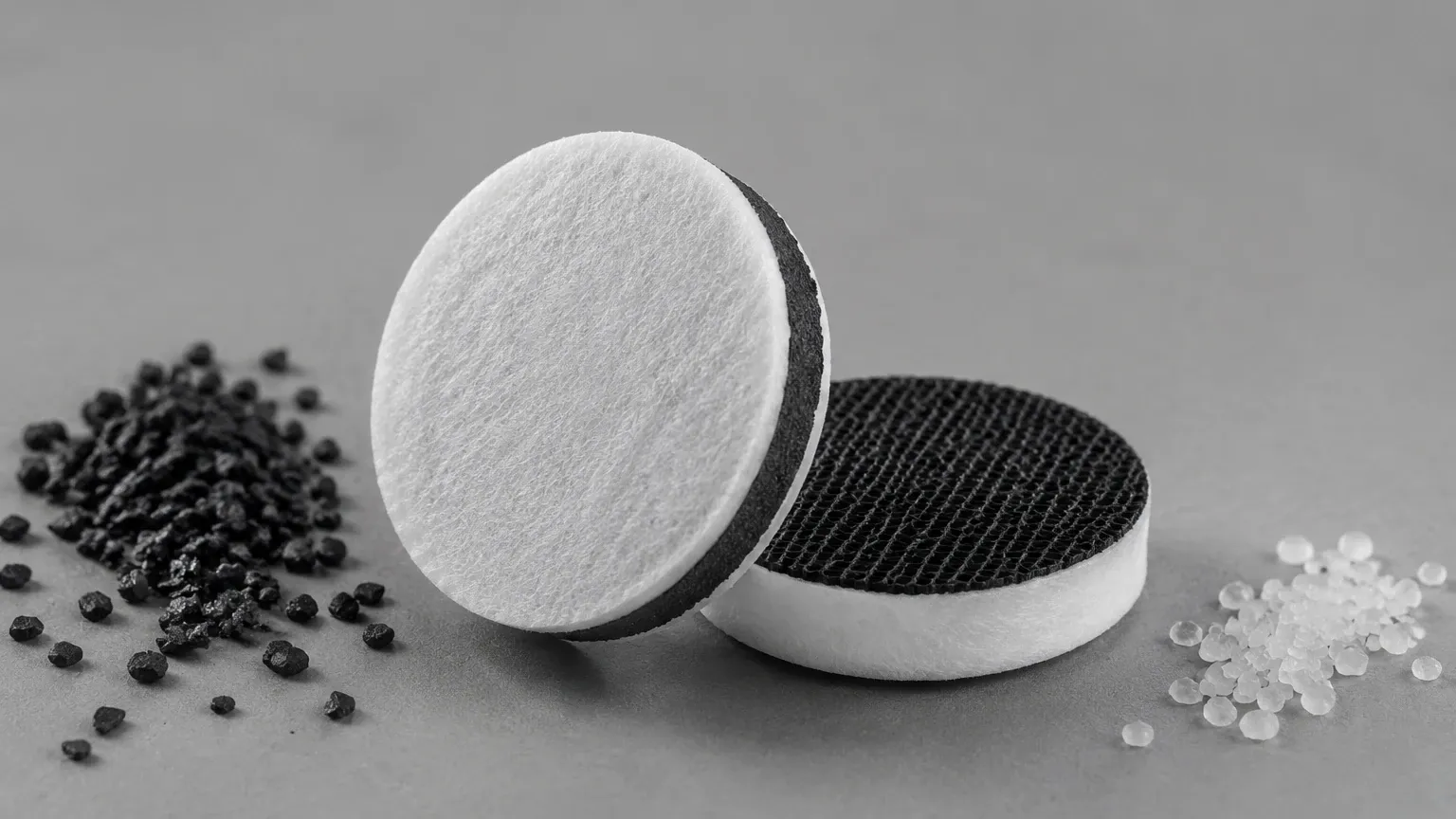
In the realm of consumer water purification, products like Brita Fill & Go filter discs have become synonymous with portable, accessible filtration. These small, carbon-based components are designed to reduce chlorine and improve the taste of tap water for individual users. However, in industrial process engineering, the requirements for filtration move far beyond taste and odor reduction. When engineers and procurement teams transition from simple consumer-grade solutions to high-performance industrial systems, the focus shifts toward structural integrity, chemical compatibility, and precise micron-level separation. This is where industrial Filter Discs & Packs become the critical standard for maintaining process efficiency and product purity.
Understanding the fundamental differences between consumer-oriented discs and industrial-grade filtration components is essential for technical professionals. While a consumer might look for ease of replacement in Brita Fill & Go filter discs, an industrial engineer evaluates a filter disc based on its ability to withstand high differential pressures, resist corrosive chemicals, and provide consistent flow rates over thousands of cycles.
Understanding the Mechanics of Disc-Based Filtration
The geometry of a disc is one of the most efficient shapes for filtration in pressurized systems. Whether used in a portable water bottle or a massive polymer extrusion line, the disc shape allows for a uniform distribution of fluid across the media surface. In industrial settings, these discs are often used in "packs"—multi-layered assemblies that combine different mesh counts to achieve graduated filtration.
In a typical industrial application, a filter pack might consist of a coarse support layer, a fine filtration layer, and a protective outer layer. This layered approach ensures that large particles are trapped by the outer mesh while the inner layers perform the precision separation. This is a significant departure from the monolithic carbon structure found in Brita Fill & Go filter discs, which rely primarily on adsorption rather than mechanical sieving. Industrial Filter Discs & Packs are engineered to handle diverse media, including high-viscosity resins, steam, and aggressive solvents, where plastic-housed carbon discs would fail instantly.
Material Science: From Polymers to Stainless Steel
The most significant differentiator between consumer and industrial filtration is the material of construction. Consumer products often utilize activated carbon encased in food-grade plastics. While effective for basic water treatment, these materials have low thermal resistance and limited structural strength.
Industrial filtration components, such as those manufactured by Kaifil, utilize advanced alloys to meet demanding environmental conditions:
1. Stainless Steel 304/316L: The industry standard for corrosion resistance and durability. 316L, in particular, is preferred in pharmaceutical and food processing due to its resistance to pitting and crevice corrosion.
2. Sintered Wire Mesh: For applications requiring extreme pressure resistance, multiple layers of wire mesh are sintered together. This process fuses the wires at their contact points, creating a rigid, porous structure that cannot be deformed by high flow rates.
3. Specialty Alloys: In highly acidic or high-temperature environments, materials like Hastelloy or Monel may be used to ensure the filter disc does not degrade and contaminate the process stream.
By moving away from the disposable nature of Brita Fill & Go filter discs and toward permanent or semi-permanent stainless steel Filter Discs & Packs, industrial operators can achieve a much lower total cost of ownership through cleaning and reuse.
Engineering Considerations for Industrial Filter Packs
When specifying Filter Discs & Packs for an industrial system, engineers must account for several technical variables that do not apply to consumer water filters. These considerations dictate the efficiency of the filtration system and the lifespan of the equipment.
Micron Rating: Absolute vs. Nominal
In consumer products like Brita Fill & Go filter discs, the micron rating is often generalized. In industrial B2B applications, the distinction between absolute and nominal ratings is vital. An absolute rating refers to the diameter of the largest hard spherical particle that will pass through the filter under specified test conditions. A nominal rating, conversely, indicates the filter's ability to retain a majority of particles of a certain size. For precision industries like semiconductor manufacturing or fine chemical processing, absolute-rated stainless steel discs are mandatory.
Pressure Drop (Delta P)
Every filter media introduces resistance to flow. In industrial systems, managing the pressure drop is critical to preventing pump strain and ensuring consistent throughput. Industrial filter packs are designed with specific weave patterns—such as Plain Weave, Twill Weave, or Dutch Weave—to balance filtration fineness with high permeability. Engineers must calculate the clean pressure drop and the terminal pressure drop (the point at which the filter must be cleaned or replaced) to optimize the maintenance schedule.
Structural Reinforcement and Rimming
Unlike the flexible edges of some consumer filters, industrial discs often require rigid rimming. Rimming serves two purposes: it prevents the edges of the wire mesh from fraying and provides a sealing surface for the filter housing. Common rimming materials include aluminum, stainless steel, and copper. In multi-layer packs, spot welding or full-perimeter welding is used to keep the layers aligned during installation and operation.
Critical Applications of Industrial Filter Discs
While Brita Fill & Go filter discs serve the individual consumer, industrial Filter Discs & Packs are foundational to global manufacturing. Their versatility allows them to be integrated into various high-stakes environments.
Polymer and Plastic Extrusion
In the production of plastics, molten polymer is forced through a "screen changer" containing multiple filter discs. These discs remove impurities that could cause defects in the final product, such as film breakage or surface irregularities. The discs must withstand temperatures exceeding 300°C and pressures that would crush standard filtration media.
Chemical and Petrochemical Processing
Industrial filters are used to protect downstream equipment like catalysts and high-pressure nozzles. Stainless steel filter packs are essential here because they can withstand aggressive chemical reactions and can be backwashed to remove accumulated solids without dismantling the entire system.
Food and Beverage Clarification
Beyond simple water filtration, industrial discs are used to clarify oils, juices, and syrups. In these applications, hygiene is paramount. Stainless steel Filter Discs & Packs are preferred because they do not shed fibers (unlike some paper or fabric filters) and can be sterilized using Steam-in-Place (SIP) or Clean-in-Place (CIP) protocols.
Customization: The Key to Industrial Efficiency
One of the primary advantages of working with a professional manufacturer like Kaifil is the ability to customize filtration components. Consumer products like Brita Fill & Go filter discs are mass-produced to a single specification. In contrast, industrial filtration requires a bespoke approach.
Customization options for Filter Discs & Packs include:
* Layer Configuration: Combining different mesh sizes (e.g., a 20-mesh support layer with a 200-mesh filtration layer).
* Shape and Dimension: While circular discs are common, rectangular, oval, and ring-shaped packs are often required for specific machinery.
* Welding Techniques: Depending on the application, discs may be spot-welded, plasma-welded, or ultrasonic-welded to ensure structural integrity.
* Surface Treatments: Electropolishing or specialized coatings can be applied to improve corrosion resistance or reduce particle adhesion.
Selection Criteria for Purchasing Teams
For procurement professionals, selecting the right filtration partner involves more than comparing unit prices. The total cost of ownership is heavily influenced by the filter's durability and its impact on process downtime. When evaluating industrial Filter Discs & Packs, purchasing teams should confirm the following with their supplier:
1. Material Certification: Ensure the stainless steel or alloy meets international standards (ASTM, DIN, etc.) to prevent premature failure.
2. Filtration Accuracy: Verify that the micron rating aligns with the technical requirements of the downstream equipment.
3. Cleaning Compatibility: Determine if the discs can be cleaned via ultrasonic baths, chemical cleaning, or burnout furnaces, which extends the product's lifespan.
4. Lead Times and OEM Capabilities: For critical operations, the ability of a manufacturer to provide consistent OEM replacements or custom prototypes is essential for supply chain stability.
Conclusion
While the convenience of Brita Fill & Go filter discs satisfies the needs of the consumer market, the industrial sector demands the precision and ruggedness of stainless steel Filter Discs & Packs. By understanding the engineering principles behind wire mesh filtration—from material selection to weave patterns and rimming techniques—engineers can significantly improve the reliability of their processes.
Kaifil remains at the forefront of this industry, providing customized, high-performance filtration solutions that meet the rigorous standards of the chemical, pharmaceutical, and food processing sectors. Whether you are upgrading an existing system or designing a new process, selecting the correct filter disc is a critical step toward achieving operational excellence and product purity.
