


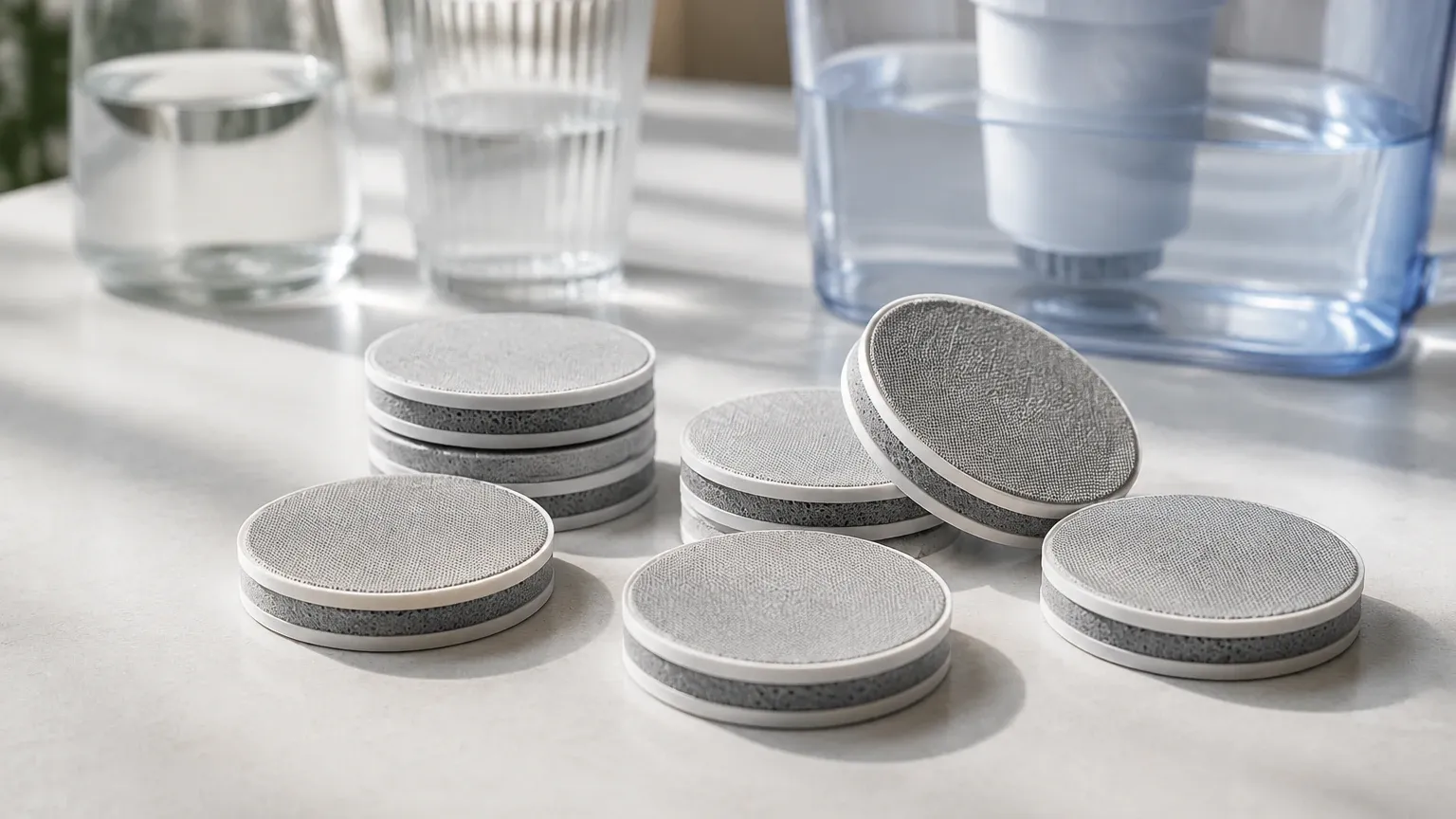
Microdisc Water Filter Discs for Brita Fill
In the landscape of modern filtration, the geometry of the filter element plays a critical role in determining both the efficiency of the process and the footprint of the equipment. While consumer-facing products like the microdisc water filter discs for brita fill have popularized the concept of compact, disc-based filtration for potable water, the industrial sector operates on a significantly more complex engineering plane. For engineers and procurement specialists, understanding the transition from simple household filtration to high-performance industrial Filter Discs & Packs is essential for optimizing system longevity and process purity.
Industrial filtration demands a level of durability and precision that exceeds the capabilities of standard consumer materials. Where a consumer disc might focus on basic taste and odor improvement, industrial filter discs are designed to withstand high pressures, corrosive chemicals, and extreme temperatures while maintaining precise micron-level separation. This article explores the engineering principles, material science, and manufacturing standards that define professional-grade filtration discs.
Understanding the Design Philosophy of Disc-Based Filtration
The fundamental advantage of a disc-shaped filter is its high surface-area-to-volume ratio within a flat or low-profile housing. In applications ranging from chemical processing to hydraulic systems, space is often at a premium. The disc format allows for a modular approach to filtration; multiple discs can be stacked to create a filter pack, increasing the total filtration area without significantly increasing the diameter of the piping or housing.
When examining the microdisc water filter discs for brita fill, the design intent is centered on user convenience and the removal of specific contaminants like chlorine from a gravity-fed or low-pressure stream. In contrast, industrial filter discs are engineered for mechanical integrity. They must resist deformation under differential pressure, which is why they are often constructed from multiple layers of woven wire mesh or sintered metal fibers. The structural design of these discs ensures that the pore size remains constant even when the filter is subjected to the high flow rates common in industrial water treatment and chemical manufacturing.
Material Science: Comparing Consumer Microdiscs to Industrial Stainless Steel
The materials used in filtration components are selected based on the specific contaminants to be removed and the environment in which the filter will operate. The microdisc water filter discs for brita fill typically utilize compressed activated carbon technology. While excellent for adsorbing organic compounds and improving taste, carbon-based discs are fragile and limited in their structural applications.
Industrial applications require the robustness of stainless steel, specifically grades 304, 316, and 316L. These materials offer several advantages over polymer or carbon-based alternatives:
1. Corrosion Resistance: Stainless steel 316L contains molybdenum, which provides superior resistance to pitting and crevice corrosion in chloride-rich environments, making it ideal for marine and chemical applications.
2. Thermal Stability: Unlike plastic-bonded filters, stainless steel Filter Discs & Packs can operate in environments exceeding 400°C without losing structural integrity or filtration accuracy.
3. Mechanical Strength: Metal wire mesh can withstand high differential pressures (often measured in bars rather than PSI), which is critical in hydraulic systems and high-viscosity polymer filtration.
4. Cleanability: One of the most significant B2B considerations is the total cost of ownership. While consumer discs are disposable, industrial stainless steel discs are often reusable. They can be cleaned via ultrasonic baths, backwashing, or chemical solvents, extending their service life and reducing waste.
Manufacturing Techniques for High-Precision Filter Discs & Packs
The manufacturing of industrial filter discs involves several sophisticated processes to ensure that the final product meets the rigorous standards required by the pharmaceutical, food and beverage, and petrochemical industries. At Kaifil, the production of Filter Discs & Packs involves precise cutting, layering, and bonding techniques.
Multi-Layer Sintering
Sintering is a process where multiple layers of wire mesh are bonded together using heat and pressure without melting the metal. This creates a single, robust plate that combines the filtration accuracy of fine mesh with the mechanical strength of coarse support mesh. A typical five-layer sintered disc might include a drainage layer, a support layer, a fine filtration layer, and a protective outer layer. This architecture prevents the fine mesh from migrating or deforming under pressure.
Edge Binding and Spot Welding
To prevent bypass—where unfiltered fluid escapes around the edges of the disc—industrial filters often feature edge binding. This involves crimping a metal ring (often aluminum, copper, or stainless steel) around the circumference of the disc pack. For less demanding applications, spot welding is used to keep multiple layers of mesh aligned during installation and operation. This level of structural reinforcement is a key differentiator between industrial components and the simpler construction found in consumer microdisc water filter discs for brita fill.
Technical Evaluation: Micron Ratings and Filtration Accuracy
For an engineer, the most critical specification of a filter disc is its micron rating. This rating defines the size of the particles the filter is capable of capturing. There are two primary ways to measure this: nominal and absolute.
* Nominal Micron Rating: This represents an approximate filtration efficiency, typically indicating that the filter can trap a certain percentage (e.g., 60-90%) of particles at the specified size. Consumer filters often operate on nominal ratings.
* Absolute Micron Rating: This is a more stringent standard, indicating that 99.9% or more of particles at the specified size will be captured. In industrial B2B contexts, especially in pharmaceutical or fine chemical production, absolute ratings are mandatory to ensure process consistency.
When selecting Filter Discs & Packs, it is also important to consider the "bubble point." This is a standard test used to verify the integrity of the filter and its maximum pore size. By submerging the disc in a liquid and gradually increasing air pressure, technicians can determine the exact point at which bubbles first appear, which correlates directly to the largest pore in the mesh.
Critical Performance Factors in Industrial Water Treatment
While the microdisc water filter discs for brita fill are optimized for the removal of chlorine and sediment in a domestic setting, industrial water treatment involves a broader spectrum of challenges. Engineers must evaluate the following performance metrics when integrating filter discs into their systems:
Clean Pressure Drop
The initial resistance to flow caused by the filter medium is known as the clean pressure drop. A well-engineered disc pack will minimize this resistance to reduce energy consumption in pumping systems. Factors influencing this include the wire diameter, the weave type (such as Plain, Twilled, or Dutch weave), and the total effective filtration area (EFA).
Dirt-Holding Capacity
This refers to the amount of contaminant a filter can retain before the pressure drop reaches a terminal level, necessitating cleaning or replacement. Industrial sintered mesh discs provide a deeper filtration path than single-layer screens, significantly increasing the dirt-holding capacity and extending the intervals between maintenance cycles.
Chemical Compatibility
In industries such as oil and gas or pharmaceutical manufacturing, the filter may be exposed to aggressive solvents or high-pH cleaning agents. Unlike the plastic housings used for microdisc water filter discs for brita fill, industrial filter housings and discs must be constructed from alloys that can withstand these chemicals without leaching impurities into the process stream.
Customization and OEM Engineering for Specialized Applications
One of the primary advantages of working with a professional manufacturer like Kaifil is the ability to customize filtration components to exact specifications. Industrial systems rarely follow a "one size fits all" approach. Engineers often require specific diameters, thicknesses, and mesh combinations to suit unique flow dynamics.
Customization options for Filter Discs & Packs include:
* Shape Variations: Beyond standard circular discs, manufacturers can produce oval, rectangular, or ring-shaped filters using laser cutting or precision stamping.
* Layer Configuration: Depending on whether the goal is high flow or high precision, the number of mesh layers can be adjusted. For example, a three-layer pack might be sufficient for coarse water filtration, while a seven-layer pack might be required for polymer melt filtration.
* Material Upgrades: For extremely corrosive environments, specialty alloys like Hastelloy or Monel can be used instead of standard stainless steel.
When purchasing for OEM applications, it is vital to confirm the tolerances of the discs. In high-speed assembly lines, even a fraction of a millimeter in diameter deviation can lead to installation failures or fluid bypass.
Conclusion: Selecting the Right Filtration Solution
While consumer products like the microdisc water filter discs for brita fill serve their purpose in the domestic market, industrial filtration requires a more rigorous, engineering-led approach. The transition to professional Filter Discs & Packs involves moving from disposable, low-pressure components to durable, high-precision stainless steel elements that can be cleaned and reused.
For engineers and purchasing managers, the focus should always be on the total cost of ownership and the reliability of the filtration performance. By selecting the appropriate material, micron rating, and structural design, industrial operations can achieve higher purity levels, protect downstream equipment, and reduce long-term operational costs. Whether you are filtering process water, hydraulic fluids, or chemical precursors, the integrity of the filter disc is the first line of defense in maintaining system efficiency.
Download Microdisc Water Filter Discs for Brita Fill as a PDF
