


How Long Do Brita Filter Discs Last
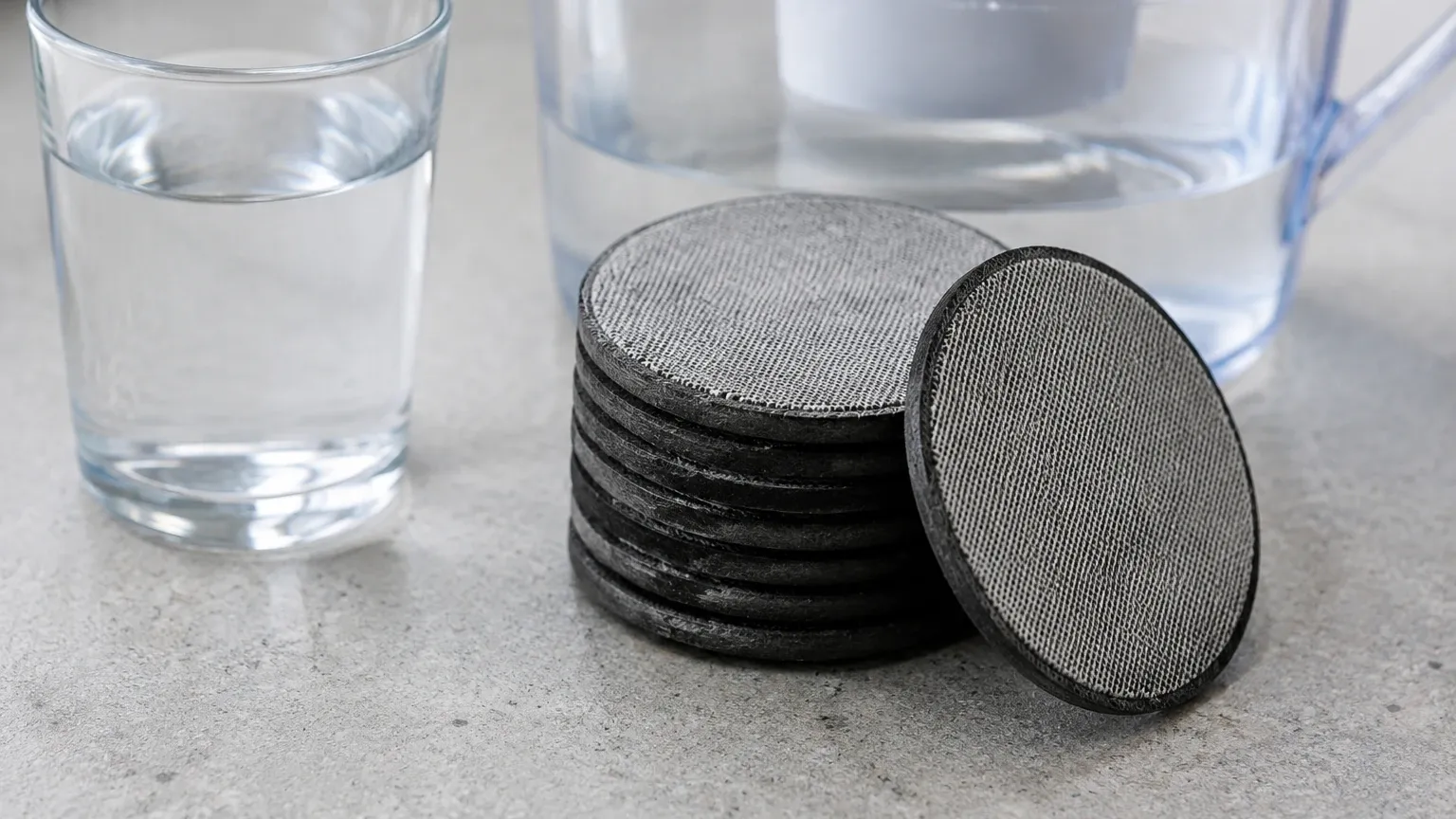
In the realm of water filtration, understanding the service life of a filter component is critical for maintaining water quality and system efficiency. While many users ask, "how long do brita filter discs last," the answer typically centers on a consumer-grade carbon-based disc designed for approximately 4 weeks of use or 150 liters (about 40 gallons) of water. However, for engineers and procurement professionals in industrial sectors, the concept of a "filter disc" extends far beyond household pitchers into the high-performance world of stainless steel wire mesh and multi-layer sintered media.
In industrial applications, such as chemical processing, polymer filtration, and hydraulic systems, the longevity of Filter Discs & Packs is measured not just in weeks, but in cycles, pressure differentials, and material integrity. This article explores the factors governing the lifespan of filtration discs, comparing consumer-grade expectations with the rigorous demands of industrial-grade stainless steel solutions.
Understanding the Lifespan of Consumer vs. Industrial Filter Discs
The fundamental difference between a consumer filter disc and an industrial filter disc lies in the material composition and the filtration mechanism. A Brita filter disc utilizes activated carbon to reduce chlorine and improve taste, which eventually becomes saturated or "spent." Once the adsorption sites on the carbon are filled, the disc can no longer function effectively, necessitating replacement every month.
In contrast, industrial filter discs manufactured by Kaifil are typically constructed from stainless steel wire mesh (304, 316, or 316L). These are surface or depth filtration components designed to remove particulate matter through mechanical straining. Unlike disposable carbon discs, industrial stainless steel discs are often cleanable and reusable. Their lifespan is determined by the mechanical wear of the mesh, the success of cleaning cycles (such as ultrasonic cleaning or backwashing), and the chemical environment of the application. While a consumer disc might last 30 days, a high-quality stainless steel filter pack can last for months or even years in a well-maintained industrial system.
Key Factors Influencing the Longevity of Industrial Filter Discs & Packs
When evaluating the durability of filtration components for industrial use, several engineering variables must be considered to determine the expected replacement cycle.
1. Contaminant Loading and Particle Distribution
The concentration and type of solids in the process fluid are the primary drivers of filter life. In a high-load environment, the interstitial spaces in the wire mesh will fill more quickly, leading to a rapid rise in differential pressure ($ΔP$). If the particles are deformable (like certain polymers or organic sludges), they may "blind" the mesh surface more effectively than rigid metallic particles, shortening the interval between cleanings.
2. Material Selection and Corrosion Resistance
The chemical compatibility of the filter disc material with the process fluid is paramount. While 304 stainless steel is suitable for many water treatment applications, 316L is required for acidic or high-chloride environments to prevent pitting and stress corrosion cracking. If the material is not correctly specified, the structural integrity of the mesh will fail long before the filtration capacity is reached.
3. Operating Pressure and Temperature
Industrial Filter Discs & Packs are often subjected to extreme pressures. High-pressure environments can cause the wire mesh to deform or migrate if not properly supported by a perforated plate or a coarser support mesh. Repeated thermal cycling can also lead to metal fatigue, particularly in multi-layer sintered discs where different layers may expand at slightly different rates.
Engineering Considerations for Extending Filter Life
To optimize the total cost of ownership (TCO), engineers should focus on the design and configuration of the filter pack. A well-engineered disc pack is not merely a single layer of mesh but a sophisticated assembly designed for durability.
* Multi-Layer Configurations: Combining a fine filtration layer with coarser support and drainage layers significantly increases the mechanical strength of the disc. This prevents the fine mesh from collapsing under pressure, thereby extending its functional life.
* Sintering Processes: Sintered wire mesh discs offer superior longevity compared to loose-lay packs. The sintering process bonds the wire contact points, ensuring that the pore size remains constant even under high-pressure pulses. This prevents "channeling," where fluid bypasses the filter media through enlarged pores.
* Pleating vs. Flat Discs: While flat discs are common in polymer extrusion and simple straining, pleating the media can increase the surface area within the same footprint. More surface area directly translates to a lower face velocity and a longer time-to-clog.
Cleaning and Maintenance: The Path to Reusability
One of the most significant advantages of stainless steel industrial filters over consumer-grade products is the ability to restore performance through cleaning. While the answer to "how long do brita filter discs last" is a hard limit based on carbon exhaustion, industrial discs can often be returned to near-original differential pressure levels.
Ultrasonic Cleaning
For precision metal filter components, ultrasonic cleaning is the gold standard. High-frequency sound waves create cavitation bubbles that dislodge sub-micron particles trapped deep within the mesh weave. This process is particularly effective for multi-layer sintered packs where manual scrubbing is impossible.
Chemical Cleaning and Burn-off
In the plastics and fiber industries, filter discs often become clogged with hardened polymers. These discs can be placed in pyrolysis ovens or chemical baths to remove the organic contaminants. If the stainless steel grade is chosen correctly to withstand these temperatures, the discs can be reused multiple times, significantly reducing the cost per gallon filtered.
Signs of Failure and When to Replace
Despite their durability, industrial filter discs are not infinite. Procurement teams and maintenance engineers should monitor specific indicators to determine when a disc has reached the end of its life:
1. Irrecoverable Pressure Drop: If the "clean" differential pressure after a maintenance cycle is significantly higher than the original specification, the media is likely permanently fouled or blinded.
2. Media Migration: The appearance of metallic fragments downstream indicates that the wire mesh is breaking down, often due to corrosion or fatigue.
3. Deformation: If a disc pack shows signs of "cupping" or bowing, it suggests that the operating pressure has exceeded the structural limits of the design, necessitating a move to a more robust, multi-layer configuration.
4. Flow Rate Reduction: In gravity-fed or constant-pressure systems, a noticeable drop in throughput that cannot be rectified by cleaning indicates the need for new Filter Discs & Packs.
Conclusion: Selecting the Right Solution for Longevity
While the question "how long do brita filter discs last" is a common entry point for those researching filtration, the requirements of the industrial sector demand a much more technical evaluation. The lifespan of a filter is not a static number but a variable dependent on engineering choices, material quality, and maintenance protocols.
Kaifil specializes in providing custom stainless steel filtration solutions that prioritize durability and precision. By selecting the appropriate mesh weave, alloy, and structural configuration, industrial users can achieve filtration performance that far exceeds the disposable nature of consumer products. Whether you are managing a chemical plant, a food processing line, or a hydraulic system, understanding the mechanical limits and cleaning potential of your filter discs is essential for operational success. For those seeking to optimize their filtration cycles and reduce downtime, investing in high-quality, engineered metal filter components is the most effective strategy for long-term reliability.
