


Filter Disk
In the landscape of industrial filtration, the filter disk serves as a fundamental component for precision separation, fluid purification, and equipment protection. Often integrated into complex machinery or used as standalone elements in piping systems, these disks are engineered to withstand demanding operational conditions while maintaining rigorous filtration standards. For engineers and procurement specialists, selecting the appropriate filter disk involves a deep understanding of material science, fluid dynamics, and mechanical design to ensure long-term reliability and cost-efficiency.
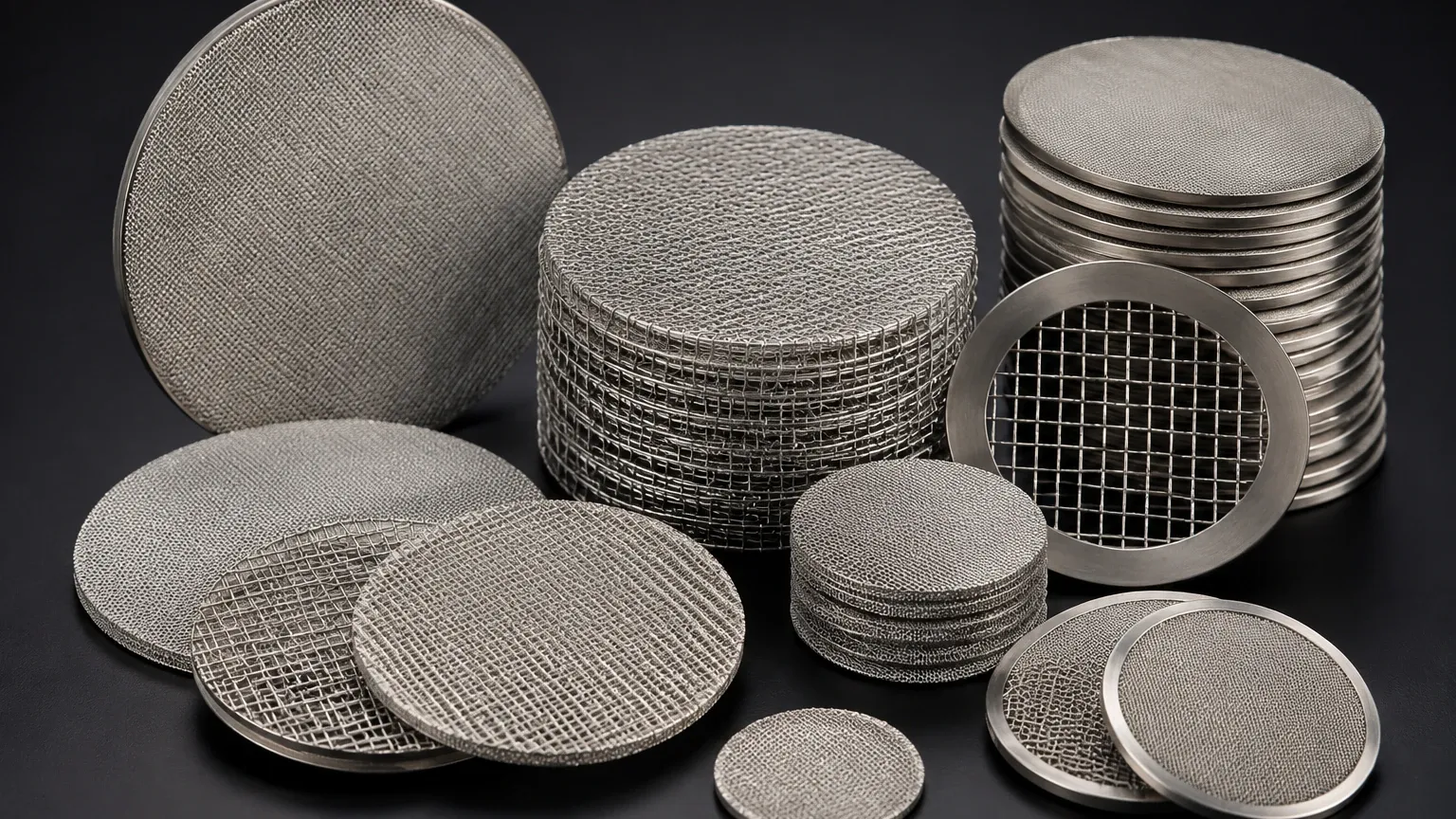
Industrial filtration requirements vary significantly across sectors such as chemical processing, pharmaceuticals, and polymer extrusion. Consequently, the "one-size-fits-all" approach is rarely applicable. This guide examines the technical specifications, engineering considerations, and selection criteria essential for optimizing filtration performance using stainless steel Filter Discs & Packs.
Engineering Principles and Material Selection
The performance of a filter disk is primarily dictated by its base material and the structure of the filtration media. Stainless steel is the industry standard due to its inherent resistance to corrosion, high temperatures, and mechanical stress. The most common alloys used include:
* AISI 304: Suitable for general industrial applications where basic corrosion resistance is required.
* AISI 316/316L: Preferred for marine environments, chemical processing, and pharmaceutical applications due to the addition of molybdenum, which enhances resistance to pitting and crevice corrosion.
* Specialty Alloys: In extreme environments involving highly acidic or alkaline fluids, alloys like Hastelloy, Monel, or Inconel may be utilized to prevent premature failure.
Beyond the alloy, the construction of the filter disk determines its filtration characteristics. Engineers typically choose between several types of media:
Woven Wire Mesh
This is the most versatile media, available in various weave patterns such as plain, twill, or Dutch weave. Plain weave offers high flow rates with moderate precision, while Dutch weave patterns provide finer filtration ratings and higher mechanical strength by packing more wires into a given area.
Sintered Metal Mesh
For high-pressure applications, multiple layers of wire mesh are sintered together—a process of diffusion bonding under high heat and pressure. This creates a porous metal structure that is exceptionally rigid and resistant to media migration, making it ideal for high-viscosity fluids or high-velocity gas filtration.
Perforated Metal and Expanded Metal
These are often used as support layers for finer meshes. They provide the structural backbone necessary to prevent the filter disk from deforming under high differential pressure (Delta P).
Key Performance Criteria for Selection
When specifying a filter disk for a new or existing system, technical professionals must evaluate several performance metrics to ensure the component meets the application's demands.
Micron Rating (Filtration Accuracy)
The micron rating defines the size of particles the disk is intended to capture. It is categorized into "nominal" and "absolute" ratings. A nominal rating indicates the ability to retain a majority of particles of a specific size, while an absolute rating guarantees the retention of all particles above that size. In critical pharmaceutical or semiconductor processes, absolute ratings are mandatory.
Flow Rate and Pressure Drop
The permeability of the filter disk determines the flow rate of the medium (liquid or gas). A common engineering challenge is balancing filtration fineness with pressure drop. A disk with a very fine micron rating will inherently offer more resistance, leading to a higher initial pressure drop. Engineers must calculate the Effective Filtration Area (EFA) to ensure the system pump or compressor can maintain the required flow without exceeding safety limits.
Mechanical Integrity and Burst Pressure
In hydraulic systems or high-pressure polymer extrusion, the filter disk must withstand significant mechanical loads. If the differential pressure across the disk exceeds its structural limits, the mesh may tear or collapse, leading to downstream contamination. Specifying the correct thickness and support structure is vital for preventing catastrophic failure.
Customization and Manufacturing Configurations
Standardized disks are available for many common applications, but custom-engineered solutions are often required to optimize performance. Manufacturing capabilities allow for a wide range of configurations within the category of Filter Discs & Packs.
Single-Layer vs. Multi-Layer Packs
A single-layer filter disk is often sufficient for low-pressure, coarse filtration. However, multi-layer packs are used to provide graded filtration—where outer layers catch larger debris and inner layers provide the final precision cut. This prevents the fine mesh from clogging prematurely, extending the service life of the component.
Rimming and Edging
To ensure a leak-proof seal and to prevent the edges of the wire mesh from fraying, filter disks can be finished with various rimming materials. Aluminum, stainless steel, and copper rims are common. The choice of rim material must be compatible with the housing and the process fluid to avoid galvanic corrosion.
Spot Welding and Assembly
For multi-layer packs, spot welding ensures that the layers remain aligned during installation and operation. Precise welding techniques are necessary to maintain the integrity of the mesh without damaging the fine wires that provide the filtration function.
Common Applications and Industry-Specific Requirements
The versatility of the filter disk makes it a staple in numerous industrial sectors, each with its own set of technical challenges.
Polymer and Plastic Extrusion
In the production of films, fibers, and resins, filter disks (often referred to as screen packs) are used to remove gels and un-melted particles from the polymer melt. These disks must operate at high temperatures (up to 400°C) and withstand pressures that can exceed 5,000 PSI. Durability and consistency are paramount here to prevent production downtime.
Chemical and Petrochemical Processing
Filtration in this sector often involves corrosive fluids and catalyst recovery. Stainless steel filter disks are used to protect sensitive instrumentation and to ensure the purity of the final chemical product. Resistance to chemical attack and the ability to be cleaned and reused are key economic drivers.
Food and Beverage Industry
Compliance with food safety standards (such as FDA or EU regulations) is non-negotiable. Filter disks used in this sector must be made from non-toxic materials and designed for easy cleaning (CIP – Clean-In-Place) to prevent bacterial growth. They are commonly used in the filtration of cooking oils, beverages, and syrups.
Pharmaceutical and Biotechnology
This industry requires the highest levels of precision. Filter disks are used in sterile air filtration, solvent purification, and the recovery of active pharmaceutical ingredients (APIs). The components must often undergo validation testing, including bubble point tests, to verify their filtration efficiency.
Maintenance, Cleaning, and Total Cost of Ownership
While the initial purchase price of a filter disk is a factor, the total cost of ownership (TCO) is heavily influenced by the disk's lifespan and cleanability. Unlike disposable synthetic filters, stainless steel disks are often cleanable and reusable.
Cleaning Methods
Depending on the contaminant, various cleaning methods can be employed:
* Ultrasonic Cleaning: Uses high-frequency sound waves to dislodge particles trapped deep within the mesh pores.
* Chemical Cleaning: Involves soaking the disks in solvents or acids to dissolve organic or inorganic deposits.
* Burn-off (Pyrolysis): Used primarily in the polymer industry to remove plastic residue by heating the disks in a controlled oxygen environment.
* Backwashing: In some systems, the flow is reversed to flush out accumulated solids.
Determining Replacement Cycles
Even with regular cleaning, a filter disk will eventually reach the end of its functional life. This may be due to "blinding" (permanent clogging of pores), mechanical fatigue, or thinning of the wires due to erosion. Monitoring the rate of pressure increase after each cleaning cycle helps engineers predict failure and schedule replacements before they impact production quality.
Technical Evaluation Checklist for Purchasing Teams
Before finalizing a purchase order for a filter disk or pack, technical and procurement teams should confirm the following details with their manufacturer:
1. Exact Alloy Grade: Is the material certified (e.g., 316L vs. 316)?
2. Micron Rating Verification: Is the rating nominal or absolute, and what testing method was used?
3. Operating Environment: Can the disk withstand the maximum operating temperature and chemical exposure of the process?
4. Differential Pressure Limits: What is the maximum Delta P the disk can handle before deformation?
5. Dimensional Tolerances: Does the disk diameter and thickness meet the housing specifications to ensure a proper seal?
6. Quantity and Lead Times: For high-volume extrusion processes, is there a reliable supply chain for replacement packs?
By addressing these technical parameters, organizations can ensure they are investing in filtration solutions that provide the best balance of performance, durability, and cost. Whether for a simple water treatment system or a high-stakes pharmaceutical process, the engineering of the filter disk remains a critical factor in industrial success.
For more information on customized configurations and material options, technical teams can Review product options and application support to find the specific filtration components required for their unique operational environments.
