


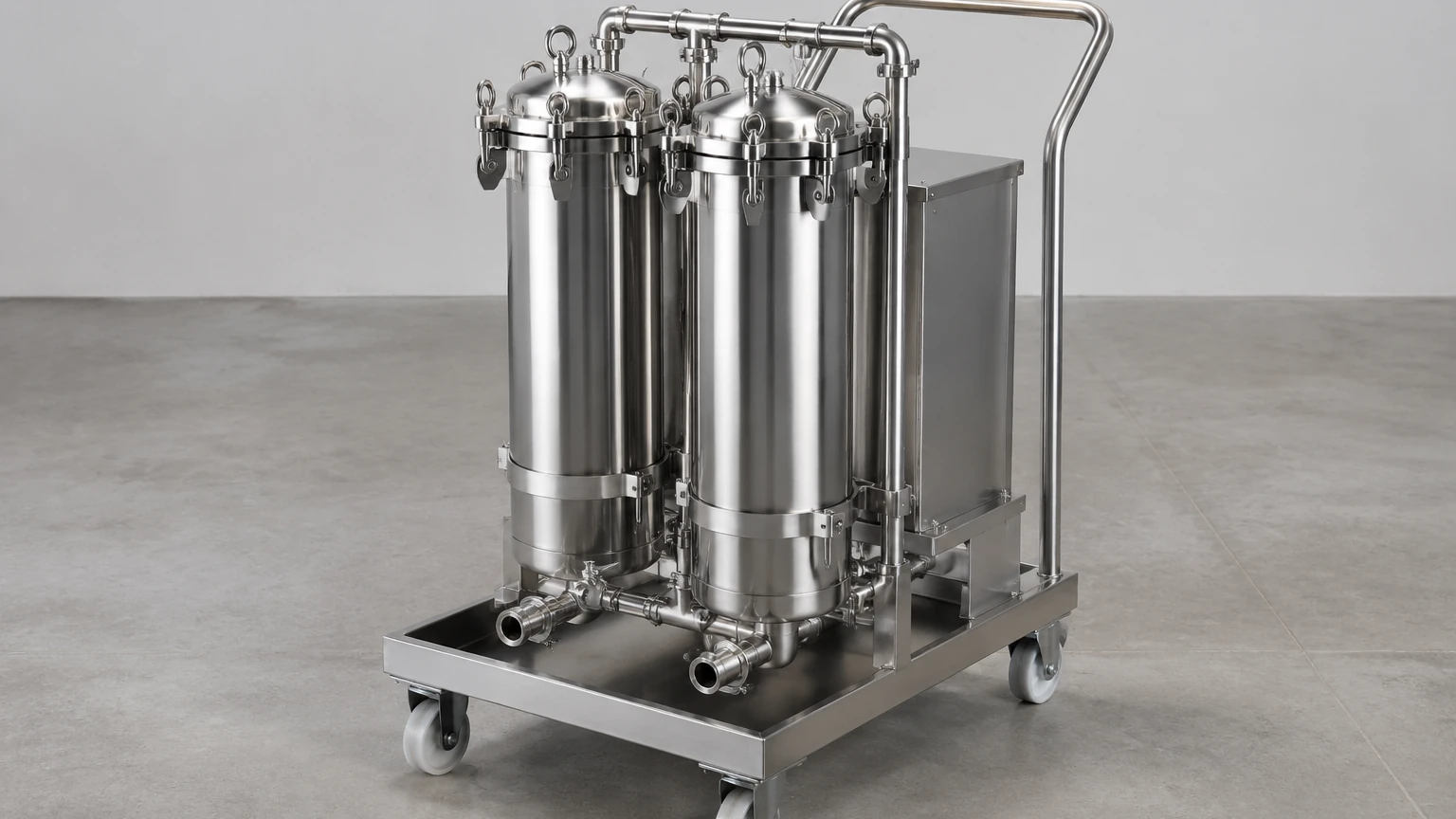
Oil Filtration Cart
In modern industrial maintenance, the cleanliness of hydraulic and lubrication fluids is a primary determinant of equipment longevity and operational reliability. Contamination—whether in the form of particulate matter, moisture, or varnish—accounts for a significant percentage of hydraulic system failures. An oil filtration cart, often referred to as a kidney loop system or portable filtration unit, serves as a critical tool for maintaining fluid integrity without interrupting primary machine operations. By circulating oil through high-efficiency filter media, these units remove contaminants that standard on-board filters may miss, ensuring that systems operate within their specified ISO 4406 cleanliness codes.
For engineers and maintenance managers, selecting the right oil filtration cart requires a deep understanding of fluid dynamics, filter media compatibility, and the specific demands of the industrial environment. As a specialist in custom stainless steel filtration solutions, Kaifil provides the technical expertise necessary to integrate high-performance components into these essential maintenance tools. To explore specific component designs and custom manufacturing capabilities, technical teams can refer to the Main Page for detailed product specifications.
Understanding the Role of an Oil Filtration Cart in Industrial Systems
An oil filtration cart is designed to perform "offline" filtration. Unlike the primary filters installed within a hydraulic circuit, which must handle the full flow and pressure of the system, a portable cart operates independently. It draws fluid from a reservoir, passes it through one or more filter stages, and returns it to the same reservoir. This continuous circulation allows for much finer filtration than is typically possible in-line, where pressure drops must be kept to a minimum to prevent cavitation or power loss.
These units are utilized in several key scenarios:
1. New Fluid Conditioning: Fresh oil from a drum is rarely clean enough for sensitive hydraulic systems. A filtration cart pre-cleans the oil before it enters the reservoir.
2. System Flushing: After a component failure or a major overhaul, a cart is used to flush out metallic debris and residual contaminants.
3. Periodic Maintenance: In systems with high ingress rates, such as those found in mining or metal processing, regular kidney loop filtration prevents the buildup of silt-sized particles.
4. Fluid Transfer: Moving oil from storage tanks to equipment while ensuring it remains free of atmospheric dust and moisture.
Technical Specifications and Engineering Components
The effectiveness of an oil filtration cart is defined by its core components. Engineering a unit that can handle various viscosities and contamination levels requires a balanced selection of pumps, motors, and filter housings.
Pump and Motor Selection
Most industrial carts utilize positive displacement pumps, typically gear pumps or vane pumps. Gear pumps are preferred for their ability to handle high-viscosity fluids (up to 10,000 SSU) and provide a steady flow regardless of the pressure differential across the filter media. The motor must be sized to provide sufficient torque for cold starts when fluid viscosity is at its peak. In hazardous environments, such as chemical processing or oil and gas facilities, explosion-proof (ATEX or UL/CSA certified) motors are a mandatory requirement.
Filter Housing Design
The housings must be constructed to withstand the mechanical stresses of portable use. While aluminum is common for lightweight units, stainless steel housings are preferred in pharmaceutical, food and beverage, and corrosive chemical applications due to their superior durability and resistance to chemical attack.
The Critical Role of Stainless Steel Filter Media
At the heart of every filtration cart is the filter element. While disposable cellulose or synthetic glass fiber elements are common, many industrial applications benefit significantly from the integration of stainless steel wire mesh or sintered metal filters. This is where the engineering expertise of a manufacturer like Kaifil becomes indispensable.
Advantages of Stainless Steel Elements
Stainless steel filters offer several technical advantages over traditional media:
* Durability: They can withstand high pressure differentials without collapsing or shedding media into the clean side of the system.
* Chemical Compatibility: Stainless steel is inert to most industrial lubricants, synthetic fluids, and solvents, preventing the media degradation often seen with resin-bonded fibers.
* Temperature Resistance: For hot oil applications, such as those found in plastic extrusion or heat transfer systems, stainless steel remains stable at temperatures exceeding 500°F (260°C).
* Cleanability: Unlike disposable elements, stainless steel mesh can be cleaned and reused, reducing the total cost of ownership and the environmental impact of waste oil and spent cartridges.
Filtration Accuracy
Precision-woven wire mesh allows for exact control over pore size. Engineers can specify absolute filtration ratings, ensuring that 100% of particles above a certain micron size are captured. This is critical for protecting high-precision servo valves and piston pumps that have clearances as small as 1 to 5 microns.
Performance Metrics: Viscosity, Flow Rate, and Beta Ratios
When evaluating an oil filtration cart, engineers must look beyond simple micron ratings. The performance of the unit is governed by three primary factors: viscosity handling, flow rate, and the Beta ratio of the filters.
Viscosity and Temperature
Oil viscosity changes dramatically with temperature. A cart that works efficiently at 40°C may struggle or trigger a bypass valve at 10°C. Engineering calculations must account for the highest possible viscosity the unit will encounter. If the fluid is too thick, the pump may cavitate, or the filter media may be damaged by excessive pressure drop ($ΔP$).
Flow Rate vs. Residence Time
There is a common misconception that a higher flow rate is always better. However, effective filtration requires sufficient residence time within the filter media. If the flow is too high for a given housing size, the velocity of the fluid can push contaminants through the pores or cause premature clogging. A typical industrial cart might offer flow rates ranging from 5 GPM (19 LPM) for high-viscosity gear oils to 20 GPM (75 LPM) for light hydraulic fluids.
The Beta Ratio (β)
The Beta ratio is the industry standard for measuring filter efficiency. A filter with a $βx[c] = 1000$ rating means that for every 1000 particles of size 'x' entering the filter, only one passes through. For critical systems, engineers should demand filters with high Beta ratios (at least 200 or 1000) to ensure meaningful cleanliness gains during each pass of the fluid.
Customization and OEM Considerations for Specialized Applications
Standard off-the-shelf filtration carts often fail to meet the specific needs of specialized industries. Customization allows for the optimization of the unit for the specific fluid and environment in which it will operate.
Material Selection for Corrosive Environments
In chemical processing or marine environments, standard steel components will quickly succumb to corrosion. Utilizing 304 or 316L stainless steel for all wetted parts—including the pump internals, piping, and filter elements—ensures long-term reliability. Kaifil specializes in these custom metal components, providing the precision needed for demanding OEM designs.
Multi-Stage Filtration
For heavily contaminated systems, a single-stage filter will clog too quickly. Custom carts often feature a multi-stage approach:
* Stage 1: A coarse stainless steel mesh (e.g., 40-100 microns) to remove large debris and protect the pump.
* Stage 2: A high-capacity water-absorbing element or a fine particulate filter (e.g., 3-10 microns).
* Stage 3: A final polishing stage or magnetic separator for capturing sub-micron metallic fines.
Portability and Ergonomics
Design considerations such as wheel type (pneumatic for rough floors vs. non-marking for cleanrooms), lifting eyes for crane transport, and integrated drip trays are essential for the practical utility of the cart in a busy industrial plant.
Operational Best Practices and Maintenance Cycles
To maximize the utility of an oil filtration cart, maintenance teams must follow rigorous operational protocols. Simply running the cart for an hour is rarely sufficient; the process must be data-driven.
Monitoring Cleanliness
Modern carts can be equipped with onboard laser particle counters. These devices provide real-time ISO 4406 cleanliness readings, allowing operators to know exactly when the target cleanliness level has been reached. Without this, fluid sampling and laboratory analysis are required to verify the effectiveness of the filtration cycle.
Filter Replacement Cycles
Filter life is not determined by time, but by the amount of contaminant captured. Carts should be equipped with differential pressure gauges (visual or electrical). A rising $ΔP$ indicates that the filter is reaching its dirt-holding capacity. If the unit is equipped with cleanable stainless steel elements, a regular ultrasonic cleaning schedule should be established to restore the media to its original flow characteristics.
Avoiding Cross-Contamination
One of the most common risks with portable carts is cross-contamination between different oil types. If a cart is used for hydraulic oil and then moved to a gearbox containing gear oil, the residual fluid in the pump and hoses can compromise the chemistry of the target system. Dedicated carts for different fluid types, or a thorough flushing procedure between uses, are necessary to prevent additive clashing or viscosity changes.
Total Cost of Ownership (TCO) Considerations
When purchasing an oil filtration cart, the initial price is only one part of the equation. Engineers must consider the long-term costs associated with replacement filters, energy consumption, and equipment downtime.
Units equipped with high-quality, durable components—specifically stainless steel filter cartridges—often have a higher upfront cost but significantly lower operating expenses. Disposable glass fiber elements can cost hundreds of dollars each and may need replacement several times during a single flushing operation. In contrast, a cleanable stainless steel element from a manufacturer like Kaifil can last for years, providing a rapid return on investment (ROI) through reduced consumable costs and waste disposal fees.
Conclusion
The implementation of an oil filtration cart is a strategic investment in industrial reliability. By understanding the technical nuances of pump selection, fluid viscosity, and filter media performance, engineering teams can significantly reduce the risk of hydraulic failure and extend the life of expensive lubricants. Whether the goal is to maintain a sterile environment in a pharmaceutical plant or to protect heavy machinery in a steel mill, the choice of filtration components is paramount. For those seeking specialized, high-durability filtration solutions, visiting the Main Page offers access to the engineering resources and custom manufacturing expertise required to optimize industrial fluid cleanliness.
