


Engineering Guide to Wire Mesh Oil Filter Elements in Industrial Systems
In industrial hydraulic and lubrication systems, the integrity of the fluid is paramount to the longevity of the machinery. A wire mesh oil filter element serves as a critical component in maintaining fluid cleanliness, specifically designed to remove particulate contaminants that can cause abrasive wear, component failure, and unplanned downtime. Unlike disposable cellulose or synthetic fiber media, stainless steel wire mesh provides a robust, cleanable, and dimensionally stable solution for demanding engineering environments.
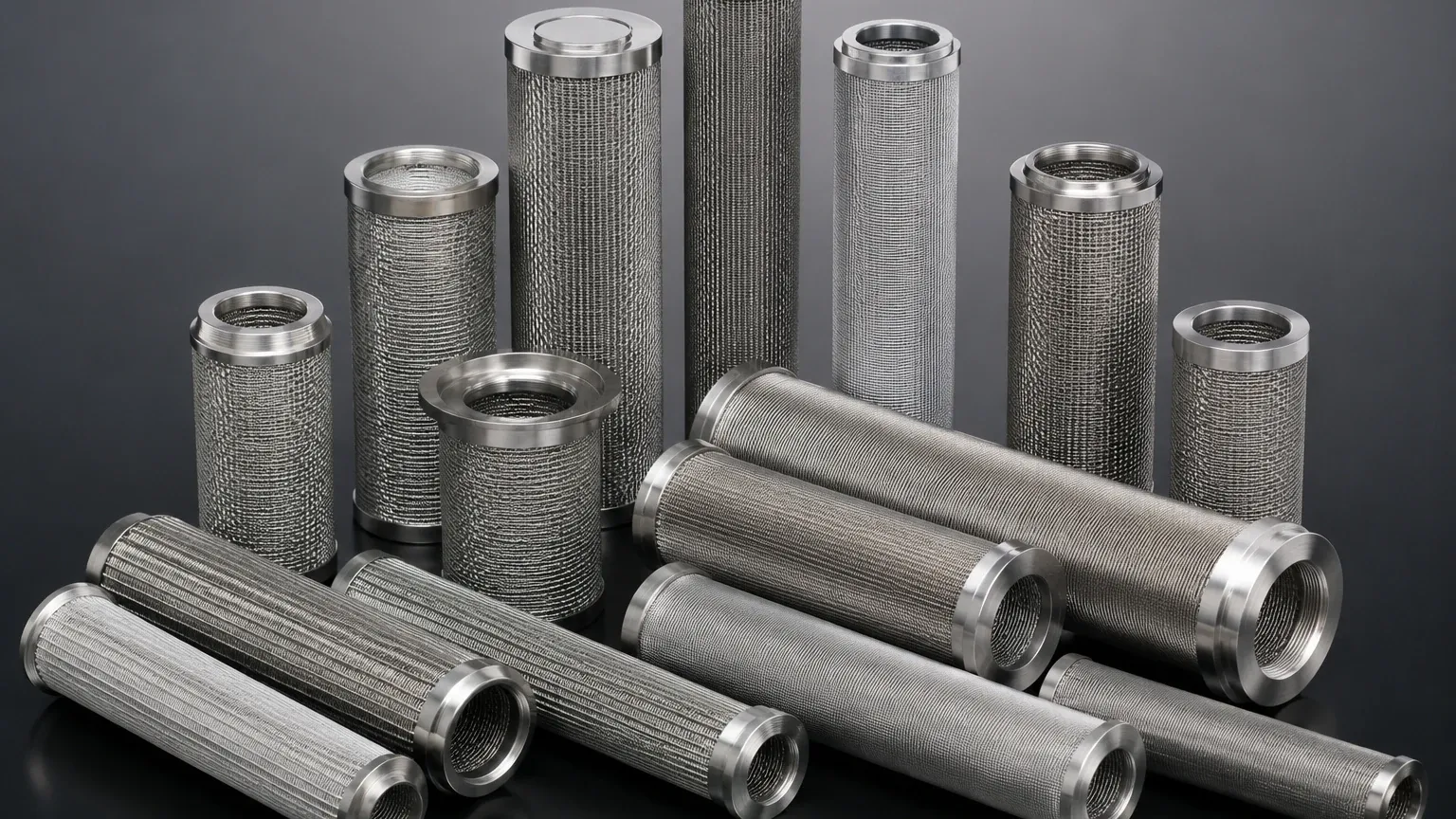
Selecting the correct filtration media requires an understanding of fluid dynamics, material science, and the specific mechanical constraints of the application. This guide explores the technical considerations for Wire Mesh Filter Cylinders & Tubes, focusing on how these components are engineered to meet the rigorous demands of modern industrial processes.
1. Operating Principles of Wire Mesh Filtration
The primary function of a wire mesh oil filter element is surface filtration. Unlike depth media, which traps particles within a thick layer of fibers, wire mesh captures contaminants on a single plane. This mechanism offers several distinct engineering advantages:
* Precise Pore Size: The weaving process allows for highly controlled aperture sizes. This ensures that the filter provides a consistent absolute micron rating, preventing any particles larger than the specified opening from passing through the system.
* Low Pressure Drop: Due to the high open area percentage of stainless steel mesh, these elements typically exhibit a lower initial pressure drop ($ΔP$) compared to depth-style filters of the same rating. This is critical for maintaining efficient pump operation and reducing energy consumption.
* Flow Stability: The rigid structure of the wire mesh prevents media migration and pore enlargement under high-pressure surges, a common failure mode in non-metallic filter elements.
In oil-based applications, the viscosity of the fluid significantly impacts filtration performance. As temperature fluctuates, the viscosity of the oil changes, which in turn affects the pressure drop across the filter. Engineering a system with wire mesh allows for more predictable performance across a wider temperature range due to the material's thermal stability.
2. Material Selection and Weave Types
When specifying a wire mesh oil filter element, the choice of material and weave pattern determines the filter’s efficiency and durability. Most industrial applications utilize austenitic stainless steels, such as SS304 or SS316L.
Stainless Steel Grades
* SS304: Suitable for standard industrial oils and general hydraulic fluids. It offers excellent mechanical strength and basic corrosion resistance.
* SS316L: Preferred for applications involving synthetic oils, aggressive chemical additives, or environments where corrosion (such as salt spray in offshore applications) is a concern. The 'L' denotes low carbon content, which improves weldability and prevents intergranular corrosion in the heat-affected zones of the filter assembly.
Weave Configurations
The geometry of the weave dictates the filtration characteristics:
* Plain Weave: The simplest pattern where wires cross over and under each other. It provides the highest open area but is generally limited to coarser filtration (above 50 microns).
* Twill Weave: Allows for a heavier wire diameter for a given mesh count, increasing the physical strength of the element.
* Plain Dutch Weave (PDW): Uses a combination of large diameter warp wires and smaller diameter shute wires. This results in a dense, strong mesh with high pressure resistance, ideal for fine oil filtration.
* Twilled Dutch Weave (TDW): Similar to PDW but with a twilled pattern, allowing for even finer filtration ratings (down to 5-10 microns absolute) by creating a tortuous path through the mesh layers.
3. Structural Design: Cylinders and Tubes
The mechanical architecture of Wire Mesh Filter Cylinders & Tubes is as important as the mesh itself. In high-pressure oil systems, the filter element must withstand significant differential pressures without collapsing or deforming.
Reinforcement and Support
To handle high flow rates and pressure spikes, the wire mesh is often supported by a perforated metal core or an outer shroud. This internal or external skeleton provides the necessary hoop strength. In many designs, multiple layers of mesh are used: a fine filtration layer is sandwiched between coarser "support" and "drainage" layers. This multi-layer construction prevents the fine mesh from flexing and failing due to fatigue.
Fabrication Methods
* Seam Welding: For cylindrical elements, the longitudinal seam is typically TIG (Tungsten Inert Gas) welded or plasma welded. This ensures a leak-proof join that is as strong as the parent material, unlike adhesive bonding which can degrade in hot oil.
* End Cap Integration: End caps are critical for ensuring a proper seal within the filter housing. These can be machined from solid bar stock or stamped from sheet metal and are usually welded to the mesh cylinder to ensure absolute bypass prevention.
4. Selection Criteria for Engineering Professionals
When selecting a wire mesh oil filter element, engineers must evaluate several variables to ensure the component is fit for purpose. Relying solely on a micron rating is often insufficient for industrial-scale procurement.
Micron Rating: Absolute vs. Nominal
In critical lubrication systems, absolute ratings are preferred. An absolute rating indicates the diameter of the largest hard spherical particle that will pass through the filter under specified test conditions. Nominal ratings are more subjective and represent an approximate efficiency, which may allow larger particles to pass during pressure surges.
Fluid Compatibility and Temperature
While stainless steel is generally inert, the seals and adhesives (if used) must be compatible with the specific oil chemistry. High-performance oils often contain zinc-based anti-wear additives or detergents that can affect certain bonding agents. For high-temperature applications (above 150°C), all-welded construction is mandatory.
Dirt-Holding Capacity (DHC)
Because wire mesh is a surface medium, its dirt-holding capacity is inherently lower than depth media. However, this is offset by its cleanability. Engineers must calculate the expected contaminant loading to determine the appropriate surface area. If the DHC is too low for the application, the filter will reach its terminal pressure drop too quickly, necessitating frequent maintenance.
5. Maintenance and Total Cost of Ownership (TCO)
One of the primary drivers for choosing Wire Mesh Filter Cylinders & Tubes over disposable alternatives is the Total Cost of Ownership. While the initial capital expenditure (CAPEX) for a stainless steel element is higher, the operational expenditure (OPEX) is significantly lower over the life of the equipment.
Cleaning Procedures
Stainless steel elements can be restored to near-original condition through various cleaning methods:
* Ultrasonic Cleaning: High-frequency sound waves create cavitation bubbles that dislodge fine particles from deep within the weave.
* Backwashing: Reversing the flow of clean fluid through the element to flush out contaminants.
* Chemical Cleaning: Using compatible solvents to dissolve varnishes or oxidized oil deposits that have adhered to the mesh.
Durability and Waste Reduction
A well-maintained wire mesh element can last for several years, whereas cellulose filters may need replacement every few months. This not only reduces the cost of replacement parts but also minimizes the environmental impact and disposal costs associated with oil-soaked waste.
6. Purchasing Checklist for International Buyers
For procurement teams and engineers sourcing filtration components globally, confirming technical specifications upfront is essential to avoid application failure. When requesting a quote for a wire mesh oil filter element, ensure the following data points are addressed:
1. Dimensional Tolerances: Specify the inner diameter (ID), outer diameter (OD), and overall length (OAL) with precise tolerances to ensure fitment in existing housings.
2. Maximum Differential Pressure: Define the collapse pressure required. This is especially important for suction-side vs. pressure-side filters.
3. Flow Direction: Confirm if the flow is outside-to-inside (standard) or inside-to-out, as this affects the placement of the support core.
4. Certification Requirements: For pharmaceutical or food-grade oil applications, ensure the materials meet FDA or relevant international standards.
5. End Fitting Configuration: Specify the type of seal (e.g., O-ring, flat gasket) and the material of the seal (Viton, Buna-N, EPDM).
Conclusion
The wire mesh oil filter element is a sophisticated engineering solution designed for reliability and precision. By utilizing high-grade Wire Mesh Filter Cylinders & Tubes, industrial operators can achieve superior fluid cleanliness while benefiting from the longevity and cleanability of stainless steel.
Whether the application involves high-pressure hydraulics in a manufacturing plant or specialized lubrication in a chemical processing facility, understanding the nuances of mesh weave, structural support, and material compatibility is the key to optimizing system performance. By focusing on technical specifications rather than just initial price, engineering teams can ensure their filtration systems provide maximum protection for their critical assets.
