


Air Filter Disk
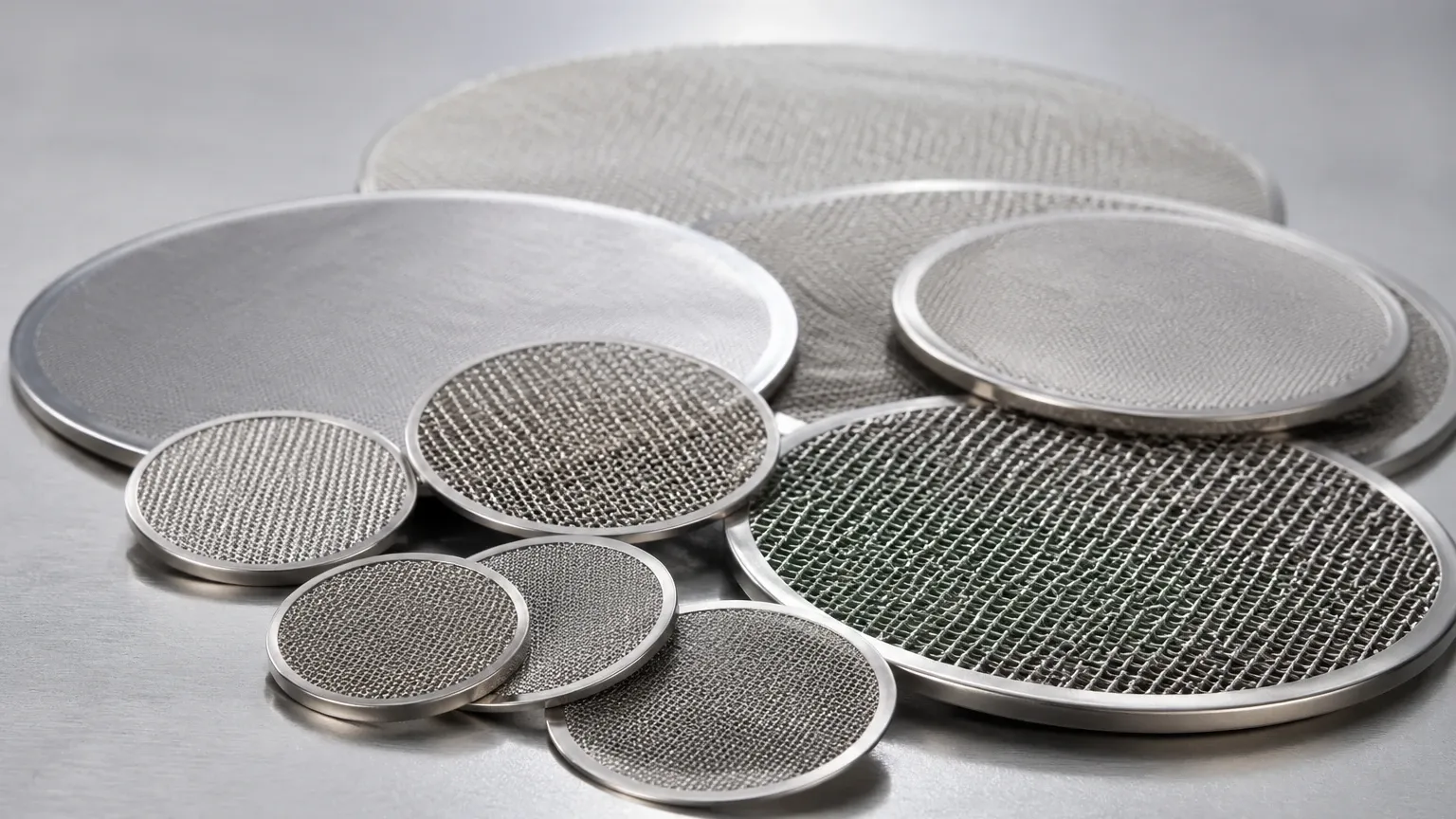
Industrial air filtration requires components that can withstand high velocities, temperature fluctuations, and corrosive environments while maintaining precise particle retention. An air filter disk is a specialized filtration component, typically constructed from stainless steel wire mesh, designed to remove particulate matter from gas or air streams. Unlike disposable polymer-based filters, metal air filter disks provide the mechanical strength and thermal stability necessary for demanding industrial processes, ranging from pneumatic systems to chemical gas purification.
For engineering and procurement teams, selecting the appropriate air filter disk involves a detailed analysis of mesh geometry, material compatibility, and structural design. These components are often integrated into larger systems as part of Filter Discs & Packs, where multiple layers of varying mesh counts are combined to optimize both filtration efficiency and service life.
Technical Foundations of Stainless Steel Air Filter Disks
The performance of an air filter disk is primarily dictated by the characteristics of the wire mesh used in its construction. Stainless steel, specifically grades 304, 316, and 316L, is the industry standard due to its balance of corrosion resistance and mechanical durability.
Material Selection
* Grade 304: Suitable for general industrial air filtration where high-level corrosion resistance is not the primary concern. It offers excellent strength and cost-effectiveness for standard atmospheric conditions.
* Grade 316/316L: Preferred for applications involving corrosive gases or high-moisture environments. The addition of molybdenum in 316 stainless steel enhances resistance to pitting and crevice corrosion, making it essential for chemical processing and marine environments.
Weave Types and Filtration Mechanics
The geometry of the weave determines how the air filter disk interacts with the gas stream. Common weave patterns include:
* Plain Weave: The most straightforward pattern, providing uniform pore sizes and high airflow. It is ideal for coarse filtration and high-velocity air streams.
* Twill Weave: Allows for a heavier wire diameter in a given mesh count, increasing the disk's mechanical strength and resistance to pressure surges.
* Dutch Weave: This pattern features a denser structure with smaller openings, facilitating fine filtration of microscopic particles while maintaining a robust physical profile.
Engineering Considerations for Air Filtration Efficiency
When specifying an air filter disk, engineers must balance three competing factors: filtration accuracy (micron rating), pressure drop, and dirt-holding capacity. In air and gas applications, the viscosity of the fluid is significantly lower than in liquid filtration, which allows for higher velocities but also increases the risk of particle "breakthrough" if the mesh is not correctly specified.
Pressure Drop (Delta P)
A critical metric in pneumatic and HVAC systems is the initial pressure drop across the filter. A high-density air filter disk may provide superior filtration but can cause a significant energy loss due to restricted airflow. To mitigate this, manufacturers often design multi-layer Filter Discs & Packs. By layering a fine filtration mesh between two coarser, high-strength support meshes, the system achieves fine particle retention without the structural deformation that could lead to increased resistance.
Particle Retention and Micron Rating
The micron rating of an air filter disk defines the size of the particles it is designed to intercept. In industrial air filtration, this can range from 5 microns for precision pneumatic components to 200+ microns for coarse intake screens. It is important to distinguish between "nominal" and "absolute" micron ratings; for critical gas-phase reactions or sensitive equipment protection, an absolute rating is usually required to ensure no particles above the specified size pass through the media.
Customization and Structural Design Variations
Industrial applications rarely permit a "one-size-fits-all" approach. The physical integration of an air filter disk into a housing or piping system requires specific edge treatments and assembly techniques. Kaifil specializes in providing customized solutions that address these mechanical requirements.
Layering and Sintering
For high-pressure air applications, a single layer of wire mesh may lack the necessary rigidity. Multi-layer disks can be spot-welded or sintered together. Sintering involves bonding the contact points of the wire mesh under high heat and pressure, creating a porous metal plate that is exceptionally strong and cannot be easily deformed or frayed. This is particularly useful for air filter disks used in high-vibration environments.
Edging and Rimming
To prevent the edges of the wire mesh from fraying and to provide a better seal within the filter housing, air filter disks are often finished with a rim. Common edging materials include:
* Stainless Steel Rims: Provide maximum durability and chemical compatibility.
* Aluminum Rims: Offer a lightweight and cost-effective alternative for less demanding environments.
* Copper or Rubber Gaskets: Used when a gas-tight seal is required to prevent bypass airflow around the filter element.
Applications Across Industrial Sectors
The versatility of the air filter disk makes it a staple in various sectors where gas purity is paramount. Each industry presents unique challenges that dictate the final design of the filter component.
Chemical and Petrochemical Processing
In these environments, air filter disks are used to protect sensitive catalysts and instrumentation from particulate contamination. The filters must withstand exposure to aggressive chemical vapors and high operating temperatures. Stainless steel 316L is typically the material of choice here due to its low carbon content and resistance to intergranular corrosion.
Food and Beverage Production
Air filtration is critical in pneumatic conveying systems for powdered ingredients and in the filtration of compressed air used for bottling or packaging. The air filter disk must be made from food-grade materials and be capable of undergoing rigorous cleaning cycles to prevent microbial growth.
Pharmaceutical Manufacturing
Precision is the priority in pharmaceutical gas filtration. Filter Discs & Packs used in this sector often require high-precision Dutch weaves to ensure the removal of fine particulates from sterile air streams. The ability to sterilize the stainless steel components via autoclaving or chemical agents is a significant advantage over disposable filters.
Maintenance, Cleaning, and Longevity
One of the primary B2B advantages of stainless steel air filter disks is their cleanability. Unlike synthetic media that must be replaced once clogged, metal mesh can be restored to near-original performance levels through several cleaning methods.
1. Ultrasonic Cleaning: High-frequency sound waves create cavitation bubbles that dislodge fine particles trapped deep within the mesh pores. This is the most effective method for fine-micron air filter disks.
2. Back-pulsing: In pneumatic systems, a brief reverse flow of air can often clear surface-level dust and debris, extending the interval between deep cleanings.
3. Chemical Cleaning: For contaminants like oils or polymers, compatible chemical solvents can be used to dissolve the blockage without damaging the stainless steel structure.
4. High-Temperature Burn-off: In some cases, organic contaminants can be removed by heating the disk in a controlled environment, provided the temperature remains below the alloy's sensitization range.
Selecting the Right Partner for Custom Filtration
When sourcing an air filter disk, purchasing teams must look beyond the unit price and consider the total cost of ownership. A poorly manufactured disk can lead to bypass leakage, frequent system downtime, or even downstream equipment damage if the mesh fails under pressure.
Kaifil provides comprehensive OEM and customized filtration solutions, ensuring that every air filter disk meets the specific technical requirements of the application. By working closely with global customers, Kaifil assists in material selection, micron rating optimization, and structural design. Whether the requirement is for a single-layer air filter disk for a simple intake or complex multi-layer Filter Discs & Packs for high-pressure gas processing, the focus remains on durability, precision, and reliable performance.
Before finalizing a specification, engineers should confirm the following with their supplier:
* Maximum Operating Pressure: To ensure the disk thickness and support layers are sufficient.
* Temperature Range: To select the appropriate alloy and edging material.
* Chemical Exposure: To verify material compatibility with the gas stream and potential cleaning agents.
* Flow Rate Requirements: To calculate the necessary surface area and avoid excessive pressure drop.
By addressing these factors during the design phase, industrial operators can achieve efficient, long-lasting filtration that protects their equipment and maintains the integrity of their processes.
