


Overhead Filter vs Canister Filter
In industrial filtration, selecting the appropriate housing and delivery system is as critical as the filter media itself. When engineers evaluate the merits of an overhead filter vs canister filter, the decision often hinges on flow requirements, pressure constraints, and the specific nature of the processed fluid. While these terms are occasionally used in smaller-scale applications, in a B2B industrial context—such as chemical processing, food and beverage production, or hydraulic systems—they represent two distinct approaches to fluid management and debris removal.
Understanding the mechanical differences between these systems allows procurement teams and plant engineers to optimize their filtration efficiency while minimizing the total cost of ownership. This guide examines the technical specifications, performance expectations, and the critical role of internal components like Filter Discs & Packs in ensuring system reliability.
Defining the Mechanical Architectures
To make an informed selection, it is necessary to define what these systems represent in an industrial environment.
Overhead Filtration Systems
Overhead filters, often referred to as top-entry or gravity-assisted systems, typically operate at lower pressures. These systems are frequently utilized in open-loop processes where the fluid is fed into a filtration chamber from above. The primary advantage of this configuration is ease of access. Because the housing is often accessible from the top, operators can perform visual inspections and media replacements with minimal downtime. However, because they often rely on gravity or low-pressure pumps, they may struggle with high-viscosity fluids or ultra-fine filtration requirements that necessitate high differential pressures.
Canister and Pressure Vessel Filters
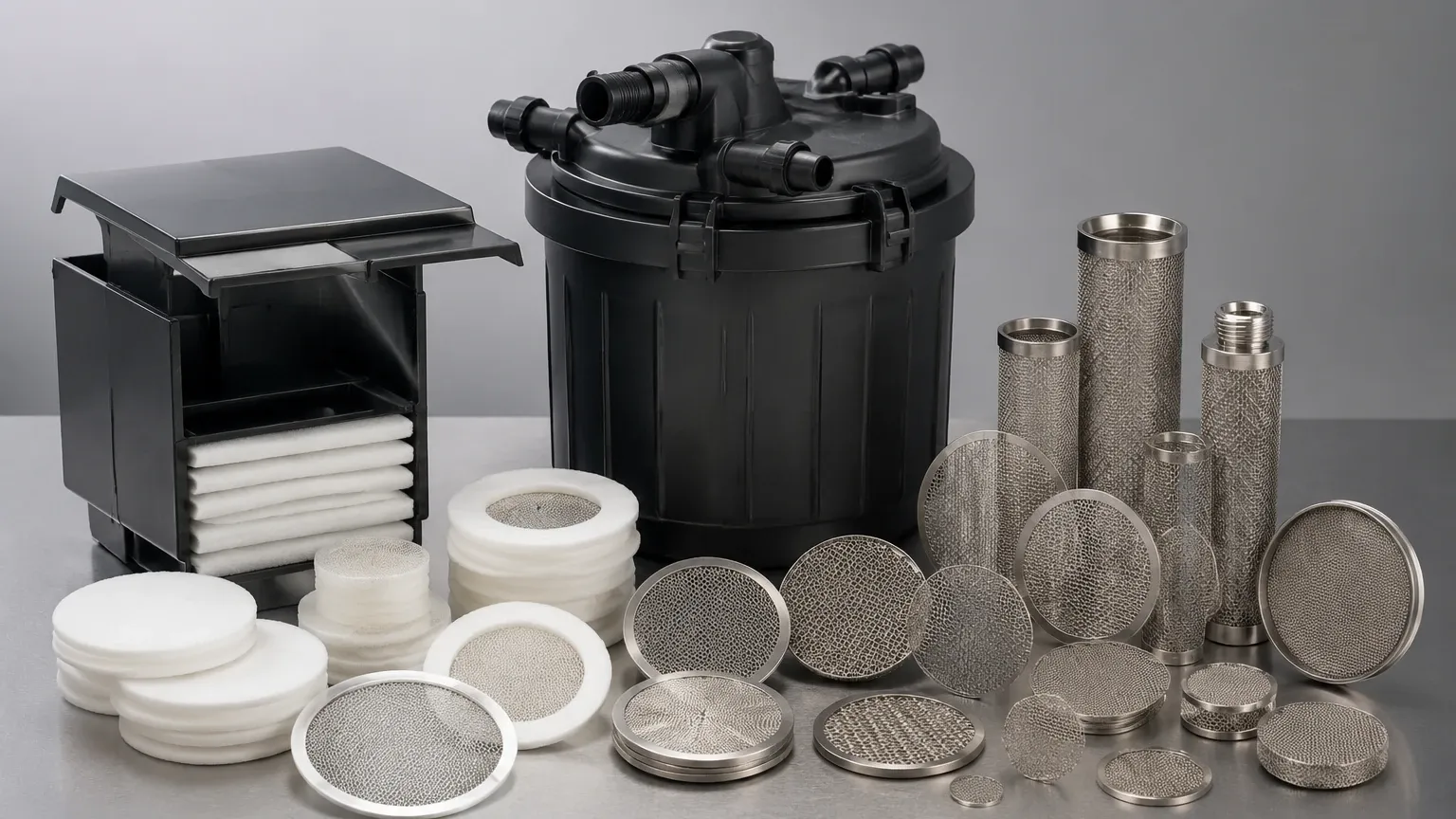
Canister filters in industrial settings are usually enclosed, pressurized vessels designed for high-velocity and high-pressure applications. These systems are integrated directly into the piping (in-line) and are capable of handling significantly higher flow rates than most overhead configurations. The sealed nature of a canister filter makes it ideal for hazardous chemicals, volatile fluids, or food-grade processes where atmospheric contamination must be strictly avoided. The internal structure of these canisters is designed to support robust Filter Discs & Packs that can withstand high pressure drops without deforming.
Key Evaluation Criteria: Performance and Efficiency
When comparing an overhead filter vs canister filter, engineers must look beyond the housing and evaluate how the system handles the specific demands of the application.
Pressure Handling and Flow Rates
Pressure is the most significant differentiator. Overhead systems are generally limited by the seal integrity of the top-entry point and the strength of the gravity feed. In contrast, canister filters are engineered as pressure vessels. If a process requires a high flow rate through a dense filter medium (such as a multi-layer sintered mesh), a canister system is almost always required to provide the necessary force to overcome the resistance of the media.
Filtration Precision and Micron Ratings
Both systems can achieve high levels of precision, provided they are equipped with high-quality stainless steel media. However, canister filters are better suited for sub-micron filtration. The pressurized environment ensures that fluid is forced through the fine apertures of the mesh consistently. In overhead systems, bypass—where fluid flows around the edges of the filter rather than through it—can be a risk if the media is not perfectly seated, as there is less mechanical pressure holding the filter in place compared to the bolted or clamped seals of a canister.
The Role of Filter Discs & Packs in Industrial Systems
Regardless of whether an overhead or canister configuration is chosen, the actual filtration performance is determined by the internal components. Stainless steel Filter Discs & Packs are the standard for demanding B2B applications due to their durability and resistance to extreme temperatures.
Multi-Layer Construction
In canister filters, these packs often consist of multiple layers of wire mesh, including a filtration layer, a support layer, and a drainage layer. This construction prevents the fine mesh from collapsing under high pressure. In overhead systems, single or double-layer discs might be sufficient for coarse pre-filtration or debris removal in water treatment or cooling loops.
Material Selection (304 vs. 316L)
For chemical processing or pharmaceutical applications, 316L stainless steel is preferred for its superior corrosion resistance. When selecting components for an overhead filter vs canister filter, engineers must ensure that the discs and packs are compatible with both the fluid chemistry and the mechanical stresses of the housing. Sintered packs are particularly effective in canister systems because the diffusion-bonding process ensures that no wires migrate into the downstream fluid, a critical requirement in food and beverage production.
Maintenance and Operational Considerations
Total cost of ownership is heavily influenced by how easily a system can be maintained and how long the filter media lasts.
Cleaning and Reusability
One of the primary benefits of using stainless steel media in either system is reusability. Unlike disposable polymer cartridges, stainless steel discs and packs can be cleaned via ultrasonic baths, backwashing, or chemical cleaning.
* Overhead Systems: These are generally easier to clean because the media is easily reached. Operators can quickly swap out a filter disc and restart the process.
* Canister Systems: While cleaning is still possible, the process involves depressurizing the system, opening the vessel, and potentially replacing seals. However, because canister filters often have a larger surface area (using pleated or multi-disc stacks), the intervals between cleaning cycles are typically longer.
Replacement Cycles
In an overhead filter vs canister filter comparison, the canister system often wins on longevity in high-load environments. The ability to use reinforced, multi-layer packs means the media can survive hundreds of cleaning cycles, whereas the simpler discs used in some overhead systems may be prone to mechanical wear if the flow is turbulent.
Common Risks and Engineering Pitfalls
Choosing the wrong system can lead to significant operational failures. Engineers should be aware of the following risks:
1. Pressure Spikes: If an overhead filter is subjected to an unexpected pressure surge, the housing may leak or the media may be displaced. Canister filters are built to contain these surges.
2. Oxidation and Contamination: Overhead systems, being more open to the environment, are susceptible to oxidation if the fluid is sensitive to air. For pharmaceutical or high-purity chemical applications, a sealed canister is mandatory.
3. Bypass Issues: In both systems, improper sizing of the Filter Discs & Packs can lead to fluid bypass. It is essential to work with a manufacturer that provides precision-cut components that match the internal tolerances of the housing.
Application Suitability Matrix
To simplify the selection process, consider the following application-based recommendations:
* Hydraulic Systems: Canister filters are the industry standard here due to the extreme pressures and the need for high-precision protection of sensitive valves.
* Water Treatment (Pre-filtration): Overhead filters are often sufficient for removing large particulates from intake water where high pressure is not required.
* Food & Beverage Processing: Canister filters are preferred for their sanitary, enclosed design, which prevents external contaminants from entering the product stream.
* Chemical Processing: Canister filters are typically required to ensure the safety of personnel by containing hazardous or corrosive fluids within a sealed vessel.
Conclusion: Selecting the Right Solution
The choice between an overhead filter vs canister filter is not merely a matter of preference but a technical decision based on the physics of the application. Overhead systems offer simplicity and ease of access for low-pressure, non-critical applications. Canister filters provide the robustness, pressure capacity, and containment required for high-performance industrial processing.
Regardless of the housing choice, the integrity of the filtration process depends on the quality of the internal media. Utilizing precision-engineered Filter Discs & Packs ensures that the system meets its micron rating and maintains flow efficiency over a long service life. Engineers should confirm flow rates, chemical compatibility, and maximum operating pressures with their component manufacturer before finalizing a system design to ensure optimal performance and safety.
