


O Filter
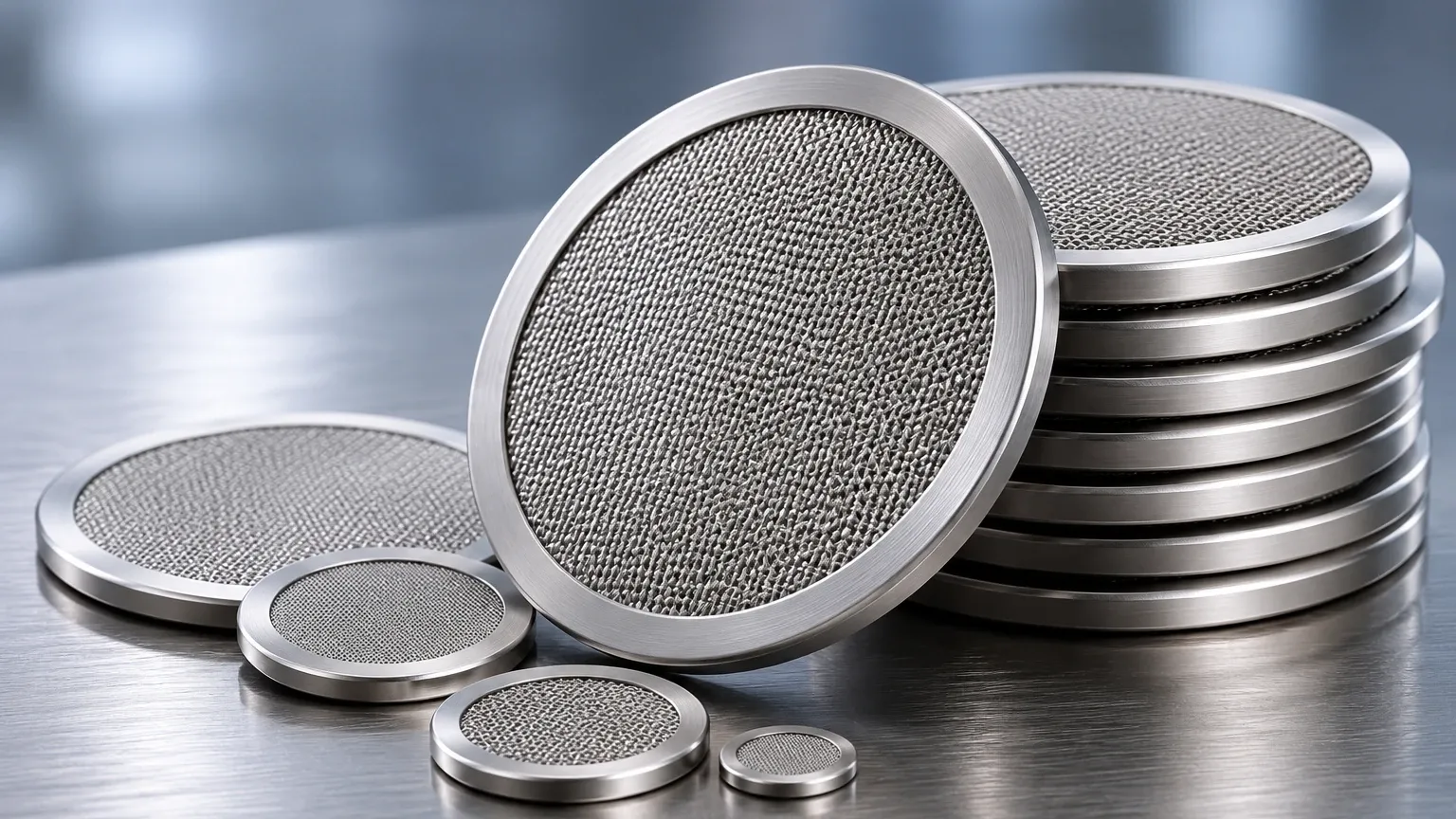
In the landscape of industrial filtration, the term "o filter" frequently refers to circular filter discs and packs designed to fit within cylindrical housings, valve assemblies, or piping systems. These components are critical for ensuring the purity of fluids and gases across a wide range of demanding sectors, including chemical processing, plastic extrusion, and hydraulic systems. Because these filters must often integrate seamlessly with O-ring seals or circular seating surfaces, their geometric precision and structural integrity are paramount to preventing bypass and ensuring consistent filtration performance.
Selecting the right Filter Discs & Packs involves a deep understanding of material science, fluid dynamics, and mechanical engineering. For engineers and procurement specialists, the challenge lies in balancing filtration fineness with flow rates, pressure drops, and the ability to withstand harsh operating environments. This guide explores the technical nuances of circular metal filters, providing the necessary context for making informed industrial purchasing decisions.
The Engineering Behind Circular Filter Discs
The geometry of an o filter is not merely a matter of shape but a functional requirement for most pressurized systems. Circular discs provide a uniform distribution of stress when clamped between flanges or seated within a housing. Unlike rectangular or irregular shapes, circular filters eliminate corner-related turbulence and potential weak points where pressure could cause the mesh to fail.
Single-Layer vs. Multi-Layer Construction
Industrial circular filters are generally categorized into two types: single-layer discs and multi-layer packs.
1. Single-Layer Discs: These are typically used in low-pressure applications or as a secondary safety mesh. They are cost-effective and easy to replace. However, they lack the structural rigidity required for high-viscosity media or high-pressure differentials.
2. Multi-Layer Filter Packs: These consist of several layers of wire mesh—often varying in weave and micron rating—bonded together. The layers usually include a fine filtration layer protected by coarser support and drainage layers. These packs are often spot-welded at the edges or encased in a metal rim (aluminum, stainless steel, or copper) to maintain alignment and facilitate a leak-proof seal.
Material Selection: Beyond Standard Stainless Steel
Material compatibility is the first line of defense in industrial filtration. While stainless steel is the industry standard for an o filter, the specific grade must be matched to the chemical and thermal profile of the application.
* Stainless Steel 304: The most common choice for general industrial use. It offers good corrosion resistance and is suitable for food and beverage applications where high acidity or alkalinity is not a factor.
* Stainless Steel 316/316L: Preferred for pharmaceutical and marine environments. The addition of molybdenum enhances resistance to pitting and crevice corrosion, particularly in chloride-rich environments. The "L" (low carbon) variant is essential for components that require welding, as it prevents carbide precipitation.
* Exotic Alloys: In extreme cases, such as highly corrosive chemical processing or high-temperature aerospace applications, materials like Monel, Inconel, or Hastelloy may be used. These alloys provide superior stability under conditions that would cause standard stainless steel to degrade.
Weave Types and Their Impact on Performance
The performance of an o filter is dictated by the weave of the wire mesh. Each weave type offers a different balance of mechanical strength, filtration accuracy, and flow capacity.
Plain Weave
This is the most straightforward weave, where each warp wire crosses over and under each shute wire. It provides a high percentage of open area, making it ideal for high-flow applications with relatively low pressure. However, it is limited in its ability to achieve ultra-fine micron ratings.
Twill Weave
In a twill weave, each shute wire passes over and under two warp wires. This allows for a heavier wire diameter to be used for a given mesh count, resulting in a stronger mesh that can achieve finer filtration than plain weave. It is commonly used in hydraulic systems where durability is as important as precision.
Dutch Weave (Plain and Twill)
Dutch weaves utilize a larger diameter warp wire and a smaller diameter shute wire, woven tightly together. This creates a "tortuous path" for the media, providing excellent depth filtration and the ability to filter particles down to 5-10 microns. For an o filter used in high-pressure polymer extrusion, Dutch weave packs are often the preferred solution due to their high mechanical strength and precise retention capabilities.
Customization and Edge Processing
One of the most critical aspects of procuring industrial Filter Discs & Packs is the finishing of the edges. In many systems, the filter disc must act as its own gasket or sit perfectly flush against a machined surface.
* Rimmed Edges: Adding a metal rim (often aluminum or stainless steel) provides several benefits. It prevents the edges of the wire mesh from fraying, ensures the multi-layer pack stays together during installation, and provides a compressible surface that can help create a seal, effectively acting as an integrated gasket in an o filter assembly.
* Spot Welding: For packs that do not require a rim, spot welding at strategic points around the circumference ensures the layers remain aligned without adding significant thickness to the edge.
* Sintered Discs: For the most demanding applications, multiple layers of mesh are sintered together. Sintering uses heat and pressure to bond the wires at every contact point, creating a monolithic structure that is incredibly strong, easy to clean, and permanent. Sintered o filters are ideal for high-pressure backwashing systems.
Key Evaluation Criteria for Engineers
When specifying an o filter for a new or existing system, engineers should confirm several performance metrics to avoid premature failure or system downtime.
Micron Rating: Absolute vs. Nominal
It is vital to distinguish between nominal and absolute micron ratings. A nominal rating indicates the ability of the filter to retain a certain percentage of particles of a specific size. An absolute rating, common in high-precision stainless steel mesh, indicates the diameter of the largest spherical particle that can pass through the mesh. For critical pharmaceutical or hydraulic applications, absolute ratings are usually required.
Pressure Drop (Delta P)
The pressure drop across the filter is a function of the mesh's open area and the viscosity of the fluid. An o filter with a very fine micron rating will naturally have a higher initial pressure drop. Engineers must ensure the system's pump capacity can handle the Delta P as the filter begins to load with contaminants.
Dirt Holding Capacity
This refers to the amount of contaminant the filter can collect before the pressure drop reaches a critical level. Multi-layer packs generally offer higher dirt-holding capacity than single-layer discs because they provide a degree of depth filtration, allowing smaller particles to be trapped within the inner layers while larger particles are caught on the surface.
Common Risks and Mitigation Strategies
Even a high-quality o filter can fail if not properly specified for the application. Common risks include:
1. Media Migration: If the mesh is not properly bonded or if the wire diameter is too thin for the pressure, individual wires can break and enter the downstream flow. Using sintered mesh or high-quality rimmed packs mitigates this risk.
2. Bypass: If the disc is not sized correctly for the housing, or if the edge is not properly sealed, fluid will take the path of least resistance around the filter. Precision laser cutting and the use of rimmed edges are effective solutions.
3. Chemical Incompatibility: Using SS304 in a high-chloride environment can lead to rapid stress corrosion cracking. Always verify the chemical composition of the process fluid and any cleaning agents used.
Maintenance and Cleaning of Stainless Steel Filters
One of the primary advantages of using stainless steel for an o filter is that it is often cleanable and reusable, which lowers the total cost of ownership compared to disposable polymer filters.
* Ultrasonic Cleaning: This is the most effective method for removing fine particles trapped within the weave of the mesh. It uses high-frequency sound waves to create cavitation bubbles that dislodge contaminants.
* Chemical Cleaning: Soaking the filters in compatible solvents or acids can dissolve organic or mineral deposits. This must be followed by thorough rinsing to prevent chemical carryover into the process.
* Burn-off (Pyrolysis): For filters used in polymer extrusion, heating the filters in a controlled furnace can burn off residual plastic, leaving the stainless steel mesh clean. However, this must be done carefully to avoid annealing the metal and reducing its strength.
Conclusion: Confirming Requirements Before Purchase
Before proceeding with an order for Filter Discs & Packs, technical teams should document the exact operating temperature, maximum system pressure, required micron rating, and the chemical nature of the media. For customized o filter solutions, providing a detailed CAD drawing or a physical sample ensures that the final product will fit perfectly within the intended housing and perform to specification.
By focusing on material quality, weave precision, and structural integrity, manufacturers like Kaifil provide the reliable filtration components necessary to protect downstream equipment and maintain product quality in the world's most demanding industrial environments.
