


Porous Plastic Filter Discs Supplier in India
In the landscape of industrial filtration, the selection of media is a critical engineering decision that dictates the efficiency, longevity, and cost-effectiveness of a process. For many applications in the chemical, pharmaceutical, and water treatment sectors, porous plastic filter discs offer a unique combination of chemical resistance and structural versatility. As industrial capacity expands across South Asia, identifying a reliable porous plastic filter discs supplier in India has become a priority for procurement teams and process engineers who require high-performance components with localized logistics.
This guide examines the technical specifications of porous plastic media, compares them with traditional metal Filter Discs & Packs, and outlines the essential criteria for evaluating suppliers in the Indian market.
Understanding Porous Plastic Filtration Technology
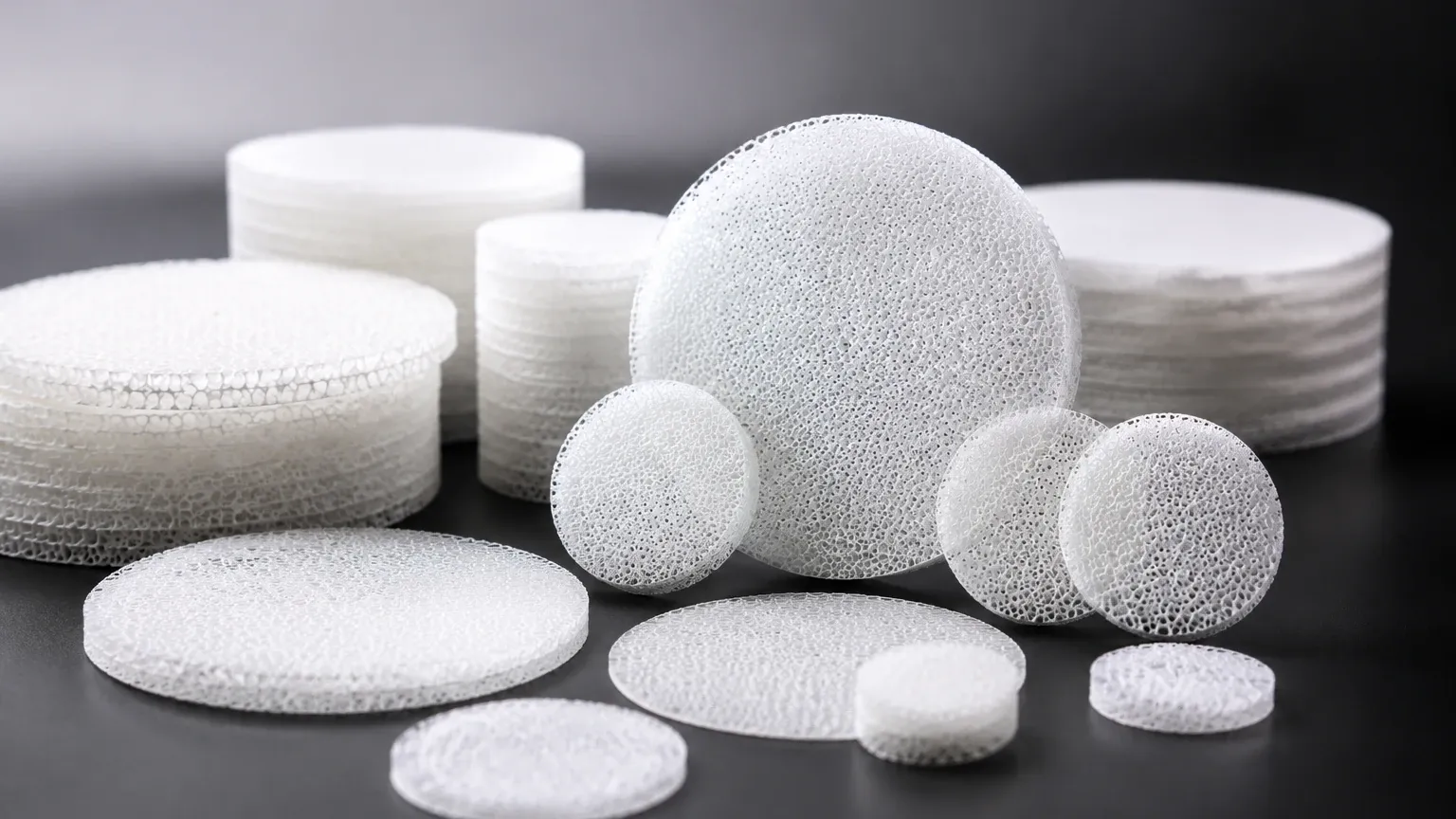
Porous plastics are typically manufactured through a sintering process. Unlike traditional plastic molding, sintering involves heating polymer granules—such as Ultra-High Molecular Weight Polyethylene (UHMWPE) or Polypropylene (PP)—below their melting point until the particles fuse at their contact points. This creates a robust, self-supporting structure with a complex, omni-directional pore network.
The Sintering Process and Pore Geometry
The resulting "tortuous path" within the material is what provides its filtration capability. Unlike surface filters (like thin membranes), porous plastic discs act as depth filters. Contaminants are trapped not just on the surface but throughout the thickness of the disc. This depth-loading characteristic allows for a higher dirt-holding capacity and prevents immediate blinding of the filter surface.
Micron Ratings and Porosity
Engineers must specify the required filtration accuracy, often ranging from 1 micron to 200 microns. The porosity—the ratio of void space to total volume—typically falls between 30% and 50%. High porosity ensures low pressure drop across the media, which is vital for maintaining flow rates in gravity-fed or low-pressure pumped systems.
Key Material Properties: PE, PP, and PTFE
When sourcing from a porous plastic filter discs supplier in India, the choice of polymer is the first technical hurdle. Each material offers distinct advantages based on the chemical and thermal environment of the application.
Polyethylene (PE/UHMWPE)
UHMWPE is the most common material for porous discs due to its exceptional abrasion resistance and high impact strength. It is naturally hydrophobic, making it ideal for air/gas filtration and moisture separation. In Indian industrial environments, PE is frequently used for water filtration and pneumatic silencers.
Polypropylene (PP)
Polypropylene offers higher thermal resistance than PE, typically withstanding temperatures up to 90°C or 100°C in non-stressed applications. It provides excellent resistance to acids and alkalis, making it a staple in the chemical processing industry for filtering aggressive reagents.
Polytetrafluoroethylene (PTFE)
For extreme environments involving high temperatures (up to 260°C) or highly corrosive organic solvents, PTFE is the material of choice. While more expensive, its chemically inert nature ensures that the filter media does not leach impurities into the filtrate, a requirement often found in pharmaceutical and high-purity laboratory settings.
Comparing Plastic Discs with Stainless Steel Filter Discs & Packs
While porous plastics are effective for many light-to-medium duty applications, engineers often compare them against stainless steel Filter Discs & Packs when designing high-pressure or high-temperature systems. Understanding the trade-offs is essential for long-term operational success.
| Feature | Porous Plastic Discs | Stainless Steel Filter Discs & Packs |
| :— | :— | :— |
| Temperature Limit | Low to Moderate (up to 100°C for PP) | High (up to 500°C+ depending on alloy) |
| Pressure Resistance | Moderate (may require support) | Very High (structural integrity) |
| Chemical Compatibility | Excellent for acids/bases | Excellent for solvents/high-temp organics |
| Cleanability | Limited (often disposable) | High (ultrasonic or backwash cleaning) |
| Cost | Lower initial cost | Higher initial investment, lower lifecycle cost |
For applications involving hydraulic fluids, high-viscosity polymers, or steam filtration, stainless steel remains the industry standard. However, for single-use medical devices, battery vents, or low-pressure water treatment, porous plastics offer a lightweight and cost-effective alternative.
Criteria for Selecting a Porous Plastic Filter Discs Supplier in India
Selecting a supplier involves more than comparing price lists. In a B2B context, technical reliability and quality consistency are the primary drivers of value.
1. Manufacturing Capabilities and Customization
Industrial filtration rarely follows a "one size fits all" approach. A capable supplier should offer customization in terms of:
* Geometry: Ability to produce discs in various diameters and thicknesses.
* Hydrophilic Treatment: For aqueous filtration, naturally hydrophobic plastics may need chemical treatment to allow water to pass through freely.
* Assembly: Integration of the plastic disc into a plastic or metal housing.
2. Quality Assurance and Testing
Inquire about the supplier’s testing protocols. Do they provide Bubble Point testing to verify pore size? Are the materials FDA-compliant for food and beverage or pharmaceutical use? In India, ISO 9001 certification is a baseline requirement, but specific industry certifications (such as USP Class VI for medical applications) may be necessary.
3. Technical Support and Engineering Expertise
A leading porous plastic filter discs supplier in India should function as a technical partner. They should be able to assist in calculating pressure drops and recommending the appropriate polymer based on the chemical MSDS (Material Safety Data Sheet) of the fluid being filtered.
Industrial Applications and Engineering Integration
The versatility of porous plastic discs allows them to be integrated into a wide array of industrial components.
Fluidization and Aeration
In the bulk solids industry, porous plastic discs are used to introduce air into powders (like cement or flour) to make them flow like liquids. This process, known as fluidization, requires highly uniform pore distribution to prevent "channeling," where air escapes through a single path rather than dispersing evenly.
Battery Venting
Lead-acid and lithium-ion batteries require venting systems that allow gases to escape while preventing the ingress of dust and moisture. Porous PE discs are often used here because they can be engineered to be oleophobic (oil-repellent) and hydrophobic, ensuring the battery remains sealed against environmental contaminants.
Vacuum Filtration
In laboratory and pilot plant settings, porous plastic discs serve as the support structure for filter papers or membranes. Their rigidity prevents the membrane from rupturing under vacuum pressure while providing a uniform drainage layer.
Operational Factors: Maintenance and Replacement Cycles
One of the most common questions engineers ask is: "When should the filter be replaced?" Unlike stainless steel Filter Discs & Packs, which can often be cleaned and reused multiple times, porous plastic discs are frequently treated as semi-consumable or disposable components.
Monitoring Pressure Drop
The most reliable indicator for replacement is the differential pressure ($ΔP$). As the internal pore structure becomes saturated with contaminants, the resistance to flow increases. Systems should be equipped with pressure gauges upstream and downstream of the filter. A common rule of thumb is to replace the disc when the $ΔP$ reaches a predetermined "terminal pressure drop," usually defined by the pump's capacity or the structural limits of the plastic disc.
Chemical Degradation
Even if the pressure drop remains stable, plastic filters should be inspected for signs of chemical degradation, such as swelling, softening, or discoloration. Over time, exposure to UV light or certain oxidizers can embrittle the polymer, leading to the release of plastic particles into the filtrate (media migration).
Procurement Checklist for Industrial Filtration Components
Before finalizing an order with a porous plastic filter discs supplier in India, procurement teams should confirm the following technical details:
1. Material Compatibility: Verify the polymer's resistance to the specific concentration and temperature of the process fluid.
2. Micron Rating: Distinguish between "nominal" (approximate) and "absolute" (guaranteed) filtration ratings.
3. Dimensional Tolerances: Ensure the discs will fit precisely into existing housings to prevent bypass (unfiltered fluid leaking around the edges).
4. Batch Consistency: Request samples or test reports from multiple production runs to ensure pore size uniformity.
5. Lead Times: Confirm that the supplier can meet production schedules, especially if the discs are a critical component of a larger OEM product.
Conclusion
Finding the right porous plastic filter discs supplier in India requires a balance of technical scrutiny and logistical considerations. While porous plastics provide excellent depth filtration and chemical resistance for a variety of low-to-medium pressure applications, they are part of a broader spectrum of filtration solutions. For more demanding environments where durability, high-pressure resistance, and extreme temperature stability are paramount, engineers often turn to stainless steel Filter Discs & Packs.
By understanding the material science behind sintered polymers and maintaining a rigorous evaluation process for suppliers, industrial operators can ensure their filtration systems perform reliably, protecting both downstream equipment and the purity of the final product.
Download Porous Plastic Filter Discs Supplier in India as a PDF
