


R4 Filter Discs
In the landscape of industrial filtration, precision and reliability are the primary benchmarks for operational success. R4 filter discs represent a specific category of high-performance filtration components designed to withstand the rigorous demands of chemical processing, polymer extrusion, and hydraulic systems. As a critical element in maintaining fluid purity and protecting downstream equipment, these discs must be engineered with exact tolerances and material integrity.
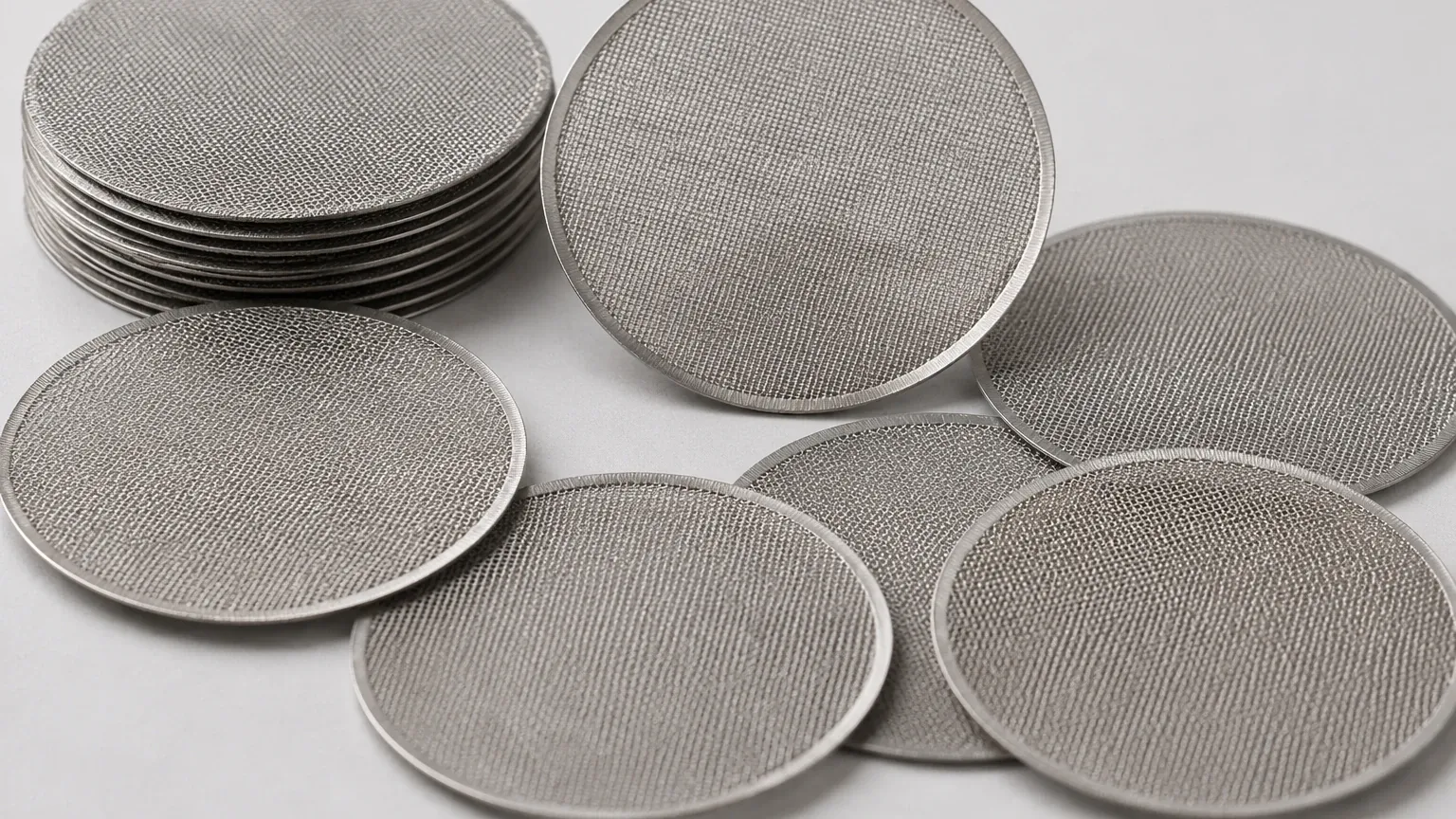
Kaifil, a specialist in custom stainless steel filtration solutions, manufactures Filter Discs & Packs that meet the stringent requirements of modern engineering. Understanding the technical nuances of r4 filter discs—from material selection to structural configuration—is essential for procurement teams and engineers looking to optimize their filtration processes and reduce total cost of ownership.
Engineering Principles of R4 Filter Discs
The performance of an r4 filter disc is fundamentally rooted in its material composition and weave structure. Most industrial applications require the use of stainless steel, specifically grades 304, 316, or 316L, due to their inherent resistance to corrosion, high temperatures, and mechanical stress.
Material Selection
Stainless steel 304 is often the standard for general industrial applications where basic corrosion resistance is sufficient. However, in environments involving acidic or saline solutions, stainless steel 316L is preferred. The "L" denotes low carbon content, which minimizes carbide precipitation during welding, thereby enhancing the disc's structural integrity and resistance to intergranular corrosion.
Weave Patterns and Filtration Accuracy
The "R4" designation often correlates with specific mesh counts or standardized dimensions used in specialized machinery. The choice of weave—whether plain, twill, or Dutch weave—determines the micron rating and flow characteristics.
- Plain Weave: Offers straightforward filtration with high open areas, suitable for low-pressure applications.
- Dutch Weave: Provides a denser structure with higher filtration accuracy, making it ideal for high-pressure environments where fine particle retention is critical.
By selecting the appropriate weave and wire diameter, engineers can balance the need for fine filtration with the requirement for a low initial pressure drop.
Critical Applications in Industrial Processing
R4 filter discs are utilized across a broad spectrum of industries, each presenting unique challenges that dictate the disc's design.
Polymer and Plastic Extrusion
In the plastics industry, melt filtration is vital for removing impurities from molten polymers. R4 filter discs are often used in screen changers to prevent contaminants from reaching the die, which could otherwise cause surface defects in the final product or lead to expensive machinery downtime. The discs must withstand extreme temperatures and high differential pressures without deforming.
Chemical and Petrochemical Sectors
Chemical processing often involves aggressive media that can degrade standard filtration materials. Stainless steel r4 filter discs provide the necessary chemical compatibility to handle solvents, resins, and catalysts. Their ability to be cleaned and reused makes them a more sustainable and cost-effective choice compared to disposable synthetic filters.
Hydraulic and Lubrication Systems
Precision hydraulic systems rely on clean oil to prevent component wear. Filter discs are integrated into these systems to capture fine metallic particles and debris. The high tensile strength of stainless steel ensures that the r4 filter discs maintain their shape even under the pulsing flow conditions common in hydraulic circuits.
Construction Variants: Single-Layer vs. Multi-Layer Packs
Depending on the application's pressure requirements and the desired lifespan of the filter, r4 filter discs can be supplied as individual layers or as part of a multi-layer assembly known as a filter pack.
Single-Layer Discs
Single-layer r4 filter discs are typically used in applications where the contaminant load is low or where the filter is frequently replaced. These are often precision-cut using laser or stamping technologies to ensure exact edge quality and dimensional accuracy.
Multi-Layer Filter Packs
For more demanding environments, multiple layers of wire mesh are combined. A typical configuration includes:
1. Filtration Layer: The primary mesh layer that determines the micron rating.
2. Support Layers: Coarser mesh layers on either side of the filtration layer that provide mechanical strength and prevent the fine mesh from collapsing under pressure.
3. Drainage Layers: Facilitate the flow of the filtrate across the surface of the disc.
These layers can be bound together using spot welding or by enclosing them in a metal rim (often aluminum or stainless steel). This framing ensures that the Filter Discs & Packs fit securely within the housing, preventing bypass—a common failure point in industrial filtration.
Technical Evaluation and Selection Criteria
When specifying r4 filter discs, engineers must move beyond basic dimensions and consider the holistic performance of the component within the system.
Micron Rating and Efficiency
It is essential to distinguish between nominal and absolute micron ratings. A nominal rating indicates the filter's ability to retain the majority of particles of a certain size, while an absolute rating refers to the diameter of the largest hard spherical particle that will pass through the filter under specified test conditions. For critical applications, absolute-rated r4 filter discs are necessary to ensure consistent output quality.
Pressure Drop (Delta P)
The initial pressure drop across a clean filter disc affects the energy efficiency of the entire system. A disc with a high open area will have a lower initial Delta P, but it may offer less structural support. Engineers must calculate the maximum allowable pressure drop before the filter requires cleaning or replacement to avoid system failure.
Temperature and Chemical Compatibility
While stainless steel is robust, certain chemicals at high temperatures can cause pitting or stress corrosion cracking. It is vital to confirm that the specific grade of stainless steel and any bonding agents used in the disc's construction (such as adhesives or solder) are compatible with the process fluid.
Performance Challenges and Risk Mitigation
Even high-quality r4 filter discs can fail if they are not correctly specified or maintained. Common risks include:
- Media Migration: If the wire mesh is poorly woven or the edges are not properly sealed, individual wires can break off and contaminate the filtrate. Kaifil addresses this through rigorous quality control and advanced edge-finishing techniques.
- Blinding and Clogging: Rapid clogging can occur if the micron rating is too fine for the contaminant load. This leads to frequent downtime. Analyzing the particle size distribution (PSD) of the fluid can help in selecting a disc that balances filtration efficiency with service life.
- Structural Deformation: Under high differential pressure, a single-layer disc may bow or tear. Utilizing multi-layer sintered or framed packs provides the necessary reinforcement to maintain structural integrity.
Customization and OEM Solutions
Every industrial system has unique constraints, and off-the-shelf solutions often fall short of optimal performance. Customization is a core strength of Kaifil’s manufacturing process. For r4 filter discs, customization options include:
- Bespoke Dimensions: Producing discs to non-standard diameters or shapes (such as oval or ring-shaped) to fit proprietary machinery.
- Varied Rim Materials: Offering copper, aluminum, or stainless steel rims to match the thermal expansion coefficients of the filter housing.
- Sintered Mesh Options: For the most extreme environments, multiple layers of mesh can be sintered together—a process that uses heat and pressure to fuse the wires at their contact points without the use of filler metals. This creates a monolithic structure that is exceptionally strong and easy to clean.
By partnering with a manufacturer that understands the engineering behind the product, B2B buyers can ensure that their r4 filter discs are not just a commodity, but a precision-engineered component designed for their specific application.
Maintenance and Total Cost of Ownership
The initial purchase price of r4 filter discs is only one component of the total cost. Longevity and cleanability play a significant role in the long-term value of the product. Stainless steel discs are typically cleaned using ultrasonic baths, chemical solvents, or burnout ovens (for polymer removal).
Establishing a clear replacement cycle based on pressure drop monitoring ensures that the system operates at peak efficiency. High-quality discs from Kaifil are designed to withstand multiple cleaning cycles, significantly reducing the frequency of replacement and the associated labor costs.
In conclusion, the selection of r4 filter discs requires a technical approach that considers material science, fluid dynamics, and mechanical engineering. By focusing on high-quality stainless steel construction and precise manufacturing standards, industrial operators can achieve reliable filtration, protect their equipment, and maintain the highest standards of product purity. For those seeking specialized configurations, exploring professional Filter Discs & Packs is the most effective way to secure a solution tailored to demanding industrial environments.
