


Disc Filter Supplier
In industrial filtration, the selection of a disc filter supplier is a critical decision that impacts the efficiency, longevity, and safety of downstream equipment. Filter discs and packs are essential components in various high-pressure and high-temperature environments, including plastic extrusion, chemical processing, and pharmaceutical manufacturing. These components are designed to remove contaminants from liquid or gaseous streams, ensuring the purity of the final product and protecting sensitive machinery from damage.
Selecting the right supplier involves more than comparing price points. It requires a deep understanding of material science, mesh weaving techniques, and the specific mechanical demands of the application. This guide explores the technical parameters, engineering considerations, and evaluation criteria necessary for identifying a reliable partner for industrial filtration needs.
Understanding the Technical Composition of Filter Discs & Packs
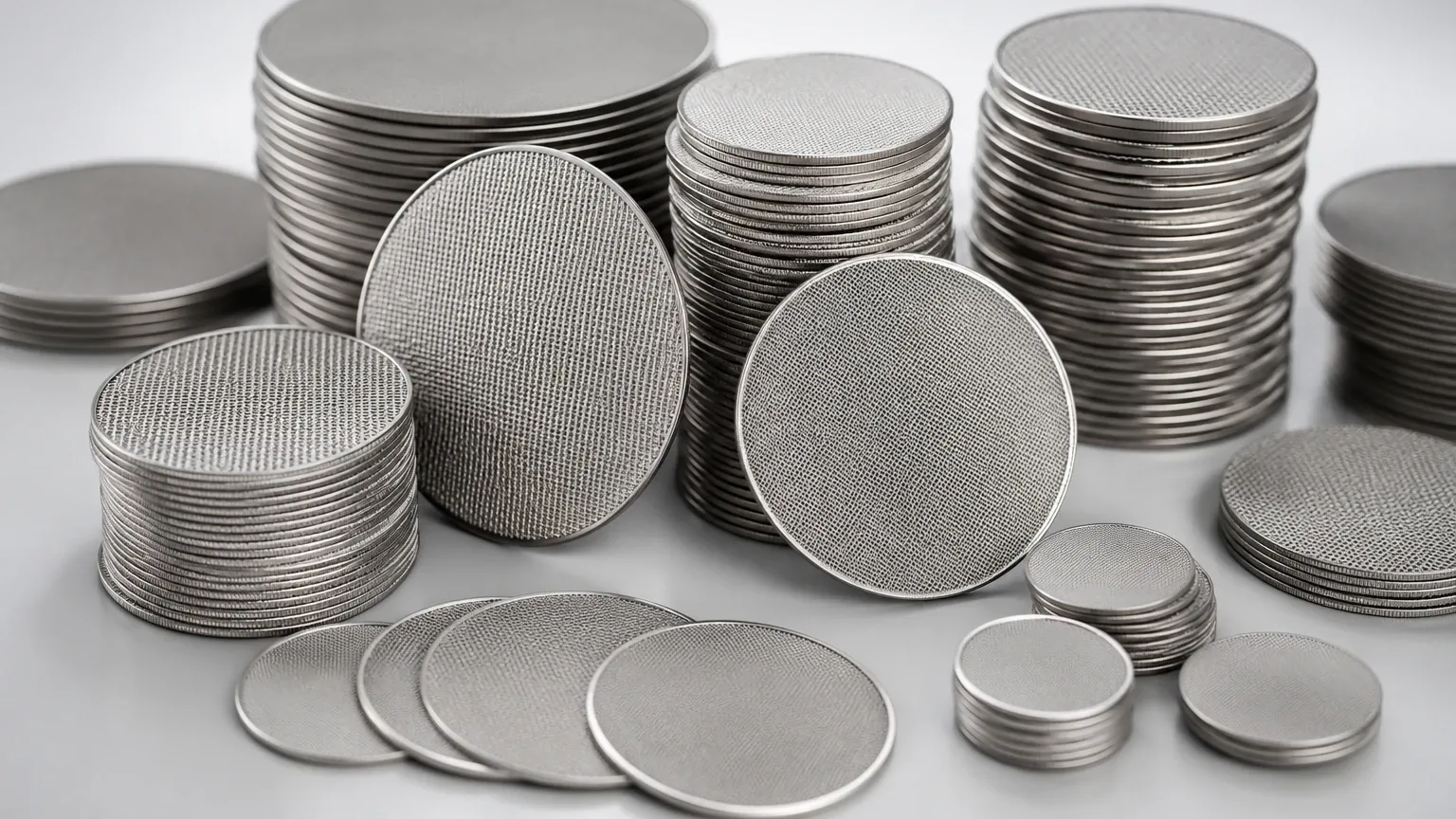
Before evaluating a disc filter supplier, engineers must define the specific technical requirements of their filtration system. Filter Discs & Packs are typically constructed from stainless steel wire mesh, although other alloys may be used for specialized environments. The performance of these discs is determined by several factors:
Material Selection
Stainless steel is the industry standard due to its corrosion resistance and mechanical strength.
- SS304: Suitable for general industrial applications where moderate corrosion resistance is required.
- SS316: Contains molybdenum, providing enhanced resistance to chlorides and pitting, making it ideal for marine or chemical environments.
- SS316L: A low-carbon version of 316 that minimizes carbide precipitation during welding, ensuring integrity in pharmaceutical and food-grade applications.
Weave Types and Micron Ratings
The weave of the wire mesh determines the filtration accuracy (micron rating) and the flow characteristics. Common weaves include:
- Plain Weave: The most common type, where wires cross over and under each other. It offers high flow rates but is generally limited to coarser filtration.
- Twill Weave: Allows for thicker wires and finer mesh counts, providing greater strength for high-pressure applications.
- Dutch Weave (Plain and Twill): Features a higher density of wires in one direction, creating a tortuous path for particles. This results in superior filtration precision and high mechanical stability.
Construction: Single vs. Multi-layer
Depending on the pressure drop requirements and the nature of the contaminants, filter discs can be supplied as single layers or multi-layer packs. Multi-layer packs often combine a fine filtration layer with coarser support layers to prevent the mesh from deforming under high differential pressure. These layers can be spot-welded together or bound by a metal rim (aluminum, copper, or stainless steel) to ensure edge integrity.
Key Evaluation Criteria for a Disc Filter Supplier
A professional disc filter supplier should function as a technical consultant rather than a simple commodity vendor. When auditing a potential supplier, consider the following engineering and operational benchmarks:
1. Manufacturing Precision and Tolerances
In precision filtration, even minor deviations in disc diameter or mesh alignment can lead to bypass—where unfiltered fluid escapes around the edges of the filter. A supplier must demonstrate the ability to maintain tight tolerances through advanced cutting technologies, such as laser cutting or high-precision stamping. For multi-layer packs, the alignment of the layers must be consistent to ensure uniform flow distribution.
2. Quality Control and Material Traceability
Industrial processes, particularly in the pharmaceutical and aerospace sectors, require strict material traceability. A reliable supplier should provide Mill Test Reports (MTRs) for the raw materials used. Quality control processes should include mesh count verification, wire diameter measurement, and bubble point testing to ensure the integrity of the micron rating.
3. Customization and Engineering Support
Standard off-the-shelf solutions rarely meet the specific needs of complex industrial systems. A competent disc filter supplier should offer customization options, including bespoke shapes (oval, kidney-shaped, or rectangular), specific rim materials, and optimized layer configurations. Engineering support during the design phase can help identify the ideal balance between filtration efficiency and pressure drop.
4. Cleaning and Finishing Processes
Residual oils, lubricants, or metal fragments from the manufacturing process can contaminate the process stream. Suppliers should utilize ultrasonic cleaning and specialized degreasing processes to ensure that the filters are "process-ready" upon delivery. For food and beverage or pharmaceutical applications, compliance with FDA or equivalent standards is non-negotiable.
Engineering Considerations: Performance and Longevity
When integrating filter discs into a system, engineers must account for the total cost of ownership (TCO), which is heavily influenced by the filter’s performance and replacement cycle.
Pressure Drop and Flow Rate
The initial pressure drop (ΔP) across a clean filter disc is a function of the mesh opening and the fluid velocity. A supplier should be able to provide data or simulations regarding expected flow rates. An optimized filter design minimizes energy consumption by maintaining a low pressure drop for as long as possible before the filter reaches its terminal pressure and requires cleaning or replacement.
Mechanical Strength and Durability
In applications like polymer melt filtration, the filter discs are subjected to extreme pressures and temperatures. If the mesh is not properly supported or if the wire gauge is too thin, the filter may collapse or "blow out." A technical supplier will evaluate the mechanical stresses of the application to recommend the appropriate wire diameter and support layer configuration.
Cleanability and Reusability
While some filter discs are designed for single use, many stainless steel variants are cleanable and reusable. Methods such as backwashing, ultrasonic cleaning, or chemical cleaning can extend the life of the disc. A supplier’s expertise in material science is vital here; they can advise on whether the chosen alloy can withstand repeated cleaning cycles without losing its structural integrity or filtration accuracy.
Common Risks in the Supply Chain
Engaging with a low-tier disc filter supplier can introduce several risks to an industrial operation:
- Material Substitution: The use of lower-grade stainless steel (e.g., substituting 201 for 304) can lead to premature corrosion and system failure.
- Inconsistent Mesh Quality: Variations in the wire diameter or weaving tension can create "large holes" in the mesh, allowing oversized particles to pass through.
- Poor Edging: If the rims of a filter pack are not properly crimped or welded, they can leak or even shed metal fragments into the process stream.
To mitigate these risks, purchasing teams should request samples for laboratory testing and conduct site audits or virtual tours to verify the supplier's manufacturing capabilities and QC infrastructure.
The Role of Kaifil in Industrial Filtration
As a specialized manufacturer, Kaifil provides precision-engineered filtration solutions tailored to demanding industrial environments. By focusing on material integrity and advanced manufacturing techniques, Kaifil supports engineers in achieving reliable filtration performance. Whether the application involves chemical processing, hydraulic systems, or food production, the focus remains on delivering components that meet exact micron ratings and mechanical specifications.
Kaifil’s approach to being a disc filter supplier involves close collaboration with clients to develop customized designs. From initial material selection to final production and ultrasonic cleaning, every step is geared toward ensuring the durability and efficiency of the filtration component. This technical expertise helps reduce downtime and optimizes the total cost of filtration for global industrial operations.
Conclusion: Making an Informed Decision
The choice of a disc filter supplier is a strategic decision that affects the reliability of your entire production line. By prioritizing technical expertise, material traceability, and manufacturing precision over initial cost, engineers can ensure that their filtration systems operate at peak efficiency.
When evaluating potential partners, always confirm their ability to provide detailed specifications, material certifications, and customized engineering support. A supplier that understands the nuances of wire mesh weaves and the mechanical demands of your specific industry will provide the greatest value over the lifecycle of the equipment. For those seeking high-performance filtration components, reviewing the available Filter Discs & Packs and consulting with technical experts is the first step toward optimizing process integrity.
