


Disc Filter Stp
In the realm of precision industrial filtration, the integration of high-performance components into complex machinery requires more than just physical durability; it demands rigorous technical documentation and precise engineering data. For mechanical engineers and system designers, the term "disc filter stp" refers to the Standard for the Exchange of Product model data (.STP or .STEP) files used to incorporate Filter Discs & Packs into 3D CAD assemblies. These files are essential for ensuring spatial compatibility, calculating flow clearances, and streamlining the transition from design to manufacturing.
At Kaifil, we understand that a filter is not a standalone component but a critical part of a larger industrial ecosystem. Providing accurate technical specifications and modeling data allows engineering teams to optimize filtration performance while minimizing the risks of interference or improper seating within filter housings and extruders.
The Engineering Significance of Disc Filter STP Data in Industrial Design
When designing a hydraulic system, a polymer melt filtration unit, or a pharmaceutical processing line, the physical dimensions of the filtration media must be exact. The use of a disc filter stp file during the design phase serves several critical functions that go beyond simple visualization.
Spatial Integration and Interference Checking
In high-pressure environments, filter discs are often stacked or placed within recessed housings with tight tolerances. By utilizing a 3D model, engineers can verify that the outer diameter (OD) and thickness of the filter pack align perfectly with the assembly. This prevents costly manufacturing errors where filters might be too loose, leading to bypass, or too tight, causing mechanical deformation during installation.
Flow Simulation and CFD Analysis
Modern engineering relies heavily on Computational Fluid Dynamics (CFD). Having an accurate representation of the filter's geometry allows designers to simulate how fluids or gases will pass through the media. While the internal mesh structure is often modeled as a porous medium, the external dimensions provided by the disc filter stp file define the boundaries of the flow field, helping to predict pressure drops and identify potential dead zones where material might stagnate.
Streamlining Custom Fabrications
Since many industrial applications require bespoke filtration solutions, the exchange of STP files facilitates a seamless feedback loop between the client and the manufacturer. If a standard circular disc does not meet the requirements, a custom-shaped model can be shared to ensure that the final manufactured product matches the intended design precisely.
Material Science and Construction of Filter Discs & Packs
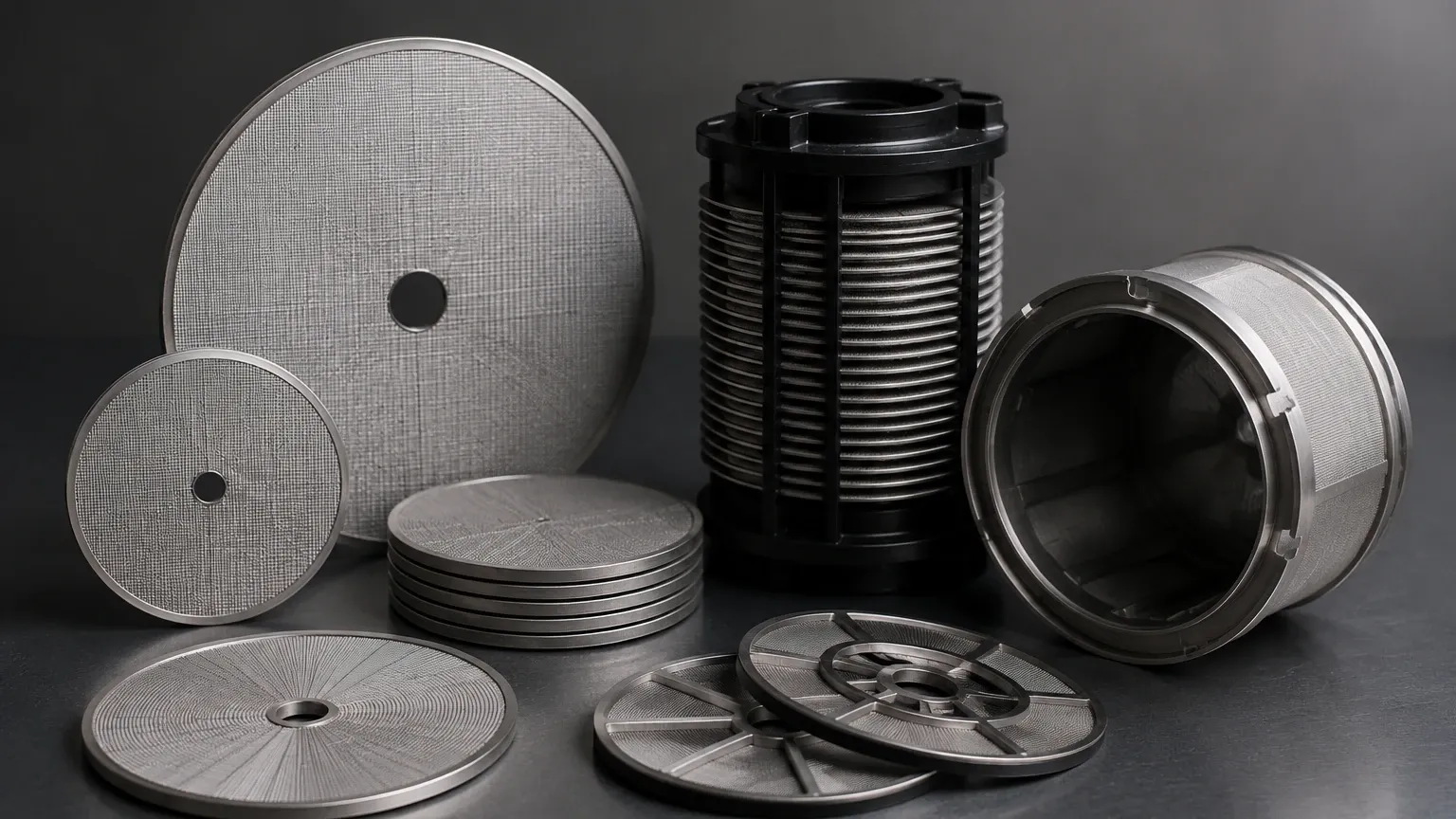
The performance of Filter Discs & Packs is fundamentally rooted in material selection. Stainless steel is the industry standard due to its mechanical strength, thermal stability, and resistance to corrosion. Kaifil utilizes various grades of stainless steel to meet the specific demands of different industrial environments.
Grade 304 Stainless Steel
This is the most common grade used for general industrial applications. It offers excellent strength and basic corrosion resistance, making it suitable for food and beverage processing, water treatment, and standard hydraulic systems where extreme chemical exposure is not a primary concern.
Grade 316L Stainless Steel
For more demanding environments, such as chemical processing or pharmaceutical manufacturing, Grade 316L is preferred. The addition of molybdenum and a lower carbon content provides superior resistance to pitting and crevice corrosion, particularly in chloride-rich environments. It also maintains its structural integrity at higher temperatures, which is vital for polymer extrusion.
Specialized Alloys
In cases involving extreme acidity or high-temperature oxidation, alloys like Hastelloy or Inconel may be utilized. These materials ensure that the filter disc does not degrade or leach contaminants into the process stream under harsh conditions.
Technical Specifications: Mesh Types and Filtration Ratings
The efficiency of a filter disc is determined by the weave pattern and the number of layers used in its construction. Understanding these variables is key to selecting the right component for a specific micron rating.
Plain Weave and Twill Weave
Plain weave is the simplest structure, where the warp and shute wires cross over and under each other. It provides a consistent pore size and is easy to clean. Twill weave allows for thicker wires and a more robust mesh, suitable for heavier loads and finer filtration tasks.
Dutch Weave (Plain and Twill)
Dutch weaves use different diameters for the warp and shute wires, resulting in a much denser mesh. This construction is ideal for high-pressure applications where fine particle retention is required. The "tortuous path" created by the Dutch weave ensures that contaminants are trapped effectively while maintaining a reasonable flow rate.
Sintered Wire Mesh
For the most demanding applications, multiple layers of wire mesh are sintered together. Sintering involves bonding the contact points of the wires through heat and pressure without the use of binders. This creates a monolithic structure that is incredibly strong, maintains a fixed pore size even under high pressure, and can be cleaned and reused multiple times. When engineers request a disc filter stp for a sintered pack, they are often looking for the precise thickness and edge details required for high-pressure sealing.
Structural Integrity and Rim Bonding Methods
A critical aspect of filter disc design is how the edges are finished. The rim not only holds the layers together but also provides the sealing surface for the filter housing.
1. Spot Welded Discs: Multiple layers of mesh are spot welded at several points along the circumference. This is a cost-effective solution for applications where the filter is held in place by a mechanical clamp or housing.
2. Aluminum or Stainless Steel Binding: The edges of the mesh are encased in a metal U-channel. This provides a smooth, rigid edge that prevents fraying and ensures a tight seal against the housing wall. It also adds significant structural rigidity to the disc.
3. Welded Rims: For high-purity applications, the edges may be TIG or plasma welded to ensure there are no crevices where bacteria or contaminants can accumulate. This is common in the food, beverage, and pharmaceutical sectors.
Integrating Disc Filters into Hydraulic and Processing Systems
In hydraulic systems, Filter Discs & Packs serve as the last line of defense against particulate contamination that could damage sensitive valves or pumps. The integration of these filters requires careful consideration of the "disc filter stp" parameters to ensure they do not become a bottleneck in the system.
Pressure Drop Considerations
Every filter introduces a degree of resistance to flow. Engineers must balance the need for fine filtration (low micron rating) with the allowable pressure drop (ΔP). A filter that is too restrictive will cause the system to work harder, leading to increased energy consumption and potential component failure. By using CAD models to calculate the effective filtration area, designers can optimize the disc size to keep the pressure drop within acceptable limits.
Dirt Holding Capacity
The geometry of the filter pack influences its dirt holding capacity. Multi-layer packs, often modeled in a disc filter stp file as a single composite unit, allow for depth filtration where larger particles are caught on the outer layers and finer particles are trapped deeper within the media. This extends the service life of the filter and reduces the frequency of maintenance shutdowns.
The Importance of Prototyping and 3D Modeling in Filtration
In the B2B procurement process, moving from a conceptual design to a physical prototype is a high-stakes step. The availability of a disc filter stp file simplifies this transition. When an engineering team can download or receive a precise model of a Kaifil filter disc, they can perform virtual fit-tests before ordering a physical sample.
This digital-first approach reduces the lead time for custom projects. For example, if an engineer discovers during the CAD phase that a standard 100mm disc interferes with a sensor probe, they can immediately adjust the design to a 95mm disc or a non-circular shape. Providing these technical assets ensures that the final product delivered by Kaifil fits the application perfectly the first time.
Quality Assurance and Testing Protocols for Stainless Steel Filters
Factual reliability is the cornerstone of industrial filtration. Kaifil adheres to strict quality control measures to ensure that every filter disc meets the specifications outlined in the technical documentation.
* Bubble Point Test: Used to verify the pore size and integrity of the filter media. This test ensures that there are no oversized pores or defects in the weave that would allow contaminants to pass through.
* Permeability Testing: Measures the flow rate of air or liquid through the disc at a given pressure, confirming that the filter meets the calculated performance metrics.
* Material Certification: Every batch of stainless steel used is accompanied by material test reports (MTRs) to verify chemical composition and mechanical properties.
* Dimensional Inspection: Using precision calipers or automated optical inspection (AOI), we ensure that the physical dimensions of the finished disc match the disc filter stp model provided during the design phase.
Choosing the Right Filter Discs & Packs for Your Application
Selecting the appropriate filtration solution requires a deep understanding of the process fluid, the nature of the contaminants, and the operating environment. When consulting with a manufacturer like Kaifil, engineers should be prepared to confirm several key factors:
1. Micron Rating: What is the smallest particle size that must be removed?
2. Operating Temperature: Will the filter be exposed to extreme heat or cryogenic conditions?
3. Chemical Compatibility: Does the fluid contain corrosive agents that require 316L or a specialized alloy?
4. Flow Rate and Pressure: What is the maximum allowable pressure drop across the filter?
5. Mechanical Interface: How will the disc be secured? Is a specific rim type or a disc filter stp model required for housing integration?
By addressing these questions early in the design cycle, purchasing teams can ensure they receive a product that offers the best total cost of ownership through durability and performance.
Conclusion
In modern industrial manufacturing, the technical data surrounding a product is as important as the product itself. The use of a disc filter stp file is a standard practice for engineers who demand precision and reliability in their filtration systems. Whether you are designing a new extruder or upgrading a hydraulic circuit, utilizing high-quality Filter Discs & Packs ensures that your equipment remains protected and your processes remain efficient. Kaifil continues to support global industries by providing the engineering expertise and manufacturing precision necessary to solve the most complex filtration challenges.
