


Filter Disc Type
In industrial filtration, the selection of the correct filter disc type is a fundamental engineering decision that directly impacts product purity, equipment longevity, and operational efficiency. Filter discs and packs are high-precision components used across diverse sectors, including polymer extrusion, chemical processing, pharmaceutical manufacturing, and food production. Understanding the nuances of material composition, structural design, and filtration mechanics is essential for engineers and procurement teams tasked with optimizing filtration systems.
Industrial filtration often involves extreme pressures, corrosive fluids, and high temperatures. Consequently, the "one-size-fits-all" approach is rarely applicable. This guide examines the various classifications of filter discs, the technical considerations for their selection, and the performance expectations required in demanding industrial environments.
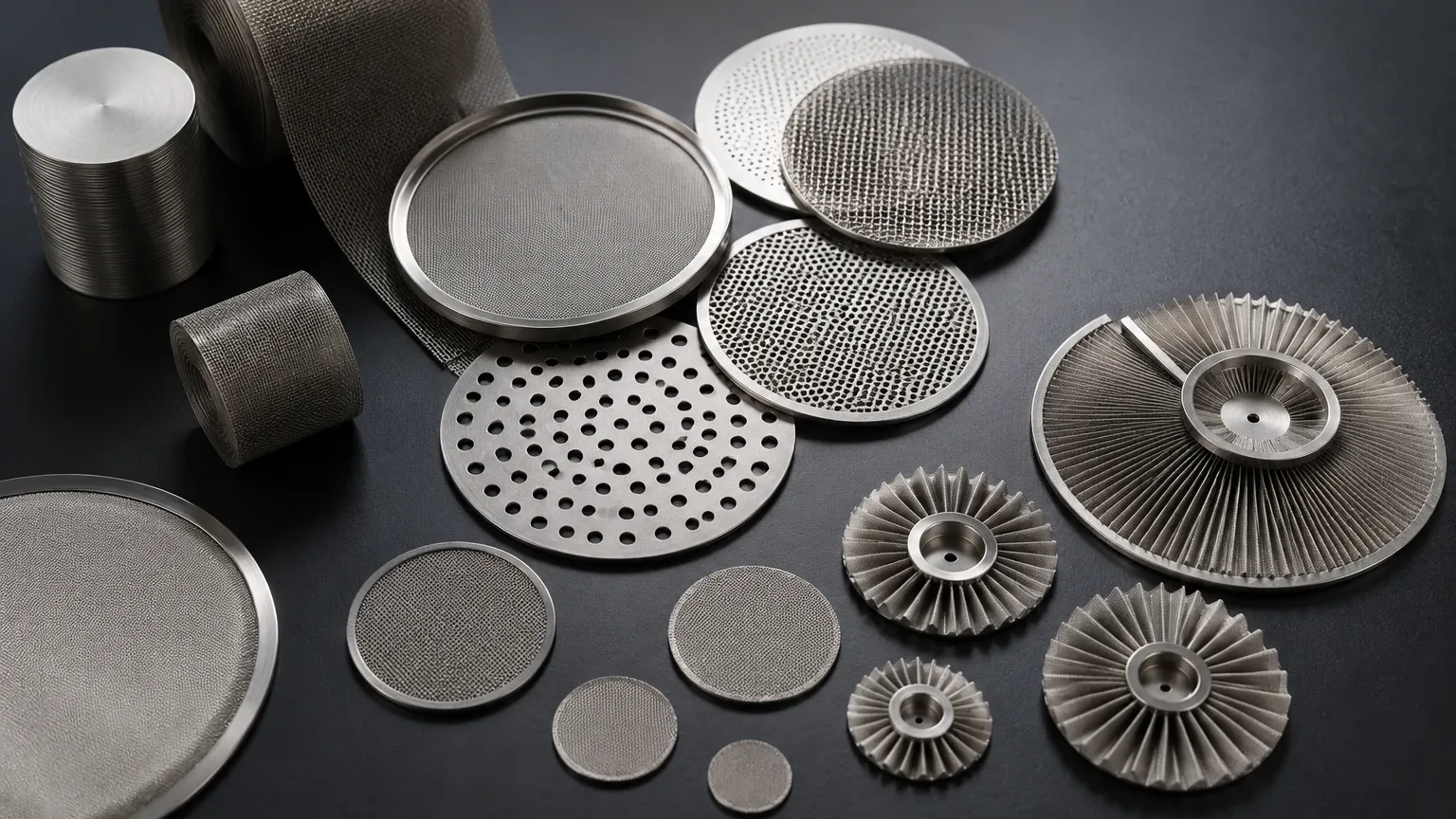
Classifying Filter Disc Type by Structure and Layering
The physical architecture of a filter disc determines its mechanical strength and filtration depth. Depending on the application, engineers may specify different configurations to balance flow rate with particle retention.
Single-Layer Filter Discs
Single-layer discs consist of a single sheet of wire mesh, usually stainless steel. These are primarily used for coarse filtration or as pre-filters in multi-stage systems. Their simplicity makes them cost-effective, but they lack the structural rigidity required for high-pressure applications. They are most effective when the pressure drop across the filter is minimal and the particle size is relatively large.
Multi-Layer Filter Packs
To achieve finer filtration and greater durability, multiple layers of wire mesh are combined. These Filter Discs & Packs are engineered to provide graduated filtration, where outer layers catch larger debris and inner layers provide the final micron-rated precision. Multi-layer packs are often spot-welded together to ensure they remain a single unit during installation and operation.
Sintered Filter Discs
Sintering involves heating multiple layers of wire mesh or metal fibers to a temperature just below their melting point, causing the contact points to fuse. This creates a highly stable, rigid structure that does not migrate under high pressure. Sintered filter disc types are preferred in applications where fiber shedding is prohibited, such as in the pharmaceutical or food and beverage industries.
Material Engineering and Chemical Compatibility
The choice of material is perhaps the most critical factor in determining the service life of a filter disc. Since these components are often exposed to aggressive chemicals or high-temperature steam, the alloy must be selected based on its corrosion resistance and thermal stability.
* Stainless Steel 304: The standard choice for general industrial use. It offers good corrosion resistance and is suitable for most water treatment and food-grade applications.
* Stainless Steel 316L: Contains molybdenum, which provides superior resistance to chlorides and acids. This is the preferred material for chemical processing and marine environments.
* Specialty Alloys: For extreme environments, materials like Hastelloy, Inconel, or Monel may be used. These alloys maintain their mechanical properties at temperatures exceeding 500°C and resist highly oxidative or reductive chemicals.
When selecting a filter disc type, engineers must also consider the weave pattern of the wire mesh. Plain weave is common for general filtration, while Dutch weave (Plain Dutch or Twill Dutch) provides a much denser structure, allowing for higher filtration accuracy and better pressure resistance.
Edge Treatment and Sealing Mechanisms
How a filter disc is finished at its edges significantly affects its performance within a housing. Improper sealing can lead to "bypass," where unfiltered fluid escapes around the edges of the disc.
Unrimmed (Raw Edge) Discs
These are simple discs cut directly from a mesh sheet. They are typically used in applications where the disc is clamped tightly between two flat surfaces, or where the edges are welded directly into a component. While economical, they can occasionally shed small wire fragments if not handled carefully.
Rimmed or Bound Discs
To prevent edge leakage and increase structural integrity, many filter discs are finished with a metal rim. Common materials for the rim include aluminum, stainless steel, or copper. The rim acts as a gasket, providing a compression seal when the filter is installed in a housing. This filter disc type is essential for high-pressure polymer extrusion, where the seal must withstand thousands of pounds of pressure without failing.
Technical Performance Metrics: Micron Ratings and Flow Rates
Evaluating a filter disc requires a deep dive into its performance specifications. Engineers must balance the need for high-purity output with the practicalities of system pressure and maintenance cycles.
Filtration Accuracy (Micron Rating)
The micron rating defines the size of particles the disc can effectively trap. It is important to distinguish between "nominal" and "absolute" ratings. A nominal rating indicates the disc can trap a large percentage of particles of a certain size, whereas an absolute rating indicates that no particles larger than the specified size can pass through. For critical pharmaceutical or hydraulic applications, absolute ratings are usually required.
Pressure Drop and Dirt-Holding Capacity
As a filter disc traps contaminants, the pressure drop (differential pressure) across the disc increases. A well-designed filter disc type should offer a low initial pressure drop to maximize the energy efficiency of pumps. Furthermore, the disc must have sufficient "dirt-holding capacity"—the volume of contaminants it can hold before the pressure drop reaches a critical limit, necessitating replacement or cleaning.
Application-Specific Selection Criteria
The ideal filter disc type varies significantly depending on the industry and the specific process requirements. Below are common scenarios and the engineering logic behind the choice:
Polymer and Plastic Extrusion
In plastic recycling and polymer production, filters must remove "gels" and carbonized particles from molten plastic. This requires multi-layer packs capable of withstanding temperatures up to 300°C and pressures up to 350 bar. The use of a combination of coarse and fine meshes prevents the fine mesh from being crushed by the viscous flow.
Hydraulic and Lubrication Systems
Precision metal filter components are used to protect sensitive valves and pumps from wear particles. Here, the focus is on high flow rates and the ability of the filter to be cleaned and reused. Stainless steel wire mesh discs are often preferred over disposable cellulose filters due to their durability and consistent pore size.
Food and Beverage Processing
Hygiene is the primary concern in this sector. Filter discs must be made of FDA-compliant materials (typically 316L stainless steel) and must be able to withstand Clean-in-Place (CIP) procedures involving caustic chemicals and high-pressure steam.
Maintenance, Cleaning, and Total Cost of Ownership
While the initial purchase price of a filter disc is a factor, the total cost of ownership (TCO) is driven by service life, cleaning costs, and the cost of production downtime.
Many stainless steel filter discs are designed to be reusable. Cleaning methods such as ultrasonic cleaning, chemical baths, or high-temperature burnout (for polymer applications) can restore the disc's performance. However, repeated cleaning can eventually degrade the mesh structure. Engineers should establish clear replacement cycles based on the observed increase in the rate of pressure rise after each cleaning cycle.
When sourcing, it is vital to confirm the following with the manufacturer:
1. Material Certification: Ensure the alloy matches the specified grade (e.g., 316L) to avoid premature corrosion.
2. Dimensional Tolerances: Even a millimeter of deviation in diameter can lead to bypass or installation failure.
3. Burst Pressure: Confirm the disc can withstand the maximum possible pressure of the system in the event of a total blockage.
By carefully selecting the appropriate filter disc type based on these technical parameters, industrial operators can ensure reliable filtration performance, protect downstream equipment, and maintain the highest standards of product quality. Kaifil provides customized filtration solutions that address these complex engineering requirements, offering precision-manufactured components tailored to specific industrial challenges.
