


Disc Filter 10 Micron
In the landscape of industrial filtration, the 10-micron threshold represents a critical balance between high-flow efficiency and precision particle retention. For engineers and procurement specialists, selecting a disc filter 10 micron solution involves more than just identifying a pore size; it requires a deep understanding of material science, structural integrity, and the specific dynamics of the fluid or gas being processed.
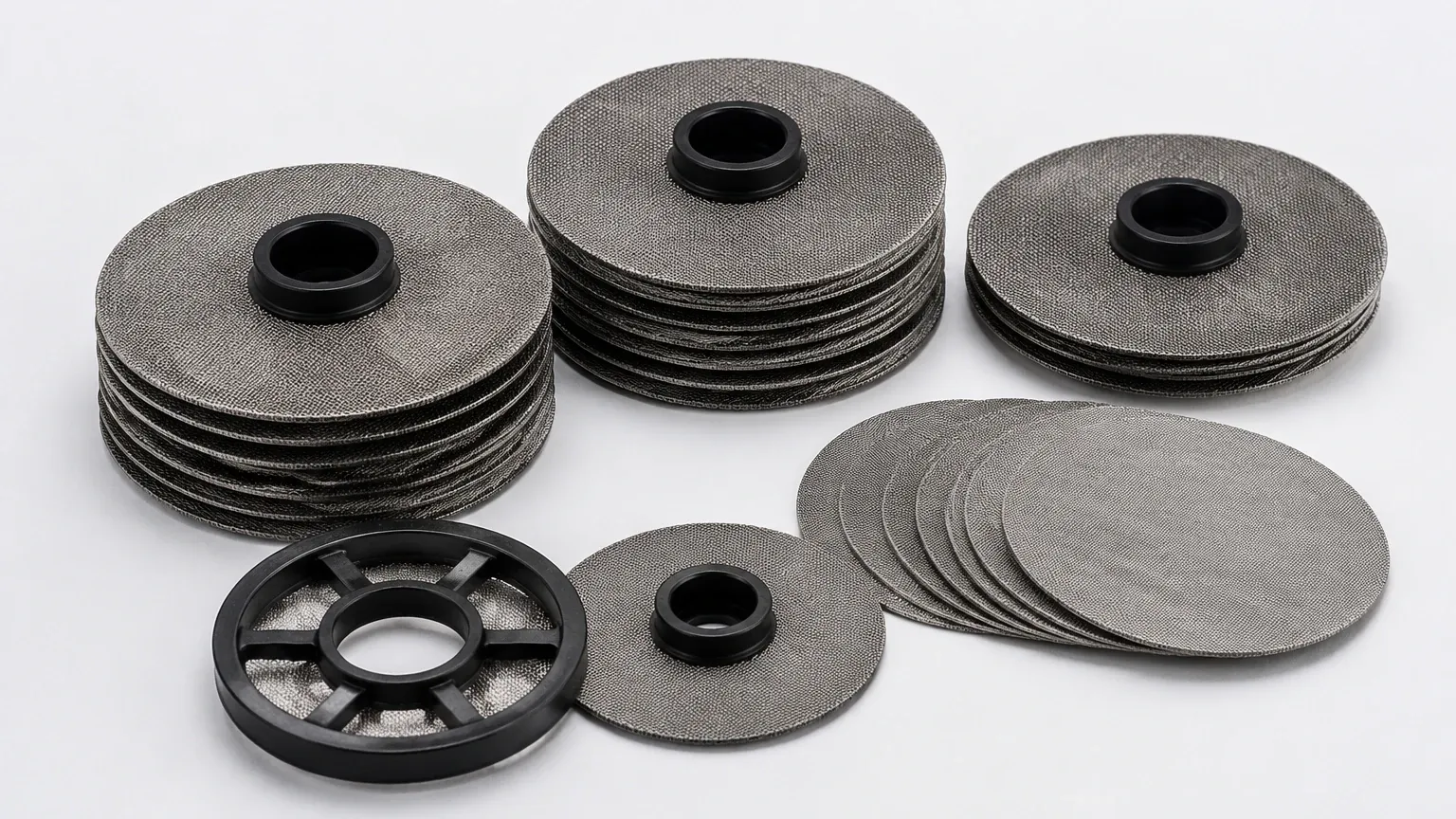
Stainless steel Filter Discs & Packs are the industry standard for applications requiring this level of precision, offering durability and chemical resistance that polymer-based alternatives cannot match. This guide explores the technical considerations, engineering specifications, and selection criteria essential for integrating 10-micron filtration into demanding industrial environments.
Understanding the Role of 10-Micron Filtration in Industrial Processes
A micron (micrometer) is one-millionth of a meter. To put a 10-micron rating into perspective, a human hair is approximately 50 to 70 microns in diameter. At the 10-micron level, filtration systems are designed to capture fine silts, metallic shavings, and large bacteria, making it a pivotal specification in hydraulic systems, polymer melt filtration, and pharmaceutical processing.
When specifying a disc filter 10 micron component, it is vital to distinguish between nominal and absolute filtration ratings. A nominal rating refers to the filter's ability to retain a majority percentage of particles at 10 microns, whereas an absolute rating indicates that 99.9% or more of particles of that size are captured. In high-stakes environments like aerospace hydraulics or fine chemical production, absolute ratings are often required to prevent downstream contamination and equipment wear.
Material Selection and Construction of Filter Discs & Packs
The performance of a 10-micron filter disc is fundamentally tied to the material and the weave of the wire mesh. Stainless steel is the preferred medium due to its thermal stability and mechanical strength.
Stainless Steel Alloys
* Grade 304: The most common stainless steel used in industrial filtration. It offers excellent strength and basic corrosion resistance, suitable for food and beverage or general industrial water treatment.
* Grade 316L: Containing molybdenum, 316L provides superior resistance to chlorides and acids. This is the standard for chemical processing, marine environments, and pharmaceutical applications where corrosion could lead to batch contamination.
Weave Types for 10-Micron Precision
Achieving a stable 10-micron opening requires specialized weaving techniques. Standard plain weaves are rarely used for such fine filtration because the wire diameters would be too thin to maintain structural integrity. Instead, engineers typically utilize:
* Plain Dutch Weave (PDW): This weave uses a combination of different wire diameters in the warp and weft directions, creating a dense, strong mesh with high filtration accuracy.
* Twill Dutch Weave (TDW): For a disc filter 10 micron rating, TDW is often the preferred choice. It allows for a higher density of wires, creating a tortuous path for particles and providing a more robust structure for high-pressure applications.
Performance Metrics: Flow Rate, Pressure Drop, and Efficiency
Every filtration component introduces a degree of resistance to the system. For engineers, the primary challenge is achieving the required 10-micron retention without causing an excessive pressure drop (delta P) that could strain pumps or reduce throughput.
Permeability and Porosity
The porosity of the mesh determines the available open area for fluid to pass through. While a 10-micron rating implies small openings, the engineering of the weave can maximize the number of those openings per square inch. High-quality Filter Discs & Packs are designed to optimize this ratio, ensuring that the flow rate remains consistent even as the filter begins to load with contaminants.
Dirt-Holding Capacity
A critical factor in the total cost of ownership is the dirt-holding capacity. A filter that reaches its terminal pressure drop too quickly requires frequent cleaning or replacement, leading to increased downtime. Multilayered packs are often used to address this, where coarser layers act as "pre-filters" to capture larger debris, leaving the 10-micron layer to handle the fine particulates.
Comparing Single-Layer vs. Multilayer Disc Filter 10 Micron Designs
The structural configuration of the disc determines its suitability for specific mechanical environments. Depending on the machinery, a filter may be a simple single-layer disc or a complex multi-component pack.
Single-Layer Discs
These are typically used in low-pressure applications or where space is extremely limited. They are cost-effective but lack the mechanical support required for high-viscosity fluids or high-pressure differentials. In a disc filter 10 micron specification, a single layer of fine mesh is delicate and prone to deformation if not handled or installed correctly.
Multilayer Filter Packs
To enhance durability, multiple layers of mesh are combined. A typical 10-micron pack might include:
1. Filtration Layer: The 10-micron mesh that performs the primary task.
2. Support Layers: Coarser mesh (e.g., 60 or 100 mesh) placed on either side of the filtration layer to provide rigidity and prevent the fine mesh from collapsing under pressure.
3. Drainage Layers: Even coarser mesh used to facilitate the flow of fluid across the entire surface area of the disc.
These layers are often bound together through spot welding or by an outer rim (edging) made of aluminum, stainless steel, or copper. Rimming not only holds the layers together but also provides a clean, burr-free edge that ensures a tight seal within the filter housing.
Critical Quality Indicators and Testing Methods
When sourcing a disc filter 10 micron, verifying the manufacturer's claims is essential for process safety. Technical professionals should look for specific quality control measures:
* Bubble Point Test: This is a non-destructive test used to determine the largest pore size of a filter. By submerging the disc in a liquid and gradually increasing air pressure, the point at which bubbles first appear indicates the maximum pore diameter. This confirms if the disc truly meets the 10-micron requirement.
* Mesh Count Verification: Using high-powered microscopy to ensure the wire count per inch matches the engineering specifications.
* Material Certification: Ensuring the stainless steel alloy (304 or 316L) is authentic through X-ray fluorescence (XRF) analysis or mill test reports. This prevents premature failure due to chemical corrosion.
Application-Specific Considerations for Engineers
The behavior of a 10-micron filter changes based on the medium it is filtering. Engineers must account for these variables during the selection process.
Polymer Extrusion
In plastic and fiber production, the "screen pack" must withstand extreme temperatures and pressures. A disc filter 10 micron used here must be able to remove "black specks" and un-melted gels from the polymer melt to ensure the quality of the final product, such as thin films or fine filaments.
Hydraulic and Lubrication Systems
Fine metallic particles can act as abrasives in hydraulic actuators and bearings. A 10-micron disc is often the last line of defense before the fluid enters sensitive components. Here, the focus is on mechanical strength and the ability to withstand pressure surges without bypass.
Chemical and Pharmaceutical Processing
In these sectors, the focus shifts to cleanability and corrosion resistance. Stainless steel Filter Discs & Packs are preferred because they can be sterilized and reused, reducing the waste associated with disposable cartridges. The 10-micron rating is frequently used for catalyst recovery or the removal of precipitates from chemical solutions.
Maintenance, Replacement Cycles, and Total Cost of Ownership
While the initial purchase price of a high-quality stainless steel disc filter 10 micron may be higher than disposable options, the long-term economics often favor the durable solution. Stainless steel discs are cleanable via ultrasonic baths, chemical cleaning, or back-flushing, allowing for multiple lifecycles.
Determining Replacement Cycles
The replacement cycle should be dictated by the terminal pressure drop—the point at which the energy required to push fluid through the filter exceeds the cost of cleaning or replacing the disc. Monitoring this through differential pressure gauges is the most effective way to optimize maintenance schedules.
Customization and OEM Integration
For manufacturers of industrial machinery, off-the-shelf filters rarely provide the perfect fit. Customization options for 10-micron discs include:
* Variable Diameters: Precision cutting to fit specific housing dimensions.
* Central Holes: For mounting on spindles or shafts within complex assemblies.
* Specialty Edging: Using soft metals like copper for high-temperature sealing or specialized polymers for chemical compatibility.
By collaborating with a manufacturer that understands these engineering nuances, purchasing teams can ensure they receive components that not only meet the 10-micron specification but also enhance the overall reliability of their industrial systems.
