


Disc Filter 25mm
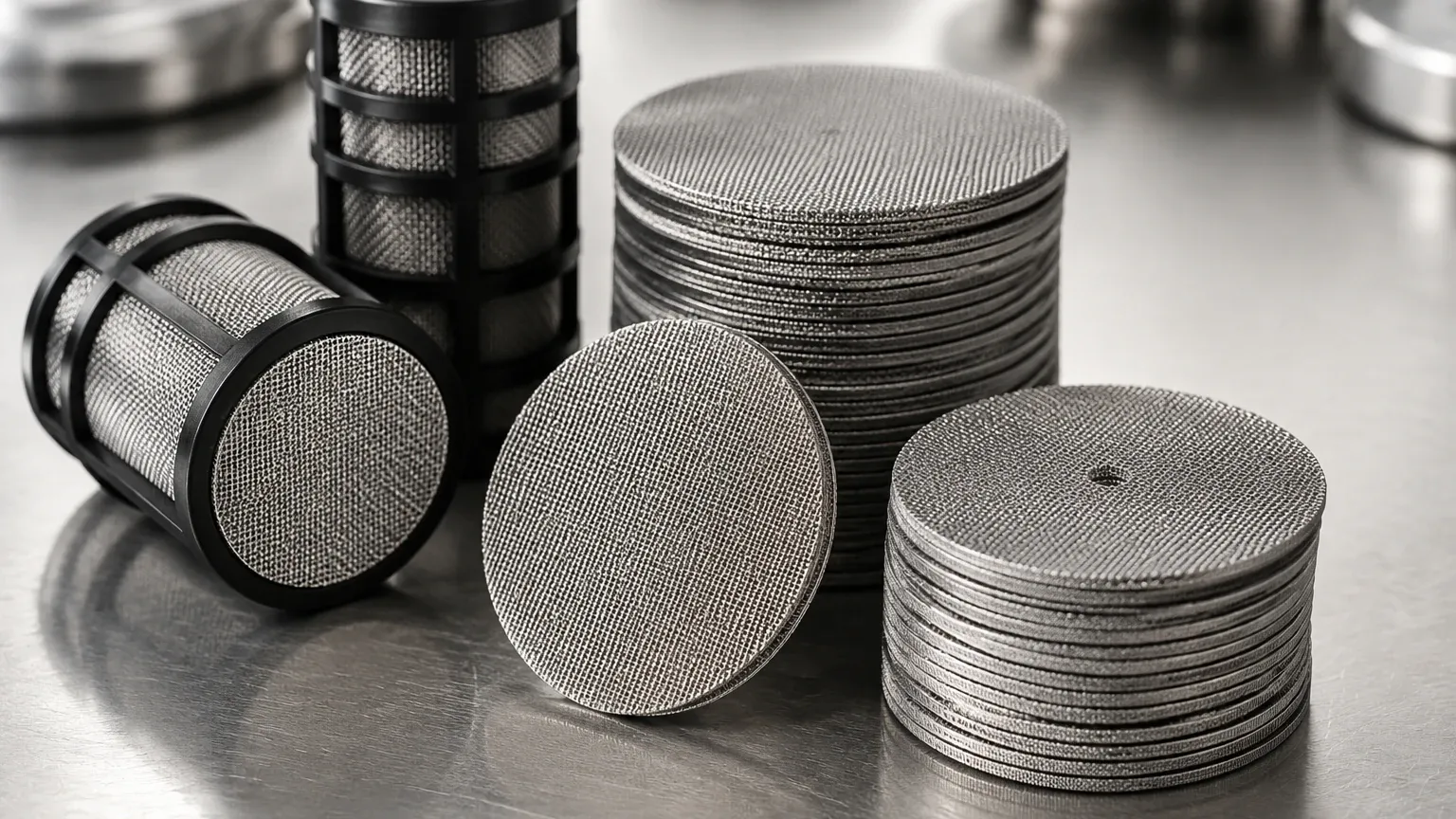
In industrial filtration, precision is often measured in millimeters. The disc filter 25mm represents a critical standard for a wide range of applications, from laboratory-scale pilot testing to high-pressure polymer extrusion. As a fundamental component within the broader category of Filter Discs & Packs, the 25mm diameter is frequently selected for its compatibility with standard housing sizes and its ability to provide high-efficiency filtration in a compact footprint.
For engineers and procurement professionals, selecting a 25mm metal filter disc involves more than just specifying the diameter. It requires a deep understanding of wire mesh structures, material metallurgy, and the mechanical stresses the component will encounter during its service life. This guide examines the technical specifications, engineering considerations, and selection criteria for 25mm filter discs used in demanding industrial environments.
Technical Fundamentals of the 25mm Disc Filter
A disc filter 25mm is typically manufactured from woven wire mesh or sintered metal fibers. While the diameter is fixed at 25mm, the performance characteristics are defined by the weave type and the wire diameter. In industrial settings, these discs act as a barrier to remove particulate matter from liquids, gases, or molten polymers.
The 25mm size is particularly common in equipment where space is constrained or where the flow rate is relatively low. Despite its small size, the engineering behind these discs must account for high pressure differentials. A standard 25mm disc may be required to withstand several bars of pressure without deforming or experiencing "media migration," where the wires of the mesh shift and allow larger particles to pass through.
Material Engineering: Stainless Steel Alloys and Their Properties
The choice of material is the most significant factor in determining the longevity and chemical compatibility of a disc filter 25mm. Kaifil primarily utilizes stainless steel alloys due to their inherent strength and resistance to environmental degradation.
Stainless Steel 304
This is the most common material used for industrial filter discs. It offers excellent mechanical properties and good corrosion resistance for general-purpose applications. It is suitable for use in environments where exposure to harsh chemicals is limited but where durability and cost-effectiveness are priorities.
Stainless Steel 316L
For applications involving corrosive fluids, high salt concentrations, or pharmaceutical requirements, 316L is the preferred alloy. The addition of molybdenum provides superior resistance to pitting and crevice corrosion. The "L" denotes low carbon content, which is essential for components that require welding, as it prevents carbide precipitation and ensures the integrity of the filter edge.
Specialized Alloys
In extreme environments involving high temperatures or highly acidic/alkaline media, specialized alloys such as Inconel, Monel, or Hastelloy may be used. These materials ensure that the disc filter 25mm maintains its structural integrity and filtration accuracy even under conditions that would cause standard stainless steel to fail.
Structural Design: Single-Layer vs. Multilayer Filter Discs & Packs
When specifying Filter Discs & Packs, engineers must decide between single-layer and multilayer configurations. The choice depends on the required filtration fineness and the mechanical load on the disc.
Single-Layer Discs
These are the simplest form of the disc filter 25mm. They consist of a single sheet of wire mesh cut to size. They are ideal for applications where the pressure drop must be kept to a minimum and where the particles being filtered are relatively large. Single-layer discs are also easier to clean and reuse in some laboratory settings.
Multilayer Packs
Multilayer designs involve stacking several layers of mesh with different pore sizes. A typical configuration includes:
* Filtration Layer: The middle layer with the finest mesh, responsible for the actual particle retention.
* Support Layers: Coarser mesh layers on either side of the filtration layer that provide mechanical strength and prevent the fine mesh from collapsing under pressure.
* Drainage Layers: These facilitate the flow of the filtrate away from the filtration zone, reducing the overall pressure drop across the pack.
Multilayer packs are essential for high-pressure extrusion and hydraulic systems where a single layer of fine mesh would lack the necessary structural rigidity.
Filtration Precision and Micron Rating Selection
The effectiveness of a disc filter 25mm is defined by its micron rating. This rating indicates the size of the smallest particle the filter is designed to trap. There are two primary ways to measure this:
1. Nominal Rating: This indicates the ability of the filter to retain a majority (typically 60% to 90%) of particles of a specific size. It is a general guide but may allow some larger particles to pass through.
2. Absolute Rating: This is the diameter of the largest hard spherical particle that will pass through the filter under specified test conditions. For critical applications in the pharmaceutical or chemical industries, an absolute rating is often required to ensure process consistency.
For a 25mm disc, micron ratings can range from as coarse as 500 microns down to as fine as 1 or 2 microns. The selection depends on the sensitivity of the downstream equipment and the purity requirements of the final product.
Mechanical Integrity and Edging Techniques
The edge of a 25mm filter disc is a potential point of failure. If the wires at the edge are loose, they can fray and contaminate the process stream. Furthermore, a poor edge finish can prevent a proper seal within the filter housing, leading to bypass—where the fluid flows around the filter rather than through it.
To prevent these issues, several edging techniques are employed:
* Spot Welding: In multilayer packs, the layers are spot-welded together at the perimeter to maintain alignment and structural integrity.
* Aluminum or Stainless Steel Rims: A metal U-shaped binding is crimped around the edge of the disc. This provides a robust sealing surface and ensures that no loose wire ends can escape into the system.
* Sintered Edges: For the highest level of security, the edges of the mesh can be sintered (fused through heat and pressure), creating a solid metal border that is completely integrated with the mesh.
Application Scenarios in Industrial Processing
The disc filter 25mm is a versatile component found in numerous sectors. Its small diameter makes it ideal for modular systems and pilot plants.
Polymer and Plastic Extrusion
In the production of fibers, films, and plastic components, molten polymer is forced through filter packs to remove impurities that could cause defects. A 25mm disc is often used in small-scale extruders or as part of a larger multi-cavity filtration system. The high heat and pressure resistance of stainless steel are vital here.
Chemical and Petrochemical Processing
Precision filtration is required to protect catalysts and sensitive instrumentation. The disc filter 25mm acts as a final guard filter, ensuring that no particulate matter enters reactive zones or clogs narrow orifices in chemical injectors.
Pharmaceutical and Biotechnology
In these industries, cleanliness and material traceability are paramount. 316L stainless steel 25mm discs are used in the filtration of active pharmaceutical ingredients (APIs) and in laboratory testing equipment where they must withstand rigorous sterilization cycles, including autoclaving and SIP (Steam-in-Place).
Hydraulic and Lubrication Systems
To prevent wear in high-precision hydraulic valves, 25mm filter discs are used to remove metallic shavings and environmental contaminants from the oil. Their ability to handle high flow velocities in a small space is a significant advantage.
Engineering Evaluation and Procurement Checklist
Before purchasing or commissioning the manufacture of a disc filter 25mm, technical teams should confirm several key parameters to ensure the component is fit for purpose. Relying on a manufacturer with OEM expertise, such as Kaifil, allows for the customization of these parameters to meet specific operational demands.
1. Pressure Differential (ΔP): What is the maximum allowable pressure drop across the filter before it must be cleaned or replaced? High ΔP can indicate a clogged filter or an incorrectly specified mesh count.
2. Flow Rate: Does the 25mm surface area provide sufficient throughput for the intended application? If the flow rate is too high for the surface area, it may lead to premature clogging or mechanical failure of the mesh.
3. Chemical Compatibility: Are the fluids or gases being filtered compatible with the chosen alloy? Consider the presence of trace acids, chlorides, or high temperatures that could accelerate corrosion.
4. Cleaning and Reusability: Is the disc intended for single use, or will it be cleaned via ultrasonic baths or chemical solvents? Sintered or heavy-duty woven mesh is generally more suitable for repeated cleaning cycles.
5. Sealing Requirements: How will the disc be seated in the housing? Does it require a specific rim thickness or a specialized gasket material to prevent bypass?
By addressing these technical factors, engineers can optimize their filtration processes, reduce downtime, and ensure the longevity of their equipment. The disc filter 25mm may be small, but its role in maintaining the integrity of industrial systems is substantial. For those seeking specialized configurations or bulk OEM production, exploring professional Filter Discs & Packs ensures that the final product meets the rigorous standards of modern industrial engineering.
