


Disc Filter 20 Micron
In industrial filtration, the precision of a filter medium is often the determining factor in process efficiency and equipment longevity. A disc filter 20 micron represents a specific technical threshold used across various sectors to capture fine particulate matter while maintaining manageable flow rates. For engineers and procurement teams, selecting the correct Filter Discs & Packs requires a deep understanding of wire mesh geometry, material science, and the mechanical stresses of the operating environment.
At this level of filtration, the focus shifts from simple debris removal to the protection of sensitive downstream components, such as high-pressure pumps, spray nozzles, and precision valves. This article examines the technical specifications, engineering considerations, and application-specific requirements for 20-micron filtration solutions.
Understanding 20 Micron Filtration in Filter Discs & Packs
A micron (micrometer) is one-millionth of a meter. To put a 20-micron rating into perspective, a human hair is typically between 50 and 70 microns in diameter. Achieving a consistent 20-micron aperture in an industrial filter requires high-precision weaving of stainless steel wire.
When specifying a disc filter 20 micron, it is essential to distinguish between nominal and absolute filtration ratings:
* Nominal Rating: This indicates the ability of the filter to retain a majority of particles at the specified size (e.g., 60% to 90%). It allows for some bypass of particles larger than 20 microns due to the nature of the weave.
* Absolute Rating: This refers to the diameter of the largest hard spherical particle that will pass through the filter under specified test conditions. For critical applications, such as pharmaceutical or aerospace hydraulics, an absolute 20-micron rating is often mandatory.
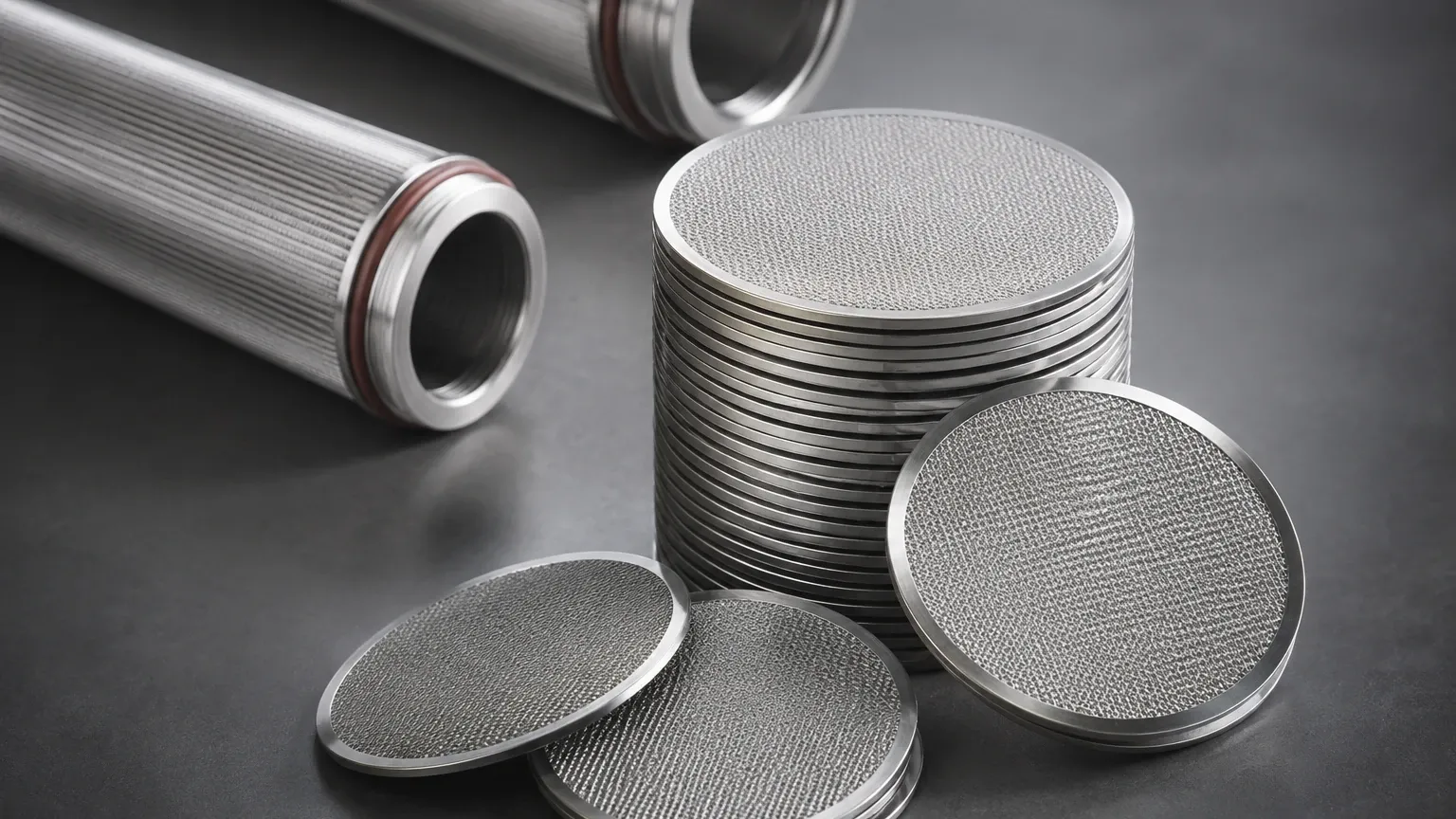
The construction of these filters typically involves stainless steel wire mesh, which offers superior thermal and chemical resistance compared to polymer-based media. The mesh is cut into circular discs or assembled into multi-layer packs to enhance structural integrity and filtration depth.
Engineering Considerations for Disc Filter 20 Micron Performance
The performance of a 20-micron filter is not solely dependent on the aperture size. Several engineering factors influence how the filter behaves under real-world conditions.
Mesh Weave Types
For a 20-micron rating, the choice of weave is critical. While plain weave is common for coarser filtration, finer ratings often utilize Dutch weave or Twill Dutch weave. In a Dutch weave, the warp wires are heavier than the shute wires, and the shute wires are driven close together, creating a dense, strong filter medium with small, curved openings. This structure is ideal for high-pressure applications where a standard plain weave might deform.
Flow Rate and Pressure Drop
As the micron rating decreases, the resistance to flow increases. A 20-micron mesh has a lower percentage of open area compared to a 100-micron mesh. Engineers must calculate the "clean pressure drop"—the initial resistance of the filter before it begins to load with contaminants. If the pressure drop is too high, it can lead to cavitation in pumps or reduced system throughput. To mitigate this, manufacturers often design multi-layer Filter Discs & Packs that include a 20-micron filtration layer supported by coarser mesh layers to provide mechanical strength without significantly increasing resistance.
Structural Integrity and Layering
Single-layer discs are suitable for low-pressure applications, but in high-pressure hydraulic or extrusion systems, the mesh must be reinforced. Sintered wire mesh is a common solution, where multiple layers of mesh are fused together through heat and pressure. This process creates a porous metal plate that maintains its 20-micron rating even under extreme mechanical stress, preventing the "wire migration" or pore enlargement that can occur with loose mesh.
Key Applications for 20 Micron Precision Filtration
The 20-micron threshold is a "sweet spot" for many industrial processes that require high purity without the extreme cost and maintenance of sub-micron filtration.
Chemical and Petrochemical Processing
In chemical manufacturing, a disc filter 20 micron is used to remove catalysts, precipitates, and impurities from liquid streams. Stainless steel construction (typically 316L) is preferred here due to its resistance to corrosive agents and high temperatures. These filters ensure that the final product meets purity standards and that downstream heat exchangers remain free of fouling.
Hydraulic and Lubrication Systems
Modern hydraulic systems operate at high pressures with tight tolerances. Particles as small as 20 microns can cause abrasive wear on pump vanes and valve seats. Using 20-micron filter packs in the return line or pressure line helps maintain fluid cleanliness, extending the Mean Time Between Failures (MTBF) for expensive hydraulic components.
Food and Beverage Production
In the food industry, filtration is used for clarifying liquids, such as syrups, oils, and beverages. A 20-micron filter is effective at removing fine pulp or sediment while allowing the liquid to pass through at high volumes. Because stainless steel is non-leaching and easy to sterilize, it is the standard material for these applications.
Selection Criteria: Evaluating Filter Discs & Packs
When sourcing a disc filter 20 micron, technical buyers should evaluate several criteria to ensure the component is fit for purpose.
1. Material Grade: 304 stainless steel is the standard for general industrial use. However, 316L is required for marine environments, acidic chemicals, or food-grade applications due to its higher molybdenum content, which provides superior pitting resistance.
2. Border or Rim Design: To prevent bypass, filter discs are often finished with a metal rim (aluminum, stainless steel, or copper). The rim provides a sealing surface and prevents the edges of the wire mesh from fraying. For multi-layer packs, spot welding or binding the edges is necessary to maintain the alignment of the layers.
3. Temperature and Pressure Limits: Stainless steel filters can typically withstand temperatures up to 800°F (427°C) depending on the alloy. However, the pressure differential across the disc must be monitored. If the process involves high-pressure pulses, a sintered or reinforced pack is necessary to prevent the mesh from collapsing.
4. Chemical Compatibility: Beyond the metal itself, any binding agents or rim materials must be compatible with the process fluid. In pharmaceutical applications, for instance, the use of certain adhesives or non-316 metals may be prohibited.
Customization and OEM Capabilities for Industrial Filters
Many industrial systems require non-standard filtration components. Customization is a core aspect of providing effective filtration solutions. Manufacturers like Kaifil specialize in tailoring Filter Discs & Packs to specific geometric and performance requirements.
* Custom Shapes: While circular discs are the most common, applications may require oval, rectangular, or ring-shaped filters. Precision laser or die-cutting ensures that the dimensions are accurate to within microns, which is essential for a proper fit in the filter housing.
* Varied Micron Layering: A custom pack might consist of a 20-micron center layer, a 100-micron support layer, and a 20-mesh outer protective screen. This "sandwich" construction optimizes the balance between filtration accuracy and mechanical durability.
* Surface Treatments: In some cases, the mesh may undergo specialized cleaning processes, such as ultrasonic cleaning, to ensure it is free of manufacturing oils and debris before being installed in a cleanroom or food-processing environment.
Total Cost of Ownership and Maintenance
One of the primary advantages of stainless steel 20-micron filters over disposable polymer or paper filters is their cleanability. In many B2B industrial settings, the initial higher cost of a metal filter is offset by its long service life.
Cleaning and Reuse
Stainless steel discs can be cleaned using backwashing, ultrasonic baths, or chemical solvents. This is particularly valuable in processes with high contaminant loads where disposable filters would need to be changed hourly. A properly maintained disc filter 20 micron can last for years, significantly reducing the total cost of ownership (TCO) and minimizing waste.
Replacement Cycles
Despite their durability, filter discs eventually reach a point where they can no longer be effectively cleaned. This occurs when fine particles become deeply embedded in the weave (pore blinding). Monitoring the pressure differential (ΔP) is the most reliable way to determine when a filter needs cleaning or replacement. A consistent increase in the baseline pressure after cleaning indicates that the filter medium is reaching the end of its functional life.
Conclusion
The selection of a disc filter 20 micron is a technical decision that impacts the reliability of an entire industrial process. By understanding the nuances of mesh weave, material selection, and structural design, engineers can optimize their filtration systems for both performance and cost-effectiveness. Whether used in chemical processing, hydraulic systems, or food production, high-quality Filter Discs & Packs provide the precision necessary to maintain modern industrial standards. Working with an experienced manufacturer like Kaifil ensures that these components are engineered to meet the specific demands of the application, from material compatibility to customized mechanical specifications.
