


2 Inch Filter Disc
In industrial filtration, the precision of a component often determines the efficiency of the entire process. A 2 inch filter disc is a specific size of filtration media widely utilized across various sectors, including polymer extrusion, hydraulic systems, and laboratory-scale chemical processing. These discs are engineered to remove contaminants from fluids or gases, ensuring that downstream equipment remains protected and the final product meets stringent purity standards.
As a specialized manufacturer, Kaifil produces high-performance Filter Discs & Packs that cater to demanding industrial environments. Understanding the technical nuances of these components—from material selection to structural configuration—is essential for engineers and procurement teams looking to optimize their filtration performance.
Technical Foundations of Filter Discs & Packs
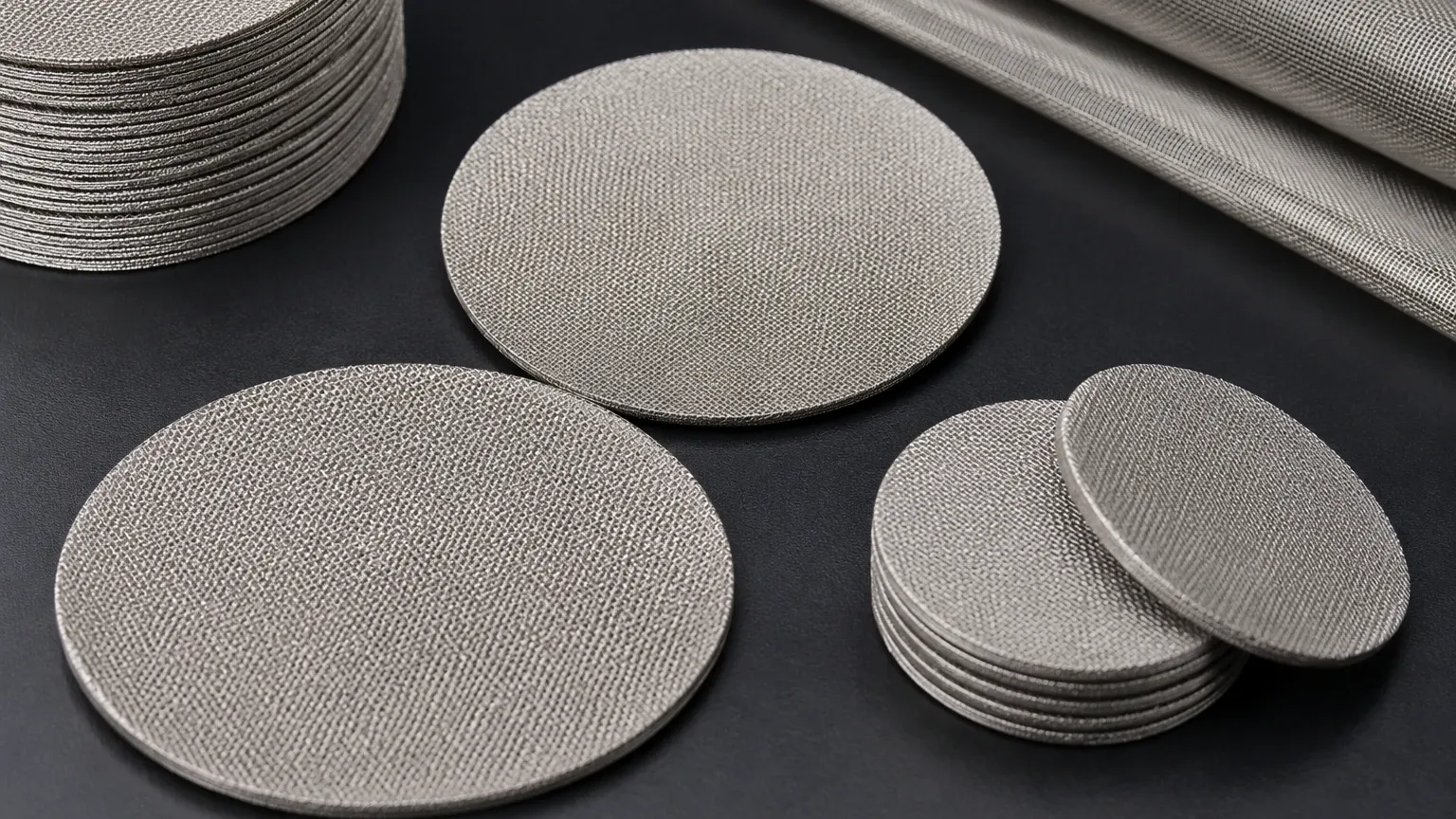
Filter discs are circular components made from woven wire mesh, sintered metal, or perforated sheets. While they may seem simple in design, their performance is dictated by the complexity of the weave and the quality of the alloy used. In the context of a 2 inch filter disc, the small diameter requires high precision during the manufacturing process to ensure that the edges are clean and the filtration area is maximized.
Material Selection for Industrial Environments
The choice of material is the most critical factor in determining the disc's longevity and compatibility with the process fluid. Most industrial filter discs are manufactured from stainless steel due to its inherent resistance to corrosion and high temperatures.
* Stainless Steel 304: This is the standard grade for general industrial applications. It offers good corrosion resistance and is cost-effective for use in environments where aggressive chemicals are not present.
* Stainless Steel 316L: For applications involving high acidity, salt, or pharmaceutical-grade requirements, 316L is the preferred choice. The addition of molybdenum and a lower carbon content provides superior resistance to pitting and intergranular corrosion.
* Specialty Alloys: In extreme cases, such as high-temperature chemical processing or aerospace applications, materials like Inconel, Monel, or Hastelloy may be used to withstand environments where stainless steel would fail.
Weave Types and Filtration Accuracy
The performance of a 2 inch filter disc is largely defined by the wire mesh weave type. Each weave offers a different balance of flow rate, mechanical strength, and filtration precision.
Plain Weave
This is the most common weave where each warp wire crosses over and under each shute wire. It provides a simple, square opening and is ideal for general-purpose filtration where a high flow rate is required and the particle size distribution is relatively uniform.
Twill Weave
In a twill weave, each warp wire passes over and under two shute wires. This allows for a heavier wire diameter to be used for a given mesh count, resulting in a stronger mesh that can withstand higher pressures. This is often used in hydraulic systems where the 2 inch disc must resist significant mechanical stress.
Dutch Weave (Plain and Twill)
Dutch weaves use a larger diameter for the warp wires and a smaller diameter for the shute wires, resulting in a very dense and strong mesh. This weave type is essential for fine filtration (down to 1-5 microns) and is commonly found in Filter Discs & Packs used for polymer melt filtration and high-pressure gas cleaning.
Structural Configurations: Single Layer vs. Multi-Layer Packs
A 2 inch filter disc can be supplied as a single-layer component or as part of a multi-layer pack. The configuration depends on the required filtration depth and the pressure the disc will encounter during operation.
Single Layer Discs
Single-layer discs are typically used in low-pressure applications or as a final safety screen. They are precision-cut to ensure a perfect fit within the housing, preventing any bypass of unfiltered material.
Multi-Layer Filter Packs
Multi-layer Filter Discs & Packs consist of several layers of wire mesh stacked together. These layers are often arranged with a coarse support mesh on the outside and a fine filtration mesh in the center. This "sandwich" construction provides several advantages:
1. Increased Strength: The outer layers support the fine inner mesh, preventing it from deforming under high pressure.
2. Graduated Filtration: By using layers with different micron ratings, the pack can capture larger particles on the outer layers and smaller particles in the middle, significantly increasing the dirt-holding capacity and extending the replacement cycle.
3. Flow Distribution: Multi-layer packs help to distribute the flow evenly across the entire surface of the disc, reducing localized wear.
Edging and Rimming Options
For a 2 inch filter disc, the treatment of the edge is vital for both safety and performance. Raw edges can fray, leading to wire migration which can contaminate the process or damage downstream components. To prevent this, Kaifil offers various edging solutions:
* Spot Welding: In multi-layer packs, the layers are spot-welded together at specific points to maintain alignment without adding bulk to the edge.
* Aluminum or Stainless Steel Rimming: A metal U-shaped rim is crimped around the circumference of the disc. This provides a clean, smooth edge and ensures a tight seal within the filter housing. Rimming is particularly important in high-pressure applications where a bypass must be completely eliminated.
* Copper Edging: Often used in specific chemical or extrusion processes where the softness of copper helps create a better seal against the housing walls.
Key Applications for 2 Inch Filter Discs
The 2-inch diameter is a standard size for many modular and laboratory-scale industrial systems. Its applications are diverse, spanning multiple high-stakes industries.
Polymer and Plastic Extrusion
In the plastics industry, melt filtration is essential to remove degraded polymer or contaminants that could cause defects in the final product. Small-scale extruders or laboratory testing equipment frequently use a 2 inch filter disc to verify material purity before moving to full-scale production.
Hydraulic and Pneumatic Systems
Precision hydraulic systems used in aerospace or specialized manufacturing require compact filtration components. A 2-inch disc can be integrated into manifolds or valve blocks to protect sensitive components from particulate wear.
Chemical and Pharmaceutical Processing
In batch processing and pilot plants, these discs are used to filter catalysts, active pharmaceutical ingredients (APIs), or solvents. The ability to use 316L stainless steel ensures that the filtration process does not introduce metallic contamination into the product.
Food and Beverage Filtration
From filtering essential oils to clarifying small batches of beverages, stainless steel discs provide a hygienic and reusable solution that complies with food safety standards. Unlike disposable filters, these metal discs can be cleaned and reused, reducing the total cost of ownership.
Engineering Considerations for Selection
When selecting a 2 inch filter disc, engineers must evaluate several variables to ensure the component performs as expected. Simply choosing a diameter is not enough; the following factors must be confirmed:
1. Micron Rating: Is the requirement for absolute or nominal filtration? Absolute filtration ensures that no particles larger than the specified size pass through, while nominal filtration represents a percentage-based efficiency.
2. Operating Pressure and Differential Pressure: The disc must be able to withstand the maximum system pressure as well as the pressure drop that occurs as the filter becomes loaded with contaminants.
3. Temperature Range: While stainless steel is robust, extreme temperatures may require specific alloys or specialized heat-treatment processes to prevent thermal fatigue.
4. Chemical Compatibility: Ensure the alloy and the edging material (if any) are compatible with the fluid being filtered to prevent corrosion or leaching.
Maintenance and Replacement Cycles
One of the primary advantages of stainless steel Filter Discs & Packs is their cleanability. Depending on the contaminant, these discs can be cleaned using several methods:
* Ultrasonic Cleaning: This is the most effective method for removing fine particles trapped within the mesh of a multi-layer pack.
* Backwashing: In some systems, the flow can be reversed to dislodge surface-level contaminants.
* Chemical Cleaning: Soaking the discs in compatible solvents or acids can dissolve organic or mineral buildup.
Despite their durability, filter discs are wear parts. A replacement schedule should be established based on the observed pressure drop. When the differential pressure reaches a predetermined limit that cleaning can no longer resolve, the disc should be replaced to avoid the risk of mesh rupture or bypass.
Why Choose Kaifil for Custom Filtration Solutions?
Kaifil specializes in the manufacture of precision filtration components, offering extensive OEM capabilities for customers worldwide. Whether you require a standard 2 inch filter disc or a complex, multi-layer custom pack, our engineering team works closely with you to define the material, weave, and structural requirements of your application.
Our commitment to quality ensures that every disc is produced with high dimensional accuracy and consistent filtration performance. By focusing on durability and precision, Kaifil helps industrial operators reduce downtime and improve the reliability of their filtration processes.
For technical specifications or to discuss a custom design, procurement teams and engineers are encouraged to evaluate the full range of available Filter Discs & Packs to find the optimal solution for their specific industrial needs.
