


2 Disc Filter
In industrial filtration, the efficiency of a process often hinges on the structural integrity and precision of the filter media. While single-layer mesh discs are suitable for basic straining, many high-pressure or high-precision applications require a more robust configuration. The 2 disc filter—specifically a dual-layer mesh pack—serves as a critical component in systems where both fine particle retention and mechanical support are non-negotiable. By combining two distinct layers of wire cloth, engineers can achieve a balance of filtration accuracy and durability that single-layer alternatives cannot provide.
Selecting the right Filter Discs & Packs involves understanding the synergy between different mesh weaves, material properties, and bonding techniques. This guide examines the technical specifications of 2 disc filter configurations, their performance characteristics, and the engineering considerations necessary for successful integration into industrial workflows.
Anatomy of a 2 Disc Filter Configuration
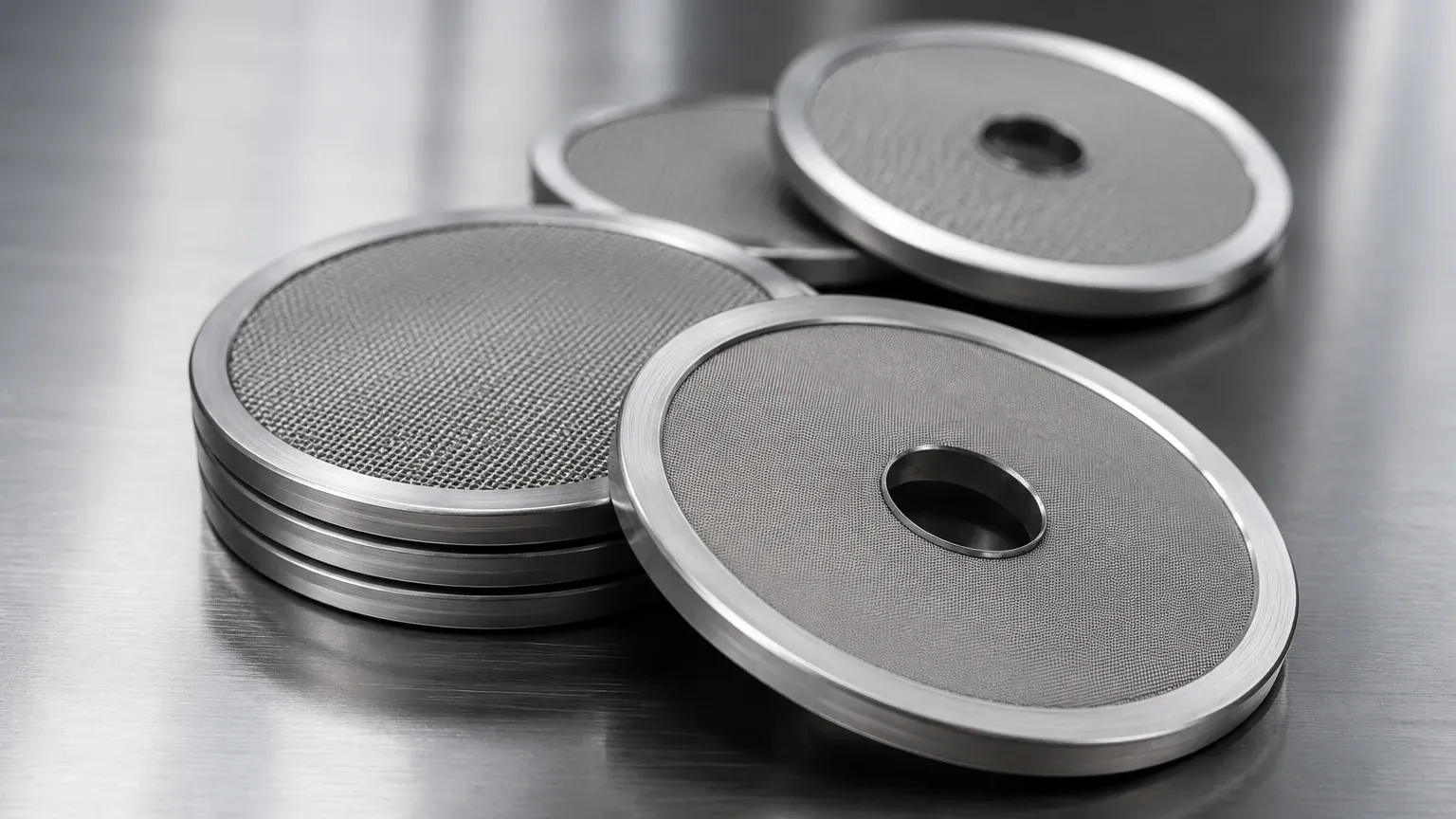
A 2 disc filter is typically constructed by layering two different types of stainless steel wire mesh. This "pack" configuration is designed to address the inherent weaknesses of fine mesh, which often lacks the rigidity to withstand high flow rates or differential pressures on its own.
The Filtration Layer
The primary layer, often referred to as the "control layer," is responsible for the actual particle retention. Depending on the application, this layer may utilize a plain weave for standard filtration or a Dutch weave for high-pressure, fine-micron requirements. The wire diameter and aperture size of this layer determine the absolute or nominal micron rating of the disc.
The Support Layer
The second layer acts as a structural skeleton. It is usually composed of a coarser mesh with thicker wires and larger openings. This layer prevents the finer filtration mesh from deforming under the force of the fluid or gas stream. In a 2 disc filter setup, the support layer also helps in distributing the pressure evenly across the surface of the filtration media, extending the service life of the component.
Material Science: Selecting the Right Alloy
The performance of a 2 disc filter is largely dictated by the metallurgy of the wire mesh. In industrial environments, stainless steel is the standard due to its corrosion resistance and thermal stability. Kaifil primarily utilizes two grades of stainless steel for these components:
1. Stainless Steel 304: This is the most common material for general industrial use. It offers excellent resistance to atmospheric corrosion and many organic and inorganic chemicals. It is ideal for food and beverage applications and standard hydraulic systems.
2. Stainless Steel 316L: For more demanding environments, 316L is the preferred choice. The addition of molybdenum provides superior resistance to chlorides and pitting. The "L" (low carbon) designation ensures that the material maintains its corrosion resistance even after welding, making it essential for pharmaceutical and chemical processing.
Beyond these standard alloys, specialized applications may require Monel, Inconel, or Hastelloy for extreme temperature or highly acidic environments. Engineers must confirm the chemical compatibility of the filtered medium with the chosen alloy to prevent premature failure due to stress corrosion cracking or general oxidation.
Manufacturing Techniques: Bonding and Edging
A 2 disc filter must function as a single, cohesive unit. If the layers shift or separate during operation, the filtration integrity is compromised. There are two primary methods used to secure the layers in Filter Discs & Packs:
Spot Welding
In this process, the two layers are fused at specific points using electrical resistance welding. This is a cost-effective method that ensures the layers remain aligned without adding significant bulk to the disc. Spot welding is commonly used for discs that will be housed within a tight-fitting mechanical assembly where edge thickness is a constraint.
Rimmed or Framed Edges
For applications requiring higher structural integrity or a more secure seal, the 2 disc filter can be finished with a metal rim. The edges of the mesh layers are enclosed within a U-shaped metal binding, typically made of aluminum, stainless steel, or copper. This framing serves several purposes:
* Leak Prevention: It ensures that fluid cannot bypass the filtration media at the edges.
* Safety: It covers the sharp, cut ends of the wire mesh, making the discs safer to handle during maintenance.
* Rigidity: It provides a solid surface for gaskets or mechanical clamps to grip.
Evaluating Filtration Performance and Micron Ratings
When specifying a 2 disc filter, engineers must distinguish between nominal and absolute micron ratings. A nominal rating refers to the ability of the filter to retain a major percentage (usually 60% to 90%) of particles of a specific size. An absolute rating indicates that the filter will retain 99.9% of particles larger than the specified micron size.
In a dual-layer configuration, the interaction between the two meshes can influence the effective filtration area. If the support mesh is too dense, it may create "blind spots" on the filtration mesh, reducing the overall flow rate. Conversely, if the support mesh is too open, the filtration mesh may sag, leading to inconsistent pore sizes. Precision manufacturing ensures that the alignment of the 2 disc filter layers optimizes both throughput and retention.
Flow Rate and Pressure Drop
The differential pressure (ΔP) across the filter is a critical metric. As the filter captures contaminants, the ΔP will increase. A well-designed 2 disc filter minimizes the initial pressure drop by using a high-porosity support layer. Engineers should calculate the maximum allowable pressure drop before the filter requires cleaning or replacement to avoid system downtime.
Operational Risks and Mitigation Strategies
Even high-quality Filter Discs & Packs can fail if not properly matched to the operating conditions. Common risks include:
* Media Migration: If the mesh is poorly woven or the wires are damaged, fragments of metal may enter the downstream flow. Using high-quality, cold-drawn stainless steel wire and rigorous inspection protocols mitigates this risk.
* Clogging (Blinding): In applications with gelatinous or fibrous contaminants, the 2 disc filter may clog rapidly. In such cases, selecting a Dutch weave for the filtration layer can provide better surface-loading characteristics and easier cleaning.
* Bypass: If the disc is not correctly sized for the housing, or if the rim is deformed, unfiltered fluid may bypass the media. Precise tolerances in the outer diameter (OD) are essential for a secure fit.
Customization and OEM Solutions
Industrial filtration is rarely a one-size-fits-all field. A 2 disc filter often needs to be customized to fit specific machinery, such as plastic extruders, oil refineries, or pharmaceutical centrifuges. Customization options include:
* Shape Variations: While circular discs are standard, filters can be produced in oval, rectangular, or ring shapes (with center holes).
* Layer Combinations: While we are discussing a 2-layer setup, some processes may require 3, 5, or even 7 layers for extreme pressure environments.
* Sintering: For the highest level of durability, the two layers can be sintered together. Sintering uses heat and pressure to bond the wires at every contact point, creating a porous but rigid metal plate that is virtually immune to media migration.
Procurement Checklist for Technical Teams
Before finalizing a purchase order for a 2 disc filter, purchasing teams and engineers should confirm the following technical details with the manufacturer:
1. Micron Requirement: Is the target retention absolute or nominal?
2. Operating Environment: What is the maximum temperature and the chemical composition of the fluid?
3. Pressure Limits: What is the maximum operating pressure and the expected differential pressure at the end of the cycle?
4. Dimensional Tolerances: What are the exact OD and thickness requirements? Does the housing require a specific rim material?
5. Cleaning Requirements: Is the filter intended for single use, or does it need to withstand ultrasonic cleaning or backflushing?
By addressing these factors, facilities can ensure they receive a filtration component that optimizes process purity while minimizing the total cost of ownership. High-quality Filter Discs & Packs are an investment in the longevity of downstream equipment and the consistency of the final product.
Conclusion
The 2 disc filter configuration represents a sophisticated balance of engineering principles. By leveraging the strengths of two distinct mesh layers, industrial operators can achieve precise filtration without sacrificing structural durability. Whether used in the delicate processing of pharmaceuticals or the rugged environment of hydraulic systems, these components are essential for maintaining system integrity. When sourcing these filters, focusing on material quality, bonding precision, and application-specific design will yield the most reliable performance results.
