


Disc Filter 4 Inch
In industrial filtration, the selection of component dimensions is as critical as the choice of material. A disc filter 4 inch specification is a standard yet versatile size used across various sectors, including polymer extrusion, hydraulic systems, and chemical processing. These components, often referred to as wire mesh discs, are engineered to provide precise particle separation while maintaining structural integrity under high-pressure conditions. Understanding the technical nuances of these filters—from weave types to material grades—is essential for engineers and procurement teams looking to optimize filtration efficiency and equipment longevity.
Understanding the Technical Role of 4-Inch Filter Discs
A disc filter 4 inch (approximately 101.6 mm in diameter) serves as a primary or secondary barrier against contaminants in fluid and gas streams. Because this diameter is a standard size for many medium-scale industrial housings and extruder screen changers, it is a staple in maintenance and OEM (Original Equipment Manufacturer) inventories.
The primary function of these discs is to remove solid particulates from liquids or gases. In a 4-inch format, the surface area is sufficient to handle moderate flow rates without inducing excessive pressure drops, provided the mesh count is correctly selected for the application. These discs are typically produced through precision die-cutting or laser-cutting processes to ensure that the edges are clean and the diameter is within tight tolerances, which is vital for preventing bypass in the filter housing.
Material Engineering: Selecting the Right Stainless Steel Alloy
The performance of a 4-inch disc filter is heavily dependent on the metallurgy of the wire mesh. Stainless steel is the industry standard due to its mechanical strength and resistance to corrosion and high temperatures.
Stainless Steel 304
This is the most common grade used for general industrial applications. It offers good corrosion resistance and can withstand temperatures up to 800°F (427°C). It is suitable for water treatment, food and beverage processing, and basic chemical filtration where aggressive acids are not present.
Stainless Steel 316 and 316L
For more demanding environments, SS316 is preferred. The addition of molybdenum enhances resistance to pitting and crevice corrosion, particularly in chloride-rich environments. SS316L (low carbon) is often specified for pharmaceutical and high-purity chemical applications because it minimizes carbide precipitation during welding, ensuring the integrity of the mesh structure in specialized Filter Discs & Packs.
Exotic Alloys
In extreme cases involving highly corrosive fluids or temperatures exceeding the limits of standard stainless steel, alloys such as Monel, Inconel, or Hastelloy may be used. While more costly, these materials ensure that the 4-inch disc does not succumb to chemical attack, which could lead to downstream contamination.
Weave Structures and Filtration Precision
The filtration capability of a disc filter 4 inch is determined by the weave pattern of the wire mesh. Each weave type offers different characteristics regarding flow resistance, mechanical strength, and micron rating.
1. Plain Weave: This is the simplest and most common weave, where each warp wire crosses over and under each weft wire. It provides high flow rates and is easy to clean, making it ideal for coarse filtration.
2. Twill Weave: In this pattern, each warp wire passes over and under two weft wires. This allows for the use of heavier wires for a given mesh count, increasing the strength of the disc for high-pressure applications.
3. Plain Dutch Weave: This weave utilizes a larger diameter warp wire and a smaller diameter weft wire driven closely together. This creates a dense, strong mesh with very fine openings, suitable for high-pressure filtration where precise particle retention is required.
4. Twill Dutch Weave: Combining the twill and dutch patterns, this weave provides the finest filtration ratings (down to 1–5 microns) and maximum strength. It is frequently used in critical hydraulic and aerospace applications.
Multi-Layer Filter Packs and Structural Integrity
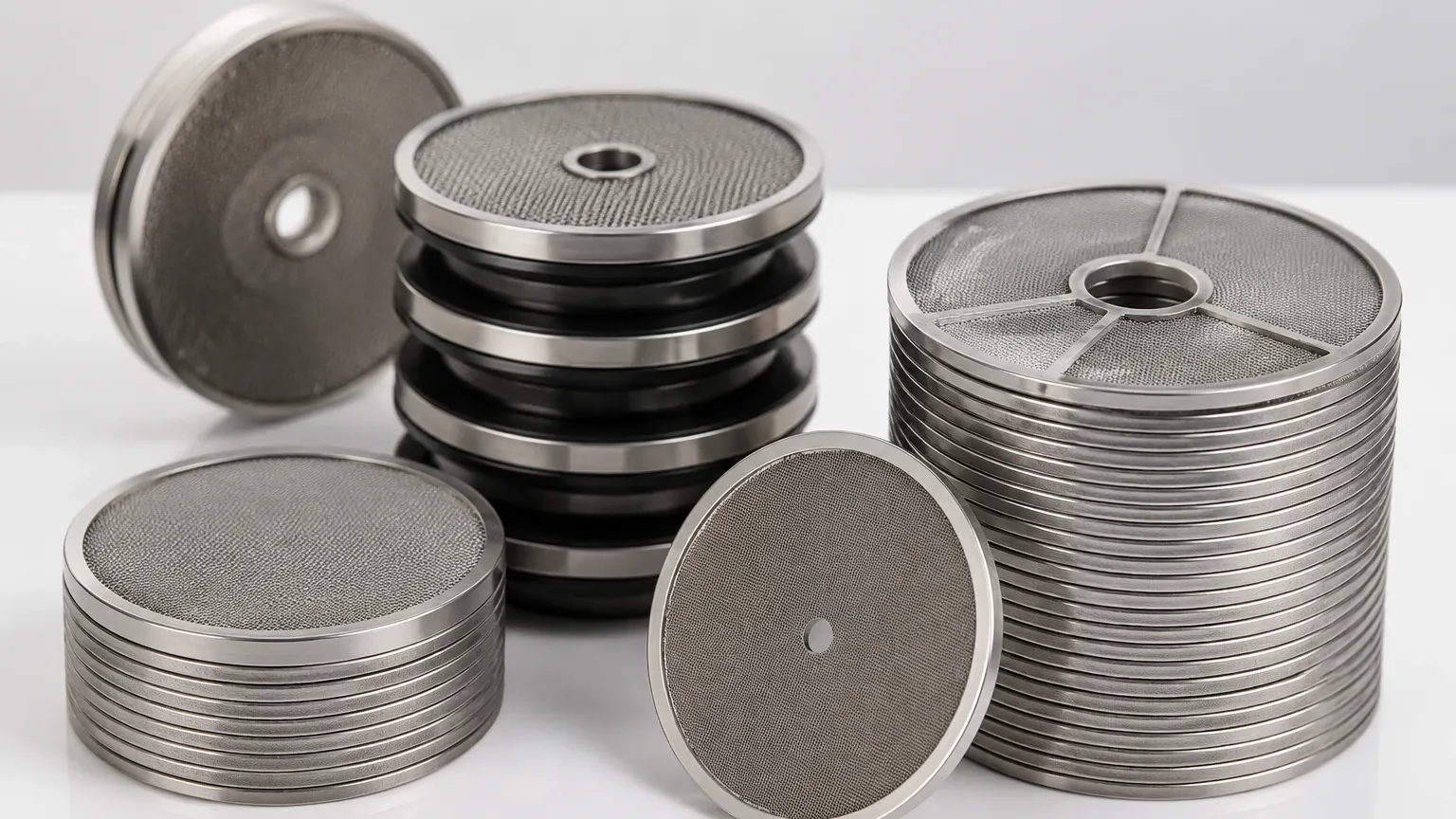
While a single-layer disc filter 4 inch may suffice for low-pressure gas filtration, many industrial processes require multi-layer configurations. These are known as filter packs and are designed to provide graduated filtration and enhanced structural support.
In a multi-layer pack, the layers are typically arranged with a coarse support mesh on the outside and a fine filtration mesh in the center. This "sandwich" construction prevents the fine mesh from deforming or migrating under high differential pressure. For 4-inch diameters, these layers are often joined using one of two methods:
* Spot Welding: Multiple points are welded around the circumference to hold the layers together. This is a cost-effective method for many industrial applications.
* Rimmed/Bound Edges: The layers are enclosed in a metal rim, usually made of aluminum, copper, or stainless steel. A rimmed disc provides a better seal within the housing and prevents the edges of the mesh from fraying, which is critical in high-vibration environments or applications where the filter is frequently handled.
Industrial Applications and Performance Requirements
The disc filter 4 inch is utilized in several key industries, each with specific performance benchmarks.
Polymer and Plastic Extrusion
In the plastics industry, these discs are used in screen changers to remove un-melted resin or contaminants from the polymer melt. The 4-inch size is common in mid-sized extruders. Here, the discs must withstand extremely high pressures and temperatures without collapsing.
Hydraulic and Lubrication Systems
Precision machinery relies on clean oil to prevent wear. 4-inch discs are often used as last-chance filters or in bypass lines to capture wear particles. The ability to clean and reuse stainless steel discs makes them a more sustainable and cost-effective choice than disposable synthetic filters.
Chemical and Pharmaceutical Processing
In these sectors, filtration accuracy and material purity are paramount. 4-inch discs are used in pilot plants and batch processing to ensure that final products meet stringent purity standards. The use of SS316L ensures that the filter does not leach contaminants into the process stream.
Procurement Considerations: Customization and Quality Control
When sourcing a disc filter 4 inch, engineers must look beyond the basic dimensions. Customization options play a significant role in the total cost of ownership and operational efficiency.
Customization Options
* Micron Rating: Standard ratings range from 2 microns up to several millimeters. Selecting the correct rating involves balancing the need for purity with the acceptable pressure drop.
* Mesh Layering: Custom packs can be designed with specific sequences of mesh counts to handle high solids loading.
* Surface Treatment: Options such as ultrasonic cleaning ensure that the discs are free from manufacturing oils and debris before they are installed in sensitive environments.
Quality Control Measures
For industrial-grade filtration, consistency is key. A reputable manufacturer will provide documentation regarding the material grade (MTRs) and mesh specifications. Key quality checks include:
* Dimensional Accuracy: Ensuring the disc is exactly 4 inches to prevent bypass.
* Flatness: A warped disc will not seal correctly in the housing.
* Integrity of the Weave: Checking for irregular wire spacing or broken wires that could compromise filtration performance.
Operational Longevity and Maintenance Protocols
One of the primary advantages of using stainless steel 4-inch disc filters is their durability. Unlike paper or polymer filters, metal mesh discs can often be cleaned and returned to service, significantly reducing waste and long-term costs.
Cleaning Methods
* Backwashing: Reversing the flow of the fluid to dislodge particles from the mesh surface.
* Ultrasonic Cleaning: Using high-frequency sound waves in a cleaning solvent to remove fine particulates trapped deep within the weave.
* Chemical Cleaning: Using compatible solvents or acids to dissolve organic or inorganic buildup.
* Burn-off: In polymer applications, controlled heating can be used to remove residual resin, though this must be done carefully to avoid damaging the metallurgical properties of the stainless steel.
Replacement Cycles
Despite their cleanability, all filters have a finite lifespan. Engineers should monitor the pressure differential ($ΔP$) across the filter. A consistent increase in the baseline $ΔP$ after cleaning indicates that the mesh is becoming permanently blinded or that the wire structure is fatiguing. Regular inspection for signs of mechanical deformation or corrosion is essential to prevent catastrophic failure and downstream equipment damage.
Conclusion
The disc filter 4 inch is a critical component in the maintenance of industrial fluid purity. By selecting the appropriate material, weave type, and structural configuration, engineers can ensure that their filtration systems operate at peak efficiency. Whether utilized as a single-layer screen or as part of complex Filter Discs & Packs, these components provide the reliability and precision required for modern industrial manufacturing. When sourcing these parts, focusing on technical specifications and quality assurance will lead to better performance and lower overall operational costs.
