


3m Filter Discs
In the landscape of industrial filtration, selecting the appropriate media and configuration is a critical engineering decision that directly impacts process efficiency, product purity, and equipment longevity. While the term 3m filter discs is often associated with high-efficiency particulate air (HEPA) filtration or respiratory protection in personal protective equipment (PPE), the broader industrial application of disc-based filtration covers a vast spectrum of liquid and gas processing. For engineers and procurement specialists, understanding the technical nuances of these components—and knowing when to transition from standard synthetic media to high-performance metal Filter Discs & Packs—is essential for optimizing industrial systems.
Industrial filtration requires a balance between flow rate, pressure drop, and particle retention. Whether an application involves chemical processing, food and beverage production, or hydraulic systems, the choice of filter disc material and structure determines the total cost of ownership (TCO) and the reliability of the filtration cycle.
Technical Overview of 3m Filter Discs and Industrial Variants
3m filter discs are widely recognized for their performance in specific niches, particularly in environments requiring high-efficiency capture of sub-micron particles. In respiratory applications, products like the 3M 2091 or 2097 P100 discs utilize advanced electret media to provide low breathing resistance while maintaining high filtration efficiency. However, in the context of industrial process engineering, "filter discs" typically refer to flat, circular filtration elements integrated into housings, extruders, or multi-stage filtration systems.
In industrial liquid and gas processing, the term may also refer to 3M’s line of depth filters or specialized membrane discs used in laboratory and pharmaceutical settings. These are often composed of synthetic polymers, cellulose, or glass fibers. While effective for single-use or low-pressure applications, many industrial environments demand a more robust solution. This is where stainless steel wire mesh and sintered metal discs provide a necessary alternative, offering mechanical strength and thermal resistance that synthetic fibers cannot match.
Engineering Considerations for Disc-Based Filtration
When evaluating 3m filter discs or their metallic counterparts, engineers must analyze several key performance indicators (KPIs) to ensure the component meets the application's demands.
1. Filtration Accuracy and Micron Rating
Filtration accuracy is defined by the size of the smallest particle the media can reliably trap. Synthetic discs often excel in the sub-micron range (0.1 to 1.0 microns), which is critical for sterile filtration in pharmaceuticals. However, for industrial applications such as polymer melt filtration or oil processing, a nominal or absolute micron rating ranging from 5 to 500 microns is more common. Stainless steel Filter Discs & Packs allow for precise control over these ratings through specific wire mesh weaves.
2. Pressure Drop (ΔP)
The resistance to flow across the filter media is a vital metric. A high initial pressure drop reduces the energy efficiency of the system and shortens the interval between filter changes. While 3m filter discs are engineered for high permeability, metal mesh discs can be engineered with specific "Dutch weaves" to maximize surface area and minimize ΔP even under heavy contaminant loading.
3. Chemical and Thermal Compatibility
One of the primary limitations of synthetic filter discs is their vulnerability to high temperatures and aggressive solvents. Most polymer-based discs are rated for temperatures below 100°C. In contrast, stainless steel (AISI 304 or 316L) filter discs can operate at temperatures exceeding 400°C and are resistant to a wide array of corrosive chemicals, making them the standard for chemical processing and steam filtration.
Comparing Synthetic Media and Stainless Steel Wire Mesh
For many B2B buyers, the decision between a synthetic 3m filter disc and a custom-manufactured metal disc depends on the operational environment. Below is a comparison of the two media types across industrial parameters:
| Feature | Synthetic/Polymer Discs | Stainless Steel Filter Discs & Packs |
| :— | :— | :— |
| Durability | Low (Single-use/Disposable) | High (Cleanable and Reusable) |
| Temperature Limit | Typically < 120°C | Up to 500°C+ (depending on alloy) |
| Structural Strength | Requires support frames | Self-supporting or sintered |
| Cleaning | Not possible | Backwashing, ultrasonic, or chemical |
| Micron Range | 0.1 – 50 microns | 1 – 1000+ microns |
In heavy-duty applications such as hydraulic fluid filtration or plastic extrusion, the structural integrity of the filter is paramount. Synthetic discs may collapse or bypass under high differential pressure, whereas multi-layer Filter Discs & Packs are designed to withstand significant mechanical stress without deforming.
The Role of Multi-Layer Filter Packs
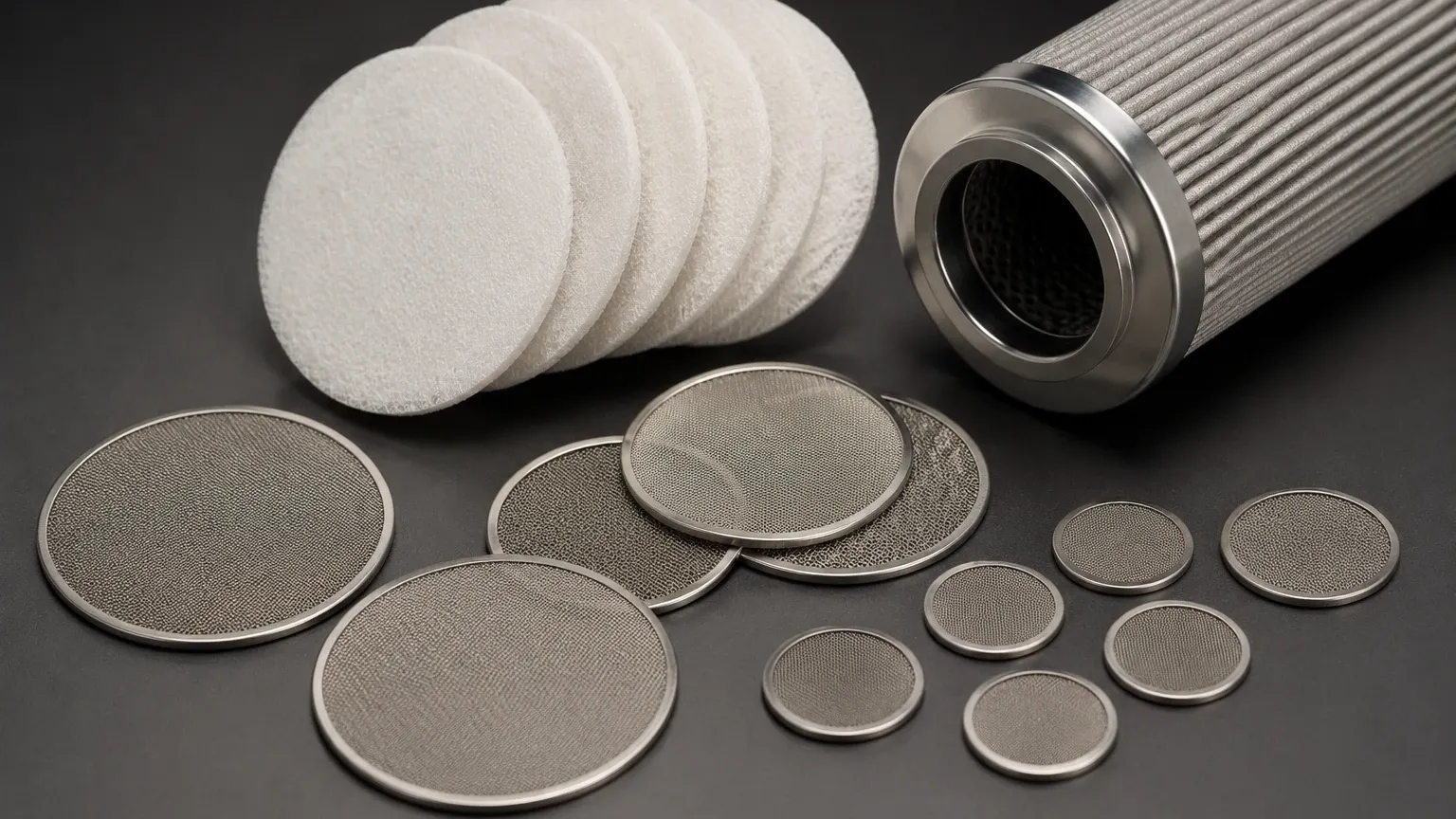
In many industrial processes, a single layer of filter media is insufficient. This has led to the development of "filter packs," which consist of multiple layers of wire mesh of varying fineness. These layers are often spot-welded or bound by a metal rim (aluminum, stainless steel, or copper) to create a single, robust unit.
Layer Configuration
* Support Layer: A coarse mesh that provides structural rigidity to the pack.
* Filtration Layer: The primary layer that determines the micron rating.
* Drainage Layer: Positioned to facilitate the flow of the filtrate and prevent the filtration layer from blinding against the housing surface.
This multi-layer approach is particularly effective in the fiber and film industry, where high-viscosity fluids must be filtered at high pressures. By combining different mesh counts, engineers can achieve depth filtration characteristics within a flat disc format, significantly extending the service life of the component compared to a single-layer 3m filter disc.
Application-Specific Selection: Beyond the Catalog
Selecting the right disc requires more than just matching a part number. Engineers must consider the physical properties of the contaminant and the fluid.
Food and Beverage Processing
In this sector, hygiene and FDA compliance are non-negotiable. While 3m filter discs are used for final polish and sterilization, stainless steel discs are employed in the earlier stages for removing larger particulates from syrups, oils, and beverages. The cleanability of metal mesh ensures that no fibers migrate into the product stream, a risk sometimes associated with lower-quality synthetic media.
Chemical and Petrochemical
Corrosive environments require materials like 316L stainless steel or even exotic alloys like Hastelloy. In these applications, the filter must resist pitting and crevice corrosion. Metal Filter Discs & Packs are often the only viable solution for high-pressure reactor outlets or catalyst recovery systems.
Hydraulic and Pneumatic Systems
Precision metal discs are used to protect sensitive valves and actuators from metal shavings and environmental dust. Unlike disposable 3m filter discs, these metal components can be integrated into permanent assemblies that are serviced during routine maintenance cycles, reducing the waste stream of the facility.
Maintenance and Lifecycle: The Economics of Reusability
A significant factor in the procurement of industrial filters is the lifecycle cost. Synthetic 3m filter discs are typically treated as consumables. Once the pressure drop reaches a terminal level, the disc is discarded and replaced. This creates a recurring operational expense and contributes to industrial waste.
Stainless steel filter discs, however, represent a capital investment. Because they are manufactured from high-grade alloys, they can be cleaned and returned to service multiple times. Common cleaning methods include:
* Ultrasonic Cleaning: Using high-frequency sound waves in a solvent bath to dislodge fine particles trapped within the mesh.
* Backwashing: Reversing the flow of the fluid to push contaminants out of the media.
* Chemical Cleaning: Using acids or alkalis to dissolve organic or inorganic buildup without damaging the stainless steel structure.
When the cost of downtime and replacement labor is factored in, the transition to reusable metal Filter Discs & Packs often provides a superior return on investment (ROI) for high-volume industrial processes.
Customization and OEM Requirements
Standard 3m filter discs come in fixed sizes and specifications. However, many industrial machines—especially older equipment or proprietary systems—require non-standard dimensions. Custom manufacturing allows for:
* Variable Diameters: Precision cutting to fit specific housing grooves.
* Custom Rim Materials: Selecting the right binding metal to prevent galvanic corrosion or to provide a better seal.
* Sintered Construction: For applications requiring extreme durability, multiple layers of mesh can be sintered together. Sintering bonds the wires at every contact point, creating a porous metal plate that is virtually impossible to fray or delaminate.
For technical teams, working with an OEM manufacturer ensures that the filtration component is tailored to the specific flow dynamics of their system rather than forcing a standard product to fit a custom application.
Conclusion: Making an Informed Decision
Whether your facility currently utilizes 3m filter discs for specialized particulate capture or is looking to upgrade to more durable stainless steel Filter Discs & Packs, the key is to match the media to the operational reality. Engineers should confirm the maximum operating pressure, temperature, and chemical exposure before finalizing a specification.
In high-purity or low-pressure environments, synthetic media remains a staple. However, for the rigors of industrial manufacturing, chemical processing, and heavy machinery, the structural integrity and reusability of stainless steel filtration components offer a level of reliability that is essential for modern production standards. By focusing on technical specifications—such as weave type, layer configuration, and alloy selection—purchasing teams can ensure they are acquiring a filtration solution that enhances both performance and profitability.
