


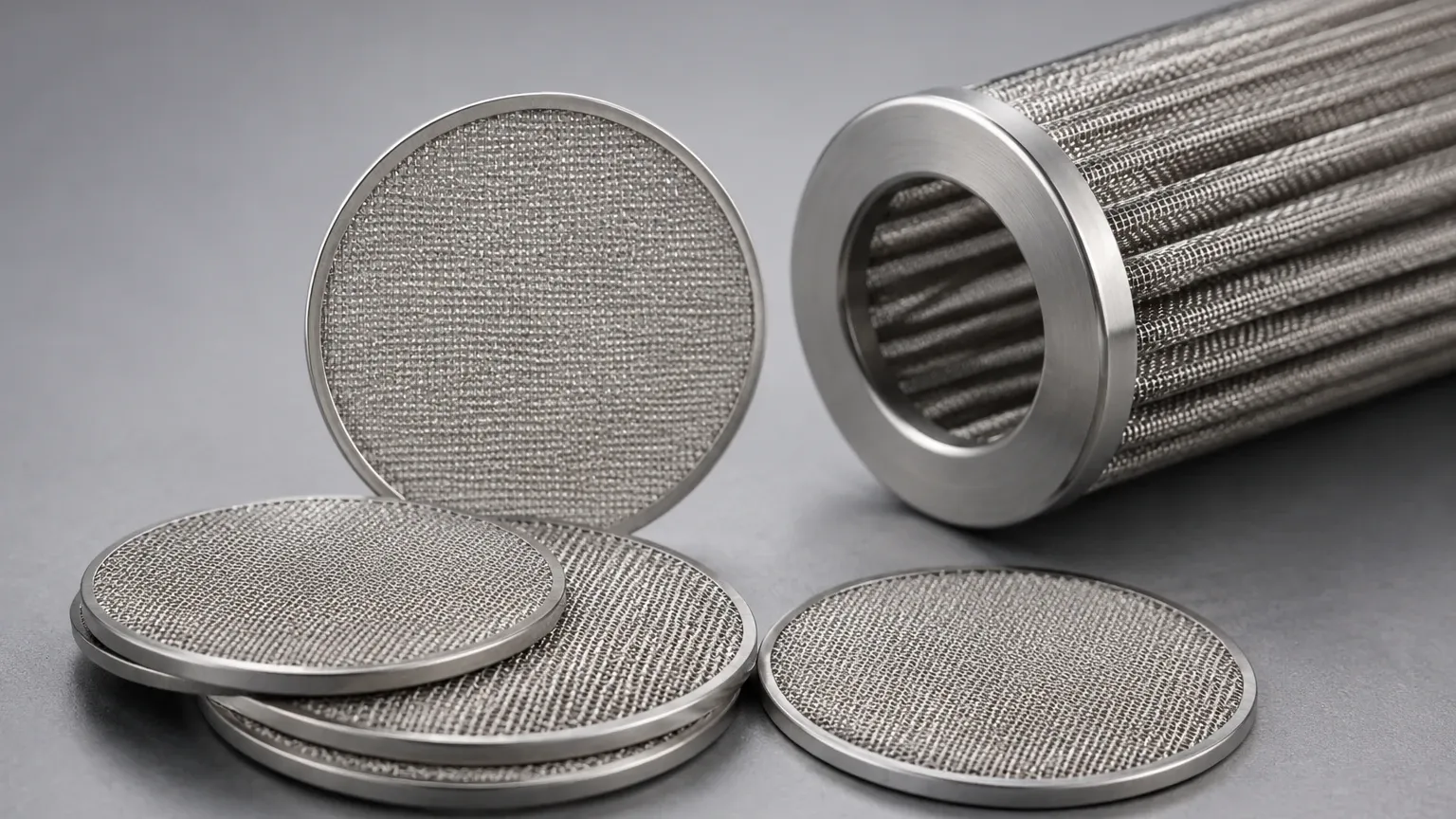
Disc Filter 40mm
In industrial filtration, precision is the primary determinant of system efficiency and product purity. The disc filter 40mm is a specific, standardized component frequently utilized across various sectors, including polymer extrusion, chemical processing, and hydraulic systems. As a critical part of the broader category of Filter Discs & Packs, these components are engineered to withstand high pressures and corrosive environments while maintaining consistent filtration accuracy.
Selecting the correct 40mm disc filter requires a deep understanding of material science, weave patterns, and mechanical structural integrity. For engineers and procurement teams, the challenge lies in balancing the initial cost with the total cost of ownership, which includes factors like cleaning cycles, durability, and the prevention of downstream contamination.
Understanding the Role of 40mm Disc Filters in Industrial Filtration
A 40mm diameter disc filter serves as a localized filtration point, often integrated into nozzles, valves, or pipe segments. Despite its relatively small size, its performance is vital for protecting sensitive equipment from particulate matter. In many industrial applications, these filters are used in "packs"—multiple layers of wire mesh stacked together—to provide graduated filtration and enhanced mechanical strength.
The primary function of a disc filter 40mm is to remove solid contaminants from a fluid or gas stream. In the chemical industry, this might involve removing catalysts or undissolved solids. In the food and beverage sector, it ensures that fine particulates do not reach the final packaging stage. Because these filters are often the last line of defense before a critical process step, their manufacturing tolerances must be exceptionally tight.
Material Selection and Construction for Filter Discs & Packs
The choice of material is the most critical decision in the engineering of Filter Discs & Packs. Most industrial applications demand stainless steel due to its inherent resistance to oxidation and chemical attack.
Stainless Steel 304 vs. 316L
Stainless steel 304 is the standard choice for general industrial applications where moderate corrosion resistance is required. It is commonly used in food processing and water treatment. However, for more demanding environments, such as pharmaceutical manufacturing or marine applications, Stainless Steel 316L is preferred. The addition of molybdenum in 316L provides superior resistance to chlorides and acidic solutions, ensuring the disc filter 40mm does not degrade or leach metallic ions into the process stream.
Specialized Alloys
In extreme cases involving high-temperature corrosive gases or highly aggressive chemicals, manufacturers like Kaifil may utilize specialized alloys such as Hastelloy, Monel, or Inconel. These materials maintain their structural integrity at temperatures exceeding 500°C, where standard stainless steels might suffer from creep or rapid oxidation.
Technical Specifications: Mesh Count and Filtration Rating
The performance of a disc filter 40mm is defined by its mesh count and its micron rating. Engineers must distinguish between nominal filtration and absolute filtration to ensure the component meets the application's requirements.
1. Mesh Count: This refers to the number of wires per linear inch. A higher mesh count indicates a finer weave. For instance, a 200-mesh screen provides much finer filtration than a 40-mesh screen.
2. Micron Rating: This measures the size of the particles the filter is capable of trapping. A disc filter 40mm can be manufactured to provide filtration from 2 microns up to several hundred microns.
3. Weave Types: The weave pattern significantly impacts flow resistance and dirt-holding capacity.
* Plain Weave: The simplest pattern, offering high flow rates and easy cleaning.
* Dutch Weave: Uses thicker warp wires and finer weft wires, resulting in a dense, strong mesh capable of very fine filtration ratings.
* Twill Weave: Allows for a heavier wire diameter in a given mesh count, increasing the mechanical strength of the disc.
Structural Design: Single Layer vs. Multi-Layer Sintered Packs
A single layer of wire mesh is often insufficient for high-pressure industrial applications. To enhance the performance of the disc filter 40mm, multiple layers are often combined into a single unit.
Multi-Layer Packs
Layering different mesh counts allows for "depth filtration" within a thin disc. A coarse outer layer can act as a pre-filter, catching large debris, while the finer inner layers perform the final precision filtration. This configuration prevents the fine mesh from blinding (clogging) prematurely, thereby extending the service life of the filter.
Sintered Mesh Discs
For the most demanding environments, the layers of mesh are sintered—a process involving heat and pressure that fuses the contact points of the wires without melting them. Sintered Filter Discs & Packs offer unparalleled mechanical stability. They do not migrate or deform under high-pressure drops and can be cleaned repeatedly using ultrasonic methods or back-flushing without losing their pore structure.
Edging and Rimming
To ensure a leak-proof seal within the filter housing, a disc filter 40mm often features a rim. These rims can be made from aluminum, stainless steel, or copper. The rimming process (often referred to as "framing") provides a compressed edge that prevents fluid bypass and makes the disc easier to handle during installation and replacement.
Key Performance Indicators for a Disc Filter 40mm
When evaluating a disc filter 40mm for a specific system, engineers must consider several key performance indicators (KPIs):
* Pressure Drop (ΔP): This is the difference in pressure between the upstream and downstream sides of the filter. A high initial pressure drop indicates that the filter may be too restrictive for the pump capacity, while a rapid increase in pressure drop during operation indicates the filter is reaching its dirt-holding limit.
* Dirt-Holding Capacity: This defines how much contaminant the filter can retain before the pressure drop becomes unacceptable. Multi-layer designs typically offer much higher capacity than single-layer discs.
* Flow Velocity: The speed at which the fluid passes through the mesh. High velocities can cause wire erosion or particle "breakthrough" if the mesh is not sufficiently supported.
* Mechanical Strength: The ability of the disc to withstand the differential pressure without buckling or tearing. This is especially critical in hydraulic systems where pressure spikes are common.
Industrial Applications and Compatibility
The versatility of the disc filter 40mm makes it a staple in various specialized fields:
Plastic and Polymer Extrusion
In the extrusion process, molten polymer is forced through a screen pack to remove impurities that could cause defects in the final product (such as film, fiber, or pipe). The 40mm size is common in lab-scale extruders and small-bore production lines. Here, the filters must withstand temperatures up to 300°C and pressures exceeding 3,000 PSI.
Chemical and Petrochemical Processing
Filtration in these sectors often involves aggressive solvents and high temperatures. Stainless steel 316L Filter Discs & Packs are used to protect sensitive instrumentation and to ensure the purity of chemical reagents.
Hydraulic and Lubrication Systems
Fine metal particles in hydraulic oil can cause catastrophic failure of pumps and valves. A disc filter 40mm is often placed in the return line or at the suction inlet to maintain fluid cleanliness levels according to ISO 4406 standards.
Engineering Considerations for Customization and Procurement
When sourcing a disc filter 40mm, providing generic specifications is often insufficient for critical applications. To ensure optimal performance, the following technical details should be confirmed with the manufacturer:
1. Fluid Characteristics: What is the viscosity, temperature, and chemical composition of the medium? This dictates material selection and weave type.
2. Contaminant Profile: What is the nature of the solids being removed? Hard, abrasive particles require different mesh structures than soft, deformable gels.
3. Operating Environment: Is the filter subject to constant flow, or are there frequent start-stop cycles that could cause fatigue in the wire mesh?
4. Cleaning Requirements: Is the filter intended to be disposable, or must it be cleaned and reused? Sintered discs are generally the best choice for reusable applications due to their structural rigidity.
By working closely with a specialized manufacturer like Kaifil, engineers can develop customized Filter Discs & Packs that are tailored to their specific equipment. Customization can include unique layer combinations, specific rim materials, or non-standard diameters to fit proprietary housings.
Maintenance and Replacement Cycles
The longevity of a disc filter 40mm depends heavily on the cleanliness of the process and the robustness of the filter design. In many automated systems, the replacement cycle is triggered by a differential pressure sensor. Once the ΔP reaches a pre-set limit, the filter must be cleaned or replaced to prevent system downtime or pump damage.
For stainless steel filters, ultrasonic cleaning is the most effective method for removing deeply embedded particulates. However, for polymer applications, a burn-off oven (pyrolysis) may be required to remove hardened resin before ultrasonic cleaning. It is essential to inspect the mesh under magnification after cleaning to ensure that no wires have been broken and that the pore size remains within the specified tolerance.
In conclusion, while the disc filter 40mm may seem like a simple component, its engineering involves complex considerations of fluid dynamics, metallurgy, and mechanical design. Selecting high-quality Filter Discs & Packs ensures that industrial processes remain efficient, equipment remains protected, and final products meet the highest standards of quality.
