


6 Diameter Filter
In industrial filtration, the 6-inch diameter format represents a critical standard for a wide range of fluid and gas processing applications. Whether utilized as a standalone screen or integrated into complex multi-layer assemblies, a 6 diameter filter provides the necessary surface area and structural integrity required for high-pressure environments, such as polymer extrusion, hydraulic systems, and chemical processing. Selecting the correct configuration requires a deep understanding of metallurgy, weave patterns, and the mechanical stresses inherent in industrial operations.
As a specialized manufacturer, Kaifil provides precision-engineered Filter Discs & Packs designed to meet the rigorous demands of global industrial sectors. This guide examines the technical specifications, engineering considerations, and selection criteria essential for engineers and purchasing teams when specifying 6-inch diameter filtration components.
Understanding the Role of 6-Inch Diameter Filter Discs in Industrial Systems
The 6-inch diameter (approximately 152.4 mm) is a ubiquitous size in the filtration industry, particularly within melt filtration and liquid processing. Its popularity stems from its compatibility with standard piping sizes and housing dimensions used in medium-to-large scale industrial equipment.
A 6 diameter filter is rarely a simple piece of wire mesh. In professional B2B applications, these components are engineered to perform specific functions: removing contaminants, protecting downstream equipment like pumps and nozzles, and ensuring the purity of the final product. The circular geometry is ideal for ensuring even flow distribution across the filter surface, which minimizes localized pressure build-up and extends the service life of the media.
In the context of Filter Discs & Packs, the 6-inch format is frequently used in screen changers for plastic recycling and virgin resin production. Here, the discs must withstand temperatures exceeding 300°C and pressures that can reach several thousand PSI. Consequently, the choice of material and construction method is paramount to preventing mechanical failure or "blow-through."
Material Selection and Metallurgical Considerations
The performance of a 6 diameter filter is fundamentally dictated by the material from which it is manufactured. Stainless steel is the industry standard due to its balance of mechanical strength, thermal stability, and corrosion resistance.
Stainless Steel 304
This is the most common grade used for general industrial filtration. It offers excellent strength and good corrosion resistance for non-acidic environments. It is often the cost-effective choice for hydraulic oil filtration and standard water treatment applications.
Stainless Steel 316 and 316L
For applications involving corrosive chemicals, saline environments, or pharmaceutical processing, 316-grade stainless steel is preferred. The addition of molybdenum enhances resistance to pitting and crevice corrosion. The "L" variant (low carbon) is specifically utilized when the filter components require welding, as it prevents carbide precipitation that can lead to intergranular corrosion at the weld sites.
Specialized Alloys
In extreme environments—such as highly acidic chemical processing or high-temperature aerospace applications—materials like Hastelloy, Inconel, or Monel may be specified. While more costly, these alloys provide the necessary longevity in conditions where standard stainless steel would fail prematurely.
Structural Configurations: Single-Layer vs. Multi-Layer Filter Packs
When specifying a 6 diameter filter, engineers must decide between a single-layer disc or a multi-layer pack. This decision is based on the required filtration fineness and the differential pressure the disc will encounter.
Single-Layer Discs
Single-layer discs are typically used for coarse filtration or as a primary screen in low-pressure systems. They are easy to clean and offer the lowest initial cost. However, they lack the depth and support required for fine micron ratings.
Multi-Layer Filter Packs
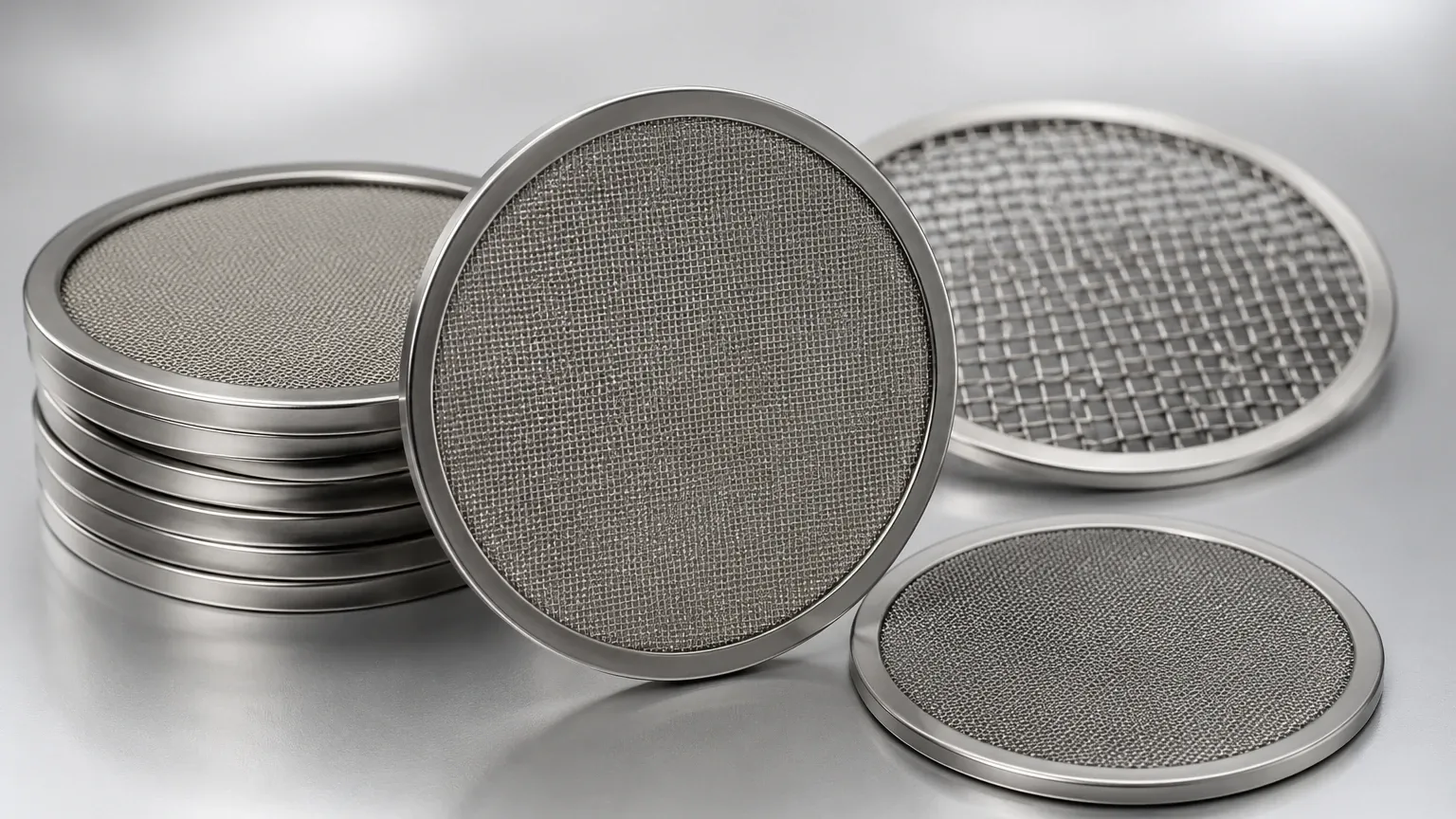
Multi-layer Filter Discs & Packs are engineered assemblies consisting of several layers of wire mesh. A typical 6-inch pack might include:
* The Filtration Layer: A fine Dutch weave or square weave mesh that determines the micron rating.
* Support Layers: Coarser mesh layers placed on either side of the filtration layer to provide mechanical rigidity and prevent the fine mesh from deforming under pressure.
* Drainage Layers: These facilitate the flow of the filtrate away from the filtration surface, reducing the overall pressure drop.
These layers are often joined via spot welding or bound by an aluminum or stainless steel rim (rimmed discs). Rimmed edges are particularly important for a 6 diameter filter used in high-pressure housings, as the rim provides a superior sealing surface and prevents bypass.
Performance Metrics: Micron Ratings and Pressure Drop
The effectiveness of a 6 diameter filter is measured by its ability to capture particles of a specific size while maintaining an acceptable flow rate. Engineers must balance two competing factors: filtration efficiency and pressure drop (Delta P).
Micron Rating
The micron rating defines the pore size of the mesh. It can be expressed as "nominal" (the size of the smallest particle that the mesh will catch a majority of the time) or "absolute" (the size of the largest particle that can pass through the mesh). For a 6-inch disc, achieving a high absolute micron rating requires precision weaving and strict quality control to ensure uniform pore distribution across the entire 28.27 square inches of surface area.
Pressure Drop Considerations
As a filter captures contaminants, the pressure drop across the disc increases. A 6 diameter filter with a high mesh count (fine filtration) will naturally have a higher initial pressure drop than a coarse mesh. If the initial Delta P is too high, it limits the "dirt-holding capacity" of the filter, leading to frequent replacement cycles and increased downtime. Engineering the pack with graduated density—where coarser layers protect the finer internal layers—is a common strategy to optimize this balance.
Weave Patterns and Their Impact on Filtration
The geometry of the wire mesh weave significantly influences the performance of the 6 diameter filter.
1. Plain Weave: The most straightforward pattern where wires cross over and under each other. It provides high flow rates and is easy to clean, making it suitable for larger micron requirements.
2. Twill Weave: Each shute wire passes successively over and under two warp wires. This allows for a heavier wire diameter in a given mesh count, increasing the strength of the 6-inch disc.
3. Plain Dutch Weave: This weave uses a larger diameter warp wire and a smaller diameter shute wire driven closely together. This creates a "tortuous path" for particles, offering superior strength and much finer filtration ratings than standard square weaves.
4. Dutch Twill Weave: Combining the features of twill and Dutch weaves, this is used for the finest filtration requirements (down to 5-10 microns) in high-pressure 6-inch filter applications.
Application-Specific Engineering for 6-Inch Filters
The application dictates the specific design of the 6 diameter filter.
Polymer and Plastic Extrusion
In this sector, 6-inch filter packs are used to remove "black specks" and un-melted resin from the polymer melt. Because the viscosity of the melt is high, the filter must be extremely robust. Multi-layer packs with reinforced rims are the standard here to prevent the mesh from collapsing into the breaker plate.
Hydraulic and Lubrication Systems
For hydraulic fluids, the primary goal is protecting sensitive valves and actuators. A 6-inch diameter disc is often used in suction strainers or return line filters. Here, the focus is on compatible materials that will not react with synthetic or mineral-based oils.
Food and Beverage Processing
Filters in this industry must be manufactured from food-grade stainless steel (usually 316L) and must be free of any lubricants or residues from the manufacturing process. The 6-inch format is common in juice processing and dairy filtration, where it must withstand frequent Clean-in-Place (CIP) cycles using caustic chemicals.
Quality Control and Technical Procurement Guidelines
When sourcing a 6 diameter filter, procurement teams and engineers should confirm several technical parameters to ensure the component is fit for purpose. Relying on a manufacturer like Kaifil ensures that these variables are managed through a professional quality management system.
Critical Confirmation Points:
* Dimensional Accuracy: For a 6-inch disc, the tolerance on the diameter is critical. Even a 1mm variance can lead to bypass or difficulty in installation within the housing.
* Mesh Count and Wire Diameter: Verify that the mesh count matches the required micron rating. Thicker wire diameters increase the lifespan but reduce the open area (flow rate).
* Edge Finish: Decide between raw cut edges (cheaper, but potential for loose wires) and rimmed or welded edges (cleaner, safer, and better sealing).
* Flatness: In high-precision assemblies, the disc must remain perfectly flat. Warping during the cutting or welding process can create gaps in the filtration stack.
* Material Certification: Always request Mill Test Reports (MTRs) to verify the grade of stainless steel, especially for pharmaceutical or chemical applications where traceability is mandatory.
Maintenance and Total Cost of Ownership
While a 6 diameter filter is often considered a consumable, its impact on the total cost of ownership (TCO) is significant. A low-quality filter that fails prematurely or allows contaminants to pass through can cause catastrophic damage to expensive machinery, such as extrusion screws or high-pressure pumps.
Cleaning vs. Replacement
Stainless steel Filter Discs & Packs are often cleanable. Methods include ultrasonic cleaning, chemical baths, or controlled burnout ovens (for polymer removal). However, the cleaning process itself can eventually fatigue the wire mesh. It is essential to establish a replacement cycle based on the number of cleaning iterations or a maximum allowable pressure drop to ensure system integrity.
Conclusion
The specification of a 6 diameter filter involves more than just selecting a size. It requires a calculated approach to material science, weave geometry, and structural design. By understanding the relationship between micron ratings, pressure drop, and mechanical support, engineers can optimize their filtration processes for maximum efficiency and longevity.
Kaifil continues to support global industries by providing customized, high-performance stainless steel filtration solutions. Whether you require a single-layer 6-inch disc for a simple strainer or a complex, multi-layer rimmed pack for a high-temperature extruder, our engineering team ensures that every component meets the exact technical requirements of your application.
