


Wedge Wire Screen Drum
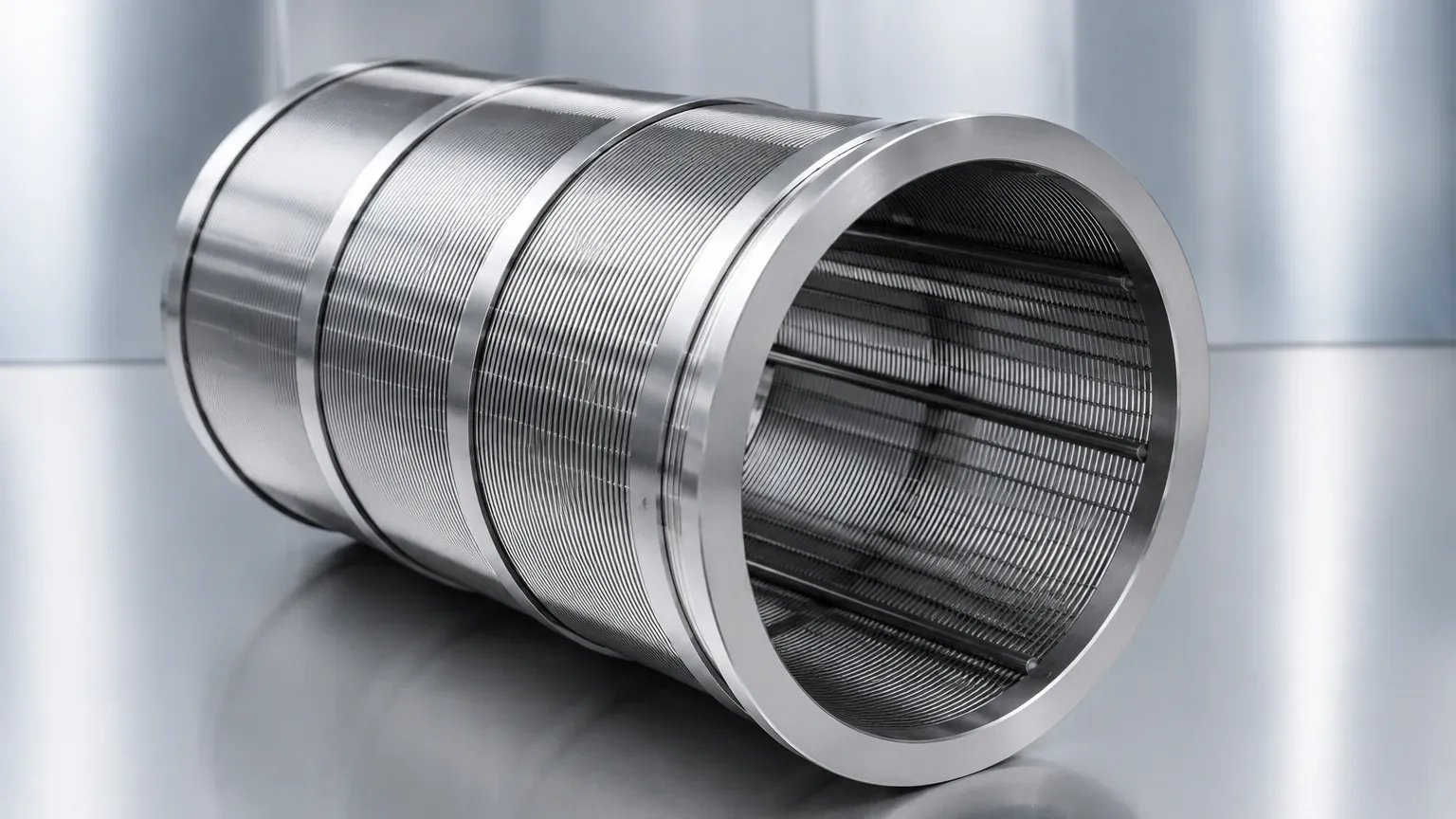
In the landscape of industrial liquid-solid separation, the wedge wire screen drum stands as a critical component for high-capacity, continuous filtration processes. Engineered for durability and precision, these cylindrical filtration units are widely utilized in rotary screen systems across the water treatment, food processing, and chemical industries. Unlike traditional mesh or perforated plates, the wedge wire construction offers a unique geometric advantage that minimizes clogging and maximizes flow efficiency.
For engineers and procurement teams, selecting the right wedge wire screen drum involves more than just specifying dimensions. It requires a deep understanding of the mechanical stresses, fluid dynamics, and material science that govern long-term performance in demanding environments. This guide explores the technical specifications, engineering considerations, and application-specific factors necessary to optimize filtration outcomes using Wedge Wire Screens.
The Engineering Principles of Wedge Wire Construction
The fundamental advantage of a wedge wire screen drum lies in its "V-shaped" profile wire. These wires are resistance-welded onto internal or external support rods at each intersection, creating a rigid, high-strength structure. This construction method provides several distinct benefits over other filtration media:
Non-Clogging Surface
The V-shaped profile creates a slot that widens inwardly. In a standard filtration setup, particles only make contact at two points on the leading edges of the wire. If a particle manages to pass through the narrowest point of the slot, it will freely fall away into the interior of the drum (or vice versa, depending on flow direction) without becoming wedged. This self-cleaning characteristic is essential for applications involving fibrous or sticky materials that would otherwise blind a standard wire mesh.
High Open Area and Flow Rates
Because the support rods are welded perpendicular to the surface wires, the structure maintains a high percentage of open area while retaining significant mechanical strength. This allows for high flow rates with minimal pressure drop, which is a critical factor in sizing pumps and managing energy consumption in large-scale industrial plants.
Structural Integrity
Unlike woven wire cloth, which can shift or deform under pressure, the welded nature of the wedge wire screen drum ensures that the slot width remains constant. This precision is vital for applications requiring strict adherence to particle size cut-offs, such as in the pharmaceutical or fine chemical sectors.
Key Design Specifications for Industrial Drums
When designing a wedge wire screen drum, engineers must balance filtration fineness with the mechanical requirements of the machine it will inhabit. Several variables define the performance profile of the drum:
1. Slot Size (Aperture): This is the distance between the surface wires. Kaifil can manufacture drums with slot sizes ranging from as small as 20 microns up to several millimeters. The tolerance of these slots is critical; even minor deviations can lead to "bypass," where oversized particles pass through the filter.
2. Wire Profile Selection: Different wire shapes (height and width) are chosen based on the abrasiveness of the media and the required structural rigidity. Heavier profiles offer longer wear life but may reduce the total open area.
3. Support Rod Configuration: The spacing and shape of the support rods determine the collapse strength and burst strength of the drum. In high-pressure hydraulic or heavy-duty mining applications, support rods are placed closer together to withstand mechanical loads.
4. Surface Smoothness: For many food and beverage applications, the surface of the drum must be perfectly smooth to prevent bacterial growth and facilitate easy cleaning. Options such as electropolishing are often employed to achieve the required Ra (Roughness Average) values.
Flow Direction and Configuration Styles
The direction of the fluid flow relative to the wire profile and support rods is a primary engineering decision. There are two main configurations for a wedge wire screen drum:
Radial Internal (FITO – Flow In-To-Out)
In this configuration, the profile wires are on the inside of the drum, and the support rods are on the outside. This is commonly used in rotary drum screens where the slurry is fed into the center of the cylinder. The solids are captured on the internal surface and are often moved toward a discharge point by an internal screw or the tilt of the drum.
Radial External (FOTI – Flow Out-To-In)
Here, the profile wires are on the exterior, and the support rods are on the interior. This is the standard configuration for intake screens or drum filters submerged in a tank. The fluid passes from the outside to the inside, leaving the debris on the exterior surface where it can be removed by spray bars or scrapers.
Axial (Vertical) Wire Orientation
While most drums use wires wrapped circumferentially, some specialized applications require the wires to run parallel to the axis of the drum. This is often seen in screw press separators where the mechanical action of an internal auger requires a specific wire orientation to prevent the auger from catching on the screen surface.
Material Selection and Chemical Compatibility
Industrial filtration environments are often corrosive or subject to extreme temperatures. Material selection is therefore paramount to the longevity of the wedge wire screen drum.
* Stainless Steel 304: The industry standard for general-purpose applications, offering good corrosion resistance and mechanical strength at a cost-effective price point.
* Stainless Steel 316L: Contains molybdenum, which provides superior resistance to chlorides and pitting. This is the preferred choice for marine environments, pharmaceutical processing, and chemical plants.
* Duplex Stainless Steels: Used in highly aggressive environments where both high strength and extreme corrosion resistance are required, such as in certain pulp and paper or mining processes.
* Specialty Alloys: For high-temperature or highly acidic applications, alloys like Hastelloy or Monel may be used, though these are typically reserved for niche industrial requirements.
Integration into Rotary Screening Systems
A wedge wire screen drum is rarely a standalone component; it is usually the heart of a rotary screening machine. Integration requires precise mechanical tolerances.
Concentricity and Roundness
For a drum that rotates at high speeds, concentricity is vital. If the drum is out of round, it will create vibration, leading to premature bearing failure and potential damage to the drive system. Manufacturers like Kaifil utilize advanced machining and welding jigs to ensure that every drum meets strict geometric tolerances.
End Flanges and Fittings
The ends of the drum must be designed to interface seamlessly with the rest of the machinery. This may include machined flanges, reinforcement rings, or specialized mounting brackets. These components must be welded with the same precision as the screen itself to maintain the structural integrity of the entire assembly.
Applications Across Key Industries
The versatility of the wedge wire screen drum makes it a staple in numerous sectors:
* Wastewater Treatment: Used in headworks for the removal of solids from municipal and industrial waste streams. The non-clogging nature is perfect for handling hair, plastics, and organic matter.
* Food and Beverage: Critical in fruit and vegetable processing, sugar refining, and brewery operations. The hygienic design of stainless steel wedge wire ensures compliance with food safety standards.
* Pulp and Paper: Utilized in fiber recovery and thickening processes where high flow rates and continuous operation are mandatory.
* Mining and Minerals: Employed in dewatering and media recovery, where the drum must withstand highly abrasive materials.
Maintenance and Operational Longevity
While wedge wire is inherently low-maintenance compared to other filter media, a structured maintenance program will extend the service life of the drum.
Cleaning Protocols
Most rotary systems incorporate a backwash system or a spray bar. Because of the V-wire profile, high-pressure water or air can effectively dislodge particles from the slots. In applications involving fats or oils, chemical cleaning (CIP – Clean In Place) may be necessary to remove biofilm or grease buildup.
Monitoring Wear
In abrasive applications, the leading edges of the profile wires will eventually wear down. This increases the slot width and changes the filtration efficiency. Regular inspections should include measuring the slot width at multiple points around the drum to ensure it remains within the specified tolerance.
Evaluating Suppliers and Technical Support
When sourcing a wedge wire screen drum, engineers should look for a manufacturer that offers comprehensive technical support rather than just a catalog product. A reliable partner like Kaifil works closely with customers to analyze the specific demands of their application—including flow rates, particle characteristics, and mechanical loads—to design a customized solution.
Key questions to ask a potential supplier include:
* What is the maximum slot tolerance you can guarantee?
* Can you provide material mill certificates to verify the grade of stainless steel?
* What testing procedures (e.g., pressure testing, concentricity checks) are performed before shipping?
* Do you offer custom engineering for non-standard flange designs or internal flighting?
By addressing these technical details early in the procurement process, companies can avoid costly downtime and ensure their filtration systems operate at peak efficiency for years to come.
