


Wedge Wire Screen Material
In industrial filtration and separation, the structural integrity and chemical compatibility of a filter element are dictated primarily by its metallurgy. Wedge Wire Screens are widely regarded for their high open area, non-clogging characteristics, and mechanical strength. However, the performance of these screens in demanding environments—such as chemical processing, mining, and food production—is heavily dependent on the specific wedge wire screen material selected during the engineering phase.
Choosing the correct alloy is not merely a matter of cost; it is a technical decision that impacts the equipment's service life, maintenance intervals, and total cost of ownership. This guide examines the metallurgical options available for wedge wire construction, the technical criteria for selection, and the engineering considerations necessary for optimizing filtration performance.
The Critical Role of Material Selection in Wedge Wire Engineering
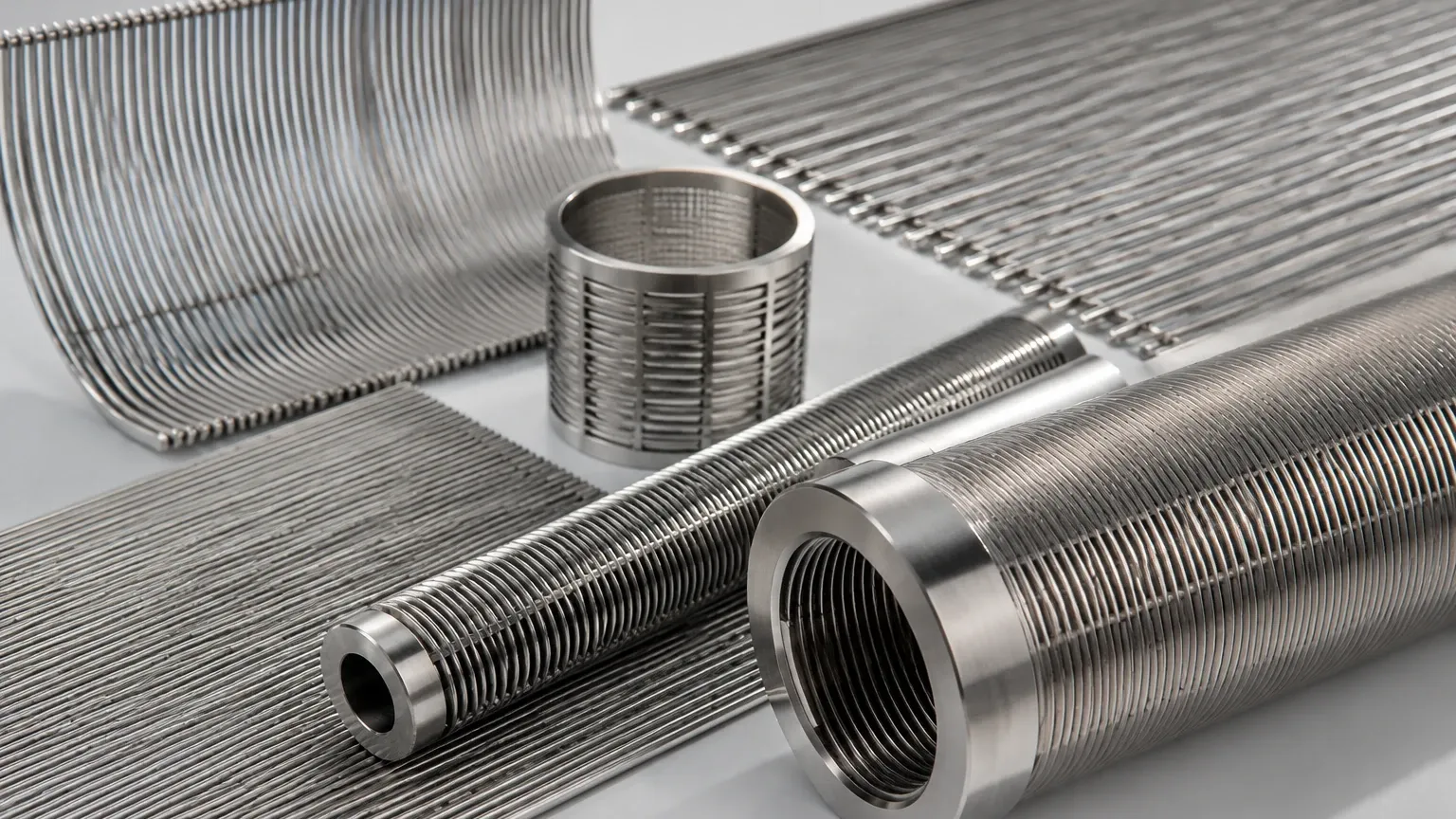
Wedge wire screens are manufactured by wrapping a profile wire (the V-shaped wire) around longitudinal support rods and joining them through high-precision resistance welding. Because this process involves localized heating and cooling, the chosen wedge wire screen material must possess excellent weldability to ensure the joints remain robust under high pressure and vibration.
Beyond weldability, the material must withstand the specific stresses of the application. In a hydraulic system, the material might face high-pressure pulses; in a wastewater plant, it may be exposed to corrosive hydrogen sulfide; in a food processing line, it must resist bacterial growth and withstand aggressive Clean-in-Place (CIP) chemicals. Engineers must balance mechanical properties, such as tensile strength and hardness, with chemical properties, such as corrosion and oxidation resistance.
Comparative Analysis of Standard Stainless Steel Alloys
Stainless steel is the most common material group used for wedge wire screens due to its versatility and inherent resistance to corrosion. However, different grades offer varying levels of protection and mechanical performance.
Grade 304 and 304L Stainless Steel
Grade 304 is the standard "18/8" stainless steel and is the most frequently specified material for general-purpose industrial applications. It provides good corrosion resistance in atmospheric conditions and fresh water. The "L" variant (304L) features lower carbon content, which minimizes carbide precipitation during welding, making it preferable for heavy-gauge wedge wire structures where post-weld heat treatment is not feasible.
Grade 316 and 316L Stainless Steel
For environments involving chlorides, such as marine applications or chemical processing, Grade 316 is the industry standard. The addition of molybdenum (2-3%) significantly enhances its resistance to pitting and crevice corrosion. In the pharmaceutical and food industries, 316L is often the preferred wedge wire screen material because it can withstand acidic sanitizing agents and high-temperature sterilization processes without degrading.
Grade 321 Stainless Steel
Grade 321 is stabilized with titanium, making it suitable for high-temperature applications (up to 800°C). It is often used in petrochemical refining where the screens are exposed to extreme heat and require resistance to intergranular corrosion.
High-Performance Alloys for Aggressive Industrial Environments
When standard stainless steels are insufficient for the chemical or mechanical demands of an application, specialty alloys are employed. These materials are selected for their specific metallurgical advantages in extreme conditions.
Duplex and Super Duplex Stainless Steels
Duplex alloys, such as 2205, feature a micro-structure consisting of both austenite and ferrite. This results in a material that is nearly twice as strong as standard austenitic stainless steels and highly resistant to stress corrosion cracking. Super Duplex (e.g., 2507) offers even higher levels of chromium and molybdenum, making it ideal for offshore oil and gas applications where screens are exposed to highly saline and high-pressure environments.
Nickel-Based Alloys (Hastelloy and Monel)
In highly acidic or alkaline environments where even high-grade stainless steel would fail, nickel-based alloys like Hastelloy C-276 or Monel 400 are used. These materials provide exceptional resistance to reducing acids, such as sulfuric and hydrochloric acid. While the initial investment is higher, the extended lifespan in aggressive media often justifies the cost.
Abrasion-Resistant Materials
In mining and aggregate processing, the primary threat to wedge wire screens is physical wear. While stainless steel is standard, specialized surface hardening or the use of high-manganese steels can be considered for specific components. However, for most abrasive slurries, high-grade stainless steel combined with optimized wire profiles remains the most common solution to balance wear resistance with corrosion protection.
Mechanical and Chemical Factors Influencing Material Choice
Selecting the appropriate wedge wire screen material requires a comprehensive review of the operating environment. Engineers should evaluate the following four factors:
1. Chemical Concentration and pH: The presence of specific ions, particularly chlorides, can cause rapid pitting in lower-grade steels. The pH level of the fluid will dictate whether an austenitic steel or a more specialized alloy is required.
2. Operating Temperature: High temperatures can lead to thermal expansion, which may affect slot tolerances. Furthermore, some materials lose their corrosion resistance or mechanical strength at elevated temperatures.
3. Pressure and Flow Velocity: High-velocity flows can cause erosion-corrosion. The material must have sufficient hardness and tensile strength to resist the mechanical forces of the fluid and any suspended solids.
4. Cleaning Protocols: In the food and beverage industry, the material must be compatible with caustic or acidic cleaning agents used in CIP cycles. 316L is typically the minimum requirement for these applications to prevent surface degradation over time.
Surface Treatments and Their Impact on Filtration Efficiency
The performance of a wedge wire screen is not solely determined by its base material; surface treatments can significantly enhance its functionality. These treatments are often applied to improve hygiene, reduce friction, or increase hardness.
* Electropolishing: This electrochemical process removes a microscopic layer of material from the surface, resulting in a mirror-like finish. For wedge wire screens used in the pharmaceutical and food industries, electropolishing is essential. It removes surface burrs, reduces the risk of bacterial adhesion, and enhances the overall corrosion resistance of the screen.
* Pickling and Passivation: These chemical treatments remove surface contaminants and iron particles introduced during the manufacturing process, allowing the protective chromium oxide layer to reform uniformly. This is a standard requirement for ensuring the longevity of any stainless steel wedge wire screen material.
* Hard Chrome Plating: In applications where the screen faces extreme abrasion from sand or minerals, a hard chrome coating can be applied to the profile wires to extend the wear life without sacrificing the core structural properties of the stainless steel.
Application-Specific Material Standards and Compliance
Different industries have established standards that dictate material selection. Understanding these requirements is vital for regulatory compliance and operational safety.
* Food and Beverage: Materials must often meet FDA or EU 1935/2004 standards. Stainless steel 316L is the benchmark here due to its inert nature and ability to maintain a smooth surface finish.
* Water Treatment: While 304 is common for municipal water, desalination plants require 316L or Duplex steels to handle the high salt concentrations and prevent localized corrosion.
* Oil and Gas: Materials must often comply with NACE MR0175/ISO 15156 standards for use in H2S-containing (sour) environments to prevent sulfide stress cracking.
Technical Specification and Quality Assurance in Procurement
When specifying wedge wire screens, engineers should provide detailed environmental data to the manufacturer. This ensures that the material selected is neither under-specified (leading to premature failure) nor over-specified (leading to unnecessary costs).
Key information to confirm during the procurement process includes:
* Material Test Reports (MTRs): Requesting MTRs ensures that the material delivered matches the chemical and physical properties specified in the order.
* Slot Tolerance: The precision of the slot opening is as important as the material itself. Ensure the manufacturer can maintain tight tolerances across the chosen alloy.
* Weld Integrity: Inquire about the manufacturer’s welding standards and quality control processes, as the weld point is often the most vulnerable area for corrosion to begin.
By carefully evaluating the wedge wire screen material in the context of chemical exposure, mechanical stress, and industry regulations, engineers can ensure that their filtration systems operate with maximum efficiency and minimal downtime. Kaifil provides a range of customized Wedge Wire Screens engineered to meet these rigorous industrial demands, supporting technical teams in selecting the optimal metallurgy for their specific application requirements.
