


R Wedges
In the field of industrial separation and filtration, the efficiency of a system is fundamentally tied to the geometry and material integrity of its filtration media. Among the most versatile and durable solutions available to engineers today are Wedge Wire Screens, which rely on precision-engineered profile wires. Specifically, the use of r wedges—a common technical designation for certain series of profile wires—plays a critical role in determining the flow rate, mechanical strength, and anti-clogging characteristics of the final filter component.
For technical professionals and purchasing teams in industries ranging from petrochemical processing to food and beverage production, understanding the nuances of r wedges is essential for optimizing process performance. These components are not merely structural elements; they are the functional interface where separation occurs, and their selection dictates the long-term reliability of the entire filtration assembly.
The Role of R Wedges in Wedge Wire Screen Construction
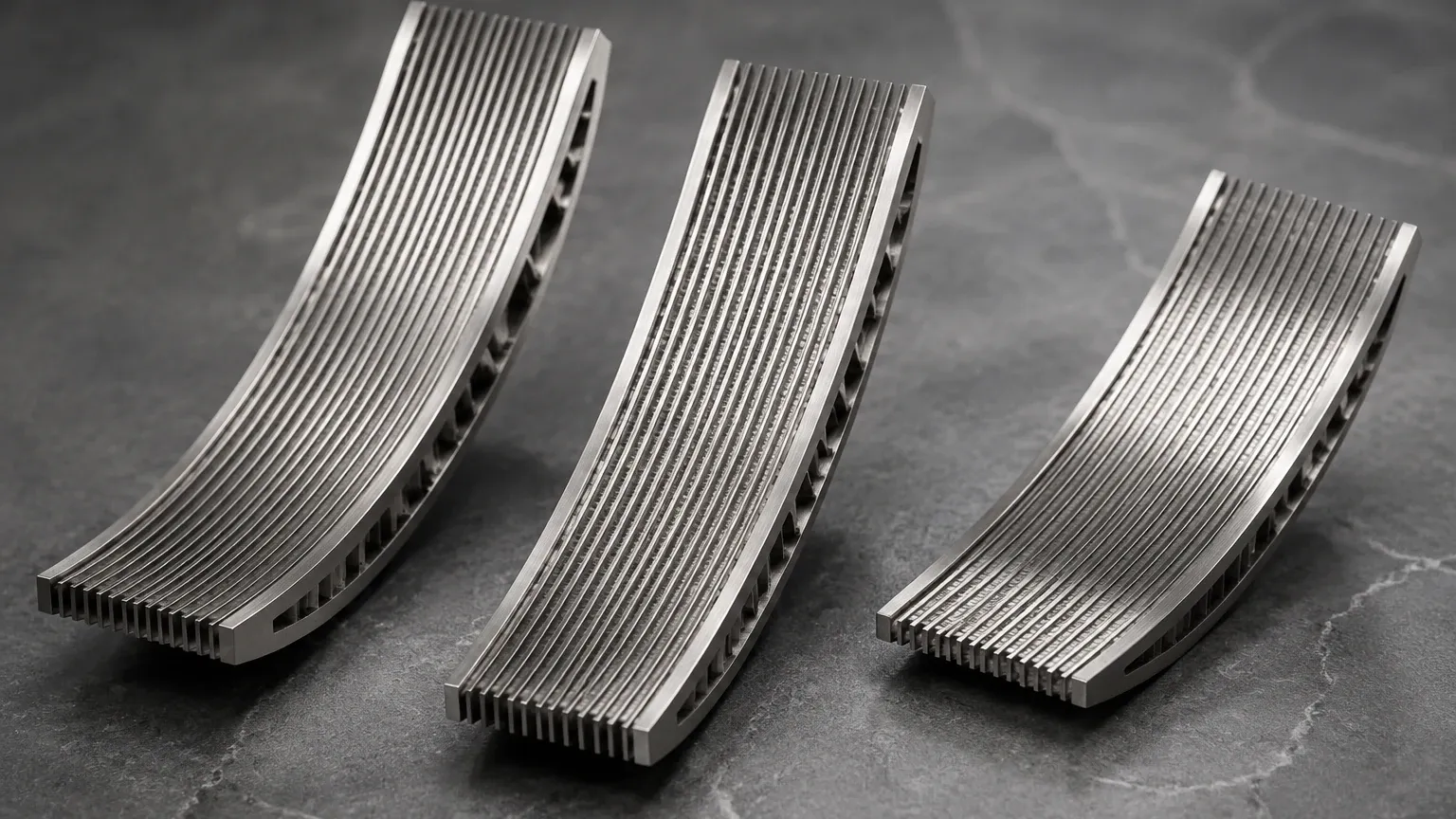
Wedge wire technology is defined by its unique construction, involving a series of surface profile wires—the r wedges—welded at right angles to underlying support rods. Unlike woven wire mesh or perforated plate, this construction creates a continuous slot that widens inwardly.
The term "r wedges" typically refers to a specific range of V-shaped or wedge-shaped profile wires characterized by their width-to-height ratio and the radius of their leading edge. These profiles are designed to offer a balance between filtration precision and structural rigidity. In a standard manufacturing process, these wires are fusion-welded at every intersection with the support rods using advanced resistance welding techniques. This creates a robust, single-unit structure that can withstand significant pressure differentials without deforming.
From an engineering perspective, the r wedges are the primary contact point for the process fluid. Their shape is what allows for the "two-point contact" principle, where a particle only touches the edges of the wire at the narrowest part of the slot. If a particle passes through this initial opening, it is immediately released into the wider internal area, effectively eliminating the risk of blinding or clogging that is common with square-mesh filters.
Technical Specifications and Geometry of Profile Wires
When specifying r wedges for a filtration project, several geometric factors must be evaluated. These dimensions directly influence the hydraulic performance and the mechanical limits of the screen.
Profile Width and Height
Common r wedge profiles are categorized by their width (the surface that faces the flow) and their height (the depth of the wire). For instance, a smaller profile like an R12 might be used for fine filtration where high open area is required, while a larger R50 profile might be selected for heavy-duty mining or architectural applications where structural load is the primary concern.
The Relief Angle
The angle at which the sides of the r wedges taper away from the slot is known as the relief angle. This angle is critical for the self-cleaning property of the screen. A steeper angle allows for easier passage of solids and more effective backwashing, which is vital in automated filtration systems that cannot afford frequent downtime for manual cleaning.
Slot Width Precision
The gap between adjacent r wedges defines the filtration rating. In high-precision manufacturing, these slots can be controlled to tolerances as tight as ±0.05mm. For engineers, confirming the consistency of these slots across the entire surface of the Wedge Wire Screens is paramount to ensuring that no oversized particles bypass the system.
Material Selection for Demanding Environments
Because r wedges are used in environments involving corrosive chemicals, high temperatures, and abrasive slurries, material selection is a non-negotiable aspect of the procurement process. Kaifil specializes in stainless steel alloys that provide the necessary longevity for industrial applications.
* SS304/304L: The standard choice for general industrial use, providing excellent mechanical properties and basic corrosion resistance. It is frequently used in water treatment and architectural applications.
* SS316/316L: Containing molybdenum, these alloys offer superior resistance to chlorides and pitting. This makes them the industry standard for pharmaceutical, food and beverage, and marine environments where sanitation and chemical stability are required.
* Duplex Stainless Steels: For extreme environments, such as offshore oil and gas or highly acidic chemical processing, duplex alloys provide double the yield strength of standard austenitic steels and exceptional resistance to stress corrosion cracking.
* Specialty Alloys: In cases involving extreme heat or specific chemical sensitivities, materials like Hastelloy or Monel may be utilized for the profile wires to ensure the integrity of the filtration system over years of service.
Advantages of R Wedges in Industrial Separation
The transition from traditional media to screens utilizing r wedges offers several quantifiable advantages for industrial facilities. These benefits contribute to a lower total cost of ownership (TCO) and improved process consistency.
Superior Anti-Clogging Performance
The V-shaped profile of r wedges ensures that the narrowest part of the opening is at the very surface. In contrast to perforated metal where particles can become lodged in the thickness of the plate, wedge wire allows for a "clear-through" passage. This is particularly beneficial in applications involving fibrous or sticky materials, such as in pulp and paper processing or starch production.
High Open Area and Flow Rates
By optimizing the width of the r wedges relative to the slot size, manufacturers can achieve a high percentage of open area. This reduces the pressure drop across the filter, allowing pumps to operate more efficiently and increasing the overall throughput of the system. For a given filtration rating, a wedge wire screen often provides a higher flow capacity than a comparable wire mesh filter.
Mechanical Durability and Backwash Efficiency
The welded construction of Wedge Wire Screens makes them inherently stronger than woven media. They can withstand high-pressure backpulsing, which is a common cleaning method in continuous filtration systems. The smooth surface of the r wedges allows the backwash fluid to effectively dislodge the filter cake, restoring the screen to its original flow capacity quickly.
Application-Specific Engineering
Different industries require different configurations of r wedges and support structures. Engineering a solution involves analyzing the specific characteristics of the fluid and the solids being separated.
Food and Beverage Processing
In breweries and juice production, sanitation is the priority. R wedges used here must have a high-quality surface finish (often electro-polished) to prevent bacterial growth in microscopic crevices. The screens are used in mash tuns and for clarifying liquids, where they must handle high organic loads without blinding.
Chemical and Petrochemical Refining
In these sectors, filters are often subjected to high temperatures and aggressive solvents. R wedges are used in catalyst baskets, resin traps, and reactor internals. The structural integrity provided by the resistance welding is crucial here, as a failure of the screen could lead to downstream equipment damage or contaminated product batches.
Water and Wastewater Treatment
From intake screens for power plants to sludge dewatering in municipal plants, r wedges provide a durable solution for removing debris and suspended solids. Their ability to be manufactured in large cylindrical or flat panels makes them adaptable to various vessel designs.
Factors Influencing Service Life and Performance
To ensure the longevity of a filtration system, engineers must look beyond the initial purchase price and consider the factors that influence the wear and tear of r wedges.
1. Abrasion Resistance: In mining or sand filtration, the abrasive nature of the media can wear down the leading edge of the profile wire. Selecting a harder alloy or a thicker r wedge profile can extend the interval between replacements.
2. Pressure Differential (ΔP): Every screen has a maximum allowable pressure drop. If the r wedges or support rods are undersized for the flow, the screen may collapse or the slots may deform. Engineers should confirm the burst and collapse pressure ratings during the design phase.
3. Chemical Compatibility: Even stainless steel can fail if exposed to incompatible chemicals or if the pH levels fluctuate wildly. A thorough analysis of the process fluid is necessary to select the correct grade of steel for the r wedges.
Customization and OEM Capabilities
One of the primary strengths of working with a specialized manufacturer like Kaifil is the ability to customize every aspect of the filtration component. Standard off-the-shelf solutions rarely meet the precise needs of complex industrial processes.
Customization options include:
* Variable Slot Sizes: Designing a single screen with different slot widths to handle graduated separation.
* Specialized Shapes: Beyond flat panels and cylinders, r wedges can be formed into conical strainers, baskets, and curved sieve bends.
* Reinforcement: Adding extra support rods or external frames to handle extreme mechanical loads.
* Surface Treatments: Options such as pickling, passivating, or chrome plating to enhance corrosion resistance or reduce friction.
When purchasing Wedge Wire Screens, it is vital to provide the manufacturer with detailed application data, including flow rate, particle size distribution, operating temperature, and chemical composition. This information allows for the engineering of a solution where the r wedges are perfectly matched to the task.
Conclusion: Making Informed Purchasing Decisions
Selecting the right r wedges for an industrial filtration system is a balance of physics, metallurgy, and economics. While the initial cost of a precision-engineered wedge wire screen may be higher than that of disposable or lower-grade media, the long-term savings in maintenance, energy consumption, and product quality are substantial.
Engineers should prioritize manufacturers who demonstrate technical expertise in profile wire geometry and offer transparent material certifications. By focusing on the specific requirements of the application—whether it is the high-flow needs of a water treatment plant or the sanitary requirements of a pharmaceutical facility—purchasing teams can ensure they are investing in a filtration solution that provides reliable performance over a long service life.
For those evaluating their current filtration efficiency or planning a new installation, reviewing the available profiles and structural configurations of r wedges is the first step toward an optimized process. Reliable filtration starts with the right wire, the right material, and the right engineering partner.
