


Wedge Wire Screen Suppliers
In the landscape of industrial filtration and separation, the selection of wedge wire screen suppliers is a critical decision that impacts the operational efficiency, maintenance frequency, and overall longevity of processing equipment. Wedge wire screens, characterized by their V-shaped profile wires and continuous slots, are engineered components used across diverse sectors including water treatment, mining, food and beverage, and petrochemical processing. Because these components often operate in high-pressure or corrosive environments, the technical capability and quality standards of the manufacturer are as important as the physical product itself.
Selecting a supplier requires an understanding of both the mechanical requirements of the application and the manufacturing processes used to create these precision components. This guide examines the essential criteria for evaluating suppliers, the technical nuances of wedge wire production, and the factors that influence the total cost of ownership.
The Role of Wedge Wire Screen Suppliers in Industrial Filtration
Wedge Wire Screens are not off-the-shelf commodities; they are precision-engineered tools designed to solve specific separation challenges. A professional supplier does more than fulfill an order; they act as a technical partner. For engineers and procurement teams, the supplier’s role involves translating hydraulic or mechanical requirements into a physical screen geometry that optimizes flow rates while maintaining structural integrity.
Reliable wedge wire screen suppliers must possess a deep understanding of fluid dynamics and material science. Whether the application involves a rotary drum screen for wastewater treatment or a flat panel for a malting floor in a brewery, the supplier must ensure that the slot openings are consistent and that the welding between the profile wire and the support rods is robust enough to withstand the intended mechanical loads. In many industrial settings, the failure of a screen can lead to significant downstream damage to pumps and valves, making the supplier’s quality control processes a fundamental part of the facility's risk management strategy.
Technical Specifications and Material Integrity
When evaluating wedge wire screen suppliers, the first point of assessment should be their mastery of material selection and technical specifications. The performance of a wedge wire screen is largely dictated by the alloy used and the precision of the slot width.
Material Selection
Most industrial wedge wire screens are manufactured from stainless steel, typically AISI 304 or 316L. However, demanding environments may require specialized alloys such as Duplex stainless steel, Monel, or Hastelloy to combat specific types of corrosion or high temperatures. A capable supplier should provide detailed material certifications (MTRs) to verify that the alloy meets international standards. This transparency is vital in industries like chemical processing, where even minor deviations in material composition can lead to premature stress corrosion cracking or pitting.
Slot Precision and Geometry
The defining feature of a wedge wire screen is the V-shaped profile wire. This geometry creates a "near-point" contact for solids, which significantly reduces the risk of blinding or clogging. As the slot widens inwardly, particles that pass the initial opening are easily cleared by the flow. Suppliers must demonstrate the ability to maintain tight tolerances on these slot widths. In fine filtration applications, even a variance of a few microns can result in bypass or inefficient separation. Engineers should confirm that the supplier uses automated welding and winding technology to ensure uniformity across the entire surface of the screen.
Evaluating Manufacturing Capabilities and Customization
Industrial applications rarely follow a one-size-fits-all approach. Therefore, the customization capabilities of wedge wire screen suppliers are a major differentiator. Manufacturing wedge wire involves a specialized resistance welding process where the profile wire is welded to support rods at every intersection. This creates a high-strength, rigid structure that can handle heavy loads without the need for additional reinforcement frames in many cases.
Custom Configurations
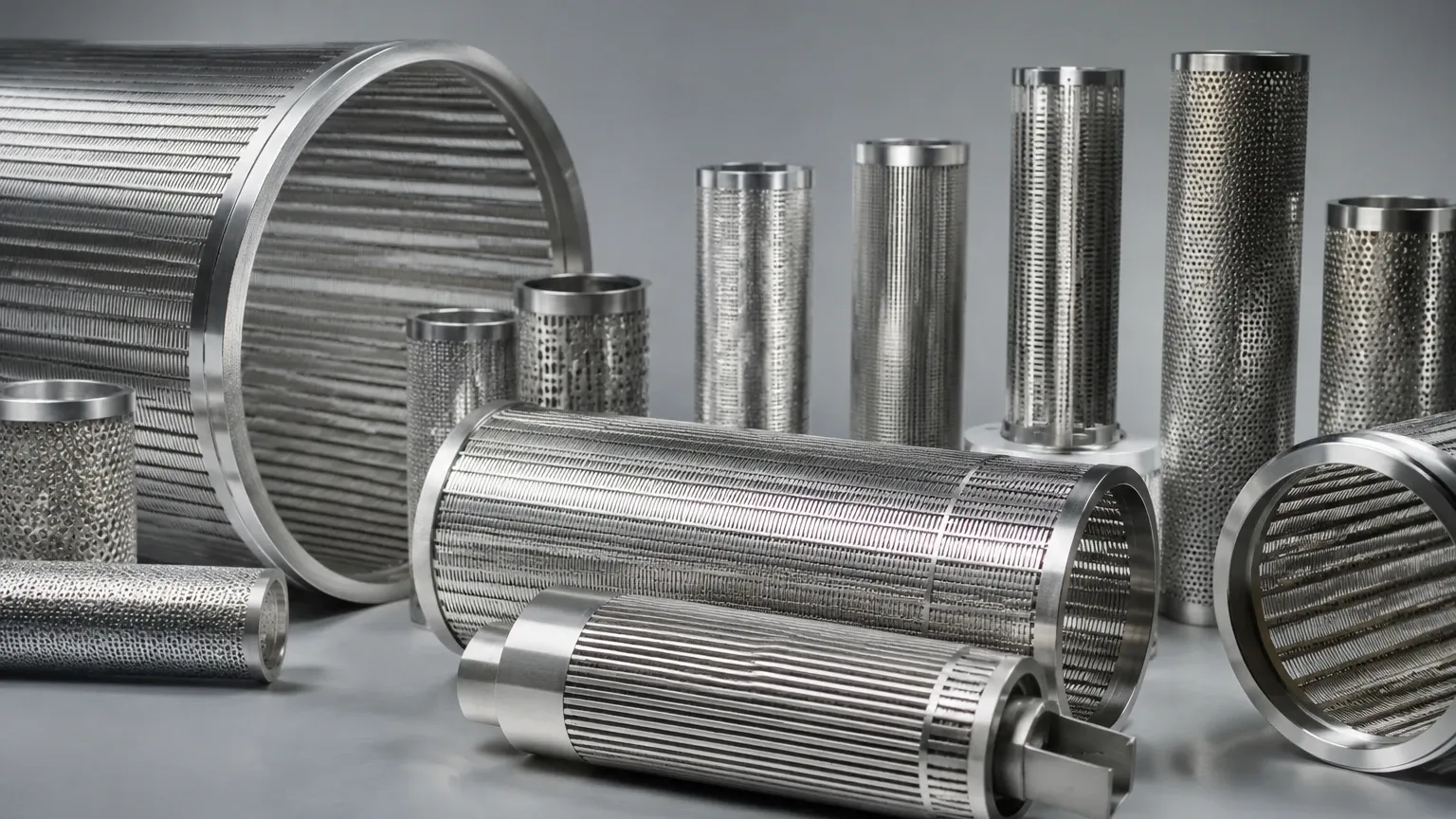
Suppliers should be able to produce a variety of shapes and configurations, including:
- Cylindrical Screens: Used in intake screens, internal pressure filters, and trommels. These can be designed for outside-in or inside-out flow.
- Flat Panels: Common in vibrating screens, sieved bends, and architectural applications.
- Sieve Bends: Curved screens used for static dewatering and thickening.
- Conical and Basket Filters: Used in centrifuges and specialized processing equipment.
Advanced Engineering Support
A high-tier supplier provides OEM capabilities, allowing them to manufacture components based on specific CAD drawings or to reverse-engineer existing parts that need replacement. This includes the ability to integrate custom flanges, reinforcement rings, and lifting handles. During the design phase, the supplier should offer guidance on the "open area" percentage—a critical calculation that balances filtration efficiency with the structural strength of the screen. A higher open area increases flow capacity but may reduce the screen's ability to handle high differential pressures.
Identifying and Mitigating Procurement Risks
Procuring industrial filtration components involves inherent risks, particularly when dealing with global supply chains. Identifying these risks early in the supplier evaluation process can prevent costly operational failures later.
Dimensional Inaccuracies
One of the most common issues with low-quality wedge wire is inconsistency in the slot width. If the welding process is not precisely controlled, the heat can cause the profile wires to warp, leading to uneven gaps. Suppliers should be asked about their inspection protocols—do they use optical measurement systems or manual feeler gauges? For critical applications, automated optical inspection is the gold standard for ensuring every slot meets the specification.
Weld Integrity
The strength of a wedge wire screen depends entirely on the quality of the fusion between the wire and the support rod. Poor welding can lead to "wire stripping," where the profile wires detach under the pressure of backwashing or mechanical scraping. Engineers should look for suppliers who perform destructive and non-destructive testing to verify weld penetration and strength.
Material Substitution
In an effort to reduce costs, some suppliers may use lower-grade alloys than specified. This is particularly dangerous in the pharmaceutical and food industries, where material traceability is a regulatory requirement. Working with established wedge wire screen suppliers who provide full traceability back to the original steel mill is the only way to mitigate this risk.
Industry-Specific Selection Factors
The "best" supplier often depends on the specific industry being served. Different sectors prioritize different performance characteristics of wedge wire screens.
Water and Wastewater Treatment
In this sector, the focus is often on large-scale intake screens and grit removal. Suppliers must be able to produce very large cylindrical screens that can withstand hydraulic surges and debris impact. Corrosion resistance to chlorine and other treatment chemicals is also a priority.
Food and Beverage Processing
For applications like mash tuns in brewing or sugar juice filtration, the primary concern is hygiene. Suppliers must be able to provide screens with high-quality surface finishes, such as electropolishing, to eliminate burrs and crevices where bacteria could thrive. The screens must also be robust enough to handle frequent Clean-in-Place (CIP) cycles.
Mining and Aggregate
In mining, abrasion resistance is the dominant requirement. Suppliers catering to this industry often use heavier profile wires and specialized support structures to handle the impact of heavy ores and abrasive slurries. The ability to provide rapid replacements is also crucial here, as downtime in a mine can cost thousands of dollars per hour.
The Impact of Supplier Selection on Total Cost of Ownership
While the initial purchase price is a significant factor, the Total Cost of Ownership (TCO) is a more accurate metric for evaluating wedge wire screen suppliers. A screen that is 20% cheaper but lasts only half as long—or requires twice as much maintenance—is ultimately more expensive.
Durability and Maintenance
High-quality wedge wire screens are known for their longevity. Because they are made of solid stainless steel and feature a non-clogging design, they require less frequent cleaning than mesh or perforated plate filters. A supplier that uses superior welding techniques and high-grade materials ensures that the screen remains in service longer, reducing the labor costs associated with replacement and the lost production time during maintenance shutdowns.
Energy Efficiency
The precision of the slot openings and the smoothness of the wire profiles affect the pressure drop across the screen. A lower pressure drop means that pumps do not have to work as hard to maintain flow, leading to significant energy savings over the life of the equipment. Suppliers who can optimize the open area for a specific flow rate help their customers achieve better energy efficiency.
Critical Information to Confirm Before Taking the Next Step
Before finalizing a contract with a wedge wire screen supplier, purchasing teams and engineers should confirm several key pieces of information to ensure the product will perform as expected.
1. Slot Width Tolerance: What is the maximum allowable deviation from the specified slot size? For precision filtration, this should be clearly defined in the technical drawing.
2. Pressure Ratings: What is the maximum differential pressure the screen can withstand before deformation? The supplier should provide calculations or test data to support these claims.
3. Surface Treatment: Will the screen be pickled and passivated? For many stainless steel applications, this is necessary to restore the protective oxide layer after welding.
4. Lead Times and Logistics: Given that many wedge wire products are custom-made, understanding the production timeline is essential for project planning. Check if the supplier has the capacity to handle rush orders for emergency replacements.
5. Quality Certifications: Does the supplier hold ISO 9001 or other relevant industry certifications? These provide an external audit of the manufacturer’s quality management systems.
By focusing on these technical and operational details, businesses can move beyond simple price-based procurement and build a relationship with wedge wire screen suppliers that contribute to the long-term success of their industrial processes. Whether you are designing a new filtration system or seeking to optimize an existing one, the engineering expertise and manufacturing precision of the supplier are the most important factors in achieving reliable separation performance.
