


Wedge Wire Screen Tube
In the landscape of industrial filtration, the wedge wire screen tube stands as a cornerstone of precision engineering. Designed to handle high-pressure environments and abrasive materials, these components are essential for industries ranging from petrochemical processing to food and beverage production. Unlike standard woven wire mesh, the wedge wire configuration offers a unique combination of structural rigidity and self-cleaning capabilities, making it a preferred choice for engineers seeking long-term operational efficiency.
As a specialized manufacturer, Kaifil provides high-performance Wedge Wire Screens that are tailored to the rigorous demands of global industrial applications. Understanding the technical nuances of the wedge wire screen tube—from its V-shaped profile to its slot precision—is critical for selecting the right filtration solution for your facility.
Engineering Principles of the Wedge Wire Screen Tube
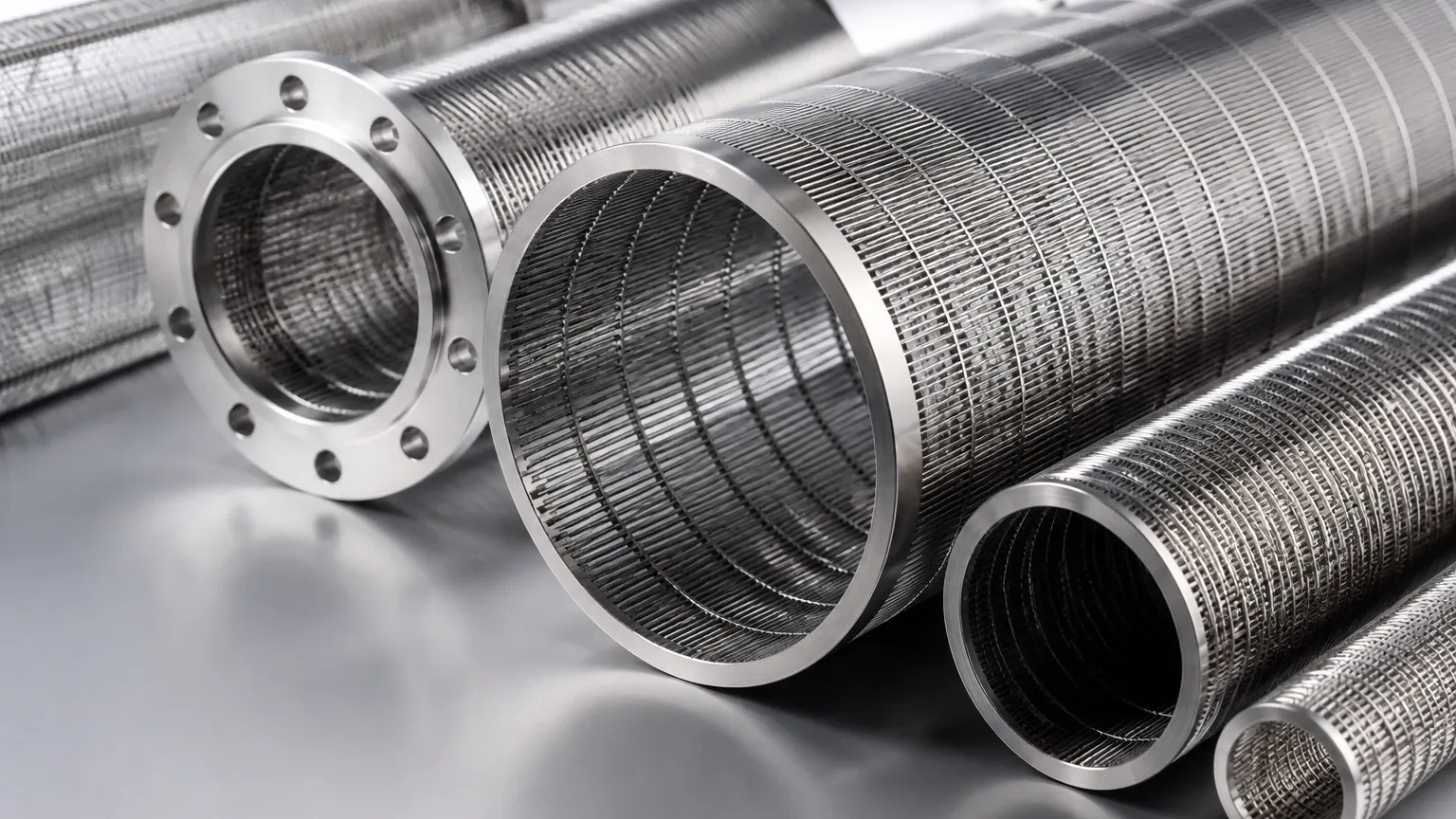
The fundamental advantage of a wedge wire screen tube lies in its construction. It is manufactured by wrapping a continuous V-shaped profile wire around a series of longitudinal support rods. Each intersection of the wire and the rod is fusion-welded, creating a robust, one-piece structure that maintains its shape even under significant mechanical stress.
The V-Shaped Profile Advantage
The "wedge" in wedge wire refers to the triangular or V-shaped cross-section of the surface wire. When fluid passes through the screen, the narrowest part of the opening is at the surface. As the fluid moves inward, the gap between the wires widens. This design creates a "point contact" between the solid particles and the screen surface. Because the opening widens inwardly, any particle that passes through the initial slot is unlikely to become lodged or "blinded" within the screen. This self-cleaning characteristic is vital for continuous processes where downtime for manual cleaning is not feasible.
Direction of Flow
Engineers must specify the direction of flow based on the application requirements. Wedge wire screen tubes can be designed for two primary flow patterns:
1. Flow-Out-to-In (FOTI): The filtration occurs on the exterior surface, and the filtrate moves toward the center of the tube. This is common in intake screens and well screens.
2. Flow-In-to-Out (FITO): The filtration occurs on the interior surface. This is often used in centrifuge baskets or internal pipe filters where solids need to be collected inside the tube for removal.
Material Selection and Durability
Industrial filtration environments are often chemically aggressive or subject to extreme temperatures. Therefore, material selection is a critical phase of the procurement process. At Kaifil, we focus on high-grade alloys to ensure the longevity of the wedge wire screen tube.
Stainless Steel 304 and 316L
Stainless steel is the standard material for most wedge wire applications. Type 304 provides excellent strength and basic corrosion resistance, suitable for many food processing and general industrial tasks. However, for environments involving chlorides or more corrosive chemicals—such as marine applications or pharmaceutical processing—Type 316L is preferred. The addition of molybdenum in 316L enhances its resistance to pitting and crevice corrosion.
Specialized Alloys
In extreme cases, such as highly acidic petrochemical processes or high-temperature steam filtration, specialized materials like Duplex stainless steel or Monel may be required. These materials offer superior mechanical properties and resistance to stress corrosion cracking, ensuring that the wedge wire screen tube maintains its integrity over years of service.
Technical Specifications and Performance Metrics
When evaluating a wedge wire screen tube, several technical parameters determine its suitability for a specific process. Engineers must balance filtration accuracy with flow capacity and structural strength.
Slot Size and Precision
The "slot" is the gap between the profile wires. Wedge wire screens can be manufactured with slot openings as small as 20 microns or as large as several millimeters. The precision of these slots is paramount; even minor deviations can lead to "bypass," where oversized particles pass through the filter, potentially damaging downstream equipment like pumps or valves.
Open Area Calculation
The open area is the percentage of the screen surface that allows fluid to pass. It is calculated based on the slot width and the width of the profile wire. A higher open area results in lower pressure drop and higher flow rates. However, increasing the open area often requires thinner profile wires, which can reduce the structural strength of the tube. Engineering a wedge wire screen tube involves finding the optimal ratio that provides sufficient flow without compromising the tube's ability to withstand collapse or burst pressures.
Support Rod Configuration
The frequency and shape of the longitudinal support rods determine the tube's collapse strength. For deep-well applications or high-pressure hydraulic systems, support rods are placed closer together to prevent the profile wire from deforming. The rods themselves can be round, teardrop-shaped, or rectangular, depending on the required mechanical load.
Industrial Applications of Wedge Wire Screen Tubes
Because of their versatility and durability, wedge wire screen tubes are utilized across a broad spectrum of industries. Their ability to be customized in terms of diameter, length, and slot size makes them adaptable to various mechanical configurations.
Water Treatment and Intake
In municipal and industrial water treatment, wedge wire screen tubes are used as intake screens for rivers or lakes. The V-wire design prevents aquatic life and debris from entering the system while maintaining a low-velocity flow that minimizes environmental impact. They are also used in ion exchange units and sand filters to retain resin or media while allowing treated water to pass.
Food and Beverage Processing
Hygiene and cleanability are the primary concerns in food production. Wedge wire screen tubes are used in sugar refining, malting, and juice extraction. The smooth surface of the stainless steel wire prevents bacterial growth and allows for easy Clean-in-Place (CIP) procedures. The high strength of the tube also makes it suitable for use in screw presses for dewatering food waste.
Petrochemical and Oil & Gas
In the oil and gas sector, these tubes serve as sand control screens in downhole applications. They must withstand immense pressure and abrasive sand particles. In refineries, they are used in catalyst baskets and reactor internals where precise filtration is necessary to protect sensitive chemical processes.
Customization and Engineering Support
No two industrial filtration challenges are identical. A standard off-the-shelf solution rarely meets the specific needs of a complex system. Customization is where the value of a professional manufacturer like Kaifil becomes apparent.
End Fittings and Integration
A wedge wire screen tube must be integrated into an existing piping or vessel system. Customization options include:
* Threaded Connectors: NPT or BSP threads for easy installation into pipe headers.
* Flanges: Standard ANSI or DIN flanges for secure bolting to vessels.
* Reinforcement Rings: Added to the exterior or interior to provide extra stability in high-vibration environments.
* Closed Ends: Welded caps or plugs to direct flow specifically through the screen surface.
OEM Capabilities
For equipment manufacturers (OEMs), having a reliable partner to produce consistent, high-quality components is essential. Kaifil works closely with engineering teams to develop wedge wire screen tubes that fit proprietary equipment designs, ensuring that the filtration component performs exactly as intended within the larger machine.
Maintenance, Cleaning, and Total Cost of Ownership
While the initial cost of a wedge wire screen tube may be higher than that of disposable filters or simple wire mesh, the total cost of ownership (TCO) is significantly lower. This is due to the longevity and cleanability of the product.
Cleaning Methods
Because the wedge wire design resists clogging, cleaning is often straightforward. Common methods include:
* Backwashing: Reversing the flow of fluid to flush particles off the surface.
* Mechanical Scraping: In some systems, a scraper moves across the surface of the wires to remove accumulated solids.
* Ultrasonic Cleaning: For fine-slot screens used in laboratory or high-precision settings, ultrasonic baths can remove microscopic particles from the gaps.
Longevity and Reliability
A well-engineered stainless steel wedge wire screen tube can last for years, if not decades, in the right conditions. This reduces the frequency of replacements and the labor costs associated with maintenance shutdowns. When evaluating the purchase, engineers should consider the cost of downtime; a more robust wedge wire solution often pays for itself by preventing unplanned outages.
Key Considerations Before Purchasing
Before finalizing a specification for a wedge wire screen tube, technical teams should confirm several key details to ensure the product will meet the application's demands:
1. Fluid Characteristics: What is the viscosity, temperature, and chemical composition of the fluid?
2. Particle Load: What size and type of solids are being removed? This dictates the slot size and wire profile.
3. Pressure Requirements: What are the maximum operating, burst, and collapse pressures the tube must withstand?
4. Flow Rate: What is the required volume of fluid per hour? This determines the necessary open area and tube dimensions.
5. Installation Constraints: Are there specific length or diameter limitations within the existing housing?
By addressing these factors during the design phase, companies can ensure they receive a filtration component that optimizes performance and minimizes operational risks. Kaifil’s expertise in manufacturing Wedge Wire Screens ensures that every tube is built to precise tolerances, providing the reliability that modern industrial processes demand.
In conclusion, the wedge wire screen tube is more than just a filter; it is a precision-engineered tool designed for durability and efficiency. Whether you are managing a municipal water plant or a complex chemical refinery, choosing a high-quality wedge wire solution is an investment in the stability and productivity of your operations.
