


Wedge Wire Screen Usa
In the landscape of industrial filtration and separation, wedge wire screens represent a pinnacle of precision engineering. For engineers and procurement specialists sourcing wedge wire screen usa solutions, understanding the technical nuances of these components is essential for optimizing system performance and longevity. These screens, characterized by their V-shaped profile wires, offer distinct advantages over traditional woven mesh or perforated plates, particularly in demanding environments where clogging, mechanical stress, and corrosion are primary concerns.
Industrial applications across North America—ranging from municipal wastewater treatment to high-capacity food processing—rely on the structural integrity and filtration efficiency of wedge wire. This guide examines the engineering foundations, material considerations, and selection criteria necessary for integrating high-performance Wedge Wire Screens into complex industrial systems.
Technical Principles of Wedge Wire Construction
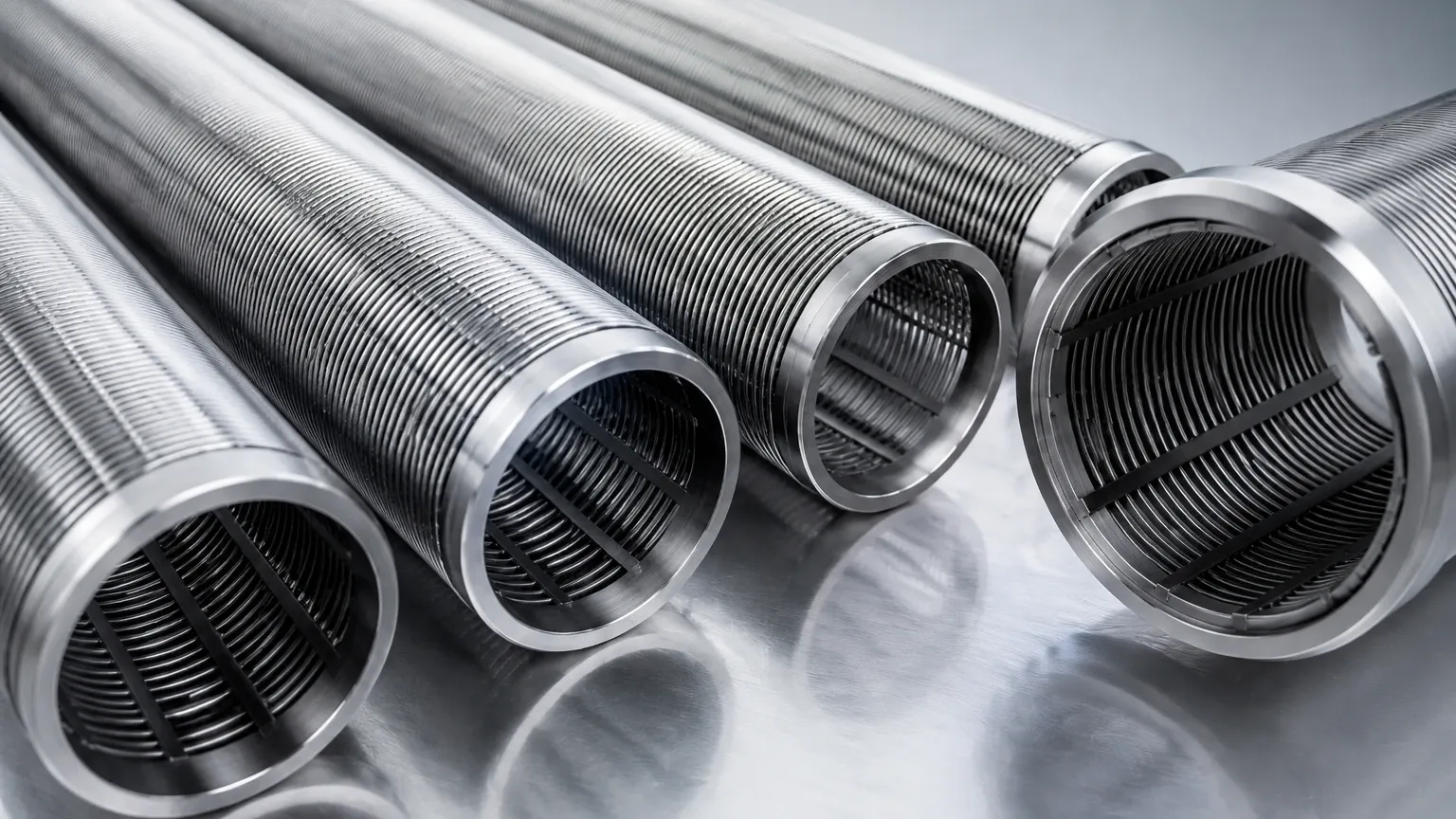
The fundamental superiority of wedge wire lies in its unique geometry. Unlike woven wire mesh, which consists of intersecting wires that can trap particles, wedge wire is constructed through a resistance welding process. V-shaped profile wires are welded onto support rods at set intervals, creating a continuous slot that widens inwardly.
The Non-Clogging V-Shape
This "opening-inward" design is the core technical advantage. As particles pass through the slot, the widening gap ensures that any particle small enough to enter the aperture will pass through completely, rather than becoming wedged. This minimizes "blinding" or clogging, which is a frequent failure point in standard filtration media. For industries requiring continuous operation, such as cooling water intake or pulp and paper processing, this self-cleaning characteristic reduces downtime and maintenance labor.
Mechanical Strength and Structural Integrity
Wedge wire screens are inherently robust. The fusion of the profile wire to the support rods creates a rigid, one-piece structure. This allows the screens to withstand significant differential pressures and high load-bearing requirements without deforming. In heavy-duty applications like mineral processing or heavy oil filtration, this mechanical stability ensures that the slot width remains consistent, maintaining filtration accuracy under extreme stress.
Material Selection for Industrial Environments
When evaluating wedge wire screen usa options, material selection is the most critical factor in determining the service life of the component. The chemical composition of the fluid, the temperature of the process, and the presence of abrasive solids all dictate the choice of alloy.
1. Stainless Steel 304: The standard choice for general industrial applications. It offers excellent mechanical properties and good corrosion resistance for water treatment and food-grade environments where aggressive chemicals are not present.
2. Stainless Steel 316L: Preferred for more demanding chemical processing and pharmaceutical applications. The addition of molybdenum provides enhanced resistance to pitting and crevice corrosion, especially in chloride-rich environments.
3. Duplex and Super Duplex Alloys: For offshore oil and gas or highly acidic chemical environments, these materials provide superior yield strength and exceptional resistance to stress corrosion cracking.
Kaifil specializes in the precision manufacturing of these components, ensuring that the metallurgical properties of the raw materials are preserved through the welding process. This technical expertise is vital for maintaining the durability of the screen in corrosive or high-temperature settings.
Key Engineering Parameters for Screen Selection
Specifying the correct wedge wire screen requires a deep dive into hydraulic and mechanical calculations. Engineers must balance filtration fineness with flow capacity and structural requirements.
Slot Aperture and Filtration Accuracy
The slot width (aperture) determines the size of the particles to be retained. Precision manufacturing allows for slot widths as small as 20 microns. However, smaller slots increase the resistance to flow. It is essential to define the minimum particle size that must be captured while considering the allowable pressure drop across the screen.
Open Area Calculations
The percentage of open area is a function of the profile wire width and the slot width. A higher open area results in lower entrance velocities and reduced pressure loss, which is critical for pump efficiency and preventing particle shear. Formulaically, open area is calculated as:
* Open Area % = [Slot Width / (Slot Width + Wire Width)] x 100
By selecting a narrower profile wire, engineers can maximize the open area without compromising the slot accuracy, though this may impact the overall mechanical strength of the screen.
Support Rod Spacing and Geometry
The support rods provide the structural backbone. The spacing and shape (round, rectangular, or teardrop) of these rods must be engineered to handle the specific flow dynamics and mechanical loads of the application. In vibrating screens, for example, the support structure must be designed to resist fatigue failure caused by constant oscillation.
Applications Across Critical US Industries
The versatility of wedge wire allows it to be adapted into various forms, including flat panels, cylindrical cartridges, and curved sieve bends. This flexibility makes it indispensable across several key sectors in the USA.
Water and Wastewater Treatment
In municipal and industrial water treatment, wedge wire is used for intake screens, resin traps, and underdrain systems. Its ability to handle high flow rates with minimal maintenance makes it ideal for protecting downstream equipment like pumps and membranes from debris.
Food and Beverage Processing
Hygiene and cleanability are paramount in food production. The smooth surface of stainless steel wedge wire prevents bacterial buildup and allows for efficient Clean-In-Place (CIP) procedures. Common uses include mash tuns in brewing, sugar juice filtration, and vegetable processing dewatering.
Petrochemical and Refining
Refineries utilize wedge wire for reactor internals, such as center pipes and scale traps. The high-temperature resistance and structural rigidity of stainless steel alloys ensure that these components can withstand the harsh conditions of catalytic cracking and other refining processes.
Customization and OEM Integration
For many industrial projects, off-the-shelf solutions are insufficient. Customization is often required to fit existing housing dimensions or to meet specific hydraulic profiles. When sourcing wedge wire screen usa components, engineers should look for manufacturers that offer comprehensive OEM capabilities.
Customization options include:
* Variable Slot Widths: Designing screens with different slot sizes across a single panel to manage varying flow rates.
* Reinforced Edges and Framing: Adding custom flanges, bolt holes, or reinforcement bars to facilitate easy installation into existing machinery.
* Surface Treatments: Electropolishing or specialized coatings can be applied to further enhance corrosion resistance or reduce surface friction for sticky materials.
Kaifil’s engineering team works closely with clients to develop tailored solutions that address specific application challenges, from material selection to final assembly. This collaborative approach ensures that the resulting filtration component is optimized for the total cost of ownership, rather than just initial purchase price.
Maintenance and Operational Longevity
While wedge wire screens are designed for durability, their operational lifespan is influenced by maintenance practices. Because of their rigid construction, these screens are highly compatible with automated cleaning systems.
Backwashing and Mechanical Cleaning
In pressurized systems, backwashing—reversing the flow of fluid—is highly effective at dislodging accumulated solids from the V-shaped slots. For open systems, mechanical scrapers or brushes can be used to clean the surface without damaging the profile wires. The robustness of the screen allows for aggressive cleaning cycles that would tear or deform standard wire mesh.
Evaluating Wear and Replacement Cycles
Engineers should monitor the pressure differential across the screen as a primary indicator of performance. A consistent increase in baseline pressure suggests that the screen may require deep cleaning or that the slot edges have worn down, affecting filtration accuracy. In abrasive applications, regular inspection for wire thinning is necessary to prevent structural failure.
Procurement Considerations: Quality and Compliance
Sourcing industrial filters for the US market requires adherence to strict quality standards. Procurement teams must verify that the manufacturer follows recognized protocols, such as ISO 9001 quality management systems. Furthermore, material certifications (MTRs) should be provided to ensure the stainless steel grades meet ASTM standards.
Total cost considerations should include not only the unit price but also the expected service life, energy costs associated with pressure drop, and the potential cost of process downtime. High-quality wedge wire screens often represent a lower total cost of ownership due to their extended replacement cycles and reduced maintenance requirements.
For technical professionals seeking reliable, precision-engineered filtration components, reviewing the available Wedge Wire Screens and consulting with manufacturing experts is the first step toward optimizing industrial separation processes. By focusing on technical specifications and application-specific requirements, engineers can ensure their systems operate at peak efficiency with minimal intervention.
