


In the demanding landscape of industrial processing, the efficiency of filtration systems directly impacts product quality, equipment longevity, and operational safety. For engineers and procurement specialists sourcing stainless steel mesh filters uk or international markets, understanding the technical nuances of filter design is essential for optimizing system performance.
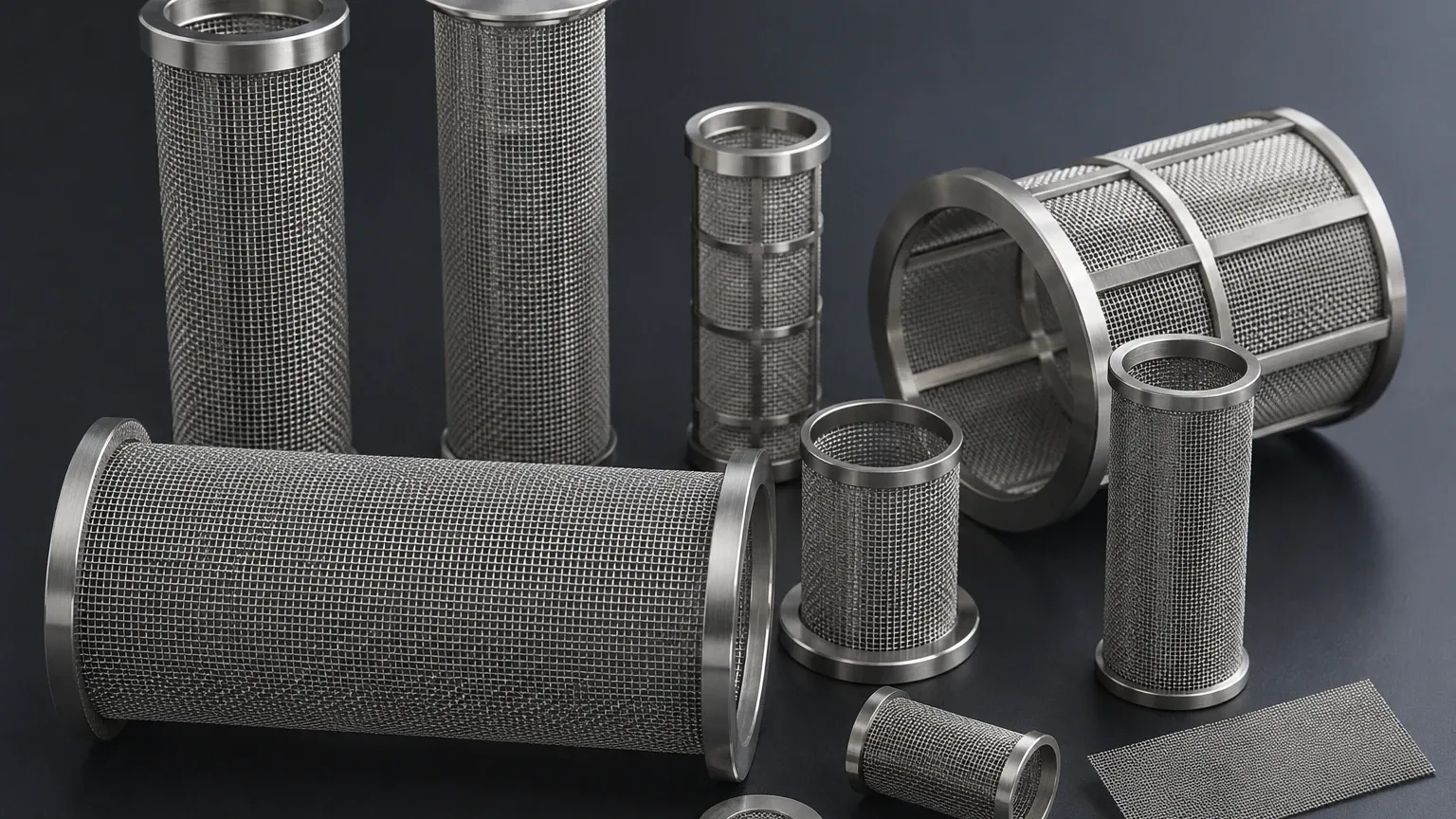
Stainless steel wire mesh is a preferred medium for industrial filtration due to its mechanical strength, thermal stability, and precise pore geometry. Specifically, Wire Mesh Filter Cylinders & Tubes serve as the backbone of many liquid and gas filtration systems, providing a robust barrier against contaminants in environments where polymer-based filters would fail. This guide explores the engineering principles, material selection criteria, and customization options necessary for selecting high-performance filtration components.
Technical Fundamentals of Wire Mesh Filtration
Wire mesh filters operate primarily through surface filtration. Unlike depth filters, which trap particles within a thick medium, wire mesh captures particles on a single plane or across multiple layers of precisely woven wire. This mechanism allows for predictable performance and, crucially, the ability to clean and reuse the filter element.
Weave Types and Their Engineering Impact
The performance of a filter cylinder is largely determined by the weave pattern of the stainless steel mesh. Each weave offers distinct advantages regarding flow rate, strength, and filtration accuracy:
1. Plain Weave: The most common and straightforward weave where each warp wire crosses over and under each shute wire. It provides high flow rates and is ideal for coarse filtration and screening applications.
2. Twill Weave: This pattern involves wires crossing over two and under two wires, allowing for a heavier wire diameter to be used for a given mesh count. This increases the mechanical strength and is often used for finer filtration requirements.
3. Plain Dutch Weave: Utilizing a combination of different wire diameters, this weave produces a dense, firm mesh with small, curved openings. It is exceptionally strong and capable of high-pressure applications with fine micron ratings.
4. Twill Dutch Weave: Combining twill and Dutch techniques, this weave provides the finest filtration levels (down to 1-5 microns) and is used in critical hydraulic and pharmaceutical applications.
Material Selection for Industrial Environments
When specifying stainless steel mesh filters uk for specific industrial sectors, material grade is the primary defense against corrosion and mechanical fatigue. Kaifil utilizes high-grade alloys to ensure compatibility with various process fluids.
* AISI 304: The standard grade for general industrial use. It offers good corrosion resistance and is suitable for most water treatment and food processing applications where high acidity or chloride levels are not present.
* AISI 316/316L: Containing molybdenum, these grades offer superior resistance to pitting and crevice corrosion, particularly in chloride-rich environments. 316L (low carbon) is preferred for welded components to prevent carbide precipitation during the welding process, ensuring the structural integrity of the filter cylinder.
* Specialty Alloys: For extreme environments involving high temperatures or highly aggressive chemicals, alloys such as 904L or Duplex stainless steel may be specified to prevent premature failure.
Structural Design of Filter Cylinders and Tubes
A wire mesh filter is rarely a standalone piece of fabric; it requires a structural framework to withstand the differential pressure ($ΔP$) generated during the filtration cycle.
Support Layers and Reinforcement
In high-pressure systems, a single layer of fine mesh would likely collapse or deform. To prevent this, engineers design multi-layer structures. A typical high-performance Wire Mesh Filter Cylinder may consist of:
* The Filtration Layer: The specific mesh weave that determines the micron rating.
* The Support Layer: A coarser mesh that provides a foundation for the filtration layer, preventing it from migrating under pressure.
* The Perforated Core: A rigid internal or external tube made of perforated stainless steel. This provides the primary mechanical strength, allowing the assembly to handle high flow velocities and pressure surges without structural failure.
Welding and Assembly Techniques
The integrity of a filter tube depends on the quality of its seams. Industrial-grade filters utilize advanced welding techniques such as TIG (Tungsten Inert Gas) welding, plasma welding, or resistance spot welding. These methods ensure that the seam is as strong as the parent material and that there are no gaps where bypass—unfiltered fluid leaking through—could occur.
Key Engineering Considerations for Selection
Selecting the correct filter requires a balance between filtration efficiency and system energy consumption. Engineers should evaluate the following parameters:
1. Micron Rating: Nominal vs. Absolute
It is critical to distinguish between nominal and absolute ratings. A nominal rating refers to the ability of the filter to retain a certain percentage (e.g., 90%) of particles of a specific size. An absolute rating indicates the pore size where 99.9% of particles are captured. In critical applications like pharmaceutical processing or high-end hydraulic systems, absolute ratings are mandatory to ensure system safety.
2. Effective Filtration Area (EFA)
The EFA determines the flow velocity through the mesh. A larger surface area reduces the velocity, which in turn lowers the initial pressure drop and extends the time between cleaning cycles. For compact systems where space is limited, pleated wire mesh cylinders can be used to significantly increase the EFA within the same physical footprint.
3. Differential Pressure (ΔP) Tolerance
Every filter has a maximum allowable differential pressure. As the filter captures contaminants, the ΔP increases. Engineers must ensure the filter cylinder is designed to withstand the maximum pressure the pump can deliver, or the point at which the system triggers a bypass or shutdown.
Applications Across UK Industrial Sectors
The demand for stainless steel mesh filters uk spans several high-stakes industries, each with unique regulatory and technical requirements.
* Chemical and Petrochemical: Used for catalyst recovery and the removal of impurities from aggressive solvents. The corrosion resistance of 316L is vital here.
* Food and Beverage: Filters must meet stringent hygiene standards. Stainless steel is non-leaching and can withstand Clean-in-Place (CIP) procedures involving high-temperature steam and caustic chemicals.
* Water Treatment: From pre-filtration for reverse osmosis (RO) membranes to the removal of sediment in municipal systems, wire mesh tubes provide a durable, long-term solution.
* Hydraulic Systems: Protecting sensitive valves and pumps from particulate wear. These filters often require high-strength Dutch weaves to handle high-viscosity fluids and high pressures.
Maintenance and Total Cost of Ownership (TCO)
One of the primary advantages of stainless steel wire mesh over disposable cartridges is the significantly lower Total Cost of Ownership. While the initial capital expenditure (CAPEX) is higher, the operational expenditure (OPEX) is reduced through several factors:
Cleanability and Reuse
Stainless steel mesh filters can be cleaned using various methods, restoring them to near-original performance levels. Common cleaning techniques include:
* Backwashing: Reversing the flow of fluid to dislodge particles from the surface.
* Ultrasonic Cleaning: Using high-frequency sound waves in a cleaning solvent to remove fine particulates trapped deep within the weave.
* Chemical Cleaning: Using acids or alkalis to dissolve organic or mineral scaling.
Durability
Unlike polymer or paper filters that degrade over time or under thermal stress, stainless steel maintains its structural integrity through thousands of cycles. This reliability reduces the risk of unexpected downtime, which is often the most significant cost in industrial operations.
Customization and OEM Solutions
Every industrial system has unique constraints. Kaifil specializes in providing customized Wire Mesh Filter Cylinders & Tubes tailored to specific OEM requirements. Customization options include:
* End Fittings: Custom flanges, threaded connections, or bayonet fittings to ensure a leak-proof interface with existing housing.
* Dimensions: Precise control over diameter and length to fit specific vessel geometries.
* Multi-Stage Filtration: Combining different mesh counts within a single tube to provide graduated filtration, capturing larger particles on the outer layers and finer particles on the inner layers to prevent premature clogging.
Conclusion: Making an Informed Purchase
When sourcing stainless steel mesh filters uk, engineers should move beyond basic dimensions and focus on the technical variables that dictate long-term success. By specifying the correct material grade, weave type, and structural support, and by considering the total lifecycle cost, procurement teams can ensure they receive a filtration solution that enhances process efficiency and protects critical infrastructure.
For technical consultation or to discuss specific application requirements, reviewing the available Wire Mesh Filter Cylinders & Tubes options is the first step toward achieving precision filtration performance. Kaifil’s engineering team provides the expertise necessary to navigate these complex variables, delivering reliable, custom-manufactured components for the most demanding industrial environments.
