


7 Wedge Anchors
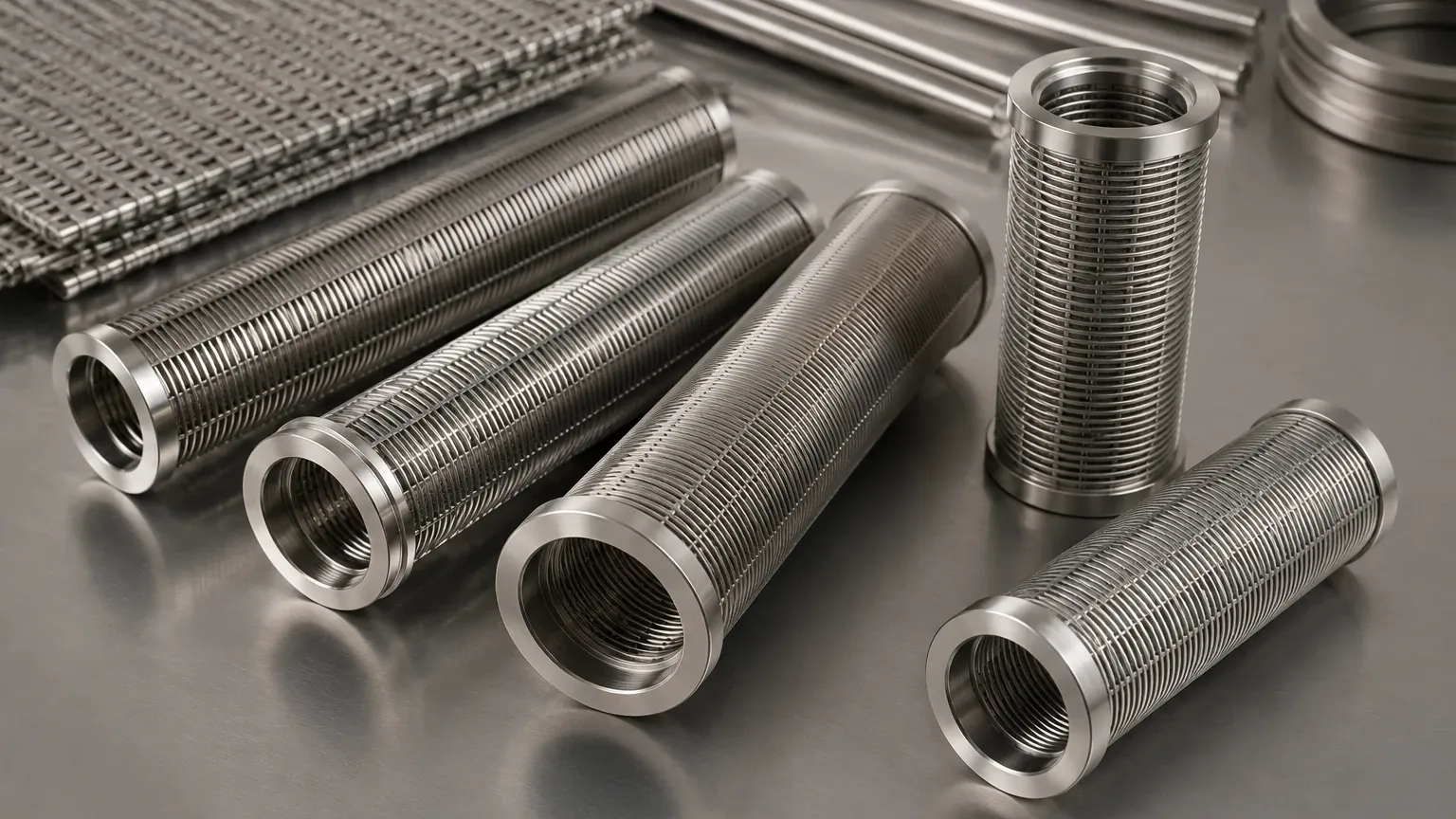
In industrial filtration and separation processes, the structural integrity of a system is as critical as the filtration accuracy itself. While the surface of Wedge Wire Screens performs the essential task of particle retention, the mechanical stability of these components depends heavily on how they are secured within a vessel or housing. The term "anchors" in this context refers to the specialized mounting points, support rods, and fastening mechanisms that ensure a filter remains stationary under intense hydraulic pressure and thermal fluctuations.
Selecting the right anchoring strategy is a complex engineering task. Improperly secured screens can lead to bypass, mechanical deformation, or catastrophic failure of the filtration unit. To assist engineers and procurement teams in optimizing their systems, we have identified the 7 wedge anchors—or critical anchoring principles—that must be evaluated to ensure long-term performance and reliability in demanding industrial environments.
1. Material Compatibility and Metallurgical Synergy
The first of the 7 wedge anchors for a successful installation is the selection of materials that match the screen's metallurgy. In most high-performance applications, wedge wire screens are manufactured from stainless steel grades like 304, 316L, or Duplex steels. The anchoring hardware—whether they are threaded studs, support rings, or clamping bars—must share similar electrochemical properties.
Using dissimilar metals for anchoring can trigger galvanic corrosion, particularly in aqueous or acidic environments. For instance, if a 316L stainless steel screen is secured with carbon steel anchors, the resulting electrolyte reaction will rapidly degrade the connection point. Engineers must specify that all anchoring components meet the same corrosion-resistance standards as the screen itself to prevent premature structural failure.
2. Managing Differential Pressure (ΔP) Loads
Industrial filtration systems are subject to significant pressure differentials. As particles accumulate on the surface of the wedge wire, the resistance to flow increases, exerting a physical force against the screen. The anchoring system acts as the primary load-bearing interface between the screen and the vessel wall.
When evaluating the 7 wedge anchors of design, structural load calculation is paramount. The anchors must be capable of withstanding the maximum expected ΔP, including potential pressure spikes during pump start-ups or valve closures. For large-diameter lateral systems or flat panels, this often requires a combination of perimeter welding and intermediate support grids to prevent the wedge wire from bowing or collapsing under the weight of the fluid column.
3. Vibration Dampening and Hydrodynamic Stability
Flow-induced vibration is a leading cause of fatigue in metal filtration components. In high-velocity applications, the movement of fluid across the V-shaped profiles can create vortex shedding, leading to harmonic resonance. If the anchoring system is too rigid or poorly distributed, these vibrations can lead to stress cracking at the weld points.
Effective anchoring involves strategic placement of supports to shift the natural frequency of the screen assembly away from the operational frequency of the fluid flow. This aspect of the 7 wedge anchors focuses on the use of dampening gaskets or precision-fit mechanical fasteners that absorb micro-vibrations, thereby extending the fatigue life of the stainless steel wires.
4. Accommodating Thermal Expansion and Contraction
In industries such as chemical processing or steam filtration, operating temperatures can fluctuate by hundreds of degrees. Stainless steel has a specific coefficient of thermal expansion (CTE), meaning the screen will physically grow and shrink during thermal cycles.
If the anchoring system is completely restrictive, the internal stress generated by thermal expansion can warp the screen or shear the anchors. A sophisticated anchoring design allows for controlled movement in one or more directions—often through the use of slotted holes or floating support rings. This "thermal anchor" principle ensures that the screen maintains its geometric precision and slot opening accuracy regardless of the temperature.
5. Precision Alignment and Bypass Prevention
The primary goal of any filter is to ensure that 100% of the fluid passes through the specified slot openings. Any gap between the screen and the housing, often caused by poor anchoring, creates a bypass route for contaminants.
Among the 7 wedge anchors of installation, precision alignment is perhaps the most critical for filtration efficiency. Anchoring mechanisms must provide a high-integrity seal. This is frequently achieved through machined flanges, compression gaskets, or O-ring seats that are integrated into the anchoring hardware. For custom OEM solutions, the tolerance of the anchor points must be held to strict standards to ensure a flush fit within the existing infrastructure.
6. Ease of Maintenance and Replacement Cycles
While permanent welding provides the highest structural strength, it complicates maintenance. In many industrial applications, wedge wire screens are wear items that must be inspected, cleaned, or replaced periodically.
An effective anchoring strategy balances structural permanence with accessibility. This involves the use of removable mechanical anchors, such as J-bolts, wedge-lock washers, or specialized quick-release clamps. By optimizing the anchoring for "serviceability," facilities can significantly reduce downtime during scheduled maintenance turnarounds. Engineers should confirm whether the chosen anchoring method requires specialized tools or if it can be managed by standard site maintenance crews.
7. Customization for Complex Vessel Geometries
No two industrial vessels are identical. Whether the application involves a conical tank bottom, a horizontal pressure leaf filter, or a vertical resin trap, the anchoring system must be tailored to the specific geometry of the environment.
This final point in the 7 wedge anchors framework emphasizes the need for customized engineering. Standard fasteners are rarely sufficient for high-stakes filtration. Custom-fabricated support brackets, radius-matched mounting rings, and bespoke reinforcement ribs are often necessary to ensure the wedge wire screen performs as intended. Working with a manufacturer that offers comprehensive OEM design services allows for the integration of these anchors directly into the screen assembly, simplifying field installation.
Engineering Considerations for Wedge Wire Selection
When specifying Wedge Wire Screens, the discussion should always extend beyond the slot size and wire profile. The total cost of ownership is heavily influenced by the reliability of the mounting system.
Technical Selection Checklist:
* Flow Direction: Is the flow out-to-in or in-to-out? This determines whether the anchors will be under tension or compression.
* Backwashing Requirements: If the system uses high-pressure backpulsing for cleaning, the anchors must resist forces from both directions.
* Chemical Exposure: Ensure that all anchoring hardware, including gaskets and bolts, is compatible with the process fluid.
* Slot Integrity: Ensure that the anchoring method does not distort the delicate slot openings, which are critical for precision separation.
The Kaifil Advantage in Custom Filtration
As a professional manufacturer of stainless steel filtration solutions, Kaifil understands that a filter is only as strong as its weakest connection point. We specialize in developing integrated filtration systems where the screen and its anchoring components are designed as a single, cohesive unit.
Our engineering team works closely with global customers to address the challenges of high-pressure, high-temperature, and corrosive environments. By focusing on the 7 wedge anchors of structural design—from material selection to custom geometry—we deliver filtration components that provide reliable service life and optimized performance.
Whether you are designing a new system or retrofitting an existing vessel, considering the structural requirements early in the process prevents costly mechanical failures and ensures that your filtration goals are met with precision. For high-performance industrial applications, the synergy between the wedge wire surface and its anchoring system is the foundation of operational success.
