


Sintered Metal Filter Manufacturers
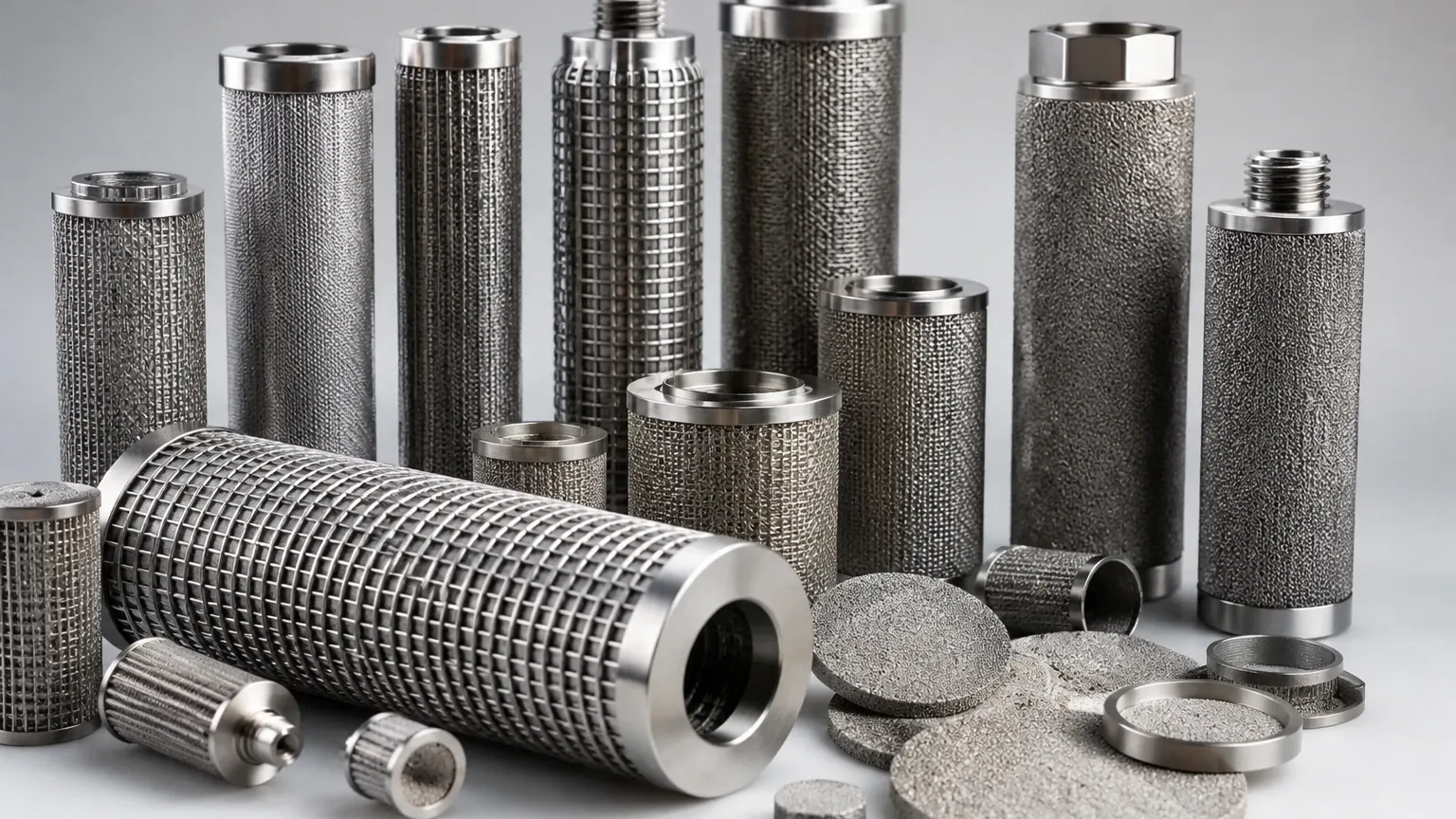
In industrial filtration, the transition from standard wire mesh to sintered metal components represents a significant shift toward durability and precision. Sintered metal filters are engineered porous structures created by fusing metal powders or multiple layers of woven wire mesh through a thermal process known as sintering. This process occurs at temperatures below the melting point of the base metal, allowing the particles or wires to bond at their contact points while maintaining a controlled pore structure. For engineers and procurement specialists, selecting the right sintered metal filter manufacturers is a critical decision that impacts the operational efficiency, safety, and longevity of high-pressure and high-temperature systems.
Industrial applications in chemical processing, pharmaceuticals, and hydraulic systems demand filtration media that can withstand mechanical stress and corrosive environments. Unlike traditional fabric or paper filters, Sintered Metal Filters provide structural integrity that prevents media migration and ensures consistent filtration performance over thousands of cycles.
Technical Foundations of Sintered Metal Filtration
To evaluate sintered metal filter manufacturers effectively, it is essential to understand the technical nuances of the manufacturing process. Sintering is more than just heating metal; it is a precision engineering feat that dictates the final permeability and mechanical strength of the filter element.
Powder Metallurgy vs. Sintered Mesh
There are two primary types of sintered metal filters: sintered metal powder and sintered metal wire mesh.
1. Sintered Metal Powder: These filters are produced by compacting stainless steel, bronze, or nickel-based alloy powders into a mold and then sintering them. This results in a rigid, porous structure with high filtration accuracy, often used for gas sparging, flame arrestors, and fine liquid filtration.
2. Sintered Wire Mesh: This involves laminating multiple layers of woven wire mesh (typically 316L stainless steel) and sintering them together. The result is a filter medium that combines the high permeability of mesh with the mechanical strength of a solid plate. This is the preferred choice for high-pressure hydraulic systems and polymer filtration.
Manufacturers must demonstrate expertise in both areas to provide comprehensive solutions. A manufacturer's ability to control the sintering atmosphere—often using vacuum or hydrogen furnaces—is a key indicator of the final product's purity and structural uniformity.
Key Evaluation Criteria for Sintered Metal Filter Manufacturers
When vetting potential partners, technical teams should look beyond the price per unit. The complexity of sintered media requires a manufacturer that functions as a technical consultant rather than just a supplier.
Material Traceability and Quality Standards
In industries like pharmaceuticals and food and beverage, material composition is non-negotiable. Leading sintered metal filter manufacturers provide Mill Test Reports (MTRs) for every batch of stainless steel used. This ensures that the 316L or 304L alloy meets the specific chemical resistance requirements of the application. Furthermore, compliance with ISO 9001 standards and, where applicable, FDA or USP Class VI standards for biocompatibility, is a baseline requirement for high-end industrial filters.
Customization and Engineering Support
Standard off-the-shelf filters rarely meet the specific flow rate and pressure drop requirements of a custom-built industrial system. A capable manufacturer should offer extensive OEM services, including:
* Custom Geometric Designs: The ability to produce pleated cartridges, conical filters, or custom-shaped discs to fit existing housings.
* Pore Size Tuning: Precision control over micron ratings, ranging from 0.5 microns to 200 microns.
* End-Fitting Integration: Expertise in welding various connectors, such as NPT threads, flange mounts, or 222/226 code fittings, without compromising the integrity of the sintered media.
Performance Validation and Testing Protocols
The reliability of a sintered filter is determined by its performance under stress. Sintered metal filter manufacturers must utilize rigorous testing protocols to validate their products before they reach the field.
Bubble Point Testing
The bubble point test is the industry standard for determining the maximum pore size of a filter. By submerging the filter in a liquid and measuring the pressure required to force air through the pores, manufacturers can verify the filtration accuracy. This test is crucial for ensuring that no oversized particles pass through the system due to manufacturing defects.
Permeability and Pressure Drop Analysis
Engineers must know the "Clean Pressure Drop" (ΔP) of a filter. Sintered metal filter manufacturers should provide data on how the filter performs at various flow rates. High permeability is essential to minimize energy consumption in pumping systems and to extend the time between cleaning cycles.
Mechanical Strength and Fatigue Resistance
Sintered filters often operate in environments with high differential pressures or rapid pressure pulsations. Manufacturers should conduct tests to ensure the media can withstand the maximum collapse pressure of the system. In hydraulic applications, fatigue resistance is particularly important to prevent the metal from cracking after repeated cycles of pressure loading.
Common Risks in Sourcing Sintered Metal Filters
Sourcing from unverified manufacturers carries significant operational risks. Understanding these pitfalls helps procurement teams ask the right questions during the auditing process.
1. Media Migration: If the sintering process is incomplete or poorly controlled, metal particles can break loose from the filter and enter the downstream flow. In a pharmaceutical or food production line, this results in catastrophic product contamination.
2. Inconsistent Pore Distribution: Poor quality control during the powder compaction or mesh layering phase can lead to "channeling," where the fluid takes the path of least resistance through larger-than-specified pores, rendering the filtration ineffective.
3. Corrosion Vulnerability: If the manufacturer uses low-grade alloys or if the sintering furnace atmosphere is contaminated, the resulting filter may develop intergranular corrosion, leading to premature failure in acidic or alkaline environments.
The Role of OEM and Custom Solutions in Industrial Filtration
For many B2B buyers, the value of sintered metal filter manufacturers lies in their ability to solve specific engineering challenges. For example, in high-viscosity polymer filtration, a standard cylindrical filter might clog too quickly. A manufacturer with deep engineering expertise might suggest a pleated sintered mesh design, which significantly increases the effective surface area within the same footprint, thereby extending the filter's service life.
Furthermore, the integration of filtration components into larger assemblies—such as sensor housings or chemical reactors—requires a manufacturer capable of precision CNC machining and specialized welding (TIG or laser welding). This vertical integration ensures that the interface between the filter media and the housing is leak-proof and structurally sound.
Total Cost of Ownership (TCO) Considerations
While the initial cost of sintered metal filters is higher than that of disposable alternatives, the Total Cost of Ownership (TCO) is often much lower in industrial settings. Sintered filters are cleanable and reusable. Manufacturers should provide guidance on cleaning methods, such as ultrasonic cleaning, backwashing, or chemical pickling.
When evaluating sintered metal filter manufacturers, consider the following TCO factors:
* Cleaning Cycles: How many times can the filter be cleaned before its structural integrity is compromised?
* Energy Efficiency: Does the filter design minimize pressure drop, thereby reducing the workload on pumps?
* Downtime Reduction: Does the durability of the filter reduce the frequency of system shutdowns for filter replacement?
Selecting the Right Partner for Your Application
Choosing between various sintered metal filter manufacturers requires a balance of technical capability, quality assurance, and industry-specific experience. For chemical processing, the focus may be on corrosion resistance and high-temperature stability. For hydraulic systems, the priority shifts to mechanical strength and high flow rates.
A reliable manufacturer like Kaifil understands these distinctions. By focusing on custom stainless steel filtration solutions, they bridge the gap between complex engineering requirements and high-performance manufacturing. Whether you are designing a new system or looking to optimize an existing process, the collaboration with a manufacturer should begin at the design phase to ensure the filtration media is perfectly matched to the operational parameters.
In conclusion, sintered metal filters are high-precision instruments that form the backbone of many industrial processes. By focusing on material traceability, rigorous testing, and customization capabilities, engineers can identify sintered metal filter manufacturers that provide not just a component, but a long-term solution for process reliability and efficiency. For those seeking specific technical data or custom designs, it is advisable to Review product options and application support to align the filter's performance with the system's demands.
