


A Sintered Filter
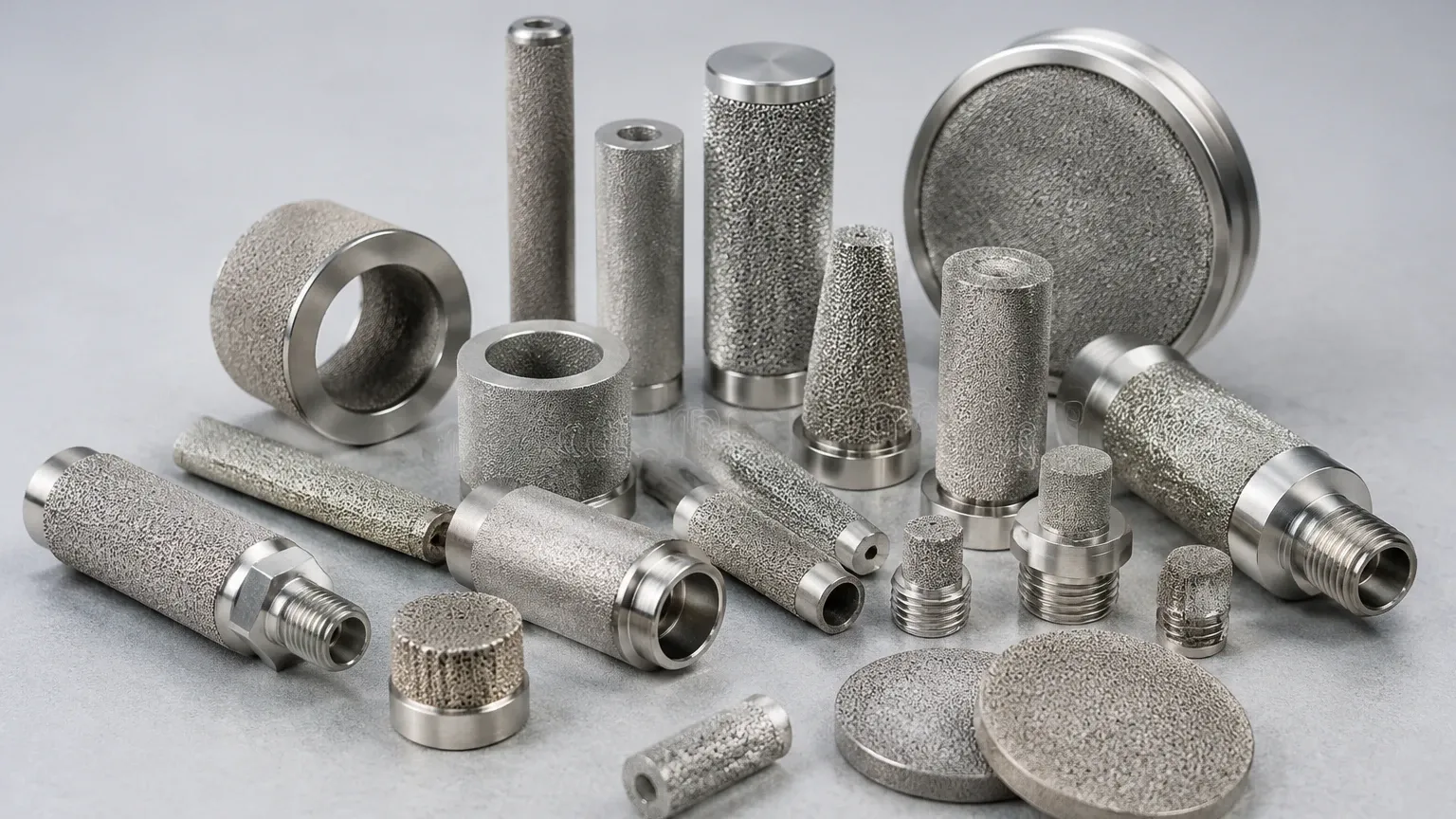
In industrial filtration, the demand for components that can withstand extreme temperatures, high pressures, and corrosive environments has led to the widespread adoption of sintered technology. A sintered filter is not merely a screen or a mesh; it is a high-performance engineering component created through a thermal bonding process that transforms loose metal powders or multiple layers of wire mesh into a rigid, porous structure. This process, known as sintering, allows for the creation of filtration media with precise pore sizes and exceptional mechanical strength, making it a cornerstone in sectors ranging from petrochemical processing to pharmaceutical manufacturing.
For engineers and procurement specialists, understanding the nuances of Sintered Metal Filters is essential for optimizing system performance and reducing long-term operational costs. Unlike disposable polymer filters, a sintered filter offers permanent or semi-permanent service life through its ability to be cleaned and reused, providing a sustainable solution for demanding industrial cycles.
Understanding the Fundamentals of a Sintered Filter
The core identity of a sintered filter lies in its manufacturing methodology. Sintering is a metallurgical process where metal particles or wire mesh layers are heated in a controlled-atmosphere furnace to a temperature just below their melting point. Under these conditions, atomic diffusion occurs across the contact points of the metal, creating molecular bonds that fuse the material into a single, integrated unit.
This fusion results in a porous medium that maintains the chemical properties of the parent metal—typically stainless steel—while gaining a structural rigidity that far exceeds that of traditional woven wire cloth. Because the pores are fixed in place by these molecular bonds, they do not shift or enlarge under high pressure, ensuring consistent filtration accuracy throughout the filter's life cycle. This stability is a primary reason why a sintered filter is preferred for critical applications where bypass or media migration could lead to catastrophic system failure.
The Manufacturing Process: From Raw Material to Rigid Porous Media
The production of sintered metal filters generally follows two distinct paths depending on the desired end-use: sintered metal powder or sintered wire mesh.
In the powder metallurgy approach, spherical or irregular metal powders are graded by size and then compacted into a mold or gravity-fed into a shape. These are then subjected to the sintering furnace. The resulting structure is a tortuous path of interconnected pores. The depth of this media allows for "depth filtration," where particles are trapped throughout the thickness of the filter wall rather than just on the surface.
Conversely, sintered wire mesh is produced by laminating multiple layers of stainless steel woven wire cloth. These layers often include a fine filtration layer, a protective layer, and several support layers for mechanical reinforcement. When sintered together, these layers form a robust, plate-like material that can be pleated, welded, and formed into various geometries. This multi-layer construction allows for high permeability while maintaining a very fine micron rating, effectively balancing flow rate with filtration efficiency.
Comparing Sintered Wire Mesh and Sintered Metal Powder
Choosing between a sintered filter made of powder and one made of wire mesh depends heavily on the specific requirements of the fluid dynamics and the nature of the contaminants.
Sintered metal powder filters are characterized by their high filtration precision and excellent depth-loading capacity. They are ideal for removing fine particulates from gases or liquids where the concentration of solids is relatively low. Because of their thickness and density, they offer superior resistance to high differential pressures. However, they typically have lower permeability compared to mesh-based designs.
Sintered wire mesh filters, on the other hand, are prized for their high flow rates and ease of cleaning. The structured nature of the mesh layers provides a more predictable pore geometry. These filters are often used in surface filtration applications where the solids form a "filter cake" on the exterior, which can then be easily removed via backwashing or back-pulsing. For applications requiring high-volume throughput, such as large-scale water treatment or hydraulic oil filtration, the sintered mesh configuration is often the more efficient choice.
Critical Engineering Specifications for Sintered Metal Filters
When evaluating a sintered filter for an industrial system, engineers must look beyond basic dimensions. Several technical parameters define the performance and suitability of the component:
1. Micron Rating (Filtration Accuracy): This defines the size of the smallest particle the filter is designed to trap. Sintered filters can range from sub-micron levels up to 200 microns or more. It is vital to distinguish between "absolute" and "nominal" ratings; sintered media typically provides an absolute rating due to its fixed pore structure.
2. Permeability: This refers to the ability of the filter to allow fluid to pass through at a given pressure. High permeability reduces the energy required for pumping and minimizes the initial pressure drop across the system.
3. Mechanical Strength: Sintered filters must withstand the physical stresses of the application, including high-pressure surges and mechanical vibrations. The tensile and compressive strength of the sintered bond ensures the filter does not collapse or deform.
4. Porosity: This is the measure of the void space within the filter. Higher porosity generally leads to better flow rates but must be balanced against the required mechanical strength and filtration efficiency.
Application Environments and Material Compatibility
The versatility of a sintered filter is largely due to the materials used in its construction. While 316L stainless steel is the industry standard due to its excellent corrosion resistance and temperature tolerance, other alloys are utilized for specialized environments.
In the chemical processing industry, where filters are exposed to aggressive acids or alkalis, materials like Hastelloy, Monel, or Inconel may be employed. These alloys provide the necessary chemical stability to prevent premature degradation. In the food and beverage and pharmaceutical sectors, the focus is on hygiene and purity. Sintered stainless steel filters are ideal here because they are non-shedding—meaning no metal fibers or particles will break off and contaminate the product—and they can withstand the high temperatures required for Steam-in-Place (SIP) and Clean-in-Place (CIP) sterilization cycles.
Furthermore, in aerospace and hydraulic applications, the ability of a sintered filter to operate at temperatures exceeding 400°C (752°F) and under pressures of several thousand PSI makes it indispensable for protecting sensitive valves and actuators from particulate wear.
Operational Efficiency: Pressure Drop and Cleaning Cycles
One of the most significant advantages of a sintered filter is its contribution to lower total cost of ownership through cleanability. Traditional disposable filters must be replaced and disposed of once they reach a certain pressure drop, leading to ongoing procurement costs and environmental waste.
A sintered filter, however, is designed to be cleaned. In many liquid systems, this is achieved through backwashing—reversing the flow of the fluid to dislodge trapped particles. For more stubborn contaminants or in gas filtration, ultrasonic cleaning or chemical cleaning can restore the filter to near-original permeability.
Engineers must monitor the "terminal pressure drop"—the point at which the filter is considered fully loaded. By establishing a regular cleaning schedule based on the pressure drop profile, operators can extend the life of the filter for years. This durability makes the initial higher investment in a sintered metal solution more economical over the long term compared to the frequent replacement of lower-cost alternatives.
Selecting a Sintered Filter for Industrial Systems
Selecting the correct Sintered Metal Filters requires a comprehensive analysis of the operating conditions. Engineers should confirm the following data points before finalizing a design:
* Fluid Characteristics: Is the fluid a gas or a liquid? What is its viscosity and chemical composition?
* Contaminant Profile: What is the expected particle size distribution, and what is the concentration of solids in the influent?
* Operating Temperature and Pressure: What are the maximum and continuous operating temperatures and pressures? Are there likely to be rapid fluctuations or "water hammer" effects?
* Cleaning Requirements: Will the filter be cleaned in-situ, or will it be removed for external cleaning? What cleaning agents or methods are available?
By addressing these factors, manufacturers like Kaifil can provide customized filtration solutions that meet specific micron requirements and structural needs. Customization might involve specialized end-fittings (such as DOE, 222, or 226 connectors), specific outer diameters, or pleated designs to increase the effective filtration area within a limited footprint.
In conclusion, a sintered filter represents the pinnacle of industrial filtration technology. By combining the material properties of high-grade alloys with the structural advantages of the sintering process, these filters provide a reliable, cleanable, and high-performance solution for the world's most demanding technical challenges. Whether the goal is to protect sensitive downstream equipment or to ensure the purity of a final product, the engineering integrity of a sintered metal filter remains an essential asset for modern industry.
