


Sintered Metal vs Carbon Brake Pads
In the realm of high-performance mechanical engineering, the selection of friction materials is a critical decision that impacts safety, durability, and operational efficiency. Whether in heavy-duty industrial machinery or high-speed transport, the debate often centers on two primary technologies: sintered metal and carbon-based (organic) compositions. Understanding the nuances of sintered metal vs carbon brake pads requires a deep dive into material science, thermal dynamics, and the manufacturing processes that define their performance characteristics.
At Kaifil, our expertise in powder metallurgy and advanced manufacturing allows us to observe how these materials behave under extreme conditions. While our core focus remains on high-precision Sintered Metal Filters, the underlying technology used to create sintered friction materials shares many of the same engineering principles—specifically the controlled fusion of metallic particles to achieve specific porosity, strength, and thermal resistance.
The Fundamentals of Sintered Metal Technology
Sintering is a manufacturing process where metallic powders are compressed into a specific shape and then heated in a controlled-atmosphere furnace at temperatures below their melting point. This causes the particles to bond through a process called solid-state diffusion, creating a solid mass that retains a degree of controlled porosity or density depending on the application.
In the context of brake pads, sintered metal compositions typically consist of a blend of copper, bronze, iron, and other metallic elements, often mixed with graphite or ceramic lubricants. This creates a material with exceptional thermal conductivity and mechanical strength.
From an industrial perspective, the same technology is utilized to produce Sintered Metal Filters. In filtration, the goal is to create a rigid structure with precise pore sizes that can withstand high pressure and corrosive environments. In braking, the goal is to create a high-friction surface that does not degrade when subjected to the intense heat of kinetic energy conversion. Both applications rely on the inherent stability of the metallic matrix formed during the sintering process.
Characteristics of Carbon and Organic Brake Pads
Carbon-based brake pads, often referred to as organic or semi-metallic depending on their exact composition, utilize a matrix of resin binders to hold together a variety of fibers and fillers. These can include glass, rubber, carbon compounds, and Kevlar.
These materials are designed for a different set of performance priorities compared to sintered metals:
1. Modulation and Feel: Carbon-based pads often provide a more progressive "feel" or modulation, which is preferred in applications where subtle control is more important than raw stopping power.
2. Noise Reduction: The softer resin matrix tends to dampen vibrations, leading to quieter operation in light-duty applications.
3. Rotor Wear: Because the material is softer than a full sintered metal pad, it is generally less abrasive to the mating surface (the rotor), potentially extending the life of the disc at the expense of the pad itself.
4. Thermal Insulation: Unlike sintered metal, which conducts heat away from the friction surface, organic pads act more as insulators. This can protect hydraulic fluid from overheating but can lead to "brake fade" if the pad surface itself becomes too hot and the resins begin to gasify.
Comparative Analysis: Sintered Metal vs Carbon Brake Pads
When evaluating sintered metal vs carbon brake pads for industrial or high-performance use, several technical benchmarks must be considered.
Thermal Stability and Heat Dissipation
Sintered metal pads are the industry standard for high-heat environments. Because they are composed almost entirely of metal, they possess high thermal conductivity. This allows heat to move quickly through the pad and into the caliper or surrounding air, preventing the friction surface from reaching temperatures that would cause material failure. In contrast, carbon/organic pads can suffer from thermal glazing, where the resin binders melt and create a slick, non-friction surface, significantly reducing braking efficiency.
Durability and Service Life
In harsh conditions—such as those involving mud, water, or abrasive dust—sintered metal pads significantly outperform carbon alternatives. The metallic bond is far more resistant to mechanical abrasion. For maintenance teams, this translates to longer service intervals and reduced downtime. This durability is the same reason why Sintered Metal Filters are preferred in industrial chemical processing; they can withstand rigorous cleaning cycles and high-pressure differentials that would destroy synthetic or organic media.
Performance in Wet and Dirty Conditions
Sintered metal maintains a consistent coefficient of friction even when saturated with water or coated in debris. The hard metallic particles can "bite" through surface contaminants to establish contact with the rotor. Carbon pads often struggle in these environments, as the water can act as a lubricant on the smoother organic surface, leading to a temporary loss of braking force until the pads dry out.
Engineering Considerations for Material Selection
For engineers and purchasing managers, the choice between sintered metal and carbon is rarely about which is "better" in a vacuum, but rather which is better suited for the specific operating parameters of the system.
Load and Pressure Requirements
If the application involves heavy loads or high-pressure cycles, sintered metal is almost always the superior choice. The structural integrity of a sintered matrix is much higher than that of a resin-bonded organic pad. In industrial filtration, we see a parallel: when a process requires filtering high-viscosity fluids under significant pressure, a Sintered Metal Filter is required to prevent media migration or structural collapse.
Operating Temperature Range
Engineers must define the expected operating temperature range. Sintered pads have a much higher "ceiling" for temperature. If the system will consistently operate at several hundred degrees Celsius, organic pads will fail prematurely. However, if the system is used in a cold environment with light loads, a carbon pad might reach its optimal operating temperature faster than a sintered metal pad.
Chemical Compatibility
In industrial environments, exposure to oils, solvents, or cleaning chemicals is common. Sintered metal (typically stainless steel or bronze-based) offers excellent chemical resistance. Organic pads, held together by resins, can swell or disintegrate when exposed to certain industrial solvents, leading to catastrophic failure.
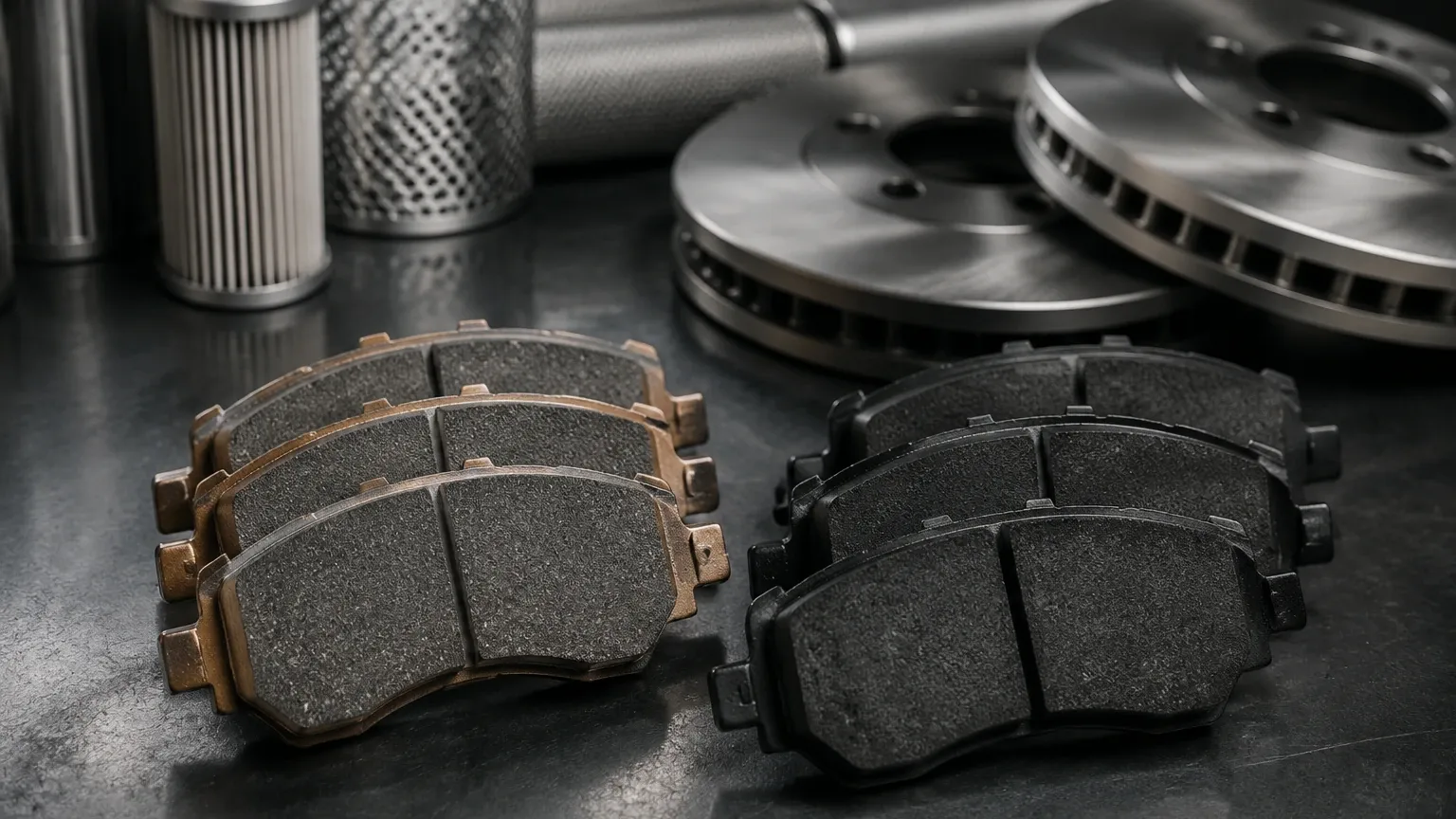
Evaluating Total Cost of Ownership (TCO)
While sintered metal pads often carry a higher initial purchase price than organic or carbon-based pads, the Total Cost of Ownership (TCO) is frequently lower in industrial settings.
1. Replacement Frequency: The extended lifespan of sintered materials means fewer replacements over the life of the machine.
2. Labor Costs: Reducing the frequency of maintenance intervals lowers the labor costs associated with pad replacement.
3. System Reliability: Sintered metal's resistance to fade and environmental factors reduces the risk of unexpected system failures, which can be incredibly costly in a production environment.
This TCO logic applies equally to filtration. While a disposable organic filter may be cheaper upfront, a permanent Sintered Metal Filter that can be cleaned and reused for years provides a much better return on investment in the long term.
The Role of Customization in Sintered Solutions
One of the greatest advantages of sintering technology is the ability to customize the material properties. By adjusting the powder composition, the compaction pressure, and the sintering temperature, manufacturers can fine-tune the friction levels, wear rates, and thermal properties of the final product.
At Kaifil, we apply this same level of precision to our filtration products. We understand that every industrial application has unique requirements. Whether you are dealing with high-temperature gas filtration or the separation of fine particulates in a chemical reactor, the ability to engineer the specific characteristics of the metal matrix is paramount.
Conclusion: Making an Informed Decision
When comparing sintered metal vs carbon brake pads, the decision ultimately rests on the demands of the application. For light-duty, noise-sensitive, or budget-constrained projects, carbon-based pads may suffice. However, for industrial, high-performance, and heavy-duty applications where reliability and heat management are non-negotiable, sintered metal is the clear technical leader.
The durability, thermal stability, and consistent performance of sintered materials make them the backbone of modern industrial friction and filtration systems. By choosing high-quality sintered components, engineers can ensure their systems operate at peak efficiency with minimal maintenance requirements.
For those seeking reliable, high-performance filtration solutions built on these same metallurgical principles, we invite you to Review product options and application support to see how our custom engineering can support your specific industrial needs.
