


Sintered Metal Candle Filter
In industrial filtration, the requirement for components that can withstand extreme temperatures, high pressures, and corrosive environments is constant. Among the various technologies available, the sintered metal candle filter stands out as a critical solution for liquid and gas clarification. These filters are not merely consumables but are engineered components designed for long-term integration into complex process systems.
As a specialized manufacturer, Kaifil provides high-performance Sintered Metal Filters that address the rigorous demands of chemical processing, pharmaceuticals, and power generation. Understanding the technical nuances of these filters is essential for engineers tasked with optimizing filtration efficiency and reducing the total cost of ownership.
What is a Sintered Metal Candle Filter?
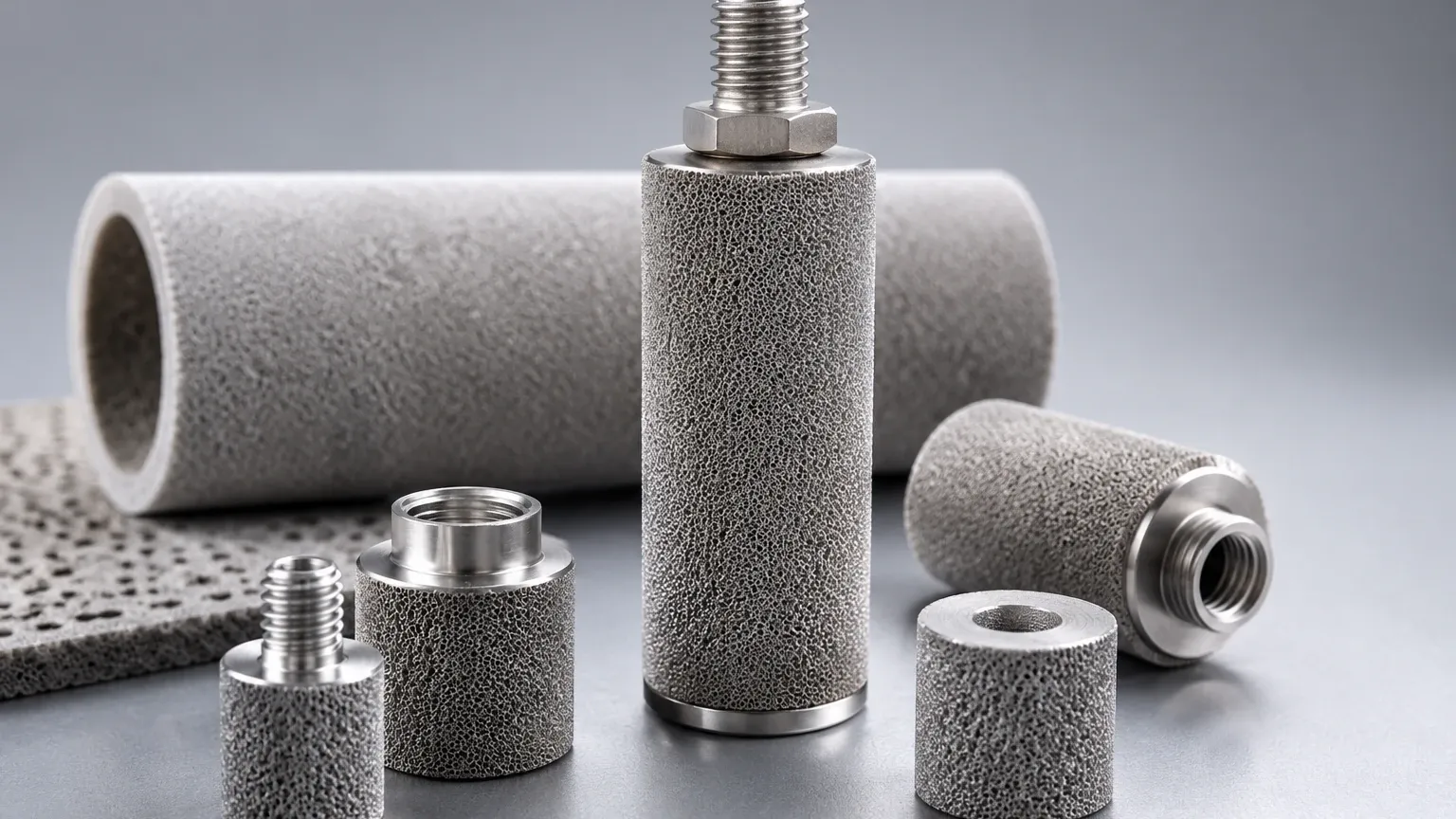
A sintered metal candle filter is a cylindrical filtration element constructed from metal powders or multi-layer wire meshes that have undergone a sintering process. Sintering involves heating the material in a controlled-atmosphere furnace to a temperature below its melting point. This process causes the particles or wire contact points to bond molecularly, creating a rigid, porous structure without the need for chemical binders or adhesives.
The "candle" designation refers to the filter's long, thin, cylindrical geometry. This shape is preferred in industrial housings because it provides a high surface-area-to-volume ratio, allowing for high flow rates within a relatively small footprint. These filters are typically installed vertically in a pressure vessel, where the fluid flows from the outside in (or inside out, depending on the system design), leaving contaminants trapped on the surface or within the depth of the filter media.
Technical Advantages of Sintered Metal Structures
The move from traditional polymer or disposable fiber filters to sintered metal solutions is driven by several technical advantages inherent to the material science of sintered metals.
Mechanical Strength and Stability
The sintering process creates a self-supporting structure. Unlike pleated paper or fabric filters, a sintered metal candle filter does not require an internal core for support under standard operating pressures. This structural integrity prevents media migration—a common failure mode where filter fibers break off and contaminate the downstream filtrate. These filters can withstand high differential pressures (often exceeding 20-30 bar depending on the design) without collapsing or deforming.
Thermal and Chemical Resistance
Standard stainless steels, such as 304 and 316L, provide excellent resistance to a wide range of industrial chemicals and can operate in temperatures ranging from cryogenic levels up to 450°C (842°F) in oxidizing environments, and even higher in reducing environments. For more aggressive applications, specialized alloys like Hastelloy, Inconel, and Monel can be used to ensure the filter does not succumb to pitting or stress corrosion cracking.
Precise Pore Size Distribution
One of the most critical aspects of Sintered Metal Filters is the ability to control pore size during manufacturing. By selecting specific powder grain sizes and controlling the sintering parameters, manufacturers can produce filters with absolute micron ratings from as low as 0.1 microns up to 200 microns. This precision ensures consistent filtration performance and predictable particle retention.
Engineering Considerations for Selection
When specifying a sintered metal candle filter for an industrial application, engineers must evaluate several variables to ensure the component meets the process requirements.
Porosity vs. Pressure Drop
Porosity refers to the percentage of void space within the filter media. Higher porosity generally leads to a lower initial pressure drop and higher flow rates. However, there is a trade-off between porosity and mechanical strength. Engineers must calculate the expected clean pressure drop (ΔP) across the filter using the fluid's viscosity and flow rate to ensure the system's pumps can handle the resistance as the filter begins to load with solids.
Filtration Mechanism: Surface vs. Depth
Sintered metal filters can act as either surface filters or depth filters:
* Sintered Metal Powder: Provides a tortuous path for the fluid, acting more like a depth filter. This is excellent for capturing irregularly shaped particles and provides high filtration efficiency for fine particulates.
* Sintered Wire Mesh: Often used for surface filtration. It is easier to clean via backwashing because the particles are trapped on the outer layer of the mesh rather than deep within the pores.
Connection Types and Sealing
To integrate a sintered metal candle filter into a housing, the connection type must be specified. Common options include:
* Threaded Connections (NPT/BSP): For secure, high-pressure attachments.
* Bolt-on Flanges: Used in heavy-duty industrial vessels.
* Standard O-ring Plug-ins (222, 226, or DOE): Often used when replacing polymer cartridges in existing housings.
Proper sealing is vital to prevent bypass, which would allow unfiltered fluid to reach the clean side of the system.
Applications in Demanding Industries
The versatility of the sintered metal candle filter makes it a staple in several high-stakes industries where failure is not an option.
Chemical and Petrochemical Processing
In these sectors, filters are used for catalyst recovery. Catalysts are often expensive precious metals; recovering them from the process stream using sintered filters is economically essential. Furthermore, the ability to handle high-temperature corrosive fluids makes these filters ideal for processing polymers and resins.
Pharmaceutical and Biotechnology
Sintered metal filters are used for steam filtration (SIP – Sterilization in Place) and gas sparging. Because they are made of stainless steel, they can be easily sterilized and do not shed particles, meeting the stringent requirements of the FDA and other regulatory bodies.
Food and Beverage
In the production of edible oils and beverages, these filters are used for polishing and removing fine impurities. Their durability allows for repeated cleaning cycles, which is more cost-effective and environmentally friendly than using disposable cartridges.
Power Generation and Hydraulics
Sintered filters protect sensitive components in hydraulic systems and turbines from particulate wear. In power plants, they are used to filter boiler feed water and condensate, where high temperature and pressure are the norm.
Maintenance: Cleaning and Reusability
One of the primary economic drivers for choosing a sintered metal candle filter is its reusability. Unlike disposable filters that must be discarded once the terminal pressure drop is reached, sintered metal elements can be cleaned and returned to service.
Backwashing and Backpulsing
Many automated filtration systems utilize backwashing. By reversing the flow of the fluid (or using a pulse of compressed gas), the accumulated filter cake is dislodged from the surface of the candle. This can be done in-situ, significantly reducing downtime.
Ultrasonic Cleaning
For deep-seated contaminants that backwashing cannot remove, ultrasonic cleaning is an effective method. The filter is placed in a bath where high-frequency sound waves create cavitation bubbles. The energy released by these bubbles imploding effectively scrubs the internal pore structures of the metal.
Chemical Cleaning
Depending on the nature of the contaminant, chemical solvents, acids, or caustic solutions can be used to dissolve the buildup. Because the filters are made of robust alloys like 316L, they can withstand aggressive cleaning agents that would destroy other filter types.
Total Cost of Ownership (TCO)
While the initial purchase price of a sintered metal candle filter is higher than that of a pleated polymer or glass fiber cartridge, the Total Cost of Ownership is often lower. Factors contributing to this include:
* Reduced Disposal Costs: Eliminating the waste stream associated with used disposable filters.
* Lower Downtime: Longer service intervals and the ability to clean in-place.
* Process Stability: Consistent filtration performance over the life of the filter without the risk of media bypass or breakdown.
Conclusion for Purchasing Teams
Selecting the right sintered metal candle filter requires a detailed understanding of the fluid dynamics, chemical compatibility, and thermal constraints of the application. By focusing on the micron rating, material grade, and structural design, engineering teams can ensure they implement a filtration solution that provides both high efficiency and long-term reliability.
For those seeking customized solutions tailored to specific industrial challenges, Kaifil offers extensive expertise in the design and manufacture of Sintered Metal Filters. From initial material selection to the final production of precision-engineered candle filters, we provide the technical support necessary to optimize your filtration processes and ensure operational continuity in the most demanding environments.
