


Water Filter Cartridges Bunnings
In the realm of industrial maintenance and facility management, the procurement of filtration components often begins with a search for immediate, accessible solutions. For many operators in regions like Australia and New Zealand, looking for water filter cartridges Bunnings provides a baseline for what is readily available in the retail market. While retail-grade cartridges serve residential and light commercial purposes effectively, industrial engineers and procurement teams must evaluate whether these standard off-the-shelf options meet the rigorous demands of heavy-duty processing, chemical compatibility, and high-pressure environments.
Understanding the technical distinctions between retail-grade water filter cartridges and industrial-grade Filter Cartridges is essential for maintaining system integrity and optimizing production uptime. This guide explores the engineering considerations, material limitations, and performance metrics that define the transition from domestic utility to industrial-scale filtration.
The Role of Retail Water Filtration in Industrial Contexts
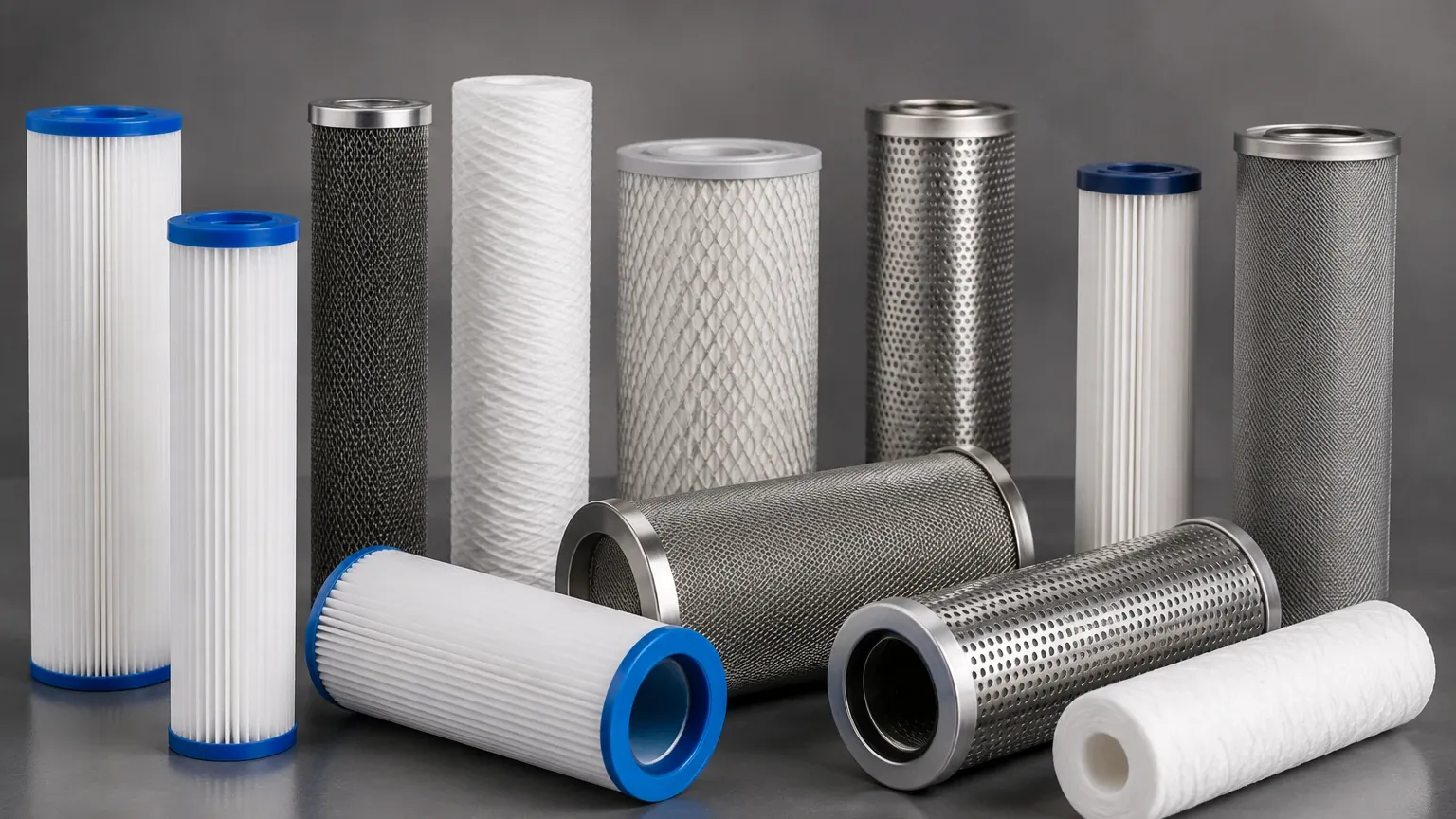
Retail outlets like Bunnings offer a variety of water filtration products, primarily focused on sediment removal, chlorine reduction, and taste improvement. These typically include carbon blocks, pleated polyester, and poly-spun (melt-blown) cartridges. For a facility's breakroom or a small-scale laboratory sink, these products are cost-effective and easily replaceable.
However, the "water filter cartridges Bunnings" category is generally designed for municipal water pressure (typically 30–60 PSI) and ambient temperatures. In an industrial setting—such as chemical processing, food and beverage production, or hydraulic systems—the operating parameters are significantly more aggressive. Engineers must look beyond the convenience of retail availability to ensure that the filtration media can withstand the thermal and mechanical stresses of the application.
Comparative Analysis: Retail vs. Industrial Filter Cartridges
When evaluating filtration solutions, the primary difference lies in the construction and the intended lifecycle of the media. Retail-grade cartridges are almost exclusively disposable. They are designed to be used until they reach a specific pressure drop and then discarded.
In contrast, industrial Filter Cartridges often utilize stainless steel wire mesh or sintered metal media. These components are engineered for longevity and, in many cases, are cleanable and reusable. The following table highlights the key differences:
| Feature | Retail/Domestic Cartridges | Industrial Stainless Steel Cartridges |
| :— | :— | :— |
| Material | Polypropylene, Carbon, Polyester | SS304, SS316L, Monel, Inconel |
| Temperature Limit | Usually < 50°C | Up to 300°C+ (depending on seals) |
| Pressure Tolerance | Low differential pressure limits | High collapse pressure resistance |
| Chemical Resistance | Limited to water and mild fluids | Broad spectrum (acids, alkalis, solvents) |
| Filtration Type | Nominal | Absolute and Nominal options |
| Maintenance | Disposable | Cleanable via backwashing or ultrasonic |
Engineering Challenges with Standard Off-the-Shelf Cartridges
Using a standard retail cartridge in a high-demand environment presents several engineering risks. The most prominent is media migration. In low-cost poly-spun or carbon filters, the high flow rates or pressure surges common in industrial lines can cause the filter media to break down, releasing fibers or carbon fines into the downstream fluid. This is unacceptable in pharmaceutical or precision manufacturing environments.
Another challenge is structural integrity. Retail housings and cartridges are often rated for a maximum operating pressure that does not account for the "water hammer" effect or the high-viscosity fluids found in industrial processes. If a cartridge collapses under pressure, it not only fails to filter but can also cause catastrophic damage to downstream pumps and sensitive instrumentation.
Material Selection and Chemical Compatibility
For engineers, material selection is the most critical factor in filter specification. While searching for water filter cartridges Bunnings might yield plastic-based solutions, industrial applications often require the chemical passivity of stainless steel.
1. Corrosion Resistance: Stainless steel 316L is the industry standard for filtration in corrosive environments. It resists pitting and crevice corrosion, making it suitable for brine, chemicals, and high-purity water systems.
2. Thermal Stability: Many industrial processes involve steam filtration or hot oil processing. Plastic cartridges will soften or melt at temperatures exceeding 60-80°C. Metal filter cartridges maintain their pore structure and mechanical strength at much higher thresholds.
3. Sanitization: In food and beverage or pharmaceutical applications, filters must be sterilized. Stainless steel components can withstand Clean-in-Place (CIP) procedures, including high-temperature steam sterilization and aggressive chemical cleaning agents that would degrade standard retail polymers.
Performance Metrics: Micron Ratings and Flow Rates
A common point of confusion when comparing retail and industrial filters is the "micron rating." Retail filters often advertise a nominal rating, meaning they can trap a certain percentage of particles of a specific size. For example, a 5-micron nominal filter might only capture 60-80% of 5-micron particles.
Industrial-grade Filter Cartridges often provide an absolute rating. An absolute 5-micron filter is engineered to capture 99.9% (or higher) of all particles 5 microns and larger. This level of precision is vital when protecting expensive equipment like high-pressure spray nozzles or RO (Reverse Osmosis) membranes.
Furthermore, flow rate capacity is a function of surface area. Industrial designs often utilize pleated wire mesh to maximize the available filtration area within a standard cartridge footprint. This reduces the initial pressure drop and extends the time between cleaning or replacement cycles compared to the thicker, depth-style filters found in retail outlets.
Customization and OEM Solutions for Critical Applications
One of the primary limitations of looking for water filter cartridges Bunnings is the lack of customization. Retail products are mass-produced to fit standard 10-inch or 20-inch housings. While these standards exist in industry as well, many machines require unique dimensions, end-cap configurations (such as Code 7, 222, or 226 O-rings), or specific reinforcement cores.
Custom manufacturers like Kaifil specialize in developing filtration components tailored to specific OEM requirements. This includes:
* Custom End-Caps: Ensuring a leak-proof seal in proprietary housing designs.
* Reinforced Cores: Preventing collapse in high-viscosity or high-pressure differential applications.
* Multi-Layer Sintered Mesh: Combining different layers of mesh to provide both fine filtration and mechanical support in a single robust component.
By moving away from standardized retail options, engineers can optimize the filter for the specific fluid dynamics of their system, rather than forcing the system to adapt to the limitations of a retail cartridge.
Total Cost of Ownership and Replacement Cycles
While the initial purchase price of a retail water filter cartridge is low, the Total Cost of Ownership (TCO) in an industrial setting can be surprisingly high. Frequent replacement of disposable cartridges leads to:
* Increased Labor Costs: Constant monitoring and manual replacement of filters.
* Disposal Costs: Managing the waste stream of used plastic and contaminated media.
* Production Downtime: Each filter change-out potentially requires a system shutdown.
Industrial stainless steel Filter Cartridges represent a higher upfront investment but offer a lower TCO over time. Because they are cleanable, the lifecycle of a single metal cartridge can span several years, whereas a disposable retail cartridge might last only weeks in a heavy-load industrial environment. The ability to perform ultrasonic cleaning or backflushing allows the filter to be restored to near-original pressure drop levels repeatedly.
Selection Advice for Purchasing Teams
Before finalizing a procurement decision based on the availability of water filter cartridges Bunnings, technical teams should confirm the following parameters with their filtration partner:
1. Fluid Characteristics: What is the viscosity, pH level, and temperature of the fluid?
2. Contaminant Profile: Is the contaminant hard (metal shavings), soft (algae/organics), or gelatinous? This dictates whether a surface filter (mesh) or a depth filter is required.
3. Flow Requirements: What is the maximum flow rate, and what is the allowable clean pressure drop?
4. Regulatory Compliance: Does the filter need to meet FDA, USP Class VI, or other industry-specific certifications for food or medical contact?
By addressing these questions, engineers can determine if a standard retail solution is a viable temporary fix or if a dedicated industrial filtration component is necessary for long-term operational stability.
Conclusion
While searching for water filter cartridges Bunnings is a practical step for domestic or light-duty needs, industrial applications require a more rigorous approach to filtration. The shift from disposable, plastic-based media to precision-engineered stainless steel Filter Cartridges ensures that critical systems are protected against the extremes of pressure, temperature, and chemical exposure. For facilities aiming to improve efficiency and reduce the frequency of filter failures, investing in industrial-grade filtration solutions provides the durability and performance that retail-grade products cannot match.
