


Filter Cartridge Aquarium
In the realm of aquatic management, ranging from large-scale public aquariums to intensive aquaculture facilities, the efficiency of water treatment systems is paramount. While the term "filter cartridge aquarium" often evokes images of small-scale consumer units, the industrial application of these components requires a significantly more robust engineering approach. For technical professionals and facility engineers, selecting the right filtration media is not merely about water clarity; it involves managing biological loads, ensuring chemical stability, and optimizing the total cost of ownership through durable, high-performance components.
Industrial-grade filtration in aquatic environments demands materials and designs that can withstand continuous operation, corrosive saltwater environments, and high flow rates. This is where the transition from disposable plastic media to precision-engineered Filter Cartridges becomes essential for operational reliability.
Understanding the Role of Filter Cartridges in Large-Scale Aquatic Systems
Aquatic filtration is a multi-stage process designed to maintain a stable environment for marine or freshwater life. In large-scale systems, such as those found in research laboratories, public exhibits, and commercial fish farms, the filtration system must handle vast volumes of water while removing particulate matter, metabolic waste, and pathogens.
Mechanical filtration is the first line of defense. A filter cartridge aquarium setup in an industrial context serves as the primary mechanical barrier. Unlike biological filtration, which relies on bacteria to break down nitrogenous waste, or chemical filtration, which uses carbon or resins to remove dissolved organics, mechanical filtration physically traps suspended solids. The precision of this trapping—measured in microns—determines the clarity of the water and the health of the downstream biological filters, which can become clogged if the mechanical stage fails.
For engineers, the challenge lies in balancing filtration fineness with flow resistance. A cartridge with an extremely low micron rating will provide superior clarity but may suffer from rapid pressure drops and frequent maintenance requirements. Conversely, a coarse filter may allow too much debris to pass, compromising the system's overall integrity.
Material Engineering: Why Stainless Steel Outperforms Polypropylene in Industrial Aquatics
In many standard applications, polypropylene or pleated paper cartridges are common. However, when specifying a filter cartridge aquarium solution for demanding industrial environments, stainless steel (specifically 304 or 316L grades) offers distinct engineering advantages.
Corrosion Resistance and Longevity
Marine environments are notoriously corrosive. The high chloride content in saltwater can quickly degrade inferior metals and cause polymers to become brittle over time. Stainless steel filter cartridges, particularly those manufactured from 316L, provide exceptional resistance to pitting and crevice corrosion. This longevity ensures that the filtration system remains structural and functional for years, rather than months.
Structural Integrity under Pressure
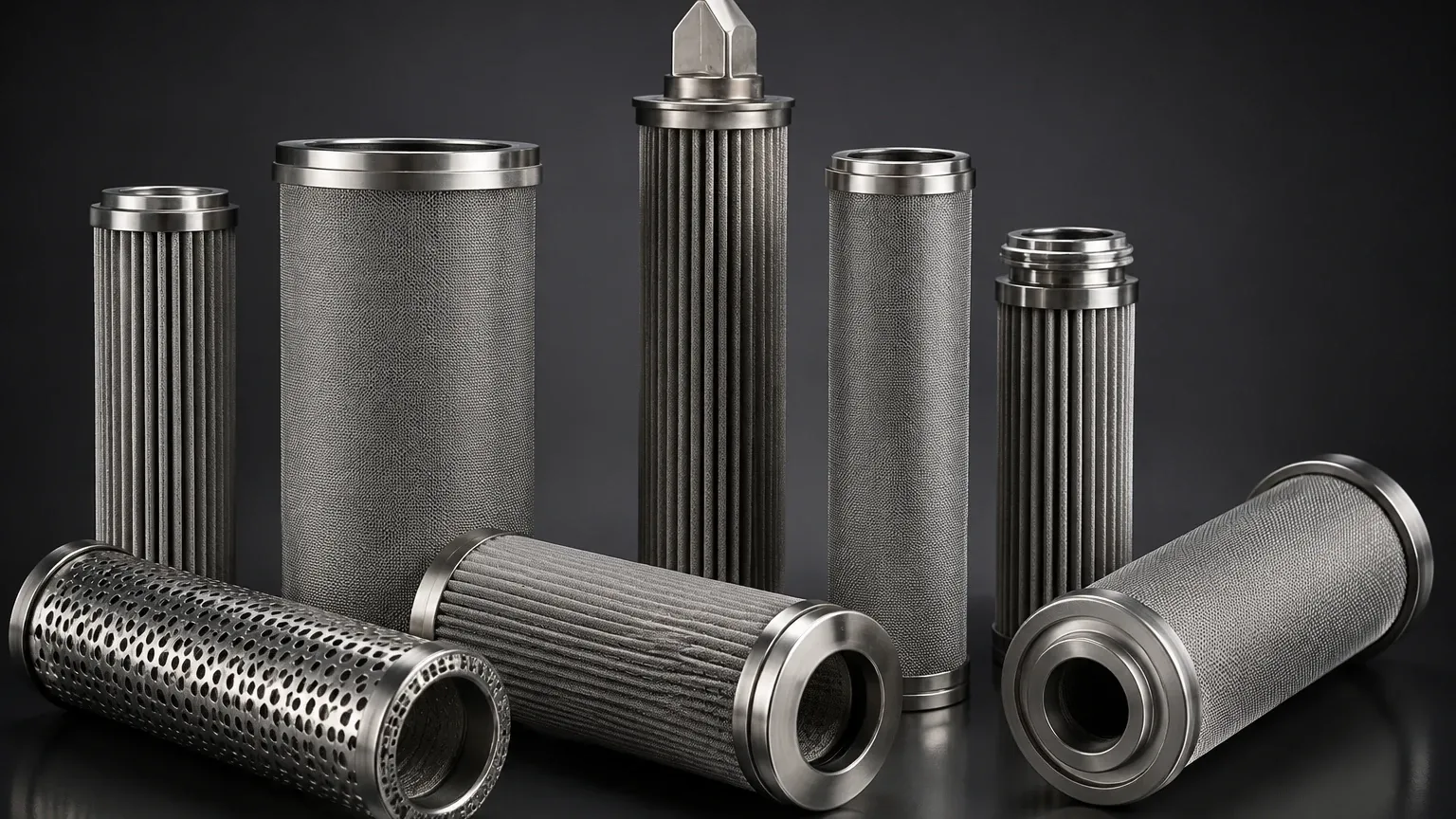
Industrial pumps generate significant head pressure. Disposable cartridges often deform or "bypass" under high-pressure differentials, allowing unfiltered water to leak through the seals or the media itself. Metal filter cartridges are structurally rigid. Whether they are constructed from woven wire mesh or sintered metal, they maintain their shape and pore size even when the pressure drop across the filter increases due to loading.
Temperature and Chemical Stability
Large aquatic systems often require sterilization or chemical cleaning. Stainless steel cartridges can withstand high-temperature sterilization (autoclaving) and exposure to various cleaning agents that would melt or dissolve standard plastic filters. This allows for a more rigorous hygiene protocol, which is critical in aquaculture and sensitive research environments.
Technical Parameters for Selecting a Filter Cartridge Aquarium Solution
When evaluating filter cartridges for large-scale aquatic applications, engineers must consider several technical specifications to ensure the component meets the system's hydraulic and biological requirements.
1. Micron Rating (Absolute vs. Nominal): In a professional filter cartridge aquarium application, the distinction between absolute and nominal ratings is critical. An absolute rating indicates that 99.9% of particles of a specific size will be trapped, whereas a nominal rating is an average. For critical life support systems, absolute-rated stainless steel mesh is often preferred to ensure consistent water quality.
2. Flow Rate and Flux: The flux, or the rate of flow per unit of filter area, must be optimized to prevent excessive velocity through the mesh. High velocity can force soft organic particles through the filter or cause "impingement," where particles are driven so deep into the mesh that they cannot be cleaned out.
3. Effective Filtration Area (EFA): By using pleated designs, manufacturers can significantly increase the surface area within a standard cartridge footprint. A higher EFA results in lower clean pressure drops and longer intervals between cleaning cycles.
4. End Cap Configurations: Compatibility with existing filter housings is essential. Common configurations include Double Open End (DOE), Code 7 (226 O-ring with bayonet), and Code 3 (222 O-ring). Ensuring a leak-proof seal at the end cap is vital to prevent bypass.
Mechanical Filtration and Micron Precision in Aquatic Environments
The effectiveness of a filter cartridge aquarium system is largely defined by the geometry of the filter media. In industrial metal filtration, two primary types of media are utilized: woven wire mesh and sintered metal fiber.
Woven Wire Mesh: This is the most common choice for mechanical filtration in aquatics. It offers a precise, two-dimensional pore structure. For applications requiring high flow and moderate filtration (e.g., 20 to 200 microns), woven mesh provides excellent permeability and is very easy to backwash or clean manually. Different weave types, such as Plain Weave or Dutch Weave, can be selected based on the required strength and filtration fineness.
Sintered Metal Media: For applications requiring ultra-fine filtration (down to 1 micron or less), sintered metal fiber or multi-layer sintered mesh is used. Sintering involves bonding layers of mesh or fibers together using heat and pressure without the use of adhesives. This creates a robust, three-dimensional filtration matrix that can trap finer particles while maintaining the structural benefits of stainless steel.
In a public aquarium, these precision cartridges are often used in the final polishing stage of the water treatment loop, ensuring that the water is crystal clear for public viewing while removing fine parasites or debris that could irritate sensitive marine life.
Maintenance and the Economic Advantage of Reusable Metal Cartridges
One of the most significant considerations for facility managers is the total cost of ownership (TCO). While the initial purchase price of a stainless steel filter cartridge is higher than a disposable polypropylene version, the long-term economics often favor the metal solution.
The Problem with Disposables
In a high-load filter cartridge aquarium environment, disposable filters may need to be replaced weekly or even daily. This creates a continuous procurement cost, significant labor requirements for change-outs, and a substantial waste stream. Furthermore, the risk of a "stock-out" of replacement filters can jeopardize the entire aquatic system.
The Cleanability Factor
Stainless steel cartridges are designed to be cleaned and reused. Depending on the nature of the debris, they can be cleaned via:
* Backwashing: Reversing the flow of water to flush particles off the surface.
* Ultrasonic Cleaning: Using high-frequency sound waves in a cleaning solution to dislodge fine particles trapped deep within the mesh.
* Chemical Soaking: Using mild acids or bases to dissolve organic buildup or mineral scale.
By implementing a cleaning rotation, a facility can operate for years with a single set of cartridges, drastically reducing the cost per gallon of filtered water and minimizing environmental impact.
Engineering Custom Solutions for Specialized Aquatic Filtration
No two aquatic systems are identical. A shrimp hatchery has different filtration needs than a shark exhibit or a recirculating aquaculture system (RAS) for tilapia. Customization is often necessary to optimize performance.
Customization options for a filter cartridge aquarium application include:
* Bespoke Dimensions: Manufacturing cartridges to fit non-standard or legacy housings, avoiding the need for expensive system-wide retrofits.
* Variable Micron Grading: Designing a single cartridge with graduated layers—coarser on the outside and finer on the inside—to act as both a pre-filter and a polisher.
* Reinforced Cores: For systems with high-pressure surges or vacuum conditions, reinforced internal cores prevent cartridge collapse.
* Material Selection: Choosing specific alloys like Titanium or Hastelloy for extremely aggressive chemical environments or specialized research applications.
By working closely with a manufacturer like Kaifil, engineers can develop filtration components that are precisely matched to their specific flow rates, particle loads, and chemical environments.
Conclusion: Selecting the Right Partner for Aquatic Filtration
Choosing the right filter cartridge aquarium solution for industrial or large-scale applications requires a move away from the "disposable" mindset. It requires an understanding of fluid dynamics, material science, and the specific biological needs of the aquatic environment. High-quality stainless steel Filter Cartridges provide the durability, precision, and economic efficiency required to maintain complex life support systems.
For engineers and purchasing teams, the focus should be on confirming the technical specifications—micron ratings, material grades, and flow capacities—before procurement. By investing in precision-engineered metal filtration, facilities can ensure superior water quality, reduced maintenance downtime, and a more sustainable operational model. Whether for a public aquarium, a commercial aquaculture venture, or a specialized water treatment plant, the right filtration component is the foundation of a healthy and stable aquatic system.
