


Brita Marella Water Filter Cartridges
In the realm of water purification, understanding the engineering principles behind point-of-use (POU) systems provides a foundational perspective for broader industrial filtration applications. The Brita Marella system is a widely recognized gravity-fed filtration solution designed for domestic and light commercial environments. While its primary application is residential, the technical architecture of Brita Marella water filter cartridges offers valuable insights into media composition, flow dynamics, and contaminant reduction strategies that parallel larger-scale industrial Filter Cartridges.
For engineers and procurement professionals, analyzing these systems requires looking past consumer marketing to evaluate the underlying material science. This article examines the technical specifications, filtration mechanisms, and performance limitations of these cartridges, while contrasting them with the robust requirements of industrial-grade filtration components.
Technical Architecture and Filtration Mechanisms
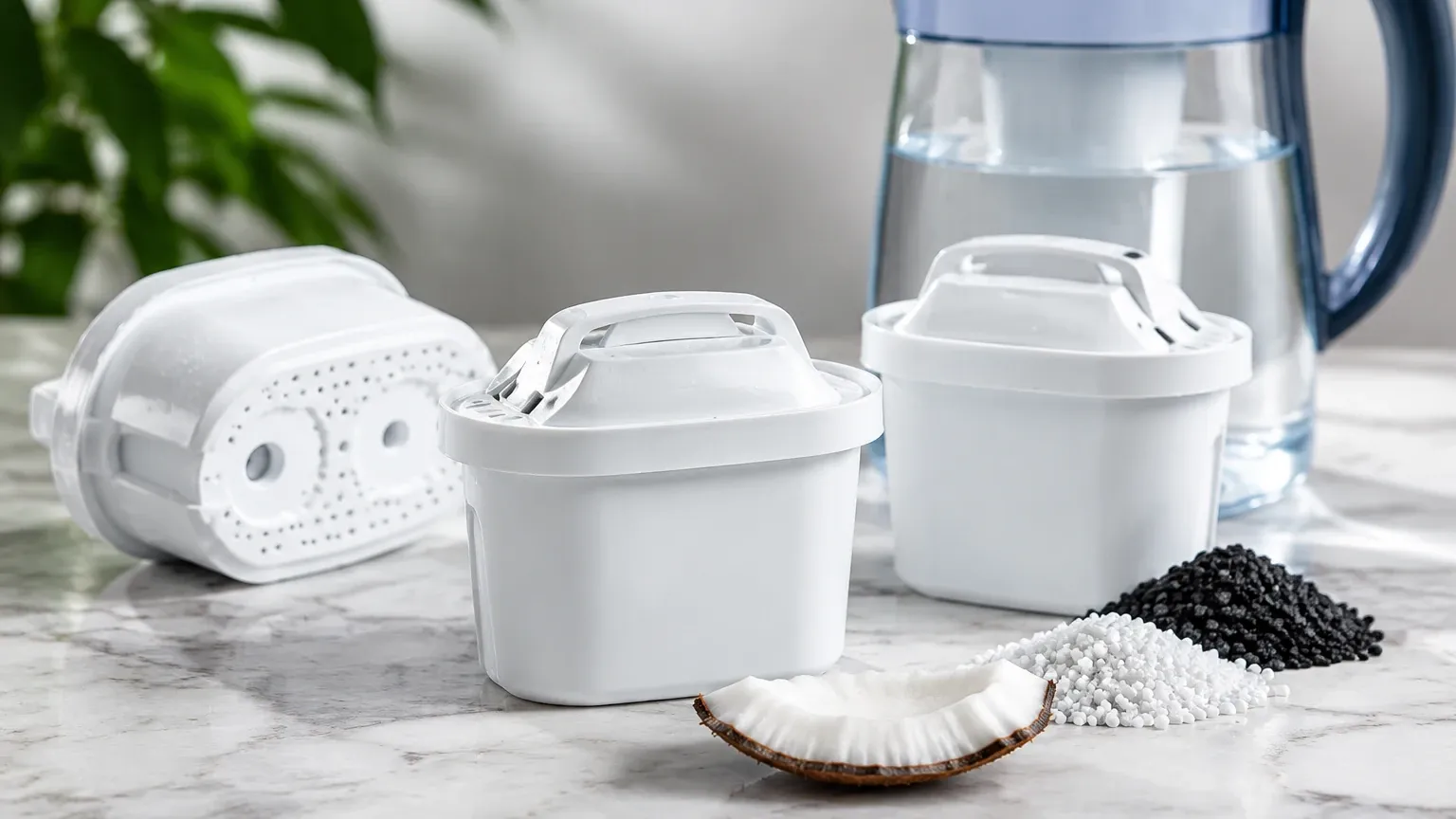
The efficacy of Brita Marella water filter cartridges—specifically the MAXTRA+ and newer MAXTRA PRO variants—relies on a multi-stage filtration process housed within a compact polypropylene shell. Unlike high-pressure industrial systems, these cartridges operate under gravity, which necessitates a specific balance between media density and hydraulic permeability.
Activated Carbon Micro-Pearls
The primary component for chemical adsorption in these cartridges is activated carbon, typically derived from natural coconut shells. This material is processed to create a high internal surface area with a vast network of micropores. In the context of the Marella system, these carbon "micro-pearls" are optimized to adsorb chlorine, organic impurities, and certain pesticides. From an engineering standpoint, the pore size distribution of the carbon is critical; it must be fine enough to capture small molecular contaminants while remaining porous enough to allow a consistent flow rate under low-pressure conditions.
Ion Exchange Resins
To address water hardness and heavy metal contamination, the cartridges incorporate ion exchange pearls. These are typically sulfonated polystyrene beads that facilitate a cation exchange process. As water passes through the resin bed, calcium and magnesium ions (responsible for limescale) and heavy metals like lead and copper are exchanged for hydrogen or sodium ions. In industrial settings, this process is scaled up significantly, but the fundamental chemistry remains consistent with the small-scale resin beds found in Brita cartridges.
Fine Mesh Pre-Filtration
Before water reaches the chemical and resin media, it passes through a fine mesh filter. This component serves two purposes: it protects the inner media from large particulate matter and prevents the migration of carbon fines into the filtered water. In industrial applications, this role is often fulfilled by precision-engineered stainless steel wire mesh, which offers superior durability and heat resistance compared to the synthetic meshes used in consumer-grade cartridges.
Engineering Considerations: Flow Rates and Pressure Drops
One of the most critical aspects of any filtration system is the relationship between flow rate and pressure drop. In the Brita Marella system, the "driving force" is the weight of the water in the upper reservoir. This results in a relatively slow flow rate, which is intentional to ensure sufficient contact time (residence time) between the water and the filtration media.
Residence Time and Adsorption Efficiency
In adsorption-based filtration, the time the fluid spends in contact with the media directly correlates with the removal efficiency. If the flow rate is too high, contaminants may "bypass" the adsorption sites. Industrial Filter Cartridges often utilize pleated designs or multi-layered sintered structures to maximize surface area, allowing for much higher flow rates without sacrificing residence time. The Marella system achieves this balance through a controlled orifice at the base of the cartridge, which regulates the exit velocity of the water.
Channeling Effects
A common challenge in granular media filtration is "channeling," where the fluid carves a path of least resistance through the media, bypassing the majority of the filtration surface. To prevent this, the internal geometry of the Brita Marella water filter cartridges is designed to distribute the water evenly across the resin and carbon bed. In industrial design, this is often managed through sophisticated internal baffles or by using rigid, porous metal structures that maintain their physical integrity under varying pressures.
Material Compatibility and Housing Integrity
The housing of a filter cartridge must be chemically inert and structurally sound. Brita Marella water filter cartridges utilize food-grade, BPA-free plastics. While suitable for ambient temperature water at atmospheric pressure, these materials are not designed for the rigorous demands of industrial processing.
Thermal and Chemical Resistance
In chemical processing or high-temperature water treatment, plastic housings can suffer from thermal degradation or chemical leaching. This is where industrial filtration diverges from consumer products. For applications involving high temperatures, corrosive fluids, or high-pressure differentials, engineers typically specify stainless steel (304 or 316L) filter components. Stainless steel provides the mechanical strength to withstand pressure surges and the chemical resistance to maintain purity in aggressive environments.
Sealing Mechanisms
The interface between the cartridge and the jug reservoir is a critical point for potential bypass. Brita uses a friction-fit or click-in mechanism with a simple gasket seal. In contrast, industrial Filter Cartridges utilize various end-cap configurations—such as 222 or 226 O-ring seals—to ensure a leak-proof fit within a pressurized housing. Ensuring a positive seal is paramount in industrial applications where even a 1% bypass can lead to downstream equipment damage or product contamination.
Performance Evaluation and Life Cycle Management
Determining when a filter cartridge has reached the end of its functional life is essential for maintaining water quality. The Brita Marella system often includes a "Memo" or "Smart Light" indicator, which tracks time or estimated volume to alert the user to replace the cartridge.
Saturation Points
The lifespan of Brita Marella water filter cartridges is typically rated for approximately 100 liters or four weeks of use. This limit is dictated by the saturation of the ion exchange resin and the potential for bacterial growth within the carbon media. Once the exchange sites on the resin are occupied by calcium or heavy metal ions, the cartridge can no longer soften the water. Similarly, once the activated carbon's pores are filled, chlorine removal efficiency drops significantly.
Industrial Monitoring Protocols
In industrial filtration, replacement cycles are rarely based on time alone. Instead, engineers monitor the differential pressure (ΔP) across the filter. As the filter captures particulates, the resistance to flow increases, causing the pressure drop to rise. Once the ΔP reaches a predetermined set point, the cartridge is replaced or cleaned. For adsorption-based industrial filters, regular effluent sampling and laboratory analysis are used to detect "breakthrough," the point at which contaminants are no longer being effectively removed.
Transitioning to Industrial-Grade Filtration Solutions
While the Brita Marella system is effective for improving the taste and odor of potable water, industrial processes require a different level of precision and durability. When moving from small-scale water treatment to industrial applications, several factors must be considered during the selection of Filter Cartridges.
Customization and Precision
Industrial environments often require specific micron ratings that consumer products cannot provide. Whether it is a 1-micron absolute rating for pharmaceutical water or a 100-micron nominal rating for cooling water, the ability to customize the filtration media is vital. Manufacturers like Kaifil specialize in creating custom stainless steel filtration solutions, including wire mesh and sintered metal cartridges, that offer precise filtration accuracy and can be cleaned and reused—a significant advantage over the disposable nature of Brita cartridges.
Total Cost of Ownership (TCO)
For a household, the cost of a disposable cartridge every month is manageable. However, in an industrial facility processing thousands of gallons per hour, the cost of disposable plastic cartridges can be prohibitive. Investing in high-quality, cleanable stainless steel Filter Cartridges often results in a lower TCO over the long term. These metal components can withstand hundreds of cleaning cycles through backwashing or ultrasonic cleaning, reducing waste and recurring procurement costs.
Selection Criteria for Engineering Professionals
When evaluating filtration options for a project, engineers should confirm the following parameters before selecting a cartridge type:
1. Fluid Compatibility: Ensure the cartridge materials (media and seals) are compatible with the chemical composition of the fluid.
2. Operating Conditions: Define the maximum operating temperature and pressure, including potential surges.
3. Filtration Goal: Identify whether the primary goal is particulate removal (mechanical filtration) or dissolved solid removal (adsorption/ion exchange).
4. Flow Requirements: Calculate the required flow rate and the maximum allowable pressure drop across the clean filter.
5. Maintenance Capabilities: Determine if the facility is better suited for disposable cartridges or cleanable, permanent filtration elements.
By understanding the fundamental principles found in systems like the Brita Marella water filter cartridges, technical professionals can better appreciate the complexities of industrial filtration. While the consumer-grade system serves its purpose for POU water treatment, the transition to industrial scales demands the robustness, precision, and engineering integrity found in specialized metal filtration components.
